Restaurants across Europe operate under one of the most detailed tax systems in the world. Value added tax (VAT) applies to most food and drink sales, alcoholic beverages, hot takeaway food, and even specific food items such as potato crisps.
Any restaurant business with taxable turnover above the VAT registration threshold set by tax authorities must register for VAT.
Once VAT registered, restaurants are required to charge VAT at the correct VAT rate, file VAT returns on time, and keep accurate records for VAT purposes.
The process can seem complex for a restaurant owner, but VAT registration follows a defined structure.
Choosing the right VAT scheme, understanding how to reclaim VAT on business expenses, and monitoring the VAT collected from customers are central to compliance and healthy cash flow.
This step-by-step restaurant VAT registration guide outlines the essentials for VAT-registered businesses and directions for those preparing to register for it.
What is Value Added Tax (VAT)?
Value-added tax, or VAT, is a consumption tax charged on goods and services at each stage of production and sale.
In the restaurant sector, value added tax VAT applies when a customer pays for food and drink. The restaurant collects VAT on behalf of the tax authorities and later submits it through a VAT return.
While the customer pays VAT on the sales price, the restaurant can reclaim VAT on certain business expenses, such as kitchen equipment, utilities, or supplies. This balance between VAT collected and VAT paid is managed through input tax deductions.
The standard VAT rate in the UK is 20 percent, but restaurants often deal with different VAT rates depending on the type of sale. Hot takeaway food, cold takeaway food, and alcoholic beverages each have their own VAT rate.
Restaurant owners must apply the correct VAT rate for every transaction to stay compliant with tax regulations.
When Does VAT Apply to Restaurants?
VAT applies when a restaurant’s taxable turnover goes above the VAT registration threshold set by tax authorities. In the UK, this VAT threshold is £90,000 as of 2024.
Taxable turnover includes all taxable sales such as food and drink served in-house, takeaway food, etc. Room hire and certain food items may also count, depending on the ordinary meaning of supplies.
If the threshold is crossed, the restaurant business must register for VAT and begin charging the correct VAT rate.
Restaurants that stay below the limit can still choose voluntary registration. This can help them reclaim VAT on business expenses and show suppliers and partners that the business is compliant with VAT regulations.
Failing to register for VAT once the taxable sales exceed the limit can lead to penalties, backdated tax collected, and increased cash flow pressure.
How to Register for VAT?
Once a restaurant’s taxable turnover reaches the VAT registration threshold, the next step is to register for VAT with the relevant tax authorities.
In the UK, this is managed through HMRC. Across the EU, local tax offices handle the same process with similar requirements.
Here are the steps you should follow:
Step 1: Check eligibility: Confirm that your taxable sales have crossed or are expected to cross the threshold. Each EU country has its own annual VAT threshold (e.g., £90,000 in the UK from April 2024, €85,000 in Ireland, €20,000 in Italy). Confirm the one that applies to your restaurant.
Step 2: Prepare business details: Authorities will ask for your business name, legal entity, address, turnover projections, bank account details, contact details, and sometimes supplier/contractor information.
Step 3: Submit an online application: Registration is usually done online through the national tax portal (HMRC in the UK, DGFiP in France, Agenzia delle Entrate in Italy, etc.).
Step 4: Receive your VAT number: Once approved, your restaurant will be issued a VAT registration certificate and a unique VAT number. From this point, your restaurant is considered VAT registered.
Step 5: Start charging VAT: Apply the appropriate VAT rate on food and drink sales, alcoholic beverages, hot takeaway food, and other taxable items. Ensure VAT charged appears clearly on invoices or receipts.
Step 6: Maintain records: Begin keeping detailed records of all VAT collected and input tax on business expenses. These will be required for future VAT returns.
Registering for VAT may look like a formal exercise, but it lays the foundation for compliance. Restaurant owners who complete the process early reduce the risk of penalties and gain the ability to reclaim VAT on purchases.
INDUSTRY INSIGHT
| In March 2024, the UK had 2.725 million VAT-registered businesses, a 1.55% dip from 2022. For restaurants, this shows how inflation and insolvencies are pushing more operators out of the VAT net, making compliance and strategic pricing even more important for those still trading. |
Voluntary Registration: Should Restaurants Consider It?
Even if a restaurant’s taxable turnover has not crossed the VAT registration threshold, it is possible to register for VAT voluntarily. This option can be valuable for smaller restaurants, cafés, or sole traders in the restaurant sector who want to manage compliance early.
The main advantage of voluntary registration is the ability to reclaim VAT on business expenses. Equipment, renovations, utilities, and supplier costs often carry VAT, and reclaiming VAT helps improve cash flow.
Voluntary registration can also enhance credibility with suppliers, landlords in shopping centres, or corporate clients who expect to work with VAT-registered businesses.
However, there are trade-offs. Once VAT registered, the restaurant must charge VAT on taxable sales and file VAT returns regularly. This increases administrative work and requires detailed records to stay compliant with VAT regulations.
For restaurants serving primarily cold food or items with a zero rating, charging VAT may increase prices for customers without bringing significant benefits.
For a restaurant owner, the decision depends on balancing cash flow benefits against administrative effort.
Voluntary registration is worth considering if your restaurant makes large investments in equipment or supplies, but it is less practical if most sales are low-margin food items with reduced rate or zero rating.
What Are the Current VAT Rates in the Restaurant Sector?
VAT in the restaurant industry follows specific rules across different categories. Understanding these different VAT rates ensures proper VAT treatment for all sales.
- Standard Rate (20%): Applies to most hot food and drink sold in restaurants, cafés, and pubs. Eat-in meals for immediate consumption, alcoholic beverages, and hot takeaway items all fall under the standard VAT rate.
- Zero Rate (0%): Cold takeaway food such as sandwiches, salads, and milkshakes typically remains zero-rated. The exception occurs when these items are served hot, moving them into the standard rate.
- Reduced Rate (5%): Rare in normal trading, but can appear in government-driven schemes. Operators must watch for these changes to maintain proper VAT treatment.
- Service Charges: Mandatory service charges are vatable. Optional gratuities left by customers are not subject to VAT.
The biggest challenge here lies in classification. Restaurant owners must understand when VAT applies based on whether food is intended for immediate consumption and its temperature at the point of sale.
How Do You Choose the Right VAT Scheme for Your Restaurant?
VAT-registered restaurants can select from different VAT schemes to manage their obligations.
The flat rate scheme offers a simplified approach where businesses pay VAT as a fixed percentage of their turnover rather than calculating actual VAT on each transaction.
Under the flat rate scheme, restaurants pay VAT at predetermined rates based on their sector classification. This approach reduces administrative burden but may not always provide the best financial outcome compared to standard VAT accounting.
Cash accounting represents another option, allowing businesses to account for VAT when payments are received rather than when invoices are issued.
Standard VAT accounting remains the default option, requiring businesses to calculate VAT on each sale and purchase.
While more complex, this method often provides the most accurate reflection of VAT liability and input tax recovery.
How Should Restaurants Manage VAT Returns and Compliance?
Once registered, restaurants must submit regular VAT returns to tax authorities. These returns detail VAT charged to customers, input tax claimed on purchases, and the net amount owed or refundable.
Most VAT-registered restaurants submit quarterly returns, though some larger operations may need to file monthly. Each return must be submitted on time with accurate figures to avoid penalties and interest charges.
Collecting VAT from customers represents just one part of the process. Restaurants must also maintain detailed records showing all transactions, supporting documents for input tax claims, and evidence of VAT charged on sales.
Modern point-of-sale systems can help calculate VAT automatically and generate the reports needed for VAT purposes. However, restaurant owners remain responsible for ensuring accuracy and compliance with VAT rules.
What Are the VAT Rules for Various Restaurant Services?
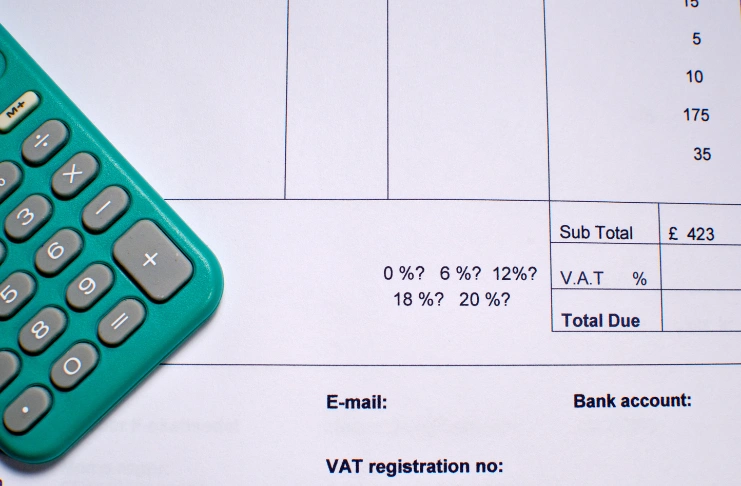
The restaurant sector covers various service types, each with specific VAT treatment requirements.
Dine-in services for immediate consumption typically attract the standard VAT rate across food and drink sales.
Takeaway food presents more complexity. Cold takeaway food generally qualifies for zero rating, while hot food attracts standard rate VAT. The distinction depends on whether food is heated for customer consumption rather than production purposes.
CASE STUDY
| Background: Ainsleys, a well-known bakery chain in Leeds, sells hot products such as sausage rolls and pasties. HMRC argued that these items should be subject to standard VAT as “hot takeaway food,” while Ainsleys maintained that they were baked to be sold fresh and not specifically to be eaten hot. Tribunal Decision: The tribunal found in favor of Ainsleys. The reasoning was that the bakery’s intention was not to sell the items as “hot meals” but rather as products baked on-site and sold as they came out of the oven. The heat was incidental, not a deliberate sales feature. Therefore, VAT was not due on these sales. Why It Matters: This case drew a clear line between food that is hot because it has just been baked and food that is kept hot for the purpose of consumption. The ruling gave bakeries and quick-service outlets guidance on how incidental heat affects VAT liability. Takeaway: Restaurants and bakeries should carefully document whether food is being kept hot to attract sales or whether it is hot only due to production processes. This distinction remains central to how HMRC assesses VAT on hot food. |
Room hire services in restaurants may qualify as exempt supplies or attract standard rate VAT depending on the specific arrangements. Catering services provided off-site typically face standard rate VAT treatment.
Understanding these distinctions helps restaurant owners apply the appropriate VAT rate across all revenue streams while maintaining compliance with VAT regulations.
What Are the Essential Tips for Effective Restaurant VAT Management?

Invest in proper systems: Modern technology can help calculate VAT, track sales, and generate reports for VAT returns. This reduces errors and saves time during busy trading periods.
Train staff thoroughly: All team members handling sales must understand the applicable VAT rate for different products and services. Mistakes at the point of sale can create compliance issues.
Keep accurate records: Detailed records support VAT return preparation and provide evidence during any tax authority inspections. Store receipts, invoices, and transaction records systematically.
Monitor VAT regulations: Rules change regularly, particularly around food classifications and rates. Stay informed through professional advisers or tax authority updates.
Plan for cash flow: VAT collected belongs to the tax authorities, not your business. Set aside VAT payments to avoid cash flow problems when returns are due.
Consider professional advice: VAT regulations can be complex for restaurant operations. Professional guidance helps ensure compliance while optimizing your VAT position.
Conclusion
Restaurant VAT registration is a significant milestone for growing food service businesses. While the process brings administrative responsibilities, proper management ensures compliance while supporting healthy cash flow through input tax recovery.
Frequently Asked Questions
1. Does VAT apply to restaurants?
Yes, VAT applies to most restaurant sales. Food and drink served for immediate consumption typically attracts the standard VAT rate of 20%. Cold takeaway food may qualify for zero rating, while hot food generally faces standard rate treatment.
2. What is VAT registration?
VAT registration is the process of formally registering your business with tax authorities to collect and pay VAT. Once registered, businesses receive a VAT number and must charge VAT on applicable sales while submitting regular returns.
3. Is it worth being VAT registered?
Being VAT registered allows businesses to reclaim input tax on purchases and demonstrates credibility to suppliers. However, registration brings administrative responsibilities and may increase prices for some customers. The decision depends on your specific circumstances and business model.
4. What VAT do you pay on food?
VAT on food depends on several factors. Hot food for immediate consumption typically attracts 20% VAT. Cold takeaway items like sandwiches usually qualify for a zero rating. Alcoholic beverages face standard rate VAT regardless of temperature or service method.