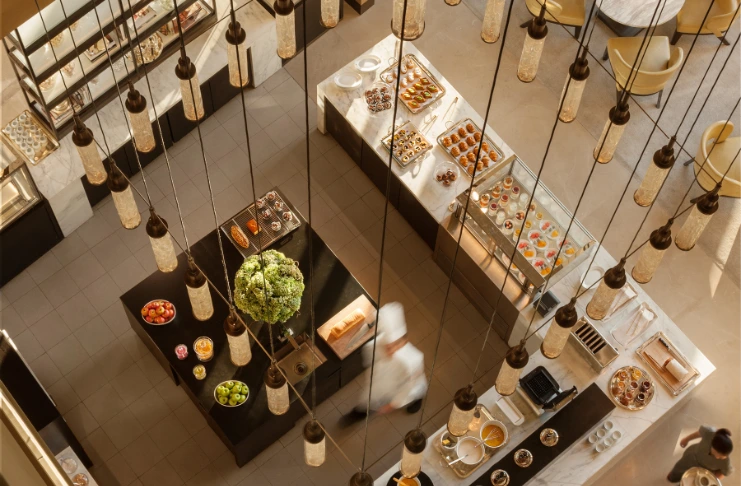

“The restaurant experience starts before the food even arrives. It begins the moment a guest walks in and senses the atmosphere” – Danny Meyer.
The design of a restaurant floor plan impacts much more than the arrangement of tables. Successful restaurant floor plans allow for efficient use of the restaurant’s space, allow for the ambiance of the restaurant to coexist with the restaurant’s operational needs, and allow for both employees and guests to thrive in the restaurant. Whether you are starting a new restaurant from scratch or you are revamping an existing restaurant, the layout you choose affects every aspect of the restaurant business, including customer satisfaction and profitability.
Good floor plans go far beyond simply providing a physical space; they create an atmosphere, dictate dining behaviors, and create the restaurant’s brand. A well-designed floor plan provides guests with a direct path to their table, supports efficient service for both employees and guests, and creates an experience that guests will remember. A poorly designed floor plan causes bottlenecks, restricts employee movement, and ultimately degrades the guest experience.
In an increasingly competitive market for restaurants, it’s critical that the design of your restaurant’s floor plan reflects your business goals and target market. Restaurants today provide customers with not only food but also a complete experience through the atmosphere and decor, comfortable seating, and attentive staff. As costs continue to rise, restaurants need to be more efficient in their day-to-day operations; therefore, your restaurant’s dining room floor plan represents the meeting point of both of these requirements and serves as a foundational aspect of your overall restaurant design.
With this comprehensive guide, you’ll learn about both the art and science of designing your restaurant floor plan, including everything from the importance of understanding spatial psychology to developing and implementing low-cost solutions that increase profits. You will also be able to look at best practices in developing your floor plan through analysis of innovative examples of restaurant layouts, case studies of successful restaurants, and insights from industry experts, provided throughout the guide to help you make the right decisions for your dining establishment.
What is a Restaurant Floor Plan?
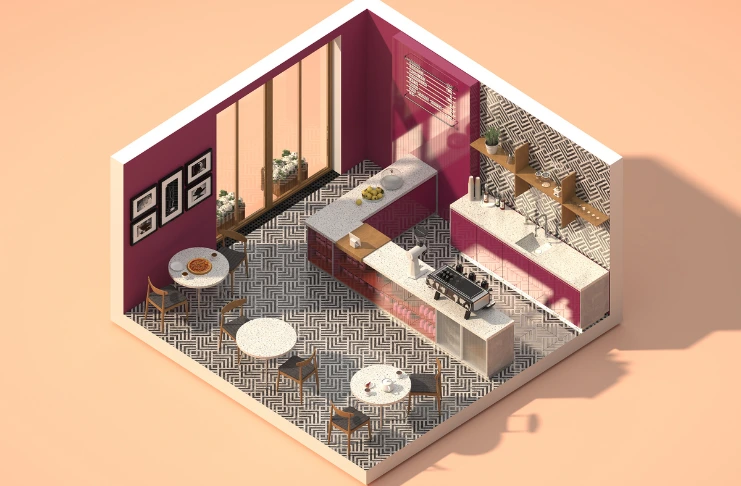
A Restaurant Floor Plan provides an idea of your entire foodservice experience, based on how the layout of each physical section affects the flow of business. The layout includes every aspect of your establishment, including the host station, your kitchen, dining areas, service stations, restroom facilities, storage areas, and so on. In addition to identifying where tables and chairs will be located, the layout identifies all aspects of the guest’s journey through your establishment.
Why Layout Is Your Silent Salesperson
Your floor plan is a strategic tool. The layout silently communicates your brand’s identity, your attention to detail, and how much you value the comfort of your guests.
- Ambiance and comfort: A tight, cluttered layout might signal haste or low investment in guest experience, while a spacious, well-lit arrangement can suggest warmth, luxury, or creativity.
- Navigation and flow: Customers should instinctively know where to go—be it to their table, the restroom, or the counter. A confused customer is already a dissatisfied one.
Perceived wait time: Studies show that customers in well-designed environments are more patient. Cornell University research indicates that layout and ambiance can affect dining duration and tipping behavior.
What is the Anatomy of a Restaurant Floor Plan?
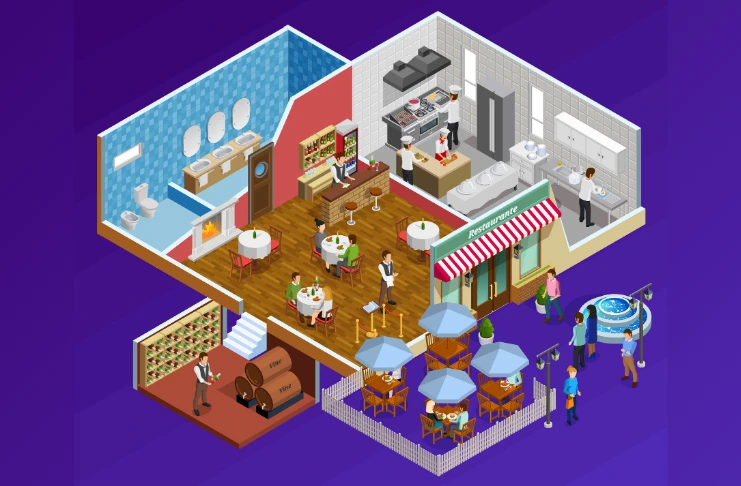
The core of the restaurant floor plan comes from the way both the exterior and interior of your establishment are styled together, as well as how each is utilized within a specific ‘zone:’
- Entry/waiting area: Will create a lasting impression and set expectations.
- Dining Area: The arrangement is a function of maximizing the number of patrons (seating) while providing sufficient space for patrons to hold conversations.
- Bar/Bar Areas: Often serve as both operational and social hubs.
- Kitchen Layout: The operational heart of a restaurant that dictates how quickly food will be served and the quality of the food.
- Service Areas: Designed to maximize staff work efficiency and minimize the distance the staff must walk to serve food and drinks.
- Restroom area: Is conveniently located but also hidden from the main dining room area and has a great impact on guest comfort.
- Back Of House (BOH) areas: Include all areas that are not accessible by guests and support operation of FOH areas.
- Circulation path(s): Are the invisible and essential paths that govern movement through the space.
When thoughtfully designed and considered, these components will work together to form an experience for both guests and staff that is cohesive and flows naturally.
Maximizes Space Efficiency
Every inch of your restaurant’s space matters, especially when it comes to seating capacity and kitchen operations. PerfectCheck reports that strategic seating arrangements can boost revenue by up to 15% through improved table turnover and customer satisfaction. Supply Chain Game Changer notes that implementing an excellent floor plan can increase revenue by 25%, highlighting the importance of layout in operational efficiency.
INDUSTRY INSIGHT
| Chick-fil-A has implemented innovative design strategies to enhance operational efficiency and customer experience. For instance, their new drive-thru concept features a kitchen located above the drive-thru lanes, allowing for faster service and accommodating up to 75 vehicles simultaneously. Additionally, Chick-fil-A has adopted modular construction methods for some locations, enabling quicker builds and consistent quality. |
Enhances Customer Experience
When a customer walks through your doors, the very first thing they notice—consciously or not—is your layout. Before they taste your food or speak to your staff, the way your space is organized, lit, and designed sets the tone for their entire dining experience. As David Rockwell so eloquently puts it, everything in your restaurant should work like a symphony—flowing seamlessly together to create comfort, efficiency, and style.
According to a Forbes article, first impressions form within 7 seconds of entering a space, and this initial reaction can make or break customer trust and comfort.
Customer satisfaction is paramount in the restaurant industry. The physical space you create significantly impacts your guests’ experience, influencing everything from their comfort to their willingness to stay longer and order more.
The Impact of Ambiance on Dining Decisions
A study highlighted by Pizza Marketplace revealed that:
- 91% of casual dining patrons say that an appealing ambiance influences their decision to visit a particular restaurant.
- 84% of quick-service restaurant customers consider a welcoming and comfortable atmosphere important.
These statistics underscore the critical role that ambiance plays in attracting and retaining customers.
Ambiance and Customer Satisfaction
Further research indicates that restaurant atmosphere significantly influences consumer satisfaction and behavioral intentions. Customers rank elements like table settings, wall color schemes, and seating arrangements as vital to their dining satisfaction.
Practical Takeaways for Restaurant Owners
- Invest in Ambiance: Ensure that your restaurant’s design elements—lighting, music, decor—create a welcoming environment.
- Understand Your Audience: Tailor your ambiance to match the preferences of your target demographic, whether it’s a quiet, intimate setting or a lively, energetic atmosphere.
- Regularly Update Your Space: Keep your restaurant’s interior fresh and inviting to encourage repeat visits.
By prioritizing the ambiance and overall design of your restaurant, you not only enhance the customer experience but also positively influence their dining decisions and satisfaction levels.
Increases Staff Productivity
A well-designed floor plan isn’t just beneficial for customers—it also supports your staff in providing better service. Saving server’s walking time through an efficient layout and placement of kitchen to close proximity of dining area allows for quicker customer service. Example, if the kitchen is located close to where the servers pick up the orders, then customers are served sooner than if the kitchen was located far away.
Improves Operational Efficiency
The operations of restaurants can be quite complicated; there are many different components that need to be coordinated. A well-designed restaurant layout will help eliminate congestion, create a more efficient flow in the kitchen, and create safer conditions in the kitchen for employees and customers alike.
Ensures Safety and Compliance
Your restaurant floor plan must also meet safety regulations, including fire codes, accessibility requirements, and local zoning laws. An unsafe or non-compliant design can result in costly fines or even shutdowns.
The Evolution of Restaurant Floor Plans
Restaurant Floor Plans have changed from simple straight-line designs to complex systems that serve a myriad of functions:
1.) Time-Based Changes – The best restaurants, in addition to building layout, are focusing on flexible building features to provide for the transition from fast and efficient lunch services to relaxed dining environments.
2.) Technology Integration – When planning and designing modern restaurant floor plans, consideration must be given to current and emerging technologies, including Point-of-Sale (POS) systems, tableside payment systems, and even delivery service pick-up locations, and the need for these to be integrated into the overall design scheme.
3.) Sustainability Issues – Growing emphasis has been placed on creating energy-efficient restaurant floor plans that optimize heating, cooling, and lighting zones.
4.) Covid-19 Adaptations – Since the onset of the Covid-19 Pandemic, restaurant floor plans have had to quickly adapt to current and evolving capacity requirements, increased outdoor dining needs, and new heightened safety guidelines.
Your restaurant floor plan silently orchestrates countless interactions throughout the day by dictating movement pathways, setting expectations, and creating atmospheres for long-lasting memories during dining experiences. When approached strategically, a great floor plan becomes an essential tool for building an everlasting restaurant business. A restaurant business that stands the test of time.
What are the Key Considerations for an Effective Restaurant Floor Plan?
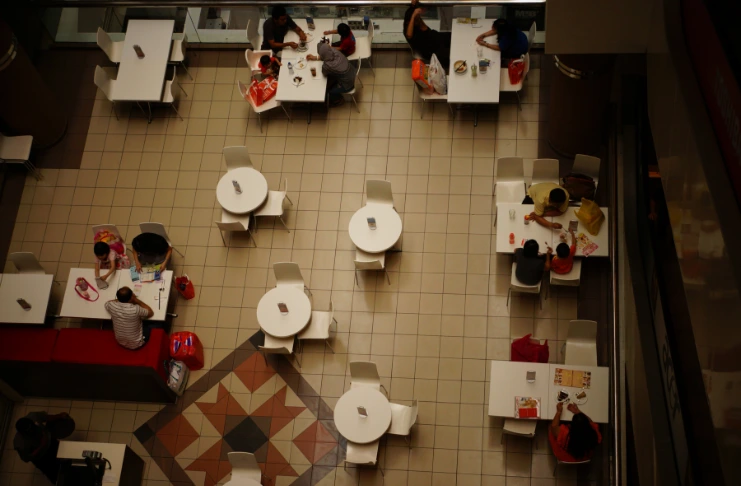
Designing an effective restaurant floor plan is not just about aesthetics—it’s about functionality. Here are some key considerations to ensure your floor plan works for both your staff and your customers:
1. Customer Comfort
- Tip: Spacious seating arrangements improve customer comfort. Avoid cramming too many tables into your space, as it can lead to a cramped dining experience, which may discourage repeat visits.
- Real-Life Example: The French Laundry is a Michelin-starred, high-award-winning restaurant located in Yountville, California, that shows how (through the use of design, thought out) a comfortable and intimate environment can be created for those eating there to enjoy their meal at a relaxed pace (without feeling rushed).
With the newly designed entry into The French Laundry, which was part of a full restoration completed under the direction of Snøhetta, The French Laundry now has a lovely area called “the arrival courtyard,” which acts as an introduction to the dining experience. This courtyard is filled with a beautifully landscaped garden with several species of trees, including Japanese Maples, Purple Leaf Plums, and Climbing White Roses, making it an inviting area that can provide some calm prior to enjoying dinner. The courtyard was inspired by classical French gardens and is a great mixture of historical charm and contemporary design, while also providing the perfect transition from the guest’s arrival to their evening at the Dining Room. Chef Thomas Keller emphasized the importance of this space, noting that it offers guests a sense of calm and detail that enhances their overall experience.
Inside, the dining room continues this theme of intimacy and comfort.
These design elements collectively foster an environment where guests can fully immerse themselves in the culinary experience, reflecting the restaurant’s commitment to excellence in both cuisine and ambiance.
2. Traffic Flow
The impact of meal imparting the setting on Customer Satisfaction was evidenced by research entitled, “The effect of Meal Pace on Customer Satisfaction.” This study showed that customers who view their dining service either extremely fast or very slow are dissatisfied with the overall meal experience. Customers who dine at fine-dining establishments have been found to have a heightened awareness of the pace of their meals and prefer to dine at a balanced pace of dining where neither do customers feel hurried in their meal serving nor forced to wait too long. Speed during check settlement is often appreciated, indicating that certain stages of the dining process can be expedited without compromising overall satisfaction.
Restaurants should have an intuitive flow, where customers and staff can move freely without disrupting each other. Consider paths for waitstaff to serve customers and for guests to access restrooms or exit.
- Tip: Planning for adequate aisle space will reduce congestion during high-traffic times. According to this data, customer satisfaction can be improved by having an optimized staff flow and an appropriate pace of service.
Although there are no specific percentage improvements mentioned within the scope of this data set, there are numerous ways to implement this.
3. Kitchen Location and Size
The kitchen is the heart of any restaurant, and its design is crucial to ensuring operational efficiency. A well-placed kitchen should minimize walking time for chefs while allowing for a smooth exchange of plates between the kitchen and the dining area.
- Tip: Kitchens should be located in such a way that staff can easily access supplies and serve food quickly without walking long distances.
- Real-Life Example:McDonald’s employs a highly efficient kitchen design that emphasizes modularity and streamlined operations, enabling the company to serve millions of customers daily. McDonald’s kitchens are organized into distinct zones—such as preparation, cooking, assembly, and storage—to ensure a smooth workflow and minimize cross-contamination. Reducing excess motion by implementing this configuration provides workers with the ability to concentrate on their respective jobs and thereby increases the total efficiency of the operation. Modular equipment ensures quick service and troubleshooting capabilities, resulting in a consistent level of service to all locations.
4. Flexibility
Ramp up flexibility in your restaurant’s layout for maximum effect during peak, holiday, or other busy times. Movable furniture items, like tables and chairs, can be quickly rearranged for larger groups, allowing you to increase your seating capacity without making permanent changes to the structure of your restaurant. Flexible restaurant layouts help restaurants manage busy customer hours, reducing customer wait time and congestion, leading to more satisfied customers! Adaptability to changing customer demand creates an efficient and dynamic experience for every guest dining at your restaurant! Additionally, you can increase the flexibility of your restaurant layout further by implementing mobile service stations or using portable partitions to create an optimal use of space, depending on your customers’ traffic levels throughout each day.
5. Accessibility
Your restaurant floor plan must comply with accessibility In accordance with the ADA, restaurants are expected to create a welcoming atmosphere for all customers through the use of wide pathways, accessible restrooms, and spaces for those who are handicapped/mobility impaired to be accommodated within the restaurant space. Several factors contribute to this concept of Accessibility; it is a requirement by law and allows restaurants to cater to a more diverse customer base.
Providing for Accessibility will also enhance the overall guest experience by allowing restaurants to provide comfortable dining experiences to an increased number of guests and fostering an environment of inclusion and comfort. Restaurant owners should incorporate the following Accessibility Design Elements into their establishments to create an equally positive experience for their customers with disabilities: 1) Ramp access; 2) Low-height checkout counters; and 3) Clearly marked pathways.
Thoughtful inclusion in design not only promotes customer satisfaction but can also increase foot traffic by attracting a diverse range of clientele.motes customer satisfaction but can also increase foot traffic by attracting a diverse range of clientele.
What are some Good Restaurant Floor Plan Layout Ideas?
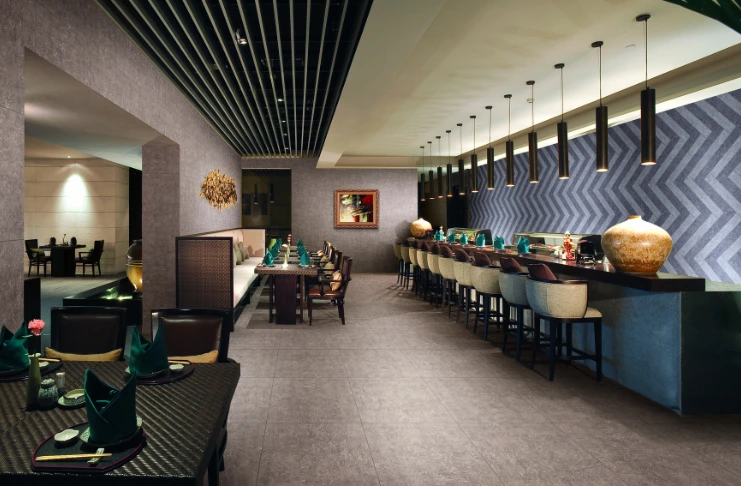
Here are some restaurant floor plan layout ideas, each catering to different types of restaurants:
1. Traditional Layout
- Features: Rows of tables are neatly aligned, and the kitchen is typically located behind the dining area. This layout often includes a bar and a spacious seating area.
- Best For: Casual and fine-dining restaurants where you want to maximize seating without compromising customer comfort.
2. Open Kitchen Layout
- Features: An open kitchen allows diners to watch chefs at work, creating an engaging, interactive experience. This layout works best with larger kitchens and clear traffic flow.
- Best For: Trendy and upscale restaurants, particularly in the modern dining or “foodie” market. Example: Nobu restaurants have open kitchens where customers can watch their food being prepared.
3. Café Layout
- Features: This style is made up of small and flexible tables that appeal to single diners and couples alike. Many also have counters or bar tops to accommodate quick meal service.
- Best For: These types of layouts suit the following types of establishments: Coffee shops, casual places to eat, or bakeries that have a relaxed and comforting atmosphere.
- Example: Starbucks and Blue Bottle Coffee exemplify this layout by providing a mix of small table and counter seating for people to enjoy, work, and unwind.
4. Family-Style Layout
- Features: A family-style layout consists of large tables and/or booths specifically constructed for groups, promoting family-style meals and communal dining experience among friends and family members.
- Best For: Family-style establishments will generally provide their patrons with a comfortable and relaxed environment within which they can spend time together.
- Example: The Cheesecake Factory offers many seating options, from large booths and abundant space to multiple dining tables, in order to accommodate a family and/or group meal experience.
5. Zoning Layout
- Features: The space is divided into separate zones, such as a quiet dining area, a bar area, and a lounge.
- Best For: Larger restaurants or multi-concept spaces that aim to provide different dining experiences in the same venue.
- Example: Hard Rock Café divides its space into themed zones—dining areas, a stage for live performances, and a bar- creating a vibrant yet organized atmosphere.
No matter your restaurant’s style, choosing the right floor plan layout can significantly enhance both the dining experience and operational efficiency, helping you cater to your guests’ needs.
What are Some Easy Restaurant Floor Plan Design Tips?
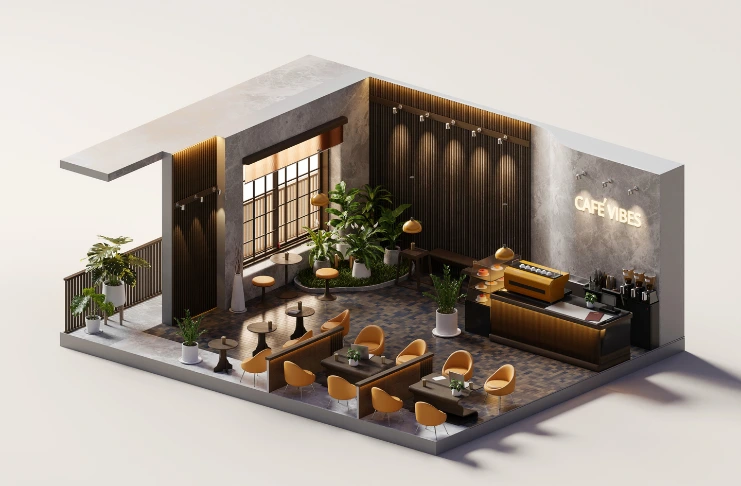
Here are some simple yet effective restaurant floor plan design tips that can improve your layout:
1. Use Modular Furniture
Modular furniture gives you the ability to change your seat arrangements based on your peak times and special event days. This gives the restaurant flexibility to boost your seating capacity, when possible, without overcrowding.
2. Prioritize Natural Light
Natural light makes any dining area more inviting and creates a bright environment for guests. Therefore, whenever possible, you should place dine-in seats next to windows and/or skylights to maximize the use of as much natural daylight as possible and reduce energy costs associated with artificial lighting.
3. Incorporate Technology
By adding tech tools such as digital menus, self-ordering kiosks, POS systems and even computer-based inventory systems, you can streamline your restaurant’s operations and improve your customers’ experiences.
4. Maximize Storage
Ensure you have enough storage space for ingredients, cleaning supplies, and other essentials. This will prevent clutter in service areas and make your operations smoother.
5. Create Private Dining Spaces
If your restaurant caters to business meetings or intimate gatherings, consider adding private dining rooms or booths to your layout. These offer exclusivity and a more personalized experience.
What are Some Restaurant Floor Plan Examples?
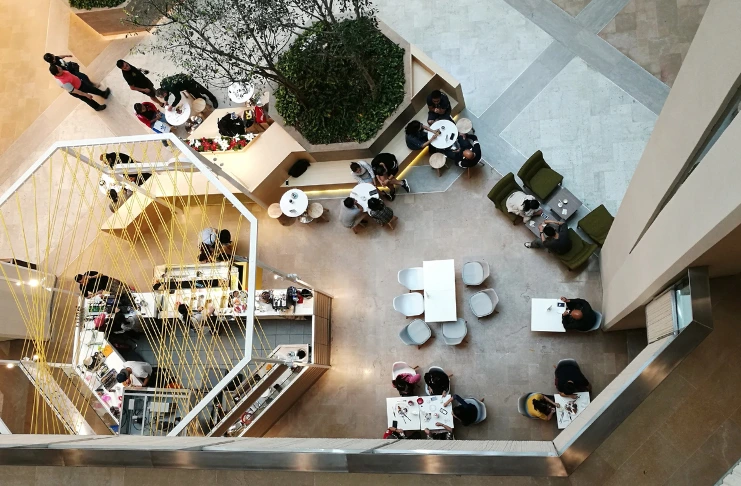
Here are some examples that illustrate how various types of restaurants utilize their space effectively:
Example 1: Casual Quick-Service Layout
- Features: provide limited seating options (typically no booths or chairs are provided), an ordering counter situated at the restaurant’s front, and a kitchen in the back of the restaurant; therefore, a minimal amount of time elapses between when an order is placed and when the meal is delivered.
- Example: Shake Shack (whose efficiency has improved because it is primarily a counter-service establishment, and thus has lowered wait times), using a specific arrangement of space to create a fast atmosphere for its customers when they dine in.
Example 2: Upscale Fine Dining Layout
- Features: offers roomy seating (combination of booths and tables), an open/semi-open kitchen space where patrons can watch the kitchen staff prepare their food while they dine, and also features a separate lounge area where guests can have drinks in an environment that is quieter than the dining room.
- Example: Per Se in New York City uses an elegant layout with a spacious, open kitchen, offering patrons a grand dining experience.
What are Some Common Mistakes to Avoid in Restaurant Floor Plan Design?

When designing a restaurant floor plan, it’s crucial to avoid common pitfalls that can negatively impact the guest experience and operational efficiency.
1. Overcrowding the Space
- Mistake: Fitting too many tables into a limited space, resulting in uncomfortable dining experiences.
- Solution: Prioritize comfort over capacity. Focus on creating a welcoming environment that encourages guests to stay longer and spend more.
2. Ignoring the Flow of Traffic
- Mistake: Failing to plan for the movement of both staff and guests, leading to bottlenecks and slow service.
- Solution: Ensure pathways are clear and wide enough for staff to move freely without bumping into customers or each other.
By addressing these mistakes, you can create a more efficient and enjoyable dining environment that benefits both your guests and your staff efficient and enjoyable dining environment that benefits both your guests and your staff.
What are Some Interactive Restaurant Floor Plan Tools?
To make the process easier, consider using interactive design tools that allow you to visualize your layout in real time:
- SketchUp: Offers 3D models and design features, ideal for restaurants that need detailed layouts.
- RoomSketcher: A user-friendly tool with drag-and-drop features, perfect for creating floor plans and experimenting with different designs.
- SmartDraw: A great tool for creating professional-looking floor plans with ease, including templates specifically for restaurants.
Using interactive restaurant floor plan tools can simplify the design process, helping you bring your vision to life with ease and precision.
Conclusion
A restaurant’s layout is the first step in creating a successful business. The layout of the restaurant will have an impact on all areas of your restaurant, as it will serve as a guide for the future of your restaurant. The layout of your restaurant should be created with a strategic vision and attention to detail so that your restaurant can create an experience that customers will remember, ensure that your restaurant’s operations are efficient and easy to manage, and help you make money. The most successful restaurant floor plans have successfully created a balance between creating a unique identity for your business and utilizing the best, proven principles of restaurant design. A restaurant floor plan should bring your concept into the physical world, provide a space for every square foot of the restaurant, and tell a story about how you create value for your customers and make them want to return. The floor plan should reflect your restaurant’s culinary philosophy as well as meet the basic needs of comfort, flow, and function for all customers in the restaurant.
Remember that your floor plan isn’t simply A flexible framework that continues to expand as your restaurant grows. The most resilient restaurants incorporate flexibility into their designs so that they can accommodate an unexpected rush of customers, change to meet demand with different types of menus or service models, and react to the impact that weather will have on sales. By incorporating adaptability into the design and development process, you will be able to create a restaurant design that stays current as trends change with time.
The most successful restaurant designs are a grid through which traffic moves naturally from one area to another without the patron or staff being aware of the effort put into the layout. Much like a well-rehearsed stage play, your restaurant design will include many interactions that occur seamlessly and without any disbelief by the patrons or staff.
When you begin the design or improvement process for your restaurant, think about the design as being a stage for numerous life experiences. Your restaurant’s layout will see and experience many first dates, successful business presentations, family celebrations, and personal reflections. It will provide the foundation for hundreds of thousands of hours spent serving your patrons and creating hundreds of thousands of memorable meals.
Whether you’re working with a cozy café corner or an expansive fine dining venue, the principles and strategies outlined here will help you create a floor plan that not only looks impressive on paper but functions brilliantly in practice. By the end of this guide, you’ll have the knowledge and tools to design a restaurant space that delights your customers, empowers your staff, and maximizes your profitability for years to come.
Let’s begin transforming your restaurant space into your most valuable asset.
Frequently Asked Questions
1. What makes a good restaurant floor plan layout?
A good restaurant floor plan layout ensures smooth traffic flow, maximizes seating capacity without overcrowding, and separates kitchen, dining, and service areas efficiently. It also enhances the customer experience and staff productivity.
2. How do I design a small restaurant?
Designing a small restaurant involves smart space utilization, choosing compact furniture, and creating a flexible layout. Focus on efficient kitchen space, strategic storage, and maintaining a cozy yet functional ambiance.
3. What is the easiest way to create a floor plan?
Using online design tools like SmartDraw, Floorplanner, or RoomSketcher is one of the easiest ways to create a floor plan. These tools offer drag-and-drop features and pre-made templates tailored for restaurants.
4. What is a good size for a small restaurant?
A good size for a small restaurant typically ranges from 800 to 1,500 square feet, depending on the concept and seating style. Smaller sizes can work well for takeout-focused or quick-service models.
5. Which layout is best for a restaurant?
The best layout depends on your concept, but common choices include straight, zigzag, or U-shaped seating for dining areas and assembly-line or island layouts for kitchens. The ideal layout balances aesthetics, efficiency, and customer comfort.
6. How do I make a floor plan layout?
To make a floor plan layout, start by measuring the available space, then sketch zones for dining, kitchen, restrooms, and service areas. Use software or work with a designer to scale and refine your plan.
7. How to properly design a restaurant?
Proper restaurant design combines functionality with ambiance—plan for smooth workflows, safety regulations, and seating comfort, while aligning with your brand theme. Lighting, acoustics, and color schemes play a key role in customer satisfaction.
8. How many seats are in a 1000 sq ft restaurant?
A 1,000 sq ft restaurant can typically seat 30–50 guests, depending on table size, spacing, and kitchen area. Fine dining needs more space per seat, while casual setups can fit more.
9. What is a restaurant layout?
A restaurant layout is the physical arrangement of all areas within the restaurant, including the dining room, kitchen, storage, service stations, and restrooms. It directly influences staff efficiency and guest experience.
10. What is a good size for a restaurant?
A good restaurant size varies by concept, but full-service restaurants often range from 2,000 to 5,000 square feet, while quick-service or cloud kitchens can operate within 500 to 1,500 square feet.