

Your kitchen is the heart of your restaurant. Get it wrong, and you’ll struggle with slow service, frustrated staff, and unhappy customers. Get it right, and you’ll have a smooth operation that boosts efficiency and profits.
This guide walks you through everything you need to know about restaurant kitchen design tips. From choosing the right commercial kitchen layout to optimizing workflow efficiency, we’ll cover the essential elements that make or break your food service operation.
You’ll discover how proper equipment placement can reduce preparation times, why storage solutions matter more than you think, and how to design a kitchen space that meets your specific needs.
Whether you’re opening a new restaurant or renovating your existing commercial kitchen, these practical steps will help you create a workspace that delivers results.
Why Does Restaurant Kitchen Layout Matter for Your Business?
Your restaurant kitchen layout directly impacts every aspect of your operation. Poor commercial kitchen design costs you time, money, and customer satisfaction. Smart kitchen layout decisions enhance productivity and foster a more effective working environment for your team.
A well-planned commercial kitchen can increase efficiency by up to 30%. That means faster service, lower labor costs, and happier customers. The difference between a cramped, disorganized kitchen and a properly designed one shows up in your bottom line every single day.
Your kitchen layout affects these critical areas:
- Food preparation speed and consistency
- Staff movement and energy levels
- Food safety and health code compliance
- Equipment longevity and maintenance costs
- Customer wait times and satisfaction
The restaurant industry moves fast. Your kitchen design either keeps up or holds you back. Every square foot of kitchen space needs to work harder as rent continues to rise and labor costs increase.
What Are the Most Popular Commercial Kitchen Layouts?

Four main commercial kitchen layout types dominate the restaurant industry. Each works best for different kinds of restaurants, menu styles, and available space constraints. Understanding these popular commercial kitchen layouts helps you pick the right foundation for your operation.
Assembly Line Layout
The assembly line layout is ideal for quick-service restaurants and high-volume operations. This commercial kitchen floor plan moves food through a straight line from food preparation to final assembly. Popular chains like Subway and Chipotle utilize this assembly-line kitchen layout to serve customers quickly.
Your cooking stations align in sequence. Raw ingredients start at one end, move through food prep areas, pass cooking equipment, and finish at the serving counter. This assembly line approach minimizes staff movement and maximizes speed.
Key benefits of assembly line layouts:
- Fastest service for simple menus
- Easy staff training and supervision
- Minimal cross-contamination risks
- Perfect for food trucks and small spaces
Island Kitchen Layout
The island layout places cooking equipment and food preparation areas at the center of your kitchen space. This popular commercial kitchen design works well for fine dining restaurants and operations with diverse menus. The island kitchen layout promotes teamwork and communication between cooking stations.
Your head chef can oversee all cooking processes from the central island. Multiple cooks work around the perimeter, accessing shared equipment and ingredients. This setup requires more square footage but offers maximum flexibility for complex food preparation.
Island layouts excel when you need:
- Complex menu coordination
- Multiple cooking methods simultaneously
- Strong teamwork between the kitchen staff
- Ample kitchen space for movement
Zone Style Layout
Zone style layout divides your commercial kitchen into dedicated work areas. Each zone handles specific tasks, including food preparation, hot cooking, cold preparation, and dishwashing. This commercial kitchen layout works best for large operations with diverse menus and specialized staff.
Your zones can operate independently while supporting the overall kitchen workflow. Hot food preparation stays separate from cold items. Dirty dishes don’t interfere with food prep areas. Each zone receives optimized equipment and storage solutions tailored to its specific function.
Zone layouts provide:
- Clear task separation and responsibility
- Reduced contamination between food types
- Scalable design for growing operations
- Specialized workflow optimization
Galley Kitchen Layout
The galley layout features parallel work lines with a central walkway. This space-efficient design maximizes functionality in smaller commercial kitchens. The galley kitchen layout works well for casual dining restaurants and event space kitchens with limited square footage.
Your cooking equipment lines one wall while food preparation and storage occupy the opposite side. Staff move efficiently between both sides without wasted steps. This galley layout makes excellent use of rectangular kitchen spaces.
Benefits of galley layouts:
- Maximum space utilization
- Cost-effective equipment placement
- Easy supervision and communication
- Ideal for moderate volume operations
How Do You Plan the Perfect Kitchen Workflow?
Kitchen workflow planning starts before you place a single piece of restaurant equipment. Map out how food moves from delivery to the customer’s plate. This planning phase determines whether your commercial kitchen design enhances efficiency or creates bottlenecks.
Start with your menu requirements. Different food types need different preparation methods, cooking equipment, and timing. Your workflow should accommodate your busiest service periods without creating chaos during slower times.
Think about these workflow stages:
Receiving and Storage: Deliveries are received and stored properly in accordance with food safety requirements. Your receiving area needs adequate space for checking orders and temporary holding before items move to proper storage.
Food Preparation: Raw ingredients transform into recipe components. This stage requires sufficient counter space, proper kitchen equipment, and easy access to both storage and cooking areas.
Cooking Process: Prepared ingredients are transformed into finished dishes using various cooking equipment. Your cooking stations require a logical arrangement and proper ventilation for multiple cooking methods.
Assembly and Plating: Finished components come together as complete menu items. This final assembly needs counter space, plate storage, and quick access to garnishes and accompaniments.
Service and Cleanup: Finished plates are moved to the servers, while dirty dishes are returned for washing. This circulation needs clear paths that don’t interfere with ongoing food preparation.
Mapping Your Kitchen Flow
Draw your kitchen space and trace the path each menu item takes from ingredient to finished plate. Look for places where paths cross or create congestion. These intersections often become bottlenecks during busy periods.
Your most popular menu items should have the smoothest, shortest paths. Less popular items can take slightly longer routes if it improves overall kitchen operations. This prioritization helps you optimize space utilization for maximum efficiency.
Consider the placement of prep tables, cooking equipment, and storage space based on how frequently staff access each area. High-use items need prime real estate. Occasional-use equipment can often be stored in less convenient locations.
What Kitchen Equipment Placement Strategies Boost Efficiency?
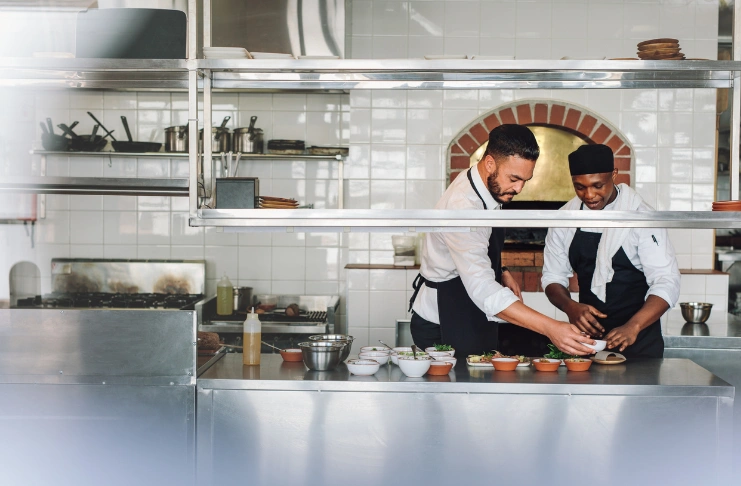
Equipment placement makes or breaks your commercial kitchen efficiency. Smart positioning reduces staff movement, speeds up cooking processes, and prevents bottlenecks during rush periods. Your restaurant equipment layout should feel natural to your kitchen staff.
Start with your cooking equipment as anchor points. Gas range oven combinations, grills, and fryers generate heat and require proper ventilation to prevent overheating. These pieces significantly influence your overall commercial kitchen layout due to their infrastructure requirements.
Place food preparation areas within easy reach of both storage and cooking equipment. Your prep tables should allow staff to easily access ingredients, complete preparation tasks, and transfer items to cooking stations without excessive walking or reaching.
Storage solutions need strategic placement throughout your kitchen space. Frequently used ingredients are most closely associated with their primary use areas. Heavy items need lower storage positions. Temperature-sensitive products require appropriate refrigeration placement.
Creating Work Triangles
Each cooking station works best with its work triangle connecting storage, preparation, and cooking areas. These triangles should be compact enough for efficiency but spacious enough to prevent crowding when multiple staff work simultaneously.
Your work triangles should avoid crossing major traffic paths through the kitchen. When staff can complete tasks within their triangle without interfering with others, your kitchen operations flow more smoothly.
Different cooking stations may share some common components. For example, multiple stations might use the same prep area during different times, or share refrigerated storage space if positioned correctly.
INDUSTRY INSIGHT
| According to the National Restaurant Association’s 2024 State of the Industry Report, 73% of operators increased their technology investments in 2024, resulting in higher operational productivity and efficiency compared to pre-pandemic levels. This surge in technology adoption demonstrates how operators are prioritizing efficiency improvements in kitchen design and operations to address labor challenges and rising costs. |
How Much Space Does Each Kitchen Area Need?
Space planning determines whether your commercial kitchen design is effective in reality or just visually appealing on paper. Each functional area needs minimum dimensions to operate safely and efficiently. Too little space creates dangerous conditions and slows down kitchen operations.
Your cooking area needs adequate clearance around all equipment. Hot cooking equipment requires minimum distances from walls, other equipment, and traffic areas. These safety regulations aren’t optional – they’re required by health and safety standards.
Food preparation areas require sufficient counter space to accommodate multiple tasks simultaneously. During busy periods, several staff members need workspace for different menu items. Your available space should accommodate peak production requirements, not just average volumes.
Essential Space Allocations
Cooking Areas: Allow 36 inches of clearance in front of all cooking equipment. This space lets staff operate safely while others pass behind them. Hot equipment requires an additional clearance, as specified by the manufacturer and local safety regulations.
Food Prep Areas: Plan for at least 24 inches of counter depth and 36 inches of width per prep station. Multiple prep stations require 48 inches of space between centers to prevent staff collisions during busy periods.
Dishwashing Zones: Require minimum 5 square meters of total area, including dish tables, washing equipment, and storage for clean items. This area must be kept separate from food preparation areas to maintain food safety standards.
Storage Space: Cold storage needs vary by menu type, but plan for at least 2-3 days of inventory. Dry storage should hold one week of non-perishable ingredients. Walk-in coolers require a minimum height of 7 feet for efficient shelving.
The size of your dining room influences the kitchen space requirements. Industry standards suggest that kitchen space should account for 25-40% of the total square footage for full-service restaurants.
Quick-service restaurants’ kitchens might need up to 35% of the total space due to higher volume food preparation demands.
Which Storage Solutions Maximize Kitchen Efficiency?

Smart storage solutions multiply your adequate kitchen space and keep ingredients organized during busy service periods. Poor storage wastes time, increases food costs, and creates food safety risks. Your commercial kitchen design needs storage that works as hard as your staff.
Vertical storage maximizes your square footage when floor space is at a premium. Wall-mounted shelving, overhead storage, and tall refrigeration units use otherwise wasted space above head level. Ensure that frequently used items are within comfortable reach.
Your storage solutions should match your menu requirements and volume needs. High-turnover ingredients need easy access to storage. Items used less frequently can be stored in harder-to-reach locations. This organization streamlines food preparation and reduces staff fatigue.
Organizing by Frequency and Type
Group similar items together and arrange by usage frequency. Most-used ingredients get prime storage locations. Seasonal or special event items can be located in less convenient areas. This system helps new staff members learn your kitchen layout more quickly.
Temperature zones need separate storage solutions. Raw proteins, dairy products, prepared foods, and vegetables each require different temperature and humidity conditions. Your refrigerated storage should maintain proper temperatures for each type of food.
Dry storage needs protection from moisture, pests, and temperature fluctuations. Sealed containers, proper shelving, and good ventilation keep ingredients fresh longer. Label everything clearly with dates and contents to maintain food rotation systems.
What Safety Regulations Must Your Kitchen Meet?
Safety regulations and health codes govern every aspect of commercial kitchen design. These requirements protect your staff, customers, and business from accidents, contamination, and legal problems. Your kitchen layout must comply from day one or face expensive modifications later.
Fire safety requires the proper placement and clearance of specific equipment. Fire extinguishers should be located in accessible areas near cooking equipment, but away from potential sources of grease fires. Your kitchen design should include emergency exits that remain clear during normal operations.
Ventilation systems remove heat, smoke, and grease-laden air from cooking areas. Proper airflow prevents dangerous accumulations and maintains comfortable working conditions. Your ventilation capacity must match the heat output of your cooking equipment.
Essential Safety Features
Fire Suppression: Automatic fire suppression systems above all cooking equipment. Manual fire extinguishers within 30 feet of any cooking area. Emergency shut-offs for gas and electrical systems are accessible but protected from accidental activation.
Flooring: Non-slip surfaces throughout all work areas. Proper drainage to prevent standing water. Easy-to-clean materials that resist stains and bacterial growth. Sealed joints to prevent pest infiltration.
Electrical Safety: GFCI protection is required for all outlets located near water sources. Adequate circuit capacity for peak equipment loads. Professional installation meeting local electrical codes.
Health and safety regulations cover food contact surfaces, employee facilities, and waste disposal. Stainless steel surfaces resist bacteria and clean easily. Hand-washing stations should be conveniently placed in all work areas.
Waste disposal systems must prevent pest attraction and contamination to ensure environmental safety.
How Do You Choose the Right Commercial Kitchen Equipment?
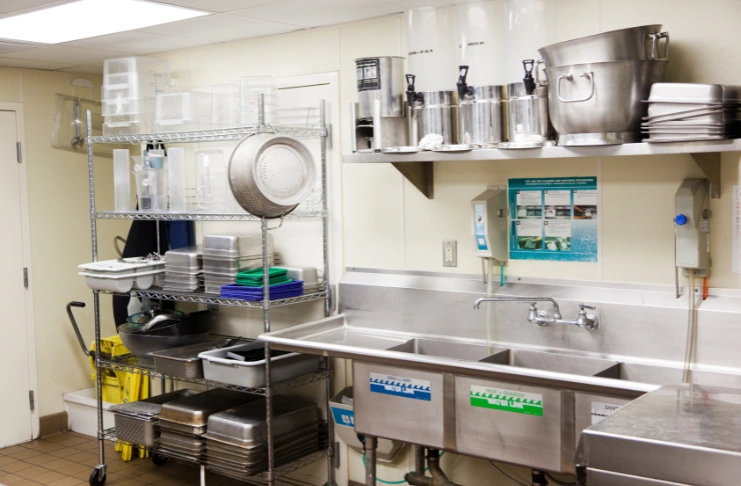
Equipment selection shapes your commercial kitchen layout and determines your operational capabilities. The right restaurant equipment improves efficiency and food quality. Wrong choices waste money and create ongoing operational problems.
Start with your menu requirements. Each dish requires specific cooking methods and types of equipment. Your equipment list should be able to handle your complete menu during peak service periods without overloading any single piece.
Energy-efficient appliances reduce operating costs and heat output. Lower heat production means smaller ventilation requirements and more comfortable working conditions. Energy efficiency becomes more important as utility costs rise.
Matching Equipment to Volume
Size equipment for your peak capacity, not average volume. Undersized equipment creates bottlenecks during busy periods. Oversized equipment wastes energy and valuable kitchen space. Find the sweet spot that handles your busiest services efficiently.
Consider equipment that serves multiple functions when kitchen space is limited. Combination ovens can steam, bake, and roast in one unit. Multi-deck pizza ovens maximize output per square foot. Versatile equipment reduces your overall equipment footprint.
Used restaurant equipment can provide excellent value for new operations. Many pieces last for decades with proper maintenance. Just ensure that the used equipment meets current safety standards and comes with service documentation.
Plan for the storage of essential tools and small equipment. Knives, thermometers, portion scales, and hand tools need convenient storage near their primary use areas. These cooking tools are just as important as major equipment for smooth operations.
What Are the Best Layout Options for Different Restaurant Types?
Different restaurant types need different commercial kitchen approaches. Your concept, service style, and menu complexity determine which layout works best for you. Copy what successful operators in your category do, but adapt it to your specific needs.
Quick service restaurants prioritize speed over flexibility. Assembly line layout dominates this category because it maximizes throughput for limited menus. Your kitchen layout should minimize order completion time while maintaining consistency in food quality.
Fine dining requires more flexibility and complex food preparation capabilities. An island layout or zone-style layout works better for restaurants with diverse menus and multiple cooking techniques. Your kitchen needs space for elaborate plating and coordination between multiple courses.
Fast Casual Operations
Fast-casual restaurants blend quick service speed with high-quality food. An assembly line kitchen layout often works, but with more sophisticated food preparation areas. Your commercial kitchen design needs to be efficient and flexible for customized orders.
Counter space requirements increase for build-your-own menu items. Customers see more of your food preparation, so both appearance and functionality matter. Your kitchen equipment should look professional and operate quietly.
Food trucks need maximum space efficiency in minimal square footage. Galley layout works best for mobile operations. Every piece of equipment must justify its space. Storage solutions need secure mounting for travel between locations.
Full-Service Restaurants
Full-service restaurants need commercial kitchen layouts that support complex menus and varying service speeds. Zone style layout often works best, with dedicated areas for different cooking methods and food types.
Your kitchen operations need coordination between appetizers, entrees, and desserts. Kitchen display systems help manage timing when multiple courses need precise coordination. Back-of-house staff require clear communication systems.
Event space kitchens must handle large volumes for specific time periods. Banquet operations require different equipment and a layout from those used in regular restaurant service. Your design should efficiently accommodate both regular service and special events.
How Do You Optimize Space in Small Commercial Kitchens?
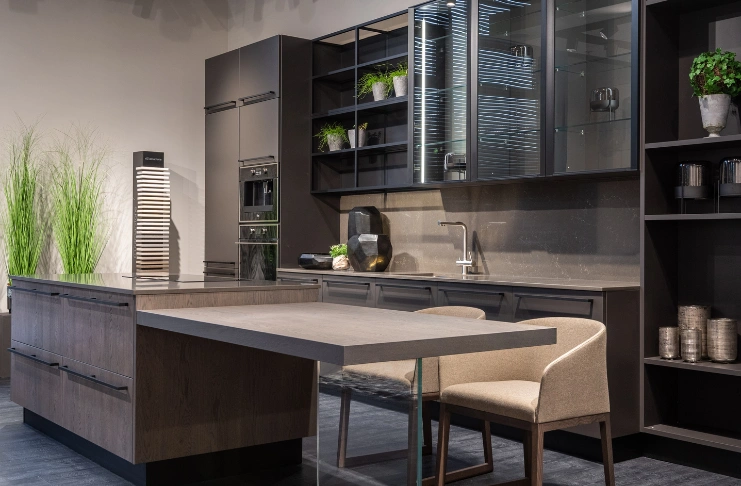
Small kitchen spaces need every square foot to work efficiently. A compact commercial kitchen design requires creative solutions and meticulous planning. You can achieve excellent results in limited space with smart equipment choices and layout decisions.
Galley layout makes the most of narrow kitchen spaces. Two parallel work lines with a central aisle maximize functionality without wasting floor space. This efficient layout is well-suited for casual dining and moderate-volume operations.
Vertical storage becomes critical when floor space is limited. Wall-mounted shelving, overhead pot racks, and tall refrigeration units allow for more storage in the same footprint. Multi-level prep tables add workspace without requiring additional floor area.
Maximizing Vertical Space
Ceiling height limitations restrict your vertical storage options. Standard commercial spaces typically offer 9-10 feet, which is usually enough for most storage needs. Higher ceilings allow for mezzanine storage areas to accommodate less frequently used items.
Mobile equipment adds flexibility to tight spaces. Rolling prep tables, portable refrigeration units, and wheeled storage carts can be easily moved as needed. This mobility allows you to reconfigure your workspace for various tasks or service periods.
Multi-function equipment reduces your overall equipment count. Combination oven-steamers, refrigerated prep tables, and cook-and-hold units serve multiple purposes. Each multi-function piece saves space and often reduces energy costs.
Ample space planning prevents overcrowding during busy periods. Your small kitchen still needs adequate clearances for safety and efficiency. Don’t sacrifice safety requirements just to fit more equipment into limited space.
What Role Does Technology Play in Modern Kitchen Design?
Kitchen display systems have revolutionized order management and timing coordination. These digital systems replace paper tickets and provide real-time order updates. Your kitchen staff can track preparation times and coordinate multiple orders more effectively.
Smart kitchen technology monitors equipment performance and predicts maintenance needs. Connected appliances provide usage data and alert you to potential problems before they cause breakdowns. This technology reduces downtime and extends the life of the equipment.
Energy-efficient technology reduces operating costs while improving working conditions. Induction cooking equipment generates less ambient heat than gas ranges. LED lighting uses less energy and produces less heat than traditional fixtures.
Integration Challenges
New technology must integrate with your existing kitchen operations and staff capabilities. Complex systems require training and ongoing support. Choose technology that enhances your workflow rather than complicating it.
Kitchen operations depend on reliability during service periods. Technology failures during busy periods create significant operational issues. Always maintain backup systems or manual processes for critical functions to ensure continuity.
Budget constraints limit the amount of technology you can implement initially. Prioritize systems that provide immediate operational benefits. You can add more sophisticated technology as your operation grows and generates more revenue.
How Do You Plan for Future Growth and Flexibility?
Your commercial kitchen design should accommodate business growth without major renovations. Fixed equipment placement limits future flexibility. Plan your initial layout with expansion possibilities in mind.
Modular kitchen designs allow easier reconfiguration as your needs change. Moveable equipment, flexible utility connections, and adaptable storage systems provide options for future modifications. This flexibility becomes valuable as your menu evolves.
Available space constraints may require creative solutions for expansion. Consider adjacent spaces that could be converted into an additional kitchen area. Vertical expansion might provide storage or prep space if the ceiling height allows.
Building in Adaptability
Design your kitchen layout with removable elements where possible. Non-load-bearing walls can be relocated if needed. Flexible utility systems allow equipment repositioning without significant infrastructure changes.
Plan equipment replacement cycles and upgrade paths to ensure optimal performance. Commercial kitchen equipment typically lasts 10-15 years with proper maintenance and care. Factor replacement costs and improved efficiency into your long-term planning.
Your restaurant concept may evolve. Successful operations often expand their menus or modify their service style. Build flexibility into your commercial kitchen design to accommodate these natural business developments.
Food business trends change over time. Plant-based options, allergen-free preparations, and specialized cooking methods may require different equipment or workflow changes. Stay informed about industry trends that may impact your future needs.
What Common Kitchen Design Mistakes Should You Avoid?
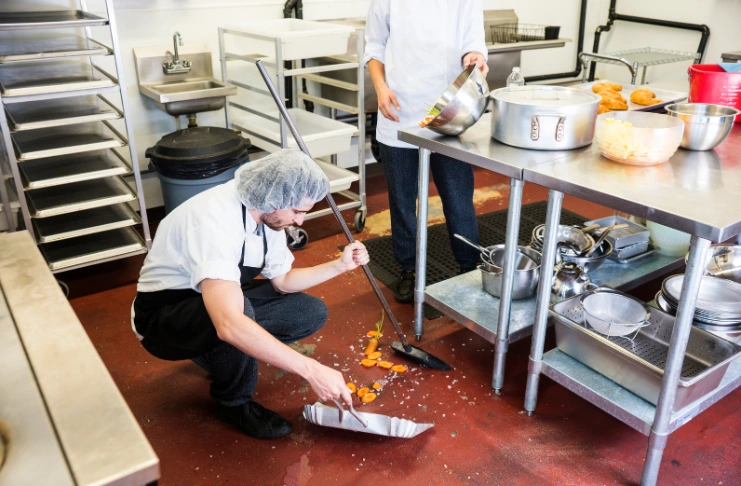
Poor workflow planning creates bottlenecks that slow service and frustrate staff. Don’t place storage far from where items get used. Avoid unnecessary traffic patterns that intersect with each other. Your commercial kitchen layout should feel intuitive and easy to navigate.
Inadequate ventilation leads to uncomfortable working conditions and equipment malfunctions. Grease accumulation can damage equipment and create fire hazards. Size your ventilation system correctly for your cooking equipment load.
Insufficient storage space forces staff to make frequent supply runs, creating cluttered work areas. Plan storage for at least one week of dry goods and 2-3 days of perishables. Include storage for cleaning supplies, linens, and equipment parts.
Planning Oversights
Electrical capacity problems appear when you add equipment without upgrading service panels. Commercial kitchen equipment draws heavy electrical loads. Plan adequate electrical infrastructure from the beginning to avoid expensive upgrades later.
Counter space shortages become particularly noticeable during busy periods when multiple prep tasks co-occur. Don’t count cooking equipment surfaces as prep space. Dedicated prep areas require sufficient square footage to accommodate your peak volume requirements.
Equipment placement mistakes create safety hazards and efficiency problems. Hot equipment too close to refrigeration wastes energy. Heavy equipment without proper floor support causes structural damage over time.
Conclusion
Effective restaurant kitchen design has a direct impact on your success. The right commercial kitchen layout boosts efficiency, reduces costs, and creates better working conditions for your team. Every decision from equipment placement to storage solutions affects your daily operations.
Focus on workflow efficiency when planning your kitchen space. Map how food moves from ingredient to finished plate. Eliminate unnecessary steps and crossing paths. Design work triangles that keep frequently used items within easy reach.
Choose your commercial kitchen layout based on your specific needs, not just what looks good. Assembly line layout works for quick service. Island layout suits complex menus. Zone style layout handles diverse operations. The galley layout maximizes limited space.
Remember that great kitchen design combines functionality with flexibility. Plan for growth, but don’t overcomplicate your initial setup. Start with solid fundamentals and add sophistication as your operation matures. Your kitchen should work as hard as you do.
Frequently Asked Questions
1. What are the 6 rules for designing a restaurant kitchen?
Plan your workflow first, ensuring adequate space between equipment, separating hot and cold areas, positioning storage near use points, maintaining proper ventilation, and complying with all safety regulations throughout your design.
2. What is the golden rule for kitchen design?
The work triangle principle – keep storage, preparation, and cooking areas within easy reach of each other to minimize staff movement and maximize efficiency during busy service periods.
3. Do and don’ts in kitchen design?
Do plan for peak capacity and maintain proper clearances. Avoid placing storage far from use points or creating crossing traffic patterns. Do invest in proper ventilation and safety systems.
4. What is important when designing the layout of a restaurant kitchen?
Workflow efficiency matters most – map how food moves from delivery to the customer’s plate. Consider equipment placement, storage accessibility, staff movement patterns, and safety compliance throughout your planning process to ensure a seamless operation.
5. How to run a restaurant kitchen efficiently?
Organize workstations logically, train staff on proper procedures, maintain equipment regularly, keep storage areas organized, and utilize technology such as kitchen display systems to coordinate orders and timing effectively.
6. What is the best kitchen layout for efficiency?
Assembly line layout offers maximum efficiency for simple menus and high volume. Island layout works best for complex operations. Choose based on your menu complexity and service style.
7. What is most important to consider when designing the layout of a restaurant kitchen?
Workflow planning takes priority over all other tasks. Design around how your staff will actually work, not just how equipment fits. Consider peak service requirements and safety regulations equally.
8. How should a commercial kitchen be laid out?
Follow the logical flow from receiving through storage, preparation, cooking, plating, and service. Create dedicated zones for different functions while maintaining clear traffic patterns and proper equipment clearances.
9. How to properly organize a commercial kitchen?
Group related activities together, position frequently used items in prime locations, separate hot and cold operations, maintain clear pathways, and ensure all areas meet health code requirements for sanitation.