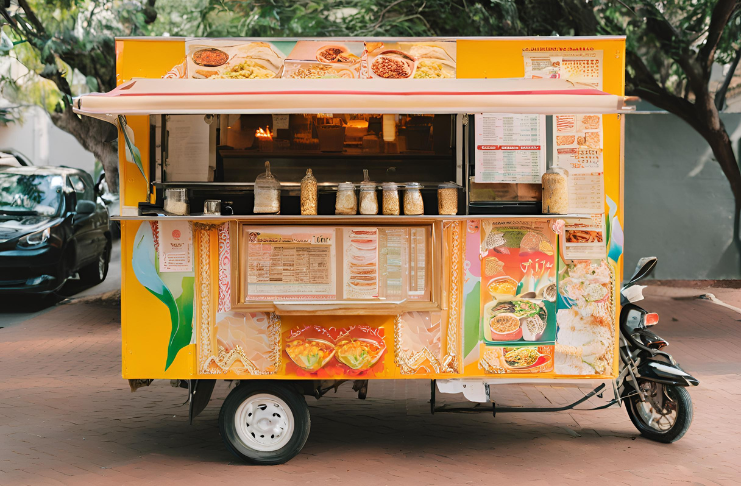

The sound of a hot griddle sizzling in India is like a live instrument playing a song about Indian food on a busy street. The smell from the griddle full of masala-dipped dosas, crunchy kathi rolls, and steaming plates of momos gives us memories of home and family rather than just yummy food memories. Almost everyone has a memory tied to a food cart – a late-night snack during college, a quick bite after a long day, or a roadside treat with friends.
This love affair with street food has given rise to the booming food cart business in India. Affordable, high in demand, and relatively easy to set up, food carts are transforming the way entrepreneurs enter the food industry. If you’ve ever dreamt of starting your own food business but hesitated due to the high costs of setting up a restaurant, a food cart might just be your golden ticket.
In this guide, we’ll walk you through every detail – from conceptualization to execution – to help you start and run a successful food cart business in India. We’ll also look at key statistics, expert insights, and industry trends to give you a competitive edge.
Why Start a Food Cart Business?
1. The Perks of Running a Mobile Food Cart Business

The Indian street food industry has witnessed significant growth, driven by urbanization, changing consumer preferences, and the increasing demand for affordable yet delicious food. According to industry reports, India’s street food market is valued at over $80 billion and is projected to grow at a CAGR of 10-11% to reach $144-152 billion by 2030.
Unlike traditional restaurants that require significant capital, food carts are relatively inexpensive to launch. The major benefits of starting a food cart business include:
- Minimal Start-up Costs: An Investor can start a food truck business starting from ₹1-₹2 Lakhs (a small investment when compared to the big investment required for opening a restaurant) to achieve a profitable operation. Higher Profit Potential: Lower cost of operations allows for a profit margin of 40% to 50%, which offers excellent earnings potential for a food truck business.
- Mobility and Flexibility of Operations: A food truck has the ability to be moved from location to location, allowing the operator to increase sales by positioning themselves in high-traffic areas throughout the city.
- Quick break-even point: Many food carts recover their initial investment in just 3 to 6 months.
- Scalability: A successful food cart business can expand into multiple carts or evolve into a restaurant brand.
2. Challenges in the Food Cart Business

While food carts offer an exciting and cost-effective entry into the food industry, they come with their own set of challenges. Entrepreneurs need to navigate obstacles in order to achieve long-term successful entrepreneurship. Factors that could create obstacles include operational complexity, regulations, and environmental conditions that can hinder profitability. If entrepreneurs identify these business challenges early, the development of solutions, along with a well-thought-out plan to address the barriers to profitability, will prove invaluable for the entrepreneur.
Street vendors throughout India face tremendous challenges in obtaining operating licenses, as well as securing prominent locations for street food sales due to ever-changing municipal ordinances. In fact, according to a report published by the National Association of Street Vendors of India (NASVI), approximately 80% of these street food vendors operate without any formal licensing, which puts them at risk of incurring legal penalties. On top of that, street food vendors face difficulties such as unpredictable weather, sterilization and disinfection of their vending carts, and competition with well-established restaurants and vendors. Consequently, street food vendors must proactively manage these operational challenges by developing contingency plans as well as viable strategies for their business operations.
- There are many legal obstacles to getting a license from local governments, including compliance with local government regulations and with FSSAI regulations.
- Finding a good place to set up your business can be very difficult because of all of the competitors and the rules and regulations for setting up your business.
- Sales fluctuate based on weather conditions, such as excessive heat or rain, or extremely cold temperatures.
- To avoid negative customer feedback and to avoid violating health codes, businesses should maintain very high standards of hygienic practices and quality.
- To maintain a profitable business, it is essential that owners have the ability to efficiently plan, manage, and operate the business to maintain a profitable business.
What are the Primary Steps to Starting Your Own Food Cart Business in India?
1. Defining Your Concept and Unique Selling Proposition (USP)

While running a food truck isn’t simply selling food, the experience is just as vital as selling the food itself. Differentiate your business through the menu items, how the food is served, and the overall interaction with the customer. Establish your Unique Selling Proposition (USP), which describes the uniqueness of your brand that separates you from the competition; this will allow for development of loyal customers who return to you time after time.
- Understanding Market Gaps: Analyze what is missing in the local food scene. Are there not enough healthy food carts? Is there an opportunity for fusion street food?
- Choosing a Specialty: Pick a specialized market that fits with you and your market. For example, choose between artisanal sandwiches, gourmet dosas, or eco-friendly vegan meals. Defining a specialty will help you establish a solid fan base.
- Branding: Create a unique and recognizable brand identity for your food trailer through a catchy name, eye-catching sign, and custom-designed menu.
EXPERT INSIGHT
| “I began experimenting with dosas, rolling out offerings, such as the schezwan dosa, paneer chilly, and spring roll dosa. In the first year, we introduced 26 innovative dosas.”- Prem Ganapathy, Founder & Managing Director, Dosa Plaza. The success of Dosa Plaza, which started as a small dosa cart in Mumbai and later expanded into a nationwide chain, highlights how a unique concept, quality cuisine and consistency can turn a simple cart into a full-fledged restaurant business. |
2. Conducting Comprehensive Market Research

Before investing in a food cart, conducting thorough market research is crucial. This step ensures that your business plan aligns with customer demands and market trends.
- Identifying Target Audience: Determine whether your ideal customers are college students, office workers, tourists, or late-night food lovers.
- Choosing the Right Location: High-footfall areas such as business hubs, railway stations, shopping districts, and IT parks are prime locations for food carts.
- Competitor Analysis: Identify successful food carts in your area and analyze their menu, pricing, and customer engagement strategies. Find gaps that your cart can fill.
Recent studies suggest that 70% of Indian consumers prefer eating out at least once a week, and street food remains their top choice due to affordability and variety.
3. Investment, Budgeting, and Financial Planning for a Mobile Food Business

To ensure that your business runs smoothly, having a budget is very important. Here is a rough guide to the costs involved in setting up a food cart:
- Food Cart & Customization: Setting up a food cart, including customization and branding, can cost anywhere between ₹40,000 – ₹60,000.
- Licenses & Permits: The cost of obtaining all necessary legal documents such as FSSAI and municipal permits will be approximately ₹5,000 to ₹15,000 for most cities.
- Cooking Equipment: Basic cooking equipment such as pots and pans will cost approximately ₹10,000 to ₹20,000.
- Raw Materials (First Month): The initial stock of ingredients may cost ₹15,000 – ₹25,000, depending on the type of food served.
- Gas, Water & Miscellaneous: Utilities and miscellaneous expenses typically range from ₹5,000 – ₹10,000.
- Marketing & Branding: Initial promotional expenses such as signage and social media campaigns can cost ₹5,000 – ₹10,000.
- Total Estimate: The overall budget for starting a food cart business ranges between ₹1,00,000 – ₹2,00,000.
An effective financial plan must be built around a contingency plan that prepares for unforeseen expense scenarios. If more funding is required, look into microfinance loans/small business grants for your business to help acquire the requisite capital.ess grants to secure initial funding if additional resources are needed.
4. Navigating Licenses and Legal Requirements

The impulse to establish a food cart is thrilling, but it is also necessary to make sure you comply with laws governing food sales in addition to creating a tasty menu. The Government of India has put forth many regulations that govern the Food Industry to ensure proper sanitation and safety for the public as well as fair business operations. Owners of food carts who do not have the required licenses run the risk of being fined, being closed down, or facing complex legal issues that could prevent them from continuing to do business.
For beginning entrepreneurs who may be unfamiliar with the legal requirements for establishing a food cart, understanding and complying with these regulations may appear overwhelming. Knowing what documentation you need and making sure that you meet those requirements will protect you from many issues that may otherwise take up a lot of time and money as well as create unnecessary legal challenges.
In order to operate a food cart business without any problems, you must acquire several specific permits in your specific geographic area. While many jurisdictions have different licensing requirements, the following are the most common types of permits required to open and operate a food cart:
- FSSAI License: Essential for food businesses. Cost: ₹100-₹5000/year. (Apply here)
- Municipal Vendor License: Approval from the local municipal corporation is necessary for public space vending.
- Street Vendor Registration: Register under the Street Vendors Act, 2014.
- Fire & Safety Compliance: Essential if using gas-based cooking.
Many food cart owners struggle with legal formalities due to lack of information. Consulting with a legal expert can help in streamlining the process and ensuring full compliance.
5. Sourcing Ingredients and Ensuring Quality Control

The foundation of a successful food cart business lies in the quality of ingredients used. The taste, hygiene, and freshness of your food will determine customer loyalty and word-of-mouth referrals. With increasing consumer awareness regarding food safety, ensuring top-quality ingredients is non-negotiable.
- Partner with FSSAI-certified vendors to source fresh and high-quality raw materials.
- Implement rigorous quality checks, including temperature monitoring and hygiene protocols.
- Use sustainable packaging to appeal to eco-conscious consumers.
Samosa Singh, a street food brand, scaled up by ensuring premium-quality ingredients and strict hygiene measures, gaining investor interest and expanding to multiple cities.
6. Branding, Digital Marketing, and Customer Engagement

In the highly competitive food industry, having a strong brand identity and an engaging digital presence is crucial. Branding goes beyond just a name and logo – it encapsulates the entire experience a customer has with your food cart.
A well-defined brand and marketing strategy creates customer loyalty, builds credibility, and enhance recognition.
- Create a Memorable Brand Identity: Design a unique logo, catchy name, and visually appealing signage that reflects your food cart’s theme and cuisine.
- Leverage Social Media: Platforms like Instagram, Facebook, and Google My Business are powerful tools for food carts. Share high-quality images, customer testimonials, and interactive posts to attract and retain customers.
- Collaborate with Food Influencers: Partner with food bloggers and Instagram influencers to boost your reach and credibility.
- Introduce Customer Engagement Strategies: Offer loyalty programs, referral discounts, and seasonal promotions to encourage repeat visits.
Biryani By Kilo (BBK) leveraged digital branding and customer engagement to scale from a single cloud kitchen to a multi-city national chain. With a strong focus on online branding, BBK achieved triple-digit revenue growth year-on-year, making it one of India’s fastest-growing food brands.
Conclusion
Starting a food cart business is a rewarding venture for food entrepreneurs looking for a low-investment, high-return opportunity. With careful planning, compliance with legal norms, and a focus on branding, you can establish a profitable street food business in India.
So, are you ready to take the first step? Research your target market, develop a unique concept, and get started on your journey toward becoming a street food sensation!
Frequently Asked Questions
1. How profitable is a food cart?
A food cart can be highly profitable due to low startup costs and high margins. Profits typically range from 40-50%, and many carts recover their investment within 3-6 months.
2. What food cart makes the most money?
Carts selling high-demand, quick-service items like momos, dosas, kathi rolls, and biryanis tend to earn the most. Unique or trendy food concepts also attract more customers.
3. What permits do I need to sell food from a cart in California?
You need a health permit, a mobile food facility permit, a seller’s permit, and a local business license. Check with the county health department for specific requirements.
4. How much is a mobile food permit in Florida?
A mobile food vendor license in Florida costs around $150–$350, depending on the location and type of permit required.
5. What does it take to start a food truck in Oregon?
You’ll need a business license, food handler’s permit, mobile food unit license, and health department approval. A commissary kitchen may also be required.
6. What permits do I need to sell food in Texas?
In Texas, you need a food handler’s certificate, a mobile food vendor permit, and a local health department inspection approval. Some cities may have additional zoning requirements.
7. How much is a food truck permit in California?
A food truck permit in California can cost anywhere between $500 and $1,000, depending on location and regulatory requirements.
8. What is a cart in business?
A cart in business refers to a small, mobile food or retail setup, often used for selling street food, beverages, or merchandise.
9. Is food cart a good business?
Yes, a food cart is a great business with low investment, high-profit potential, and flexibility. It’s an ideal entry point for aspiring food entrepreneurs.
10. Is it legal to own a cart?
Yes, owning a cart is legal, but you must obtain the necessary permits and licenses based on your city’s regulations.
11. How much does a food truck license cost in Florida?
A food truck license in Florida can cost between $50 and $500, depending on the type of food and location.
13. Is food cart legal in India?
Yes, but vendors must obtain an FSSAI license, a municipal vendor permit, and street vendor registration under the Street Vendors Act, 2014.
12. Is food cart business profitable in India?
Yes, the food cart business in India is highly profitable, with a market worth over ₹5,52,000 crore and growing at 10% annually.
14. How much does it cost to set up a food truck in India?
Setting up a food truck in India costs between ₹8-₹20 lakhs, including vehicle customization, permits, and equipment.
15. How profitable is the food business in India?
The food business in India is highly profitable, with profit margins ranging from 40-60% due to high demand and low overhead costs.