

Opening a microbrewery in Singapore is an exciting venture that blends creativity, craftsmanship, and business strategy. With the craft beer market gaining traction in the Lion City, there’s never been a better time to explore the booming beer business. However, entering this industry requires a deep understanding of local regulations, significant capital investment, and a passion for quality brews.
This guide walks you through everything you need to know about how to open a microbrewery in Singapore, from permits and startup costs to brewing equipment and operational tips.
What is the Craft Beer Culture Like in Singapore?

Singapore’s craft beer culture has evolved rapidly over the past decade.
INDUSTRY INSIGHT
| The overall beer market in Singapore was worth approximately USD 9.1 billion in 2023, expected to grow at a CAGR of 3.6%, reaching around USD 10.9 billion by 2030, driven by premium and craft beer demand. |
Local breweries like Brewlander and RedDot BrewHouse have cultivated a loyal customer base by producing innovative brewing techniques and offering unique brews that cater to local palates.
This evolving landscape presents lucrative opportunities for entrepreneurs interested in setting up a craft beer brewery in Singapore.
Benefits of Opening a Microbrewery in Singapore
Singapore’s dynamic food and beverage scene offers fertile ground for aspiring brewery owners. Starting a microbrewery here comes with several strategic advantages:
- Access to a growing market of beer enthusiasts
- Rising demand for locally brewed beers and seasonal brews
- Strong support from local restaurants and multi-tap craft bars
- Opportunities for hosting beer tastings and brewery tours
With the right concept and execution, a microbrewery in Singapore can quickly become a go-to destination for craft beer lovers and a profitable part of the local beer scene.
How to Choose the Right Business Structure?

Before applying for permits, decide on your business structure. You can register as a sole proprietorship, partnership, or private limited company with the Accounting and Corporate Regulatory Authority (ACRA). Most brewery owners opt for a private limited company due to liability protection and ease of raising funds.
Register with Singapore Customs Under the Excise Factory Scheme
To operate a microbrewery in Singapore legally, registration under the Excise Factory Scheme with Singapore Customs is mandatory. This allows you to manufacture alcoholic beverages, including high-quality craft beer, while complying with the Customs Act. Key steps:
- Apply through the TradeNet system
- Prepare a detailed floor plan of your brewing premises
- Submit Standard Operating Procedures for beer production and inventory management
- Install proper security measures such as CCTV and tamper-proof seals
Obtain Essential Licenses and Permits
Compliance with local regulations is crucial. The following are the key licenses you’ll need:
- Liquor Licence (Class 3A or 4)
- Issued by the Singapore Police Force via the GoBusiness Licensing Portal.
- Required to sell beer directly to consumers or to supply to other businesses.
- Food Shop Licence
- If your microbrewery includes a bar or restaurant setup, you’ll need this from the Singapore Food Agency (SFA).
- If your microbrewery includes a bar or restaurant setup, you’ll need this from the Singapore Food Agency (SFA).
- NEA Clearance
- The National Environment Agency ensures your brewery complies with sanitation and waste disposal regulations.
Securing the right registrations and licenses is the foundation of setting up a legally compliant and operational microbrewery in Singapore. By following the necessary steps and adhering to local regulations, you’ll ensure a smooth launch and avoid costly legal issues down the line.
How Much Capital Do You Need?
Starting a microbrewery in Singapore requires a significant capital investment. Here’s a general breakdown:
| Expense Category | Estimated Cost (SGD) |
| Brewing Equipment | 150,000 – 300,000 |
| Licenses & Permits | 8,000 – 15,000 |
| Renovations & Interior Design | 50,000 – 100,000 |
| Ingredients & Inventory | 20,000 – 50,000 |
| Staffing & Training | 30,000 – 60,000 annually |
| Marketing & Branding | 10,000 – 20,000 |
| Contingency Fund | 30,000 – 50,000 |
| Total Estimated Cost | 298,000 – 595,000 |
This estimated range of SGD 298,000 to 595,000 reflects the capital needed to launch a microbrewery that’s both compliant and competitive in Singapore’s growing craft beer market. While the upfront investment is considerable, strategic planning, efficient operations, and tapping into local support schemes can help optimize costs and accelerate your path to profitability.
Manage Operational Costs and Inventory Efficiently
Operational costs can be optimized with smart inventory management, energy-efficient brewing systems, and digital tools for order and supply tracking. Many successful brewery owners use POS-integrated inventory systems for real-time monitoring.
Tap into Government Grants and Funding Support
The Singapore government offers several support schemes that could reduce your financial burden:
- Enterprise Development Grant (EDG): Supports projects that help grow and transform your business
- Productivity Solutions Grant (PSG): Helps subsidize costs for adopting IT solutions and equipment
- Startup SG Founder Grant: Offers funding and mentorship to first-time entrepreneurs
Leveraging these government grants not only eases your initial financial load but also positions your microbrewery for sustainable growth through innovation, digital adoption, and strategic mentorship. Be sure to align your business goals with the criteria of each grant to maximize your chances of securing support.
What is the Essential Brewing Equipment to Set Up Your Microbrewery?
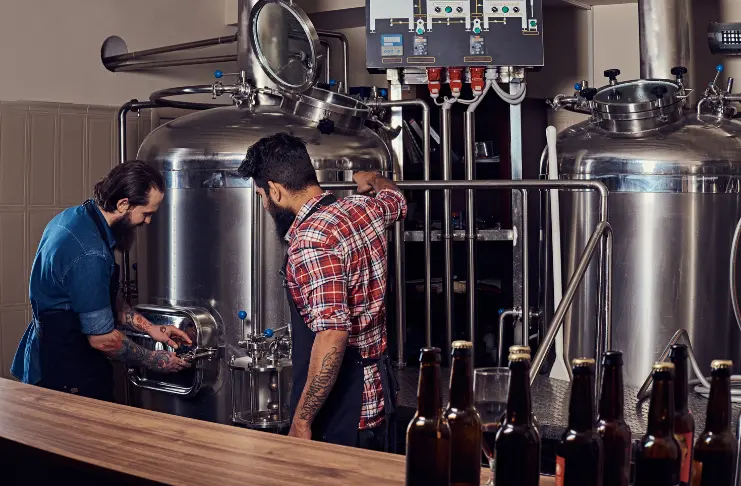
Outfitting your microbrewery with the right equipment is crucial to maintaining consistency, ensuring beer quality, and scaling production efficiently. Here’s a list of essential brewing equipment you’ll need to set up a functional and compliant craft beer brewery in Singapore:
- Fermentation tanks
- Kettles and mash tuns
- Cooling and storage units
- Automated cleaning systems
- Kegging and bottling machines
- Quality control lab tools
Investing in essential brewing equipment ensures consistency and enhances beer quality, which is key to your brewery’s success.
How to Find the Right Location for Your Brewery?

Location can significantly influence your operational costs and brand visibility. Here’s what to consider:
- Proximity to nightlife and dining districts
- Accessibility for delivery and logistics
- Floor space for brewing equipment, storage, and a taproom
- Compliance with zoning and NEA regulations
Areas like Jalan Besar, Bukit Merah, and Geylang have seen a rise in local businesses launching microbreweries due to their vibrant food and beverage scenes.
How to Develop a Strong Brewery Business Plan?

A well-documented business plan is vital to attract investors and navigate the operational journey. It should include:
- Business overview and concept
- Market analysis of the Singapore craft beer scene
- SWOT analysis
- Brewery setup plan
- Financial projections
- Marketing strategy
- Exit strategy (if needed)
A clear, comprehensive business plan not only guides your day-to-day operations but also strengthens your credibility with investors, partners, and licensing authorities, laying the foundation for long-term brewery success.
What is the Brewing Process Like and How to Control Quality?

A head brewer is responsible for overseeing the brewing process, from recipe development to quality control. Each batch must meet safety, taste, and hygiene standards. Consistency in beer quality helps maintain brand loyalty and enhances customer satisfaction.
Understand Local Consumer Preferences
Singaporeans show a growing interest in experimental and seasonal brews. Aligning your brewing techniques with local tastes is essential. Offer options such as:
- Citrus or tropical-flavored IPAs
- Low-alcohol session ales
- Asian-inspired craft beers (lemongrass, ginger, pandan)
By staying attuned to evolving local tastes and offering inventive brews, your microbrewery can stand out in a competitive market and cultivate a strong, loyal following.
How to Craft Effective Marketing Strategies?

Marketing efforts will play a critical role in attracting customers and increasing your brand’s visibility. Here’s how to start:
- Build a visually appealing website with e-commerce options
- Leverage social media to showcase behind-the-scenes content
- Partner with local restaurants and food festivals for exposure
- Use influencer marketing to reach niche audiences
A well-executed marketing strategy not only drives footfall and online sales but also helps build a distinctive brand identity that resonates with Singapore’s craft beer community.
How to Build a Loyal Customer Base?

Engagement and retention are key. Here are some ideas:
- Launch a beer subscription or loyalty program
- Host regular events such as brewery tours and tasting nights
- Encourage user-generated content on social media
- Introduce limited-edition seasonal brews to spark excitement
A survey by Nielsen found that over 56% of craft beer consumers prefer to try new flavors regularly, making limited releases an effective customer retention strategy.
How Do Collaborations with Local Businesses and Events Help?

Partnerships can accelerate growth. Consider:
- Collaborating with local restaurants for beer-pairing menus
- Co-hosting events or pop-ups with food trucks and artisan brands
- Participating in beer festivals and cultural events
Strategic collaborations not only expand your reach but also embed your brewery within the local F&B ecosystem, strengthening community ties and boosting long-term brand visibility.
How to Stay Compliant with Tax and Excise Duties?

Operating a microbrewery in Singapore means strictly adhering to regulations set by Singapore Customs, especially under the Excise Factory Scheme (Microbrewery). This ensures that every batch of beer is accurately accounted for and that duties are handled correctly.
1. Licensing and Duty Framework:
- Your microbrewery must be licensed as an Excise Factory, which includes permissions to ferment, bottle, and store beer, subject to excise duty and GST suspension while stored in the approved premises.
- Annual licence fees for breweries producing less than 1.8 million litres are S$8,400, or prorated in the first year based on licence duration.
2. Mandatory Reporting Procedures:
- You must submit a Monthly Brew Return by the 5th of each month, declaring the amount brewed, measured, and duty paid.
- A Monthly Sales Summary must also be filed biannually, breaking down sales by beer type via your POS system.
3. Duty Calculation and GST Implications:
- Excise and customs duties are calculated based on the formula: Quantity (L) × Percentage of Alcohol Strength × Relevant Duty Rate. For example, beer with ≤5.8% ABV faces S$60 per litre of alcohol plus S$16 customs duty, resulting in a total of S$76 × ABV proportion. GST is charged on top of this duty amount.
- Proper labelling and annual calibration of flowmeters or pre‑approved volume declarations are required to support accurate duty declarations.
4. Compliance and Security Requirements:
- You must maintain strict record-keeping, SOPs for production and inventory, and physical security measures like CCTV and tamper-proof seals to prevent duty evasion.
- Enterprises undergo a TradeFIRST assessment, and you must achieve at least a “Standard” band to qualify for the licence.
The annual licence fee for microbreweries with production below 1.8 million litres is S$8,400, or prorated if you begin partway through the year.
Why This Matters
Compliance is more than a regulatory checkbox; it protects your business from hefty penalties, promotes transparency, and builds credibility with authorities. By staying disciplined in reporting and duty payment, your brewery can operate smoothly and sustainably.
Let me know if you’d like help interpreting duty rates specific to your beer ABV, or drafting SOPs required for customs compliance!
What are Some Helpful Tips for Long-Term Brewery Success?

Launching a brewery is just the beginning—the real challenge lies in staying relevant, profitable, and beloved in a dynamic market like Singapore’s. From shifting taste trends to rising competition, long-term success demands strategic thinking, consistent quality, and a passion for craft that never fades. Here are key practices that help breweries grow sustainably and build a loyal following:
- Prioritize beer quality with regular taste testing and lab analysis.
- Monitor evolving consumer preferences through customer feedback and market research.
- Constantly innovate with brewing techniques and seasonal or limited-edition releases.
- Cultivate a strong brand identity that reflects your story and values.
- Maintain a dedicated team of brewers and service staff who share your vision.
Whether you’re running a neighbourhood taproom or a high-volume brewpub, these principles form the backbone of a resilient and respected brewery. As Singapore’s craft beer scene continues to expand, focusing on quality, adaptability, and team culture will keep your brand ahead of the curve.
Conclusion
Opening a microbrewery in Singapore offers both challenges and incredible potential. By understanding the local beer scene, investing in high-quality equipment, complying with microbrewery permit requirements in Singapore, and building a smart business plan, you can tap into this thriving industry. The key lies in offering value through flavorful, locally brewed beers and fostering a community of passionate beer lovers.
Frequently Asked Questions
1. How much does it cost to open a micro brewery?
Opening a microbrewery typically costs between SGD 300,000 to SGD 600,000 in Singapore, depending on scale, equipment, and location.
2. Is it legal to brew your own beer in Singapore?
Yes, home brewing is legal for personal consumption without a license, but selling beer requires proper permits and registration under Singapore Customs.
3. How profitable is a microbrewery?
Microbreweries can be profitable with good branding, location, and quality brews, often achieving profit margins of 10%–20% after initial setup costs are recovered.
4. How do you open your own microbrewery?
You’ll need to register your business, apply for brewing and liquor licenses, set up under the Excise Factory Scheme, purchase brewing equipment, and secure a compliant location.
5. What qualifies as a microbrewery?
A microbrewery is a small-scale brewery that produces limited volumes of beer, often under 15,000 barrels annually, with a focus on craft or specialty brews.
6. How much money do you need to start a micro brewery?
You typically need around SGD 300,000 to SGD 600,000 to start a microbrewery in Singapore, covering equipment, licenses, and setup costs.
7. What license do you need for a brewery?
You need registration under the Excise Factory Scheme and a Liquor Licence (Class 3A or 4) from the Singapore Police Force, among other clearances.
8. How much does it cost to start a craft brewery?
Starting a craft brewery can cost between SGD 300,000 and SGD 600,000, depending on your production scale and operational model.
9. How to start a craft beer brewery?
Begin by creating a business plan, choosing a location, securing the required licenses, investing in brewing equipment, and crafting recipes aligned with market demand.
10. How profitable are craft breweries?
Craft breweries can be profitable with consistent quality, strong marketing, and taproom sales, often earning a 10%–15% net profit margin once established.
11. What is the average profit margin for a craft brewery?
The average profit margin for a craft brewery ranges from 10% to 20%, depending on sales volume, distribution channels, and cost management.
12. How to start a microbrewery with no money?
Starting with no money is challenging, but you can explore options like crowdfunding, grants, small business loans, or partnering with investors to raise capital.