

Running a banquet hall or event venue comes with constant challenges. You’re simultaneously handling client requests, coordinating with vendors, managing staff schedules, tracking inventory, and trying to deliver flawless events while staying profitable. The pressure is real, and when things fall through the cracks, it shows.
That’s where banquet management software comes in. For event planners and venue operators dealing with corporate meetings, private parties, weddings, and large-scale events, an ideal management software can be a game-changer.
So, how exactly can you increase banquet efficiency with software? This guide answers the exact.
Why Do Banquet Operations Need Digital Tools?
Traditional banquet management relies heavily on spreadsheets, paper contracts, and endless email chains. One missed detail, one miscommunication, and suddenly you’re dealing with an unhappy client or a kitchen that’s scrambling to keep up.
Banquet management software addresses these complex processes directly. It brings everything into one platform, from the initial event booking to post-event reports. This means fewer repetitive tasks, less human error, and more time to focus on what actually matters: delivering exceptional events and building client satisfaction.
Not to mention, the hospitality industry is embracing technology faster than ever. Reports suggest that 76% of operators accept that using technology in their restaurant operations gives them a competitive advantage. When you’re competing for the same clients and trying to stand out among other event venues, that edge matters.
What Does Banquet Management Software Actually Do?

Let’s get practical. Banquet event order software gives your team comprehensive tools to work smarter. Here’s what modern catering software does:
Centralizes event details: Every piece of information lives in one place. Guest count, menu selections, dietary restrictions, setup requirements like the dance floor or live music stage, all stay organized and accessible. No more digging through emails or calling the client three times to confirm the same thing.
Automates the booking process: Clients can check availability, request quotes, and even book online. This speeds up client interactions and reduces the back-and-forth that eats up your day.
Manages resource allocation: From staff assignments to equipment tracking, the software centralizes scheduling and inventory needs. You’ll know exactly who’s working which shift and whether you have enough linens for Friday’s event.
Handles client communication: Automated reminders, contract updates, and confirmations keep everyone on the same page. Clients feel informed, and your team spends less time answering the same questions.
Tracks inventory: Catering software simplifies tracking everything from glassware to food supplies. You can monitor stock levels in real time and avoid last-minute shortages or unnecessary costs from over-ordering.
How Does Management Software Streamline Operations?
Efficiency means reducing friction at every step. Here’s how banquet management software streamlines operations in ways that actually impact your bottom line:
1. Better coordination across teams
When your front-of-house staff, kitchen crew, and event coordinators all work from the same system, execution runs smoothly. Management software keeps everyone up to date. Changes made by one team are instantly visible to others, leading to fewer mistakes and smoother execution on event day.
2. Faster response times
Client preferences change. Guest counts fluctuate. Delivery schedules shift. With real-time updates and mobile access, your team can adapt quickly without scrambling. This kind of responsiveness builds trust and improves client satisfaction.
3. Smarter resource allocation
You can track which staff members work best at corporate meetings versus private parties. You can see which event venues have availability during off-peak times and adjust pricing accordingly. Data-driven decisions replace guesswork, helping you maximize utilization and increase revenue.
4. Reduced administrative burden
Automating repetitive tasks like generating reports, sending invoices, and tracking payments frees up hours every week. Your team can focus on personalized service and creating memorable experiences instead of drowning in paperwork.
Which Features Matter Most in Banquet Management Software?

Not all software is built the same. When evaluating options, focus on specific features that address your unique challenges:
- Event management dashboard: A clear overview of all upcoming events, past events, and event success metrics in one place
- Online ordering and booking: Let clients book directly through your website, view availability, and customize packages
- Integration with other systems: The software should work with your accounting software, payroll tools, and any existing venue management platforms
- Detailed reports and analytics: Understand business performance, track client preferences, and identify opportunities for repeat business
- Customization options: Every venue is different. The software should adapt to your processes and workflows.
- Mobile access: Your team needs to access event details and update information from anywhere, especially during events
INDUSTRY INSIGHT
| The hospitality industry is going through a major shift. According to the National Restaurant Association’s 2024 report, 73% of restaurant operators have achieved higher operational productivity and efficiency than they were before the pandemic, largely due to technological investment. The global restaurant tech market hit $59.3 billion in 2024 and is projected to reach $314.85 billion by 2033, with a 16.39% CAGR from 2023 to 2033. Banquet halls and event venues are part of this transformation. The same digital tools that help restaurants serve guests faster and reduce costs can revolutionize banquet operations. |
What Benefits Does Banquet Management Software Deliver?
Switching to management software delivers numerous benefits that go beyond just saving time. Here’s what venues typically see:
Increased efficiency: Staff can handle more events without burnout because systems handle the heavy lifting of coordination and communication.
Improved client satisfaction: When clients receive prompt updates, accurate invoices, and seamless service, they notice. Satisfied clients lead to positive reviews and repeat business.
Lower costs: Better inventory tracking reduces waste. Smarter scheduling cuts down on overtime. Fewer errors mean less money spent fixing problems.
More revenue: When you can handle more events, upsell more effectively, and fill your venue during off-peak times, revenue grows. Plus, clients are willing to pay more for venues that deliver a superior planning process and flawless execution.
Better staff training: Digital tools make onboarding easier. New staff can quickly learn your processes through clear workflows and documented event details rather than relying solely on shadowing experienced team members.
Enhanced venue management: You get visibility into which spaces get booked most, which packages sell best, and where bottlenecks occur. This helps you optimize everything from pricing to layout.
How Does Catering Software Contribute to Event Success?
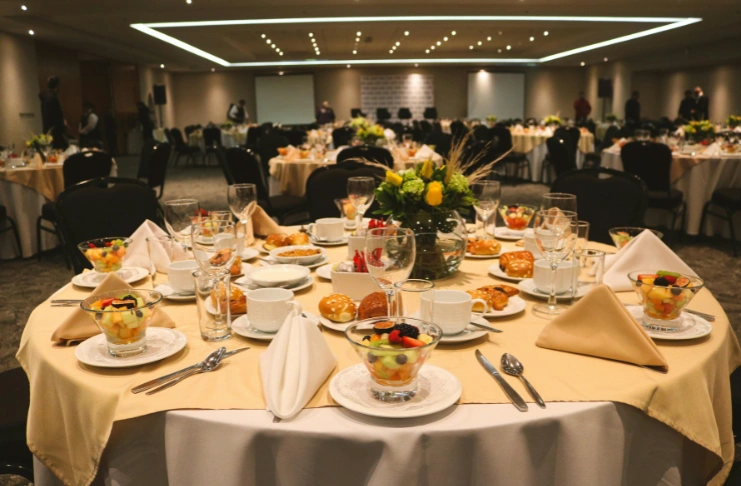
Catering is often the most complex part of banquet operations. Managing dietary restrictions, coordinating with suppliers, timing food preparation, and ensuring quality under pressure requires careful orchestration. Catering software plays a crucial role in managing these challenges.
Good catering software simplifies menu planning, tracks ingredient costs, and coordinates kitchen schedules with event timelines. It helps you track inventory in real time so you can prevent running out of key ingredients mid-event. It also manages client preferences and dietary restrictions, ensuring every guest has appropriate meal options.
Beyond logistics, catering software helps with pricing and profitability. You can see exactly what each menu costs, adjust pricing based on seasonality, and identify which offerings deliver the best margins. This kind of insight is vital for long-term success.
How Does Software Integration Improve Banquet Efficiency?
The real power of banquet management software comes from integration. When your event booking system talks to your catering software, which connects to your accounting software, everything flows. Data moves seamlessly between platforms without manual re-entry.
This integration delivers actionable insights. You can see which types of events are most profitable, which clients generate repeat business, and where you’re spending too much. You can generate detailed reports that show business performance trends and help you plan for the future.
Integration also improves the client experience. When a client updates their guest count, that change automatically flows to catering, staffing, and invoicing. Everyone stays on the same page, and the client sees a professional, cohesive operation.
What Is the Right Way to Implement Banquet Management Software?

Adopting new technology requires a thoughtful approach. Here are some key strategies:
- Start with a clear plan: Identify your biggest pain points first. Is it client communication? Inventory management? Staff scheduling? Choose software that addresses your top priorities.
- Involve your team early: Get input from the people who will actually use the software. Their buy-in and feedback during the planning process make implementation smoother.
- Invest in training: Dedicate resources and time to proper staff training so your team can use the software effectively.
- Roll out in phases: Start with one area, like event booking, then expand to other features as your team gets comfortable.
- Monitor and adjust: Track results. Are you handling more events? Are clients happier? Use data to measure success and make adjustments as needed.
How Can Digital Tools Meet Modern Client Expectations?
Today’s clients expect a modern experience. They want to browse availability online, book quickly, and receive instant confirmations. They expect transparency around pricing and flexibility to make changes easily. If your competitors are offering these conveniences, staying competitive requires similar capabilities.
Customer satisfaction increasingly depends on convenience and communication. Clients appreciate being able to log in to a portal to view event details, menus, and timelines rather than waiting for someone to email them back. This level of transparency builds trust and reduces anxiety, especially for clients planning large-scale events like weddings or corporate meetings.
Meeting customer expectations means using digital tools thoughtfully to create a better experience from inquiry to event day and beyond. Technology should enhance personalized service while freeing your team from administrative tasks.
What Does the Future of Banquet Management Look Like?
Technology in event management continues to evolve. Increasingly popular trends include AI-powered scheduling, predictive analytics for demand forecasting, and even more sophisticated integrations with third-party platforms.
Only those venues that embrace these innovative solutions while maintaining the personal touch will thrive. The goal is to free your team from non-value-added repetitive tasks so they can focus on creating memorable experiences.
As event planners and venue operators look ahead, choosing the right banquet management software will position them for exponential growth in the market. The numerous benefits of streamlined operations, improved client satisfaction, and increased efficiency make this investment essential for modern banquet operations.
Conclusion
Increase banquet efficiency with software by choosing solutions that address your specific operational challenges and support your growth goals. The best banquet management software transforms how you handle event planning, client interactions, and daily banquet operations.
With the right digital tools and commitment to staff training, your venue can deliver exceptional event success while building a sustainable, profitable business that thrives on repeat business and customer satisfaction.
Frequently Asked Questions
1. How to boost banquet sales?
Use management software to streamline booking, offer online ordering, track client preferences for personalized service, and implement dynamic pricing during off-peak times. Focus on delivering such experiences that drive repeat business and referrals.
2. What software to use for event planning?
Look for comprehensive event management software that handles booking, client communication, catering, resource allocation, and reporting. Popular options include specialized banquet event order software and integrated venue management platforms.
3. Which software is mostly used in the hospitality industry?
The hospitality industry commonly uses POS systems, property management software, catering software, and accounting software. The best solution depends on whether you’re running a restaurant, hotel, or event venue.
4. What is the best software for restaurants?
Cloud-based platforms that integrate POS, inventory management, online ordering, and staff scheduling are generally considered best. Look for solutions that offer mobile access, detailed reports, and easy integration with other systems you already use.