

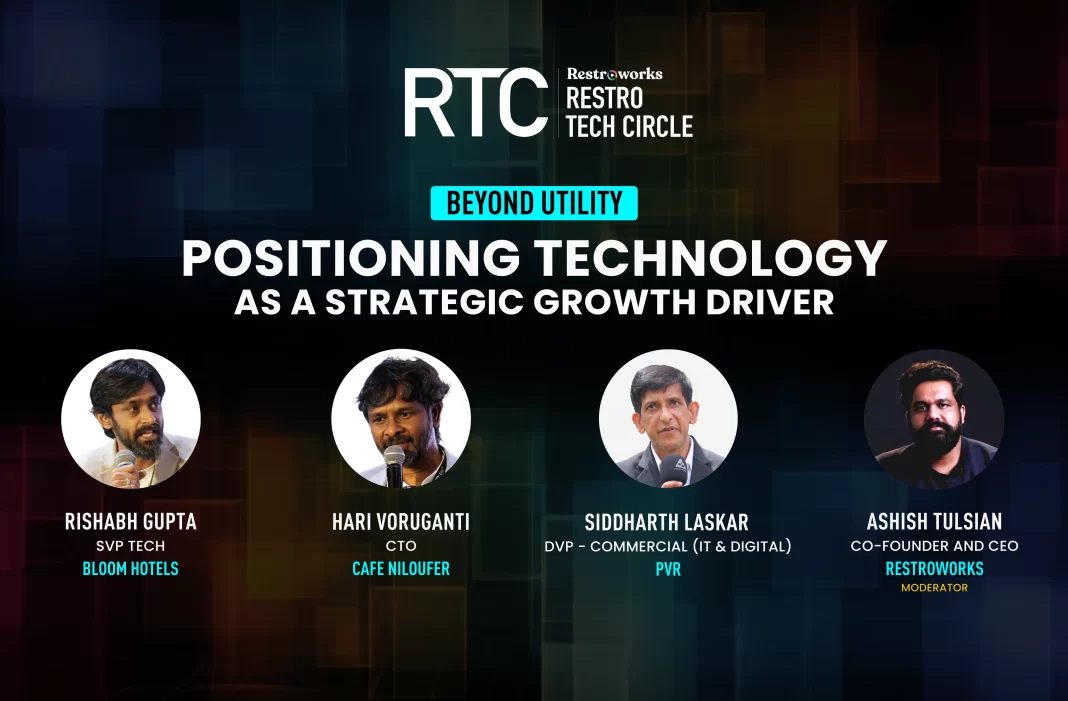

RestroTech Circle (RTC) 2025 brought together Tech leaders from India’s hospitality sector to discuss how IT is evolving from a mere backend function to a core business driver.
One of the event’s key discussions, Positioning Technology as a Strategic Growth Driver, explored what this shift looks like in practice.
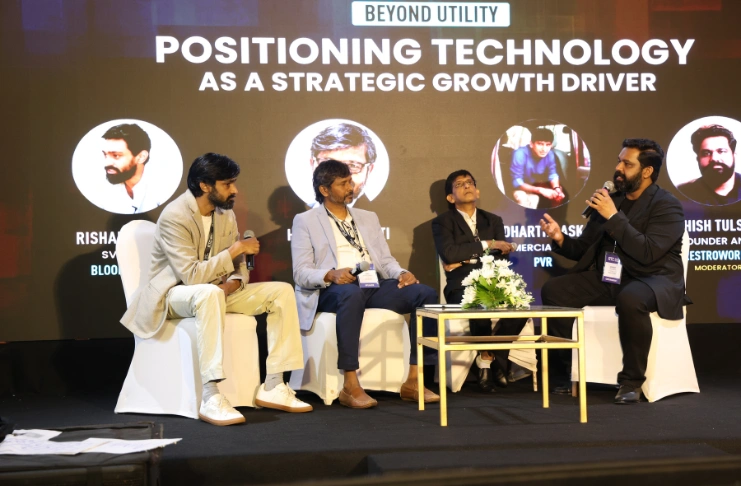
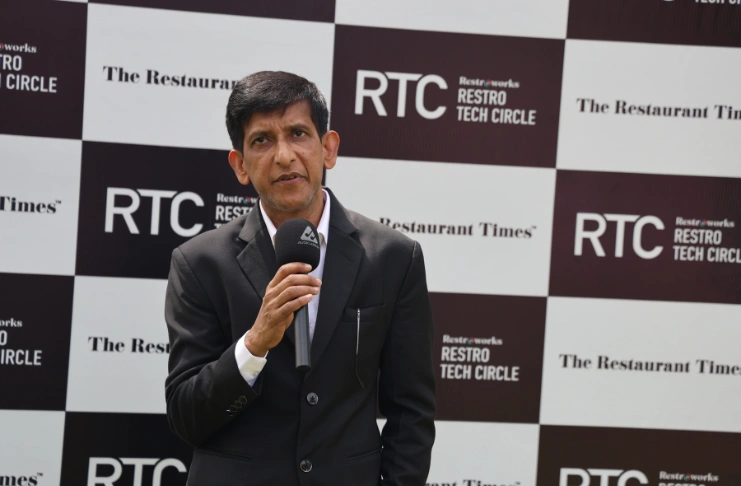
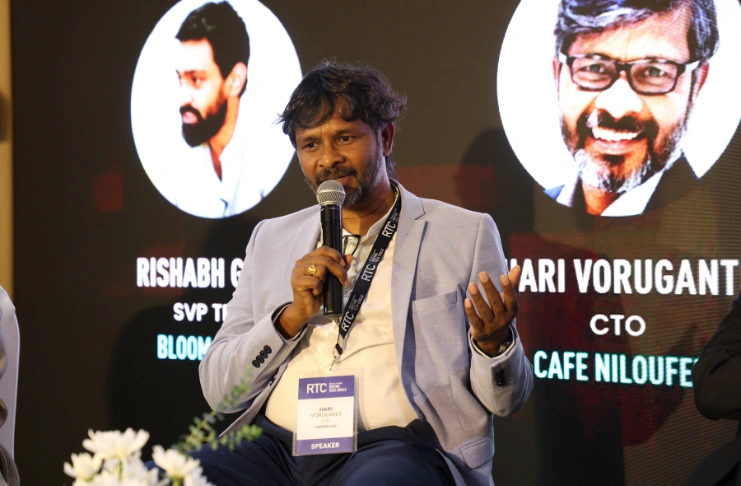
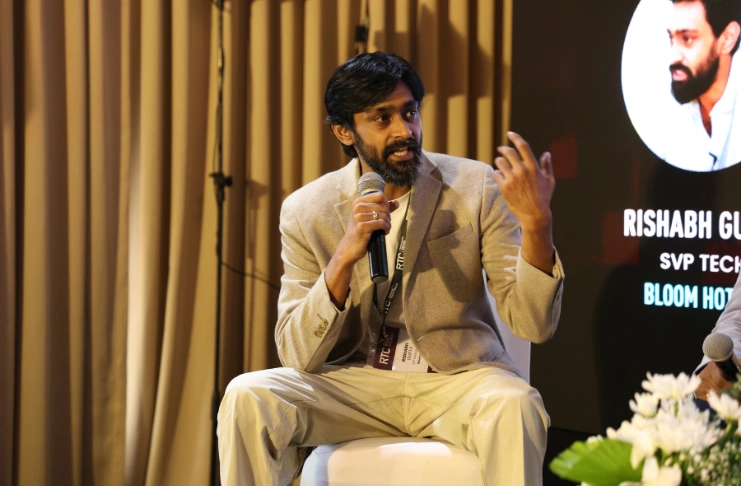
The panel was moderated by Ashish Tulsian, CEO and Co-founder of Restroworks, and featured Rishabh Gupta, SVP Technology at Bloom Hotels; Hari Voruganti, CTO at Cafe Niloufer; and Siddharth Laskar, AVP-IT and Digital at PVR.
The Build vs. Buy Decision: In-House Technology Development
One of the most striking revelations came from Rishabh Gupta about Bloom Hotels’ approach to technology. “Out of the 20 applications that the company uses internally, 14 of them have been built in-house,” Gupta shared. “We’ve been on this journey for quite some time now. It’s been like eight, nine years.”
This level of in-house development is rare in hospitality, where most operators rely on third-party vendors for core systems. Gupta explained the strategic rationale: “When we are building something specifically for Bloom, it is catering to our standard operating procedure, and there are no extra clicks. We think about every single click that a front office guy has to go through when they are checking a person in.”
In fact, data show that 70% of travelers are likely to check themselves into a hotel using an app or a self-service kiosk instead of a traditional front desk, with the figure rising to 82% among Gen Z travelers. This shift validates Bloom’s investment in proprietary check-in systems.
The in-house approach requires sustained commitment to resource management. When asked about retention challenges, Gupta noted, “Bloom has been fortunate. Over the last eight years, we may have had only five people from the technology team leave the organization. You have to make sure the technology team is happy.”
For organizations considering in-house development, the market context matters as well. Technology is becoming the operational backbone of the hotel industry, supporting efficiency, revenue growth, and guest satisfaction. However, building internal teams requires addressing both technical depth and cultural fit from the start.
Self-Check-In Systems for Seamless Guest Experience
Bloom Hotels has deployed self-check-in kiosks across all 70 properties in India. Gupta described this implementation: “You get a check-in link at the time of your arrival. When you click it, we store some of your data in our local storage. On your next booking, whenever you arrive at the hotel, you can just go scan it at the self-check-in kiosk; it’ll recognize who you are, which hotel you’ve booked, and then it’ll automatically check you in.“
Such organic evolution from data infrastructure highlights how technology strategy can dictate product roadmap. “This was something that we did not plan for outwardly,” Gupta explained. “We just knew we had all this data, and it was launched as an organic next step.”
The payoff has been commercial in ways. For example, for Bloom’s, in-house technology improved the guest experience, strengthened loyalty, and drove more direct bookings.
For the wider industry, data has it that guests using kiosks are three times more likely to buy upsells and generate nearly 70% more upsell revenue per check-in than those using the front desk.
Hari Voruganti from Cafe Nilofer, too, framed the scalability imperative: manual systems may work at a small scale, but enterprise growth is impossible without technology. Expansion, he argued, demands systems that can scale faster than people.
Flexi-Ticket: Camera-Based Refund System in Cinemas
Siddharth Laskar of PVR outlined one of the more experimental ideas discussed at RTC: flexi-tickets. The concept allows moviegoers to exit a film they do not enjoy and receive a refund, either in full or proportionate to the time spent watching it.
Addressing concerns around misuse, Laskar explained how the system closes the fraud loop. For the record, the system does not rely on manual verification at the counter. It used cameras to capture real-time snapshots of people exiting the auditorium and relay them to the POS system, which validates the exit before processing the refund. Only verified exits trigger refunds.
This camera-led validation repurposes video technology’s role as a security tool into a transactional enabler. While the pilot, tested in NCR, “was not a great success,” it proved how technology can enable entirely new business models in the F&B and entertainment sectors.
Critically, the experiment depended on tight integration between camera infrastructure and POS systems, underscoring that customer-facing innovation is only as strong as the connective tissue behind it.
Cloud Migration: Shifting from Capex to Opex
Laskar also put concrete numbers to the case for cloud adoption. In 2017–18, a traditional server-client setup for a 100-cover restaurant (with licensed software, servers, five to six workstations, printers, and related infrastructure) typically cost ₹10–11 lakh.
Moving to the cloud cuts far deeper than upfront capex. In fact, research from Berkeley Lab suggests that moving business software to the cloud can reduce energy footprints by as much as 87%.
And not to mention, how cloud systems reduce capital costs, consolidate maintenance under a single roof, and ease the shortage of skilled manpower.
Budget for Restaurant Tech Stack
When asked about technology budget allocation, Laskar confirmed the industry benchmarks: IT typically accounts for 1–2% of overall spend, with additional buffers kept for innovation. Sometimes, these numbers may climb to 3-4% as per ongoing experimentations.
Indeed, there may be some variations too. As Hari Varangati shared, in informal comparisons, he has heard figures ranging from 0.5% to 2%. But still, he challenged the logic of fixed allocations altogether. Technology spend, he argued, cannot be justified by percentage alone; it must be tied to outcomes. Ring-fencing a number first and promising results later rarely works.
Bloom Hotels operates differently. When asked about percentage-based budgets, Gupta revealed: “Bloom works a little bit differently. We have never had to justify a project for expense. The team has always put tech at the forefront. No matter what we wanted to do, we were allowed to do it. For example, our AWS bills are never monitored.“
That mindset, Gupta argued, is deliberate. A tech-first DNA is what allows a company to scale from 70 hotels to several hundred. At that point, cost becomes a secondary concern to speed, systems, and long-term leverage.
KPI Alignment: Revenue Attribution as the New Standard
The conversation also pointed to an explicit redefinition of how IT is judged. Laskar said the old KPIs, such as server uptime and maintenance, no longer matter on their own. Today, IT is measured by returns. If technology absorbs a share of customer revenue, it must show what that investment delivers.
This shift, however, demands regular reporting. Earlier KPIs focused on keeping systems running to avoid revenue loss. That logic no longer holds. IT performance is now evaluated through revenue impact, not operational stability.
Hari Voruganti reinforced the need to tailor this narrative to different stakeholders. “I discussed with a CFO to really see what he’s looking for. He said, Hari, 5% EBITDA has to be improved. So I think we need to translate that into seeing how the technology can help us get there. If you talk the same to the CIO, he’ll be more focused inward. And if you talk to the marketing guy, he’ll be more focused on getting more revenue. We need to play our cards with both these things.“
Taken together, the message was that IT can no longer operate as a cost center defended by technical metrics. Without clear links to revenue lift or cost savings, technology loses its claim to strategic relevance.
Data Privacy Under DPDP
The conversation touched on India’s Digital Personal Data Protection Act, which significantly impacts how F&B operators collect and use customer data. When discussing Bloom’s storage of guest ID proofs, concerns emerged about compliance requirements.
Gupta acknowledged that, “Bloom takes data security very seriously. For example, if the front office guy is pulling out an ID for a guest, we track who is pulling it out, when it was pulled out, whether there was a stay, and if there was not, an issue will be raised. We have those checks and balances in place.“
However, Ashish highlighted the regulatory complexity: “Your ability to ask for data and your ability to continue to store that data and leverage it later, all three get impacted massively with at least what I know about DPDP as of today. You cannot require some data to be provided. Two, you need to allow people to delete it as they want. Three, there is a time limit after which you have to delete it.”
Gupta acknowledged the operational tension this creates for hotels. He shared that, by law, hotels must retain guest IDs for potential future inquiries. However, that data is often stored in an encrypted format and is inaccessible to anyone unless legally required.
For restaurants, salons, and retail, the constraints are even tighter. Ashish noted that DPDP leaves very little room for discretionary data collection. It discourages operators from capturing any sort of customer data at all.
Such a regulatory shift forces operators to fundamentally rethink customer data strategies, potentially limiting the personalization capabilities that have become central to modern F&B operations.
The OTA Data Challenge
A persistent challenge raised by multiple panelists throughout the RTC concerned data asymmetry with online aggregators. Ashish asked: “How many of you are tired of this question about how to get data from Swiggy and Zomato?”
Laskar from PVR connected it to cinema booking platforms. Platforms such as BookMyShow control demand, but their leverage is limited by supply concentration. With only a few large cinema chains, PVR included, the dependence runs both ways. That dynamic has allowed PVR to push its own app more aggressively, steadily pulling customers into a direct ecosystem.
Gupta highlighted a more granular issue at Bloom: email ownership. OTAs such as Booking.com or MakeMyTrip do not share guest email IDs, which disrupts pre-stay engagement. Bloom works around this at the first physical touchpoint. Once a guest checks in and shares an email address, the system is activated and powers the in-stay and post-stay experience.
From there, the strategy is education and incentives. Guests are shown the tangible benefits of booking direct on their next visit. Over time, this has shifted repeat business toward Bloom’s own channels rather than OTAs.
Takeaway? Aggregators may control discovery, but long-term leverage comes from technology that enables direct relationships through proprietary apps, self-service touchpoints, and loyalty systems.
Technology as Strategic Differentiator
The conversations at RTC 2025 celebrated technology leaders actively reshaping their organizations’ relationships with IT. After all, the shift from viewing technology as a maintenance function to a strategic enabler requires KPI alignment, willingness to invest in in-house systems, direct customer relationship building, and compliance readiness.
For F&B and hospitality operators, the technology bets made today determine their competitive positioning tomorrow. As markets grow and customer expectations evolve, only organizations with strong technology foundations will capture disproportionate value.
The leaders at RTC showed that this transition is already in motion. The rest of the industry now faces a simple test of speed.


