
The Middle East restaurant technology landscape doesn’t do things halfway. When a region simultaneously runs some of the world’s most technologically advanced airport operations while wrestling with fragmented POS systems that still require on-site support, you know you’re dealing with a unique set of contradictions.
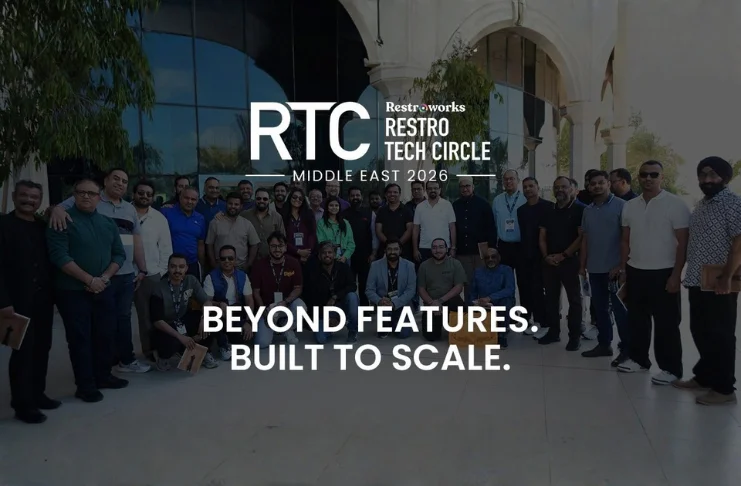
This is precisely why RestroTech Circle chose Ras Al Khaimah, UAE, for its first Middle East edition in January 2026.
While the Goa edition in September 2025 revealed how India’s restaurant technology leaders were drowning in data they couldn’t use and juggling six to seven disconnected systems, the Middle East presents a different challenge: extreme ambition colliding with operational complexity. Restaurant groups not only grow at their home base, but they also operate in many different countries, deal with various regulatory environments, and cater to customers who want the same level of digital services as if they were in Dubai.
The numbers illustrate some of these trends. The F&B sector in the region will likely see considerable growth from tourism, expatriates, and a growing tech-savvy consumer base, but it isn’t the size of the market that’s the problem; it’s how businesses can develop to the point of success without compromising their ability to grow.
Why the Middle East, Why Now
The Middle East restaurant market operates at a scale and complexity that’s rare globally. A single brand might run operations across Saudi Arabia, the UAE, Kuwait, and Egypt, each with different tax structures, labor regulations, and consumer behaviors. Add in franchising models, joint ventures with mall operators, and equity stores in airports, and you have a business architecture nightmare that most point-of-sale systems weren’t designed to handle.
As Ashish Tulsian, CEO of Restroworks, frames it: “The problem is called restaurant, not POS. When you define the problem wrong, no matter how smart the people you work with are, you end up with a suboptimal solution.”
This resonates deeply in the Middle East, where technology leaders are often forced to become integration architects by default. In sum, they are building technology solutions based on information from a previous industry (legacy systems) rather than planning for and designing an integrated software ecosystem to operate within today’s multiple countries and compliance environments.
Similarly, the Middle East is at a pivotal transition point; although many existing operations still use legacy systems, the realization that the old way is no longer viable continues to grow. Technology leaders here aren’t asking whether they should modernize; they’re asking how to do it without disrupting 24/7 operations across multiple time zones.
The Architecture Problem No One Talks About
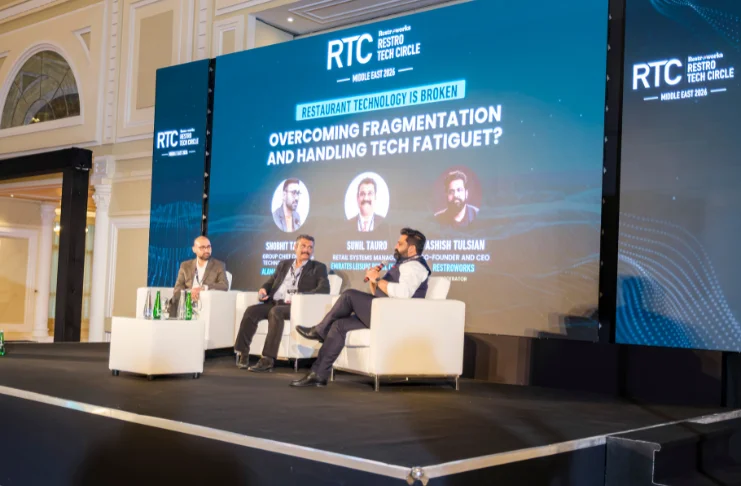
In his workshop at RTC Middle East, Ashish shared a revelation that cuts to the heart of why restaurant technology keeps breaking: “Features are overrated. Everybody can build them. What doesn’t happen is that they don’t scale because there’s no foundation.”
He drew an analogy to Burj Khalifa, where the first four years were spent building the foundation, invisible work that tourists never see but without which the world’s tallest building couldn’t exist. Restaurant technology suffers from the opposite problem: shiny features built on cracked foundations.
This architectural void manifests itself across the board:
- A loyalty program that cannot support multi-brand portfolios
- An inventory management system that crashes when adding a fourth warehouse
- Point-of-Sale (POS) systems, which require a complete reconfiguration to begin operating in different countries
These are not bugs; they are the outcome of failing to design solutions with adequate consideration for the full complexity of the current restaurant marketplace.
Tulsian’s company learned this the hard way. In 2015, despite having 700-800 customer locations and a celebrated product, they made a brutal decision: rewrite their entire architecture from scratch. “This was probably the hardest year in our lives,” he admits. “We hired a parallel tech team and said, if we know what we know today about restaurants, what should our architecture look like?”
What emerged was BFCD—Brand, Format, Cluster, and Deployment—an architecture that accommodates the messy reality of how restaurant groups actually operate. It’s the kind of foundational thinking that doesn’t make for flashy product demos but determines whether your technology will scale or collapse at 100 locations.
The Middle East needs this conversation. Here, technology leaders are managing some of the most complex multi-brand, multi-country operations in the world. The question isn’t whether they need better architecture, it’s whether they can afford to rebuild it while the business is running at full speed.
From Cost Centers to Value Drivers
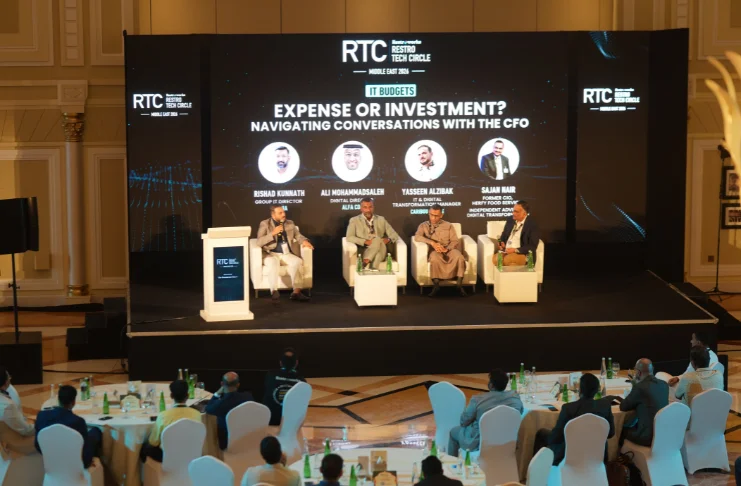
The first panel at RTC Middle East tackled a question every IT leader faces: how do you convince finance to approve technology investments when every expense is scrutinized?
Rishad Kunnath, Group IT Director at Cravia, brought perspective from both European and Middle Eastern contexts. In Europe, he explained, budget planning starts in Q4 with structured “working backward documents” that clearly articulate what problems will be solved and what value will be delivered. “If you have data and know how to articulate it, half the job is done,” he noted.
The Middle East operates differently. “There’s not always clear planning for the whole year,” Rishad observed. “But management isn’t against technology or innovation. They’re worried about success factors and adoption rates.”
This gets to a deeper truth: IT project failure rates are so high—McKinsey found that half of technology projects are poorly planned or fail outright—that CFOs have legitimate reasons to be skeptical. The challenge isn’t convincing them technology matters; it’s proving you can actually deliver results.
Ali Mohammad Saleh, Digital Director at Alfa Co, made a crucial point: in restaurants, customers are driving technology adoption whether you’re ready or not. “They’re demanding features. If you don’t deliver loyalty engines, kiosks, and new ways of online ordering, you’ll lack attraction to customers.”
This shifts the conversation from IT expense to competitive necessity. When customers expect certain capabilities, the question isn’t whether to invest, it’s whether you can afford not to.
The Pilot Strategy
One pattern emerged clearly: successful technology leaders use pilots and proofs of concept to de-risk investments and build credibility.
Ali described a partnership with a Saudi startup offering digital checklists and knowledge resources: “They said they’re a startup, we have many brands, they’ll give us the software free for the first year. We tried it, it worked well, now management is convinced, and we’ll pay this year.”
This strategy is the complete opposite of the typical procurement approach, i.e., years of RFP and evaluation before you can test something in the marketplace with very low commitment. If it works, you have now validated your approach; if it does not, you have gathered information about that process at a small financial risk.
Yaseen Alzibak, IT & Digital Transformation Manager at Caribou Coffee UAE, emphasized stakeholder alignment: “You have to find key stakeholders and get buy-in from them. Then it’s guaranteed you’ll be able to roll out a new system.”
The implication is clear: technology decisions aren’t purely technical. They’re organizational. The best technology in the world will fail if the people who need to use it aren’t bought in.
When Technology Becomes Invisible
One of the most compelling discussions centered on making technology work so seamlessly that operators don’t think about it.
Ali shared an example of developing in-house solutions to replace expensive third-party tools: “We were paying $70,000 a year for a service that only plays music in restaurants, different playlists for Italian, American, and Mexican cuisines. We developed it in-house and saved that money.”
These small savings compound. A QR generator. A music system. Process automation tools. While none of these components will provide individual transformation, the combination of them will free up budget for larger strategic investments, such as the greeting robots mentioned by Ali (no direct ROI), that will entice customers looking for the experience.
Most fundamentally: Technology should create revenue, reduce costs,s and remove friction. If it doesn’t do at least one of these things clearly, it’s probably not worth the investment.
The Support Factor
When pressed on vendor selection criteria, Yaseen was emphatic: “It’s always about support. The decisive factors are support, service speed, and the release schedule. Support is the backbone of the system. If there is no support, the system will fall.”
This might sound obvious, but it’s often overlooked in procurement processes that prioritize feature checklists and pricing over it. Yet every technology leader in the room could recount stories of vendors who went dark after the sale, leaving them stranded when systems failed during peak hours.
The Middle East context makes support even more critical. When you’re running operations across multiple countries and time zones, you can’t afford to wait for business hours on a different continent to get help. Support needs to be responsive, knowledgeable, and available when you need it.
The Data You Can’t Use
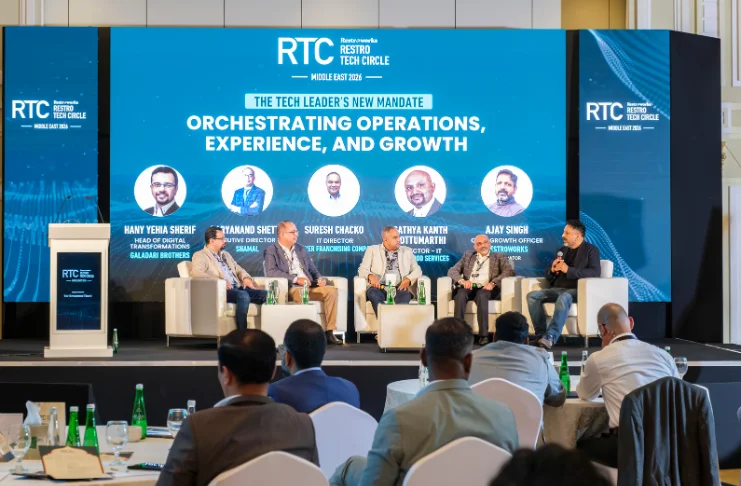
Perhaps the most sobering insight came from discussions about data. Like their Indian counterparts in Goa, Middle East technology leaders are collecting more data than ever, and struggling to extract value from it.
Rishad emphasized evaluation metrics that go beyond features: “We evaluate based on business cases, technology requirements, commercial factors, and non-negotiable requirements from cross-functional departments.”
In addition, while simply possessing data and using it well presents challenges on different levels, the data discussions during Goa demonstrated that many restaurants are so overwhelmed with their available data points that they are unable to put these data points into context and/or use analytical tools to provide actionable insights.
The Middle East opportunity is significant: if technology leaders can solve the data problem, not just collection, but analysis, contextualization, and action, they’ll unlock competitive advantages that go far beyond operational efficiency.
What’s Different About RTC
RestroTech Circle isn’t a typical conference. There are no vendor booths, no product pitches, no keynotes designed to wow audiences with visions of the future that will never materialize.
Instead, it’s built on Chatham House rules, which allow technology leaders to admit what’s not working without worrying about public relations consequences. The Goa edition proved this format works. When CTOs can say “we’re only using 10% of our data capability” or “we spend more time managing technology than serving customers,” real learning happens.
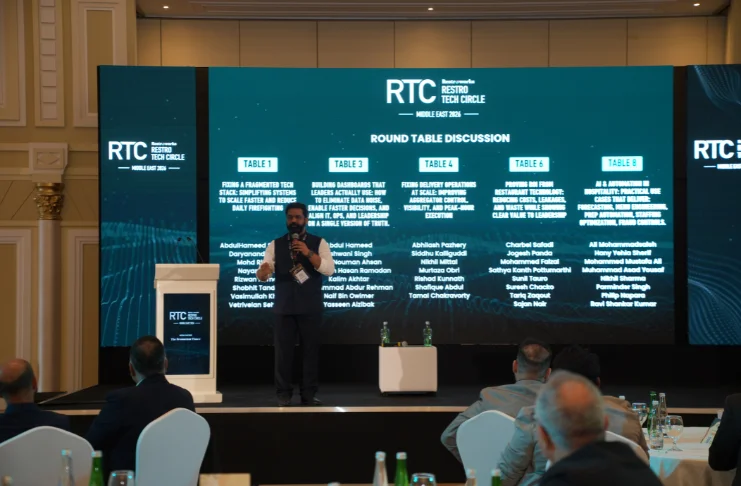
The Middle East edition brings together over 50 C-level technology decision-makers for three days of panels, workshops, and conversations focused on real problems, not theoretical ones. It’s a recognition that in a region scaling as fast as the Middle East, the shared challenges matter more than competitive advantages.
As Ashish reflected in his workshop: “This industry, the dynamism, the continuous change, every day we deal with new developments, new requirements, new business cases. Every opportunity we get today, we realize we couldn’t have served them four years back. These 14 years, 25,000 restaurants, it feels like prep for what we’re set out to do.”
That sentiment captures why RTC exists. Technology leaders in restaurants aren’t working on solved problems. They’re navigating uncharted territory where yesterday’s best practices become today’s limitations. The only way forward is together, learning from each other’s failures as much as successes.
The Real Competitive Edge
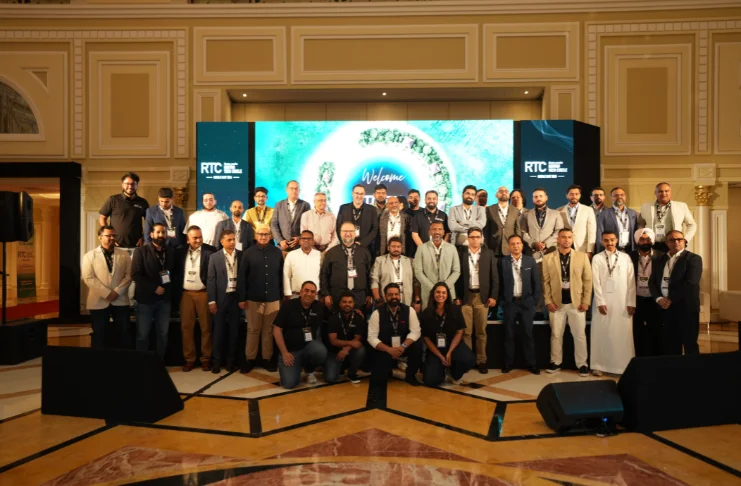
Those members of the restaurant tech sector who can master this concept will shape the future of the Middle East restaurant tech marketplace. The reality of restaurant technologies is that success will not be determined by having the most feature-rich POS system, but rather, success will be measured by developing technology solutions that are able to scale, creating architectures that support complex systems, and building executive teams that can deliver results on these technology solutions.
As Ashish put it: “Technology is not getting into the business anymore, technology is what is driving the business.”
The question for every technology leader in the room isn’t whether to invest in technology. It’s whether they’re investing in the right foundation to support the ambition their businesses demand.
During RTC Middle East 2026, leaders were called together not to praise new ideas but to face the difficult reality of implementing large-scale tech solutions. In a region where partial solutions have no value, there’s only one path forward: create a robust foundation for technology, even if you are the only one to see the outcome.