It started with a bowl of ramen in an anime. Literally!
Growing up on Japanese animation, Ish Patil was particularly moved by a scene in one of Studio Ghibli’s masterpieces, Ponyo. The way food was portrayed, the care in every movement, the steam rising, the broth shimmering, it was emotion made visible.
That scene stayed with her through Parsons School of Design and into her years of working at the DY Patil Group. It resurfaced as she realized she couldn’t find that specific sense of calm and presence in Mumbai. The city’s food was exciting, sure. But nothing felt as transportive.
So at 24, fresh off a degree in Integrated Design from one of the world’s most prestigious art schools, Patil decided to build it herself.
Restaurants, after all, have always meant more to Patil than just food. Growing up, dinners out were where she switched off and connected with the people she loved.
“An art project captures one dimension, a textile piece another. But a restaurant lets people experience all of it at once: the menu, the space, the art, and the ritual.”
And so came Donmai, the contemporary Japanese gastrobar she founded in Mumbai (although “gastrobar” kind of undersells the overall concept).
“While we use the ‘gastrobar’ label for familiarity, the experience is more akin to an Izakaya,” she explains. “A meeting point where Japan’s high-energy bar culture collides with the quiet, considered character of an art studio.”
Donmai just completed its first year, and to mark the milestone, The Restaurant Times sat down with its founder, Ish Patil, to speak on how the brand came together stitch by stitch and where she intends to take it next.
The Art of Mindfulness
Every handmade element at Donmai is rooted in history and culture. Its core philosophy draws from something both Indian and Japanese cultures share: mindfulness.
At its simplest, it’s about giving your full presence to food.
“In Japan, eating is treated with such respect that you rarely see anyone eating while walking, not because it’s forbidden, but because giving your full attention to the meal is part of the culture,” Patil explains. “Donmai was built on that principle.”
The entire space is a visible manifestation of such discipline. The idea is to take a raw ingredient and, through focused intention and craft, make it whole.
Her art comes from the same place. Crochet is her form of mindfulness. “They’re meditations made visible, and they echo the journey of the food itself: raw to refined, elemental to composed and shaped entirely by hand,” she says.
“The textiles you see throughout the space are handmade, made from repurposed materials, and reflect a slower, more sustainable way of creating, “ she adds. “In a fast-paced world, Donmai is designed for longevity, built on materials meant to age, patina, and hold stories.”
The Confluence of Parsons & DY Patil
What gives Patil an edge in the hospitality sector is the intersection she operates from.
While Parsons taught her to research deeply, understand cultural roots, and design with purpose, working within the DY Patil Group (her family business) grounded her in the realities of operating at scale.
“I learned that systems, people, and consistency matter,” she says. “Hospitality isn’t just creativity; it demands structure, disciplined operations, and building teams who feel supported and aligned. That experience taught me that passion alone doesn’t sustain a restaurant.”
Her design background, on the other hand, provides a literal ‘user-experience’ lens for the restaurant. “I see the room through the guest’s eyes,” she explains. “When I look at the dining room, I’m not just seeing furniture; I’m thinking about the way you move through the space or how the dimness of a light can slow down the whole evening. It’s art, but it’s art with meaning and function.”
Crochet in the Making

Craft has always been Patil’s language. When building Donmai, she knew the space needed to reflect that same tactile, layered approach.
“Working with Sumesh Menon was deeply collaborative. I created all the textile artworks by hand. He helped translate the mood and tactile sensibility into the larger architectural design,” she says. “The space carries both my material language and his architectural clarity.”
“Coming from an art background gave me an advantage, too,” she says. “If something felt too ambitious or complex, I could simply make it myself. That hands-on ability meant I could push creative boundaries while staying practical.”
“The frayed edges, layered fabrics, and hand-finished details you see come directly from my practice,” she says. “Nothing overly polished or sterile. I wanted the space to feel more human. These elements, integrated into the architecture itself, became an extension of the philosophy behind Donmai and the way I approach making. Every layer carries meaning.”
The Defining Moments (Year One)
Year One at Donmai, as Ish shares, was defined by three distinct moments.
Creatively, the shift came when the design, menu, textures, and cultural storytelling finally felt aligned. “It stopped feeling like a new restaurant and started feeling like a brand with its own identity,” she says.
Operationally, she realized how much leadership matters. “Managing a large team for the first time wasn’t easy, and I had to grow quickly, communicating more clearly, listening better, understanding that people need consistency and direction from me, not perfection.”
And then came the emotional moment. On her birthday, her team gave her a handwritten note.
“It was the first time I felt, in a very real way, that my leadership, while still evolving and maturing, was connecting with the people who make Donmai what it is.”
Beyond the Safe Zone
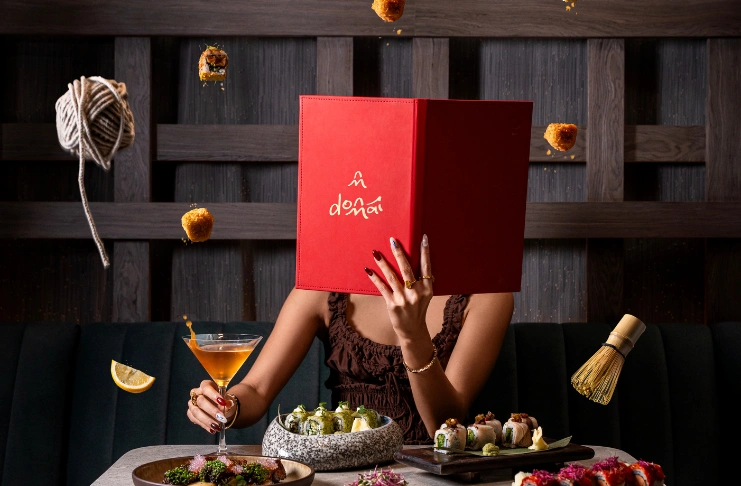
The new menu at Donmai “offers familiar textures and proteins alongside flavors that reveal a deeper and more diverse side of Japanese cuisine.” This revamp was meant to showcase regional dishes and introduce thoughtful choices for vegetarian and Jain guests.
For Ish, “bringing a Jain-friendly lens to Japanese cuisine—which traditionally relies heavily on aromatics like onion and garlic—required us to go back to the drawing board. We experimented with different profiles and techniques to ensure the depth of flavor remained.”
What excites Patil most is telling stories through specific dishes. Take Buta no Shogayaki – braised pork ribs with ginger mochi and gari pearls. Or Taco Raisu, an Okinawan dish of braised lamb with Japanese rice, queso, and salsa.
“These aren’t the dishes people expect when they think of Japanese food, but they’re deeply authentic and regionally significant,” she says. “While there is something for everyone at Donmai, our goal was to bring depth and calm to the table, inviting people to explore Japan beyond the dishes they already know.”
Zero Ego
Behind the scenes, the collaboration between Patil and Chef Oishik is very fluid and built on trust. The chef develops dishes based on regional research; she acts as the narrative filter, assessing how the dish fits into Donmai’s larger story.
“What makes it work is that we share an absolute commitment to the philosophy behind Japanese food: discipline, craft, and intention,” she says. “There is zero ego in the process. He has full creative control and trust in the kitchen space, and he trusts me to hold the emotional, cultural, and visual storytelling of the brand.”
Community at the Centre of It All
Community at Donmai isn’t a concept; it’s a practice. Their strongest expression is The Donmai Nomikai, a monthly community dining ritual inspired by the Japanese tradition of gathering over food and drink.
“Nomikai is designed as an intimate, shared-table experience where strangers become familiar, conversations flow naturally, and the menu is crafted around storytelling,” Patil says. “It’s our way of recreating the warmth and camaraderie at the heart of true Japanese hospitality.”
Beyond Nomikai, they host monthly community-led workshops in collaboration with artists, chefs, cultural educators, and emerging brands. These workshops aren’t just “events,” they’re Donmai’s version of a loyalty program. “By creating spaces where strangers become regulars, we’re moving away from transactional dining toward a relational model where the guest feels like a stakeholder in the brand’s story,” she explains.
The Dining of Today
The biggest shift Patil is seeing, and one she feels strongly about as a young founder, is that dining in India has become experiential. Guests, especially Gen Z, don’t want just great food—they want a story, a mood, a philosophy.
“Lifestyle-facing hospitality is becoming the norm,” she says. “Restaurants are no longer just restaurants, they’re cultural spaces, social hubs, extensions of personal identity. Japanese cuisine fits naturally into that. At Donmai, we lean into this through design, pacing, rituals, and ingredient philosophy, without making it feel performative.”
Another major shift is transparency. Young diners immediately sense when a brand is shallow. They gravitate toward homegrown concepts, responsible sourcing, and genuine storytelling.
“Saturation in the market has pushed founders like me to build what’s missing, not replicate what already exists,” she says.
The most hopeful shift, though, is the rise of collaboration over competition.
“As a first-time restaurateur, I’ve experienced incredible generosity from the industry,” she says. “That openness is creating a more creative, supportive ecosystem.”
Building an Ecosystem
All of Patil’s projects, Donmai, Communion cafe, and even the work she does in education and art, are tied together by storytelling, learning, and community. Long-term, she’s focused on creating an ecosystem where hospitality and education overlap. In her own words:

“The design is there to spark that curiosity; it sets the stage for people to actually connect with what they’re eating.”
She’d also love to build a creative lab within or alongside Donmai—a space where food, craft, design, and culture can evolve together. “It could host a test kitchen, artist residencies, workshops, and fermentation experiments,” she says. “That idea excites me because it merges hospitality with learning and creation.”
The Future and Legacy
As for legacy, Patil hopes young women see that they “can be creative, instinctive, and artistic” and still lead powerfully. “I want more women to feel encouraged to pursue creative careers, merge disciplines, and build spaces that reflect who they truly are.”
Her father taught her that you can learn from anyone, no matter their title or experience level. “As a young leader in a hierarchical industry, that perspective has been crucial,” she says. “It’s kept me from leading through authority I haven’t earned yet and has helped me create a culture where people feel respected, valued, and encouraged to grow alongside me.”
“Ultimately, I hope people see my work as proof that you can do anything if you’re willing to learn, stay curious, and build with purpose,” she says. “That’s the legacy I want to leave.”