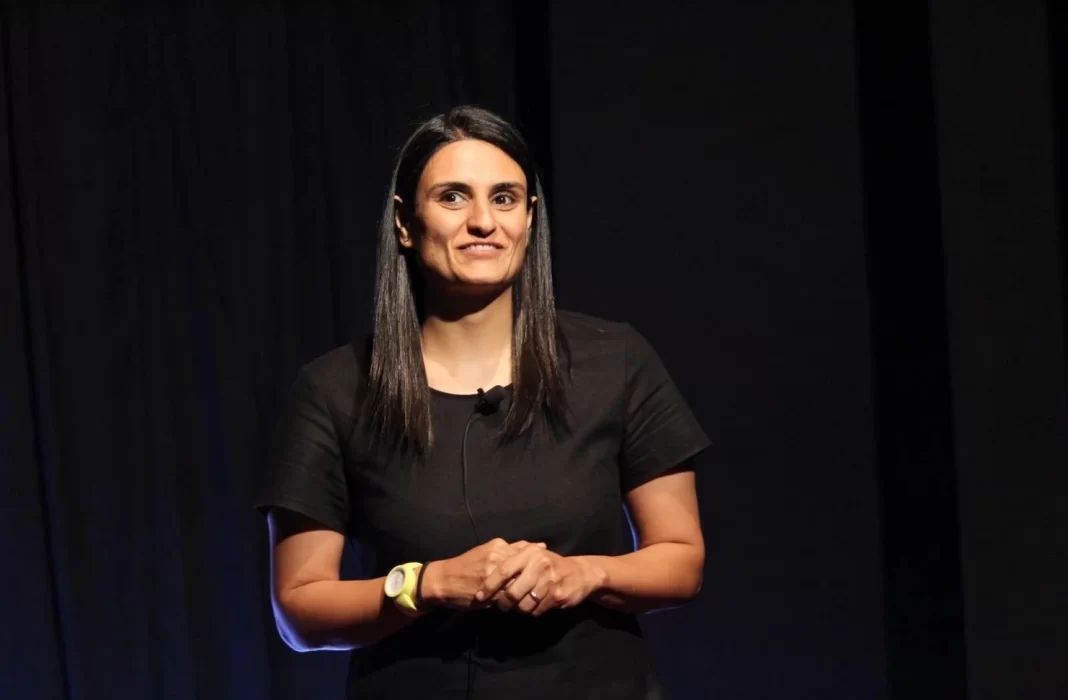

It was 2003, and Kainaz Messman Harchandrai was just 24, living her dream life. As a pastry chef for a top hospitality brand, she moved between cities every six months, exploring India’s culinary heritage and crafting desserts in five-star kitchens. Everything was going right.
But just then, she hurt her back with a bulging disc, and the doctors told her she couldn’t be a chef anymore and that she would have to consider alternate career options.
Now, what would you (or anyone, for that matter) do when your dream job becomes physically impossible? For most people, it’s a tragedy. For Kainaz, it became a turning point.
A year into her recovery, her family suggested she start something of her own. In October 2004, Theobroma started as a small neighborhood cafe on Colaba Causeway, Mumbai.
Today, twenty years later, Kainaz runs a countrywide chain of over 250 outlets across more than 40 Indian cities. In July 2025, ChrysCapital moved to acquire approximately 90% of Theobroma in a deal valued at around ₹2,410 crore. For context, the company pulled in revenue of ₹121 crore in FY21 during the pandemic, hit ₹400 crore in FY24, and projected ₹525-550 crore for FY25.
What was this journey like – you might wonder? The team at The Restaurant Times sat with Kainaz Messman to bring you the answer.
Solving the Privilege
When Theobroma started, getting an authentic European-style pastry meant walking into a five-star hotel. Only a handful of people could afford it, and even they treated it as an occasional luxury.
The Messman sisters identified this gap and decided to bring what was once a privilege to the high street.
“The idea was to start a small neighborhood…that could be accessible to more people, and more people could enjoy it,” Kainaz says.
It sounds simple now. But in 2004, the idea of premium patisserie outside luxury hotels was unproven territory. The sisters were betting that Indians would pay for quality if you met them halfway on price and convenience.
They were right.
Building from Scratch
Success didn’t arrive wrapped in gingham and tied with a bow.
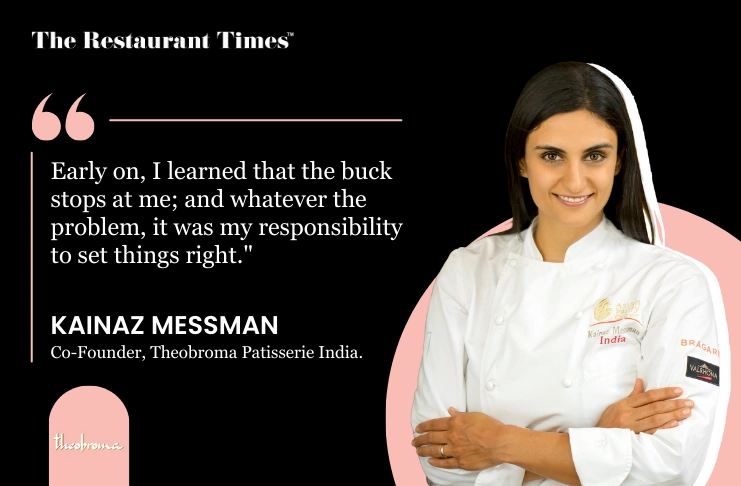
“Every stage of our journey has been difficult. Our problems merely changed as we moved through each phase of our business,” Kainaz shares.
At 25, she was responsible for everything that made a retail business run. She had to learn leadership, hiring, work-life balance, and accountability when things went wrong.
“When we started, we knew how to make cakes but were unprepared for the retail business. I had to learn quickly and on the job.”
This is the part of entrepreneurship that often doesn’t make it to Instagram. Rarely do people acknowledge chefs beyond their perfect ganache.
But Kainaz developed what she calls a positive outlook on such challenges, treating them as opportunities to grow. Over the years, Theobroma built a professional team that helped them scale while maintaining what made them special in the first place.
In her book Baking a Dream, Kainaz documented the stories, anecdotes, and characters behind the brand, offering a rare glimpse into the unglamorous reality of building something from scratch.
The Philosophy of Simple
Walk into any Theobroma outlet, and you won’t find 47 varieties of experimental fusion desserts. You’ll find brownies, pastries, cakes, and croissants made exceptionally well.
“We make simple things, and we make them well,” Kainaz says.
It’s a strategy that defies the startup wisdom of constant innovation and pivoting. Theobroma has stuck to its core for two decades, perfecting rather than expanding its range.
The menu focuses on high-quality ingredients and consistent execution. There are seasonal gifting ranges launched around festivals, keeping customers engaged without diluting the brand identity. But the core remains unchanged.
“A consistent product quality, trying to achieve it, and improve it has been our strength and purpose in life,” she says.
When Theobroma enters a new city, the first priority is setting up a central kitchen facility. Only then do they think about the location of the outlet and other things.
Having a central kitchen allows them to manufacture the product at a single facility and then distribute it to multiple locations within the city. It makes it easier for them to maintain quality standards and consistent taste. Besides, everyone in the company gives high weightage to quality and taste, right from the CEO to the chefs in the kitchen.
Design, Detail, and the Making of a Modern Bakery Brand
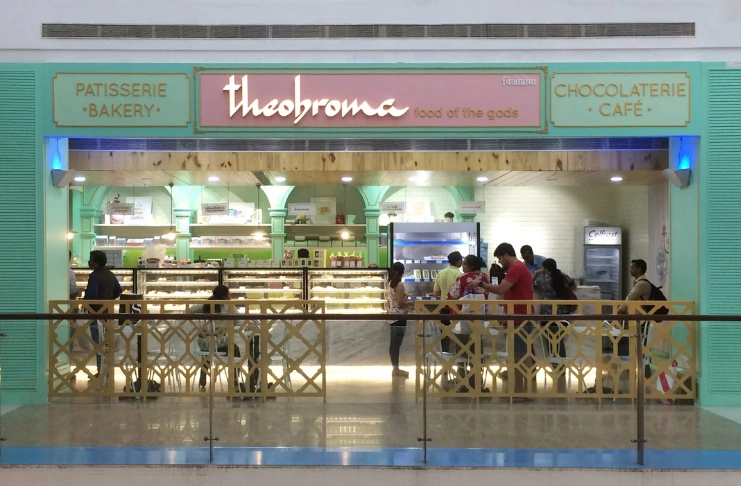
Kainaz admits she didn’t understand the importance of packaging in the early years. Over 15 years in the business, she learned that packaging had become a significant part of the product itself.
With the help of ad-world veteran and friend Elsie Nanji, Theobroma created a distinctive visual identity: a comforting fantasy world of pastries and cakes, gingham doilies, floral prints, and beautiful artwork. The same imagery carries through packaging and interior spaces.
It matters because Theobroma products are often bought as gifts. So, the presentation had to match the product quality.
The Deal
By 2017, ICICI Venture had invested in Theobroma, signaling that the homegrown patisserie had caught the attention of institutional investors. Other private equity players circled over the years, including reported interest from Bain and Carlyle.
In 2025, ChrysCapital moved to acquire a majority stake in a deal that values Theobroma at approximately ₹2,410 crore. The Messman sisters are expected to retain about 10% and remain operationally involved while ICICI Venture exits.
Why would private equity bet billions on a bakery chain?
The answer is in the unit economics, brand recognition for signature products, strong omnichannel presence across retail stores and delivery platforms, and significant room for operational upgrades and expansion.
In the world of Indian F&B, Theobroma represents a rare combination: proven product-market fit, scalable operations, and genuine brand equity.
For Kainaz and her sister Tina, it’s a landmark liquidity event. But unlike many founder exits, they’re staying on. The usual sequence in such deals is operational professionalization and aggressive scaling, followed potentially by a secondary sale down the line.
The Legacy
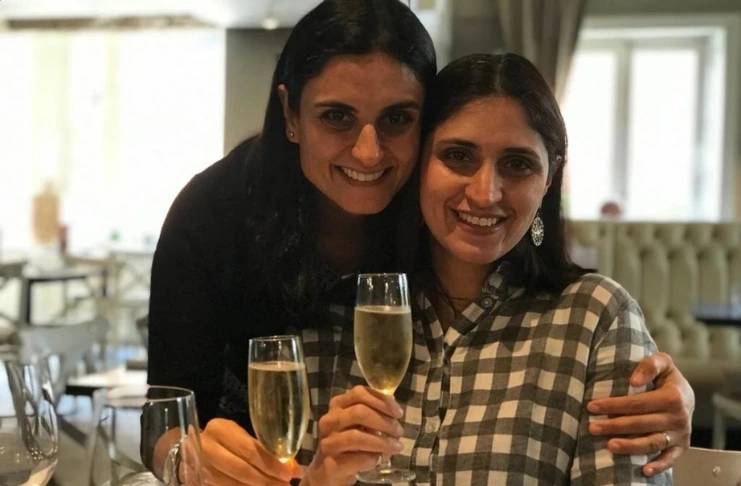
Kainaz’s advice to aspiring bakers and food entrepreneurs is: “Be prepared to work very hard.”
She’s quick to dispel the myth of overnight success. What looks effortless from the outside has decades of effort, craft, and research behind it. The key is putting in the work while genuinely enjoying what you do.
There’s something poetic about a chef who couldn’t stand in kitchens anymore building an empire that requires her to stand for quality, consistency, accessibility, and the belief that good food should be within everyone’s reach.
Theobroma started with the ambition of baking good cakes and spreading happiness through food. Despite the growth, the ₹2,410 crore valuation, and 225 outlets across India, that same value still drives the company.
The injury that ended Kainaz’s career as a pastry chef forced her to think bigger than any single kitchen. Her back couldn’t take the physical demands of the job she trained for. But it turns out her vision could carry a brand that changed how an entire country thinks about dessert.
The food of the gods, indeed. But made for everyone.