
Have you ever felt that pressure when there is a line of impatient customers in front of you and you can’t do anything because your system’s down?
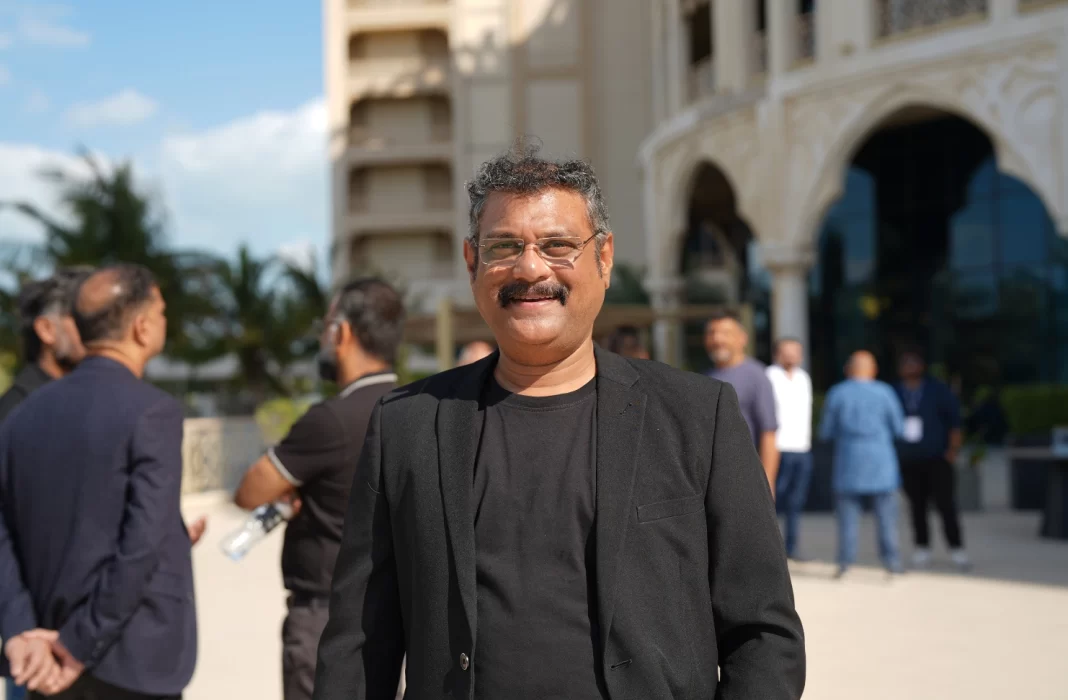
Sunil Tauro has lived that firsthand. As Systems Manager at Emirates Leisure Retail, he oversees technology for Costa Coffee’s 168 UAE outlets, 27 bars and restaurants, Pret-a-Manger, Premier Inns, and even Zanzibar’s airport concessions, and such things happen quite often.
Maybe that’s why his measure of success is a bit different. “When a customer doesn’t even realize they’ve touched a point of sale, but the order is complete, that’s a success,” he says.
For Tauro, good technology fades into the background. It becomes the business itself.
While he gets it that systems fail, downtime happens, and it always will. What matters is how IT responds. Empathy here is the key. You understand the pressure on the floor, speak plainly when things go wrong, and fix problems without creating new ones.
That mix — technical control with human awareness — is what defines how Tauro leads.
Scale, Stress, and the Architecture of Resilience
Tauro’s career has taken him from Australia and New Zealand to Singapore and, now, to the UAE. Each region brings its own challenges.
In Zanzibar, for example, infrastructure doesn’t support credit card integration. In the UAE, it’s non-negotiable.
That’s why scaling systems across geographies requires sensitivity to local compliance, infrastructure, and customer expectations. That’s exactly what makes any system resilient.
That same logic drives his view on self-checkouts and generational change. Gen Z doesn’t queue. They rarely go to counters. If the kiosk fails, they leave. That’s lost business.
Which means kiosks must be monitored centrally, with alarms that trigger support before customers even notice. They must be scalable, hardware-agnostic, multilingual, and designed as extensions of mobile journeys.
“Self-checkouts are managed by Gen Z. If you make it interesting (QR code-based, game-based, upsell-driven) that’s where value comes in,” he says.
Tauro has also catered to rugby sevens events with millions of transactions a day. In those environments, system failure is a liability.
“Peak seasons and events aren’t exceptions,” he insists. “They’re business. Systems must be thin, light, and fast enough to handle volume without breaking.”
The Next Layer of Retail Infrastructure
Post-COVID, mobile ordering and takeaway went mainstream.
Speed and convenience overtook ceremony, and quick-service formats rose to the top.
Tauro sees this as a structural shift. Systems must keep pace with fast-moving trends by seamlessly integrating kiosks and mobile apps. The back office must be stronger than ever to keep up with this pace.
On AI, Tauro is skeptical about the hype. “At the moment, it’s just chatbots,” he says. True functionality will take time. He compares it to electric cars—fast-moving, inevitable, but not yet mainstream.
He sees AI’s real potential in suggested ordering, seasonal trends, and in integrating external data, not in replacing chefs, but in helping kitchens reduce waste and respond to demand efficiently.
Tauro’s final thought ultimately circles back to the idea that the best system is invisible. Operations should flow so customers don’t realize they’re interacting with technology. That invisibility is the real measure of success.
It’s a philosophy that prioritizes customer journeys, withstands peak pressure, and ensures systems “serve” the business.