

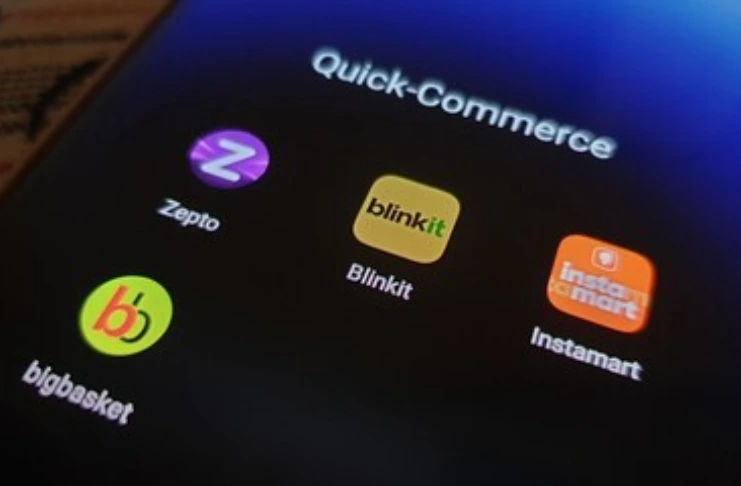

Major quick-commerce and delivery platforms, including Blinkit, Zepto, Swiggy Instamart and Flipkart Minutes, have abandoned their long-touted “10-minute delivery” branding across apps and marketing materials following a directive from India’s Union Ministry of Labour. The move comes amid rising concerns over delivery-worker safety and growing attention from regulators and labour groups on the pressures associated with ultra-fast fulfilment timelines.
The change signifies the end of the overly-compressed delivery promise that defined the rapid growth of quick-commerce in India. This area is worth over $11.5 billion and has been quickly taken up by city consumers who want to receive groceries, snacks, and other necessities almost immediately.
Sources state that the Union Labour Minister, Mr. Mansukh Mandaviya, has reached out to quick-commerce executives and requested that they eliminate the strict “10-minute” delivery commitment from their marketing efforts. The ministry’s intervention comes after increasing pressure from delivery workers, worker groups, and politicians stating that very short delivery windows lead to dangerous riding behaviours and high stress levels for gig workers.
In response, Blinkit, long associated with the promise of delivering thousands of products in “10 minutes”, revised its tagline to focus on convenience and range instead of a fixed time guarantee. Other platforms such as Zepto and Swiggy Instamart similarly replaced specific timelines with broader messaging like “groceries in minutes” or “groceries and more,” removing explicit claims of delivery within a set number of minutes.
Industry analysts note that the underlying delivery operations have not necessarily slowed; deliveries can still be extremely fast in areas with dense dark-store networks. Instead, the change is primarily a branding and compliance shift designed to align public messaging with evolving regulatory expectations.
This change comes after the recent national strikes in December 2022 and December 2025 organised by gig worker unions. These strikes generated a lot of media attention to issues concerning pay, safety, and working conditions within the quick-commerce industry. In addition to the negative impact of exaggerated delivery promises related to long work hours, dangerous driving conditions, and inadequate wages, critics also contend that digital countdown clocks (“Countdown Timer”) used by apps and delivery personnel create both psychological and physical stress for workers.
Raghav Chadda, an AAP politician, expressed his support for the branding change, arguing that slogans promoting fixed delivery times create pressure on delivery personnel, thereby impairing not only their safety but also their dignity while working; this sentiment is supported by labour advocates and gig workers’ collectives.
While some companies provide rapid product delivery behind the scenes through their network of micro-warehouses and established routes, they do not make a public promise about delivery times.
Removing the “10 minutes to delivery” terminology is a defining moment for the quick commerce industry. It signals a shift due to regulatory scrutiny about marketing that may lead to harm or the exploitation of workers. In addition, there is a growing demand for companies to adopt responsible approaches to the use of technology in providing services. The core principles of quick commerce for fast, localized fulfilment have not changed, but this change represents the beginning of an industry-wide reconciliation about the limits of convenience versus worker wellbeing.
Globally, as delivery platforms face similar scrutiny over gig labour practices, this branding reset may signal a turning point where speed and safety must be balanced to sustain long-term growth.


