

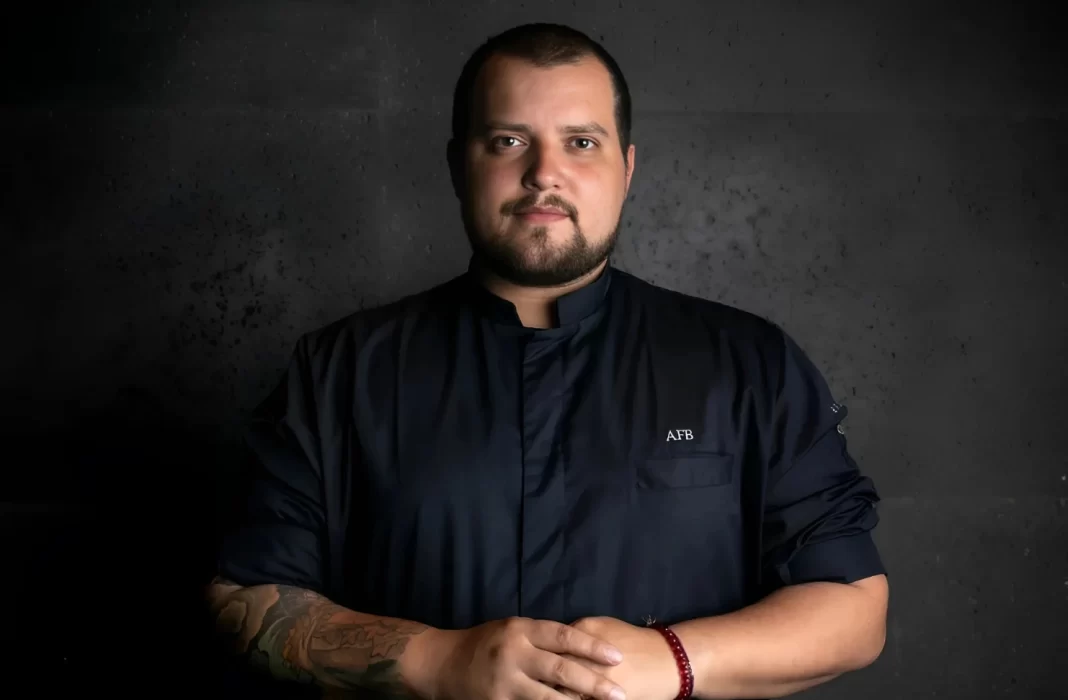

The moment Agustin Ferrando Balbi stepped off the plane in Tokyo, he made an unexpected career decision.
He couldn’t speak a word of Japanese. He had zero connections. He was walking away from European kitchens where his Spanish-Argentinian heritage would have actually made sense.
Everyone said he was crazy.
They were right. And that’s exactly why Ando worked.
The Language of Silence
Balbi spent six years in Japan working at Michelin-starred restaurants like Zurriola, Nihonryori Ryugin, and Cuisine Michel Troisgros. Six years of learning technique through observation because words failed him daily.
Most chefs would have cracked under the pressure. Most would have packed up and headed to Spain or Italy, where their background made sense. But Balbi wasn’t like most chefs.
He inherited persistence from his grandmother, Lola. Of course, he wasn’t going to give up.
The Grandmother Factor
Everything Balbi does traces back to Lola. She was his first teacher.
Every day at her house meant a different dish. Every meal told a story. Food wasn’t just nutrition – it was love made edible.
“Eating at my grandmother’s house when I was a child, every day was [exciting], all around good food,” Balbi said during an interview with Lifestyle Asia.
Lola became the unseen architect of Andō. The restaurant’s signature dish, Sin Lola or “Without Lola,” reimagines her humble Spanish rice soup with abalone and Japanese precision, served family-style in her honor.
Balbi created it because he missed his grandmother’s funeral. He was too far away, too committed to his Japanese kitchen apprenticeship to make it home.
“Being very far away and therefore not being present for my mother’s and grandmother’s funerals,” he listed as his biggest regret in life.
Love Story
Six years in Japan gave Balbi more than culinary skills. It gave him Yoshiko, his wife.
“Yes, with my wife, we met in Tokyo through a friend. It was instant, not something I can really explain, but when I saw her, I told myself ‘I want to marry this lady,'” he recalled.
Their relationship became a living example of what Andō would eventually represent – East meeting West, understanding each other, and creating something beautiful and unexpected.
The Safe Bet (or really?)
In 2016, Balbi arrived in Hong Kong and did exactly what everyone expected. He opened Haku, a Japanese restaurant. It was successful. It made sense.
But it was also slowly killing his creativity.
After six years of earning the right to cook Japanese food at the highest level, he realized he didn’t want to be trapped by other people’s definitions of what he should be cooking.
By 2020, he was ready to risk everything on something nobody could categorize. He partnered with JIA Group to create Andō, named after two words – the Spanish “doing” and the Japanese “comfort.”
The timing was insane. Summer 2020. It was the middle of a pandemic. Most restaurants were shutting down.
But maybe insane timing was exactly what an insane idea needed.
The Menu That Tells Truth
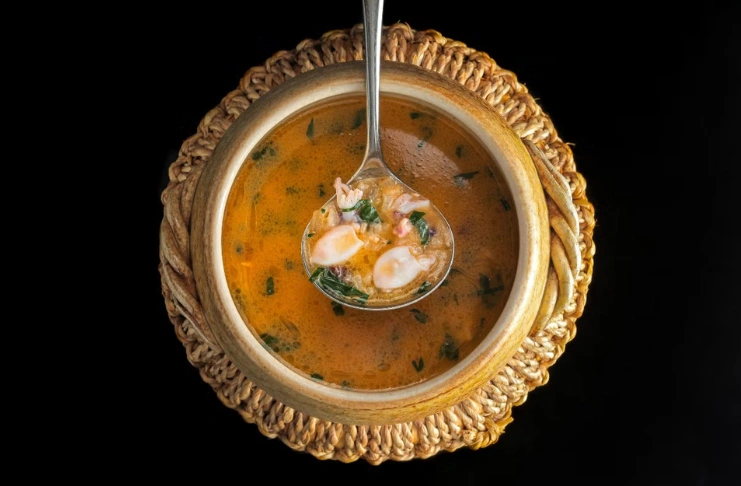
Every dish at Andō tells a piece of Balbi’s story, but none more powerfully than Sin Lola – “Without Lola.” Even its name holds the pain.
The other dishes, too, follow in its footsteps.
The other dishes continue the story. Partir means “to depart” in Spanish. The dish represents Balbi’s move to Japan – raw seafood served on honeycomb plates, each piece representing something left behind to find something new.
Risas Del Jardin celebrates Kumamoto Wagyu with corn puree and bone broth. It’s inspired by Argentine garden barbecues. Andō is the only restaurant in Hong Kong serving this specific Wagyu.
Basically, every dish at Andō connects to a memory, a moment, a person who shaped it.
The Impossible Becomes Inevitable
Six months after opening during the worst restaurant year in modern history, Andō earned its Michelin star. Hong Kong, a city that knows good food, embraced this weird fusion because it tasted real.
“We’re so lucky to be here in Hong Kong, and we are very happy to be open,” Balbi said.
The restaurant was fully booked for two months straight during pandemic restrictions. The so-called “impossible gamble” was paying off because it was never actually a gamble – it was just honest.
Giving Back the Lola Way
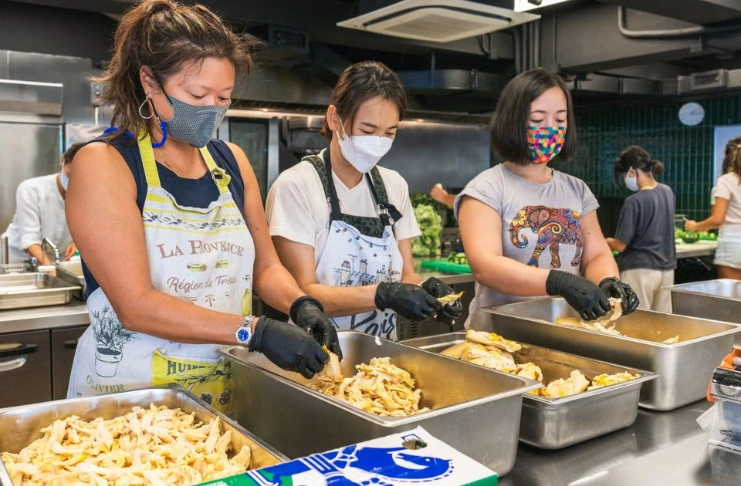
Success could have made Balbi comfortable. Instead, it made him remember where he came from. Once a month, Andō’s kitchen turns into a charity operation, cooking for Hong Kong’s homeless and refugees through More Good.
“We don’t do our normal cuisine, because the guests are not used to those flavors. It’s very important that we do something good for them, that makes them happy,” Balbi explained. (Source: Fine dining lovers)
The impulse goes back to Lola. She believed no one should ever be turned away from the table. Balbi grew up in Argentina, seeing what hunger looked like, and those early lessons now shape how he gives back.
The Authenticity Test
Most fusion restaurants fail because they’re intellectual exercises. Chefs throw ingredients together, hoping something clicks. Balbi’s fusion works because it’s autobiographical.
“Andō is very easy for me to do, because nothing is forced,” he explained. “It’s a combination of what I grew up eating, with my grandmother, she was from Spain, and then I mix it with what I learned in Japan.”
The Spanish elements are rooted in the dishes his grandmother cooked. The Japanese techniques come from six years of hard apprenticeship in Tokyo.
What ends up on the plate is nothing short of a lived experience.
The Koi Fish Philosophy
Balbi has a massive tattoo of koi fish on his arm. The legend goes that koi swim upstream against impossible currents, trying to reach a waterfall. Most turn back. But one koi spent a hundred years jumping, trying to reach the top. When it finally succeeded, the gods turned it into a dragon.
“I think this story really captures my motto in life,” he told Lifestyle Asia.
From Buenos Aires to Tokyo to Hong Kong. From a vegetable market helper at age 12 to a Michelin-starred chef. From broken Japanese to perfect Spanish-Japanese fusion.
The impossible journey was the only one worth taking.
What Comes Next
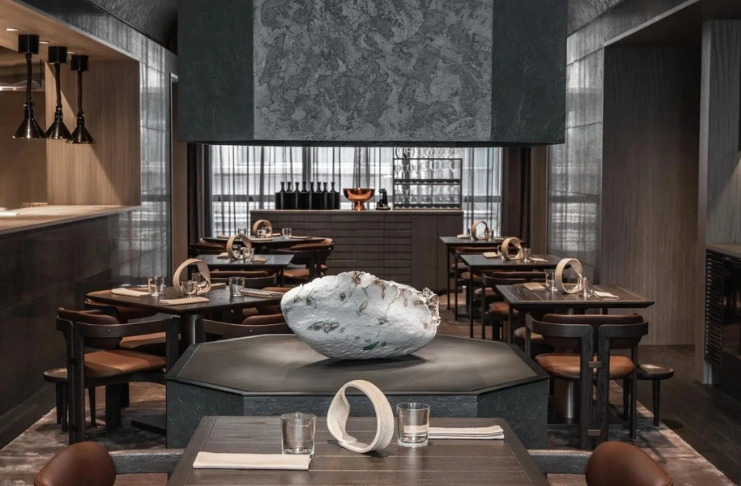
Today, Andō operates with 30 seats and reservations booked months ahead. Awards keep coming – Asia’s 50 Best Restaurants, Tatler Restaurant of the Year, consecutive Michelin stars.
Yet Balbi holds to the motto that carried him through Tokyo’s kitchens: “It doesn’t matter how slow you go, as long as you don’t stop.”
The decision, once dismissed as reckless, has become one of Hong Kong’s defining culinary stories. Andō today advocates food that carries memory, risk, regret, and resilience.
The lesson? Sometimes the path that looks impossible is the only one worth taking.


