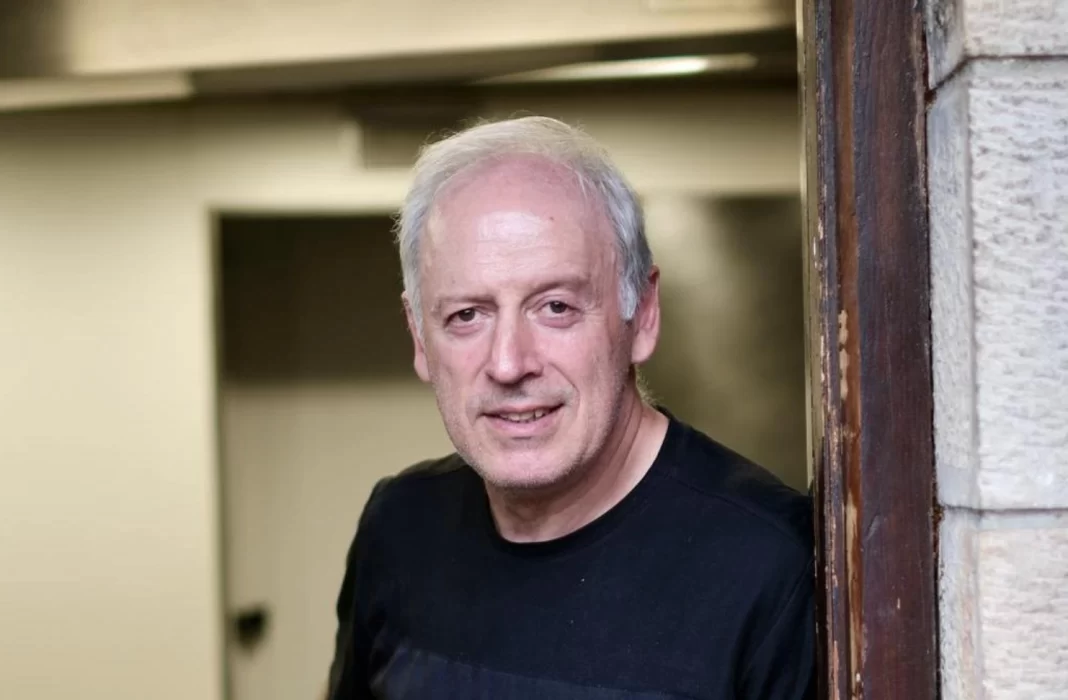

Victor Arguinzoniz, known to locals as Bittor, has been doing the exact same thing every morning for the last 34 years at Asador Etxebarri. He stacks wood in the fogón (brick hearth) to create a flame and carefully supervises it. He is very particular about woods when doing so. Holm oak goes in for meats, vine shoots for vegetables, and sometimes orange wood, depending on what the day’s ingredients demand. The entire process can take up to three hours. By the time guests arrive for lunch, the embers are white-hot, clean, radiant carbon with no visible smoke.
He basically cooks over fire.
Humans have been doing this for millennia. But the precision and care with which this is done at this Basque restaurant have earned it the number two spot on The World’s 50 Best Restaurants list in both 2024 and 2025. Chefs from around the world make pilgrimages to Atxondo to understand how someone who never trained in a professional kitchen can become one of the most respected fire cooks on earth.
The Daily Ritual
The kitchen at Etxebarri has six adjustable grills, each one designed and built by Arguinzoniz himself. They work on pulley systems that raise or lower the cooking surface by millimeters.
“For me, the most important thing is the customer, the one who comes to Etxebarri, and my motivation is that they enjoy the gastronomic experience in our house,” Arguinzoniz told deia. Recognition is welcome, he says, but he never seeks it. All he focuses on is his daily ritual.
Mohamed Benabdallah, the restaurant’s sommelier and front-of-house manager, rarely sees his boss leave before eight in the evening. “He is so obsessively dedicated. For him, Etxebarri is a restaurant and more like a son,” Benabdallah shared with Fine Dining Lovers. Excellence is indeed elusive, but Arguinzoniz pursues it every single day.
A Life Shaped By & Around Fire
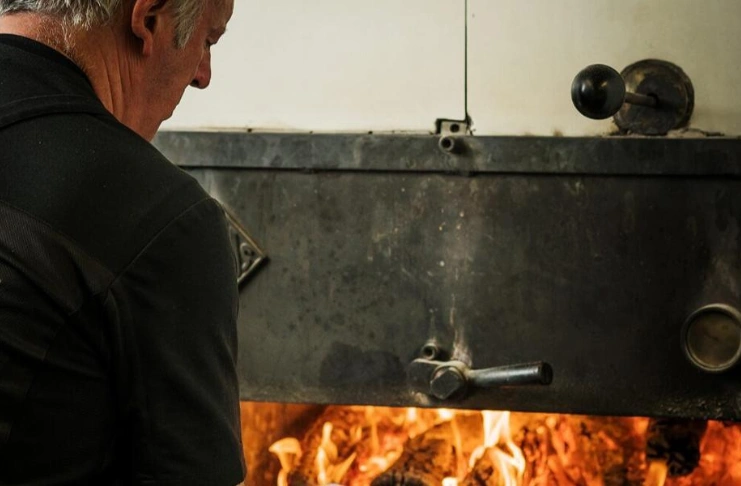
Arguinzoniz was born in 1960 in Axpe. At that time, electricity was scarce. So, obviously, fire was practically how his family cooked, heated their home, and survived the mountain winters. That early relationship with flame carried some weight. Because after working in construction for years, Arguinzoniz bought an 18th-century stone manor house in 1989. The following year, he opened Asador Etxebarri.
He taught himself to cook through trial and error and an intuitive understanding of how fire behaves. Over the years, he developed his own tools like metal grates with mesh fine enough to hold caviar, latticed pans designed like colanders for delicate seafood, and a pot with a hole in the center for cooking over wood steam. None of this was accessible in the market.
“The only secret I have is work, perseverance, the sacrifice of the day to day,” he said. People come expecting recipes or hidden techniques. They leave, realizing the secret is simpler and harder than they imagined. It’s showing up every morning. It’s burning wood and knowing, without a thermometer, when the embers are ready.
The Evolution of an Asador
Traditional Basque asadores have always centered on grilled meats. Arguinzoniz respects that tradition but wanted to do something different. At Etxebarri, baby eels are brought over the table with a subtle smokiness. Fresh mozzarella is melted over fire. Milk ice cream, infused with beetroot and reduced over embers, closes nearly every meal. These are ingredients most chefs would never dare bring near open flame.
Brazilian chef Alex Atala remembers a class Arguinzoniz gave to a group of chefs, including Andoni Aduriz, Joan Roca, and Francis Paniego. The subject was asparagus. Arguinzoniz asked for everyone’s opinion on how to cook it perfectly. Then he prepared his version on a baking pan perforated with small laser holes, covered with moss. By controlling time and heat, the moss dehydrated before the asparagus lost moisture. The result had a smoky flavor and perfect texture. “We were all stunned,” Atala recounted to Fine Dining Lovers.
Dabiz Muñoz, the chef behind DiverXO in Madrid, points to Arguinzoniz’s relentless ability to keep improving. “The perfectionism with which he manipulates the ingredient is something admirable,” Muñoz said. Portuguese chef Alexandre Silva, who runs Michelin-starred LOCO and Fogo in Lisbon, echoes this. “You may have tasted shrimp in different restaurants, in different ways, but you’ve never tasted anything like the one he serves at his restaurant.”
The Philosophy Behind the Flames
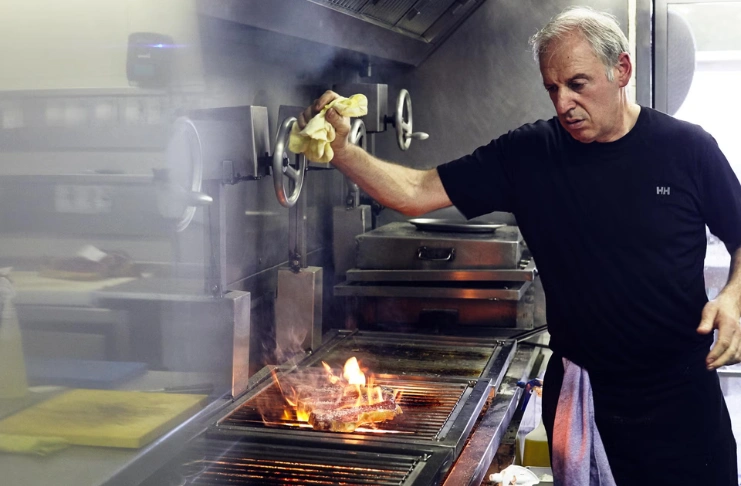
Arguinzoniz treats wood the way other chefs treat seasoning. Each type brings a different character to the dish. Holm oak burns long and clean, ideal for beef. Vine wood is slightly aromatic, better suited for fish and vegetables. He seasons the wood for one to two years, letting it dry naturally in the mountain air around Axpe.
“I’ve dedicated my whole life to this art to develop a practical skill to be able to control times and temperatures over the ambers meticulously, which makes this craft purely artisanal,” he explained to Fine Dining Lovers. The craft of fire, he believes, cannot be taught. It can only be acquired through experience and dedication. Of the many people who have come to learn from him over the past 30 years, few have truly captured it.
Hector Gran, a young cook who joined the team in 2015 after stints at Quique Dacosta and Mugaritz, understands this. “In Etxebarri’s world, which is Victor’s world, there is a golden rule that it is paramount to have the best product available every day and to treat it in the best possible way,” Gran shared. “Victor can understand the potential of each ingredient: while the flames may just caress some, others need to rest over the embers. That sensitivity is what makes him such a unique chef.”
What Defines Etxebarri
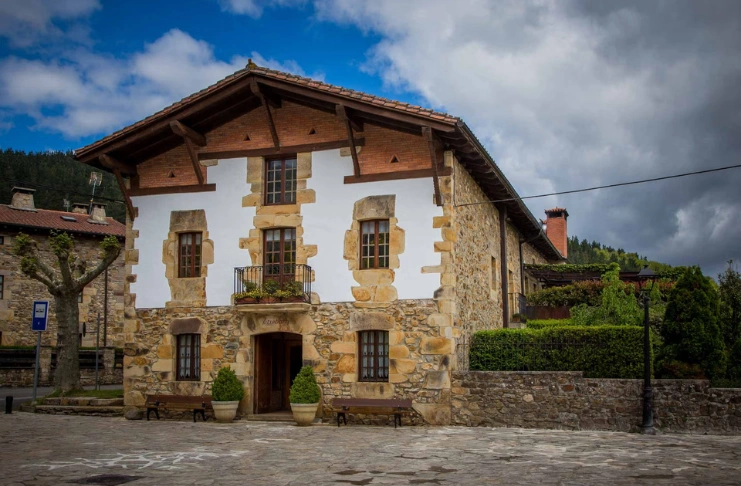
Asador Etxebarri is deep in the Atxondo valley, about an hour outside Bilbao. The restaurant overlooks rolling hills and distant peaks. The stone manor house, dating back to the 1740s, houses a dining room that feels genuinely unpretentious. It sports stone walls, wooden beams, and an atmosphere that lets the food speak for itself.
The tasting menu costs 280 euros per person, excluding drinks. These must-have dishes are always up on the menu (in the same order): house chorizo, salted anchovies, buffalo mozzarella, tomato with mushrooms, Palamós prawns, squid in its ink, hake kokotxas, beef chop, and finally, reduced milk ice cream and chocolate soufflé.
Interestingly, all of these have been touched by fire. There’s no theatricality here, no molecular gastronomy or elaborate presentations. The focus stays on the ingredient, the fire, and the craft required to bring the two together. Reservations are notoriously difficult to secure. More than 80 percent of diners come from abroad, according to Josper, the company that collaborated with Arguinzoniz to design specialized grills and accessories.
Respect and Humility
When asked who he would be most excited to cook for, Arguinzoniz said that he doesn’t think in terms of names. “All the people who come to Etxebarri are the same, and I put the same effort and the same enthusiasm into doing it as well as with any other diner. For me, names don’t exist, people exist.”
Arguinzoniz once learned from his father that you can learn from anyone, regardless of their title or experience level. It’s a perspective that has shaped how he leads. “Many times, in this world of social networks, anyone can insult you and, therefore, I lack the respect of the person towards someone who, like me, there are many and who, at some point, is respected,” he shared. Respect, he believes, is a value that has disappeared. It’s something he tries to maintain in his own interactions, even when others fail to return it.
What the Future Holds
At 65, Arguinzoniz is starting to think about retirement. “I’ve been working all my life. Since they taught me to walk at home, they put me to work,” he recalls. He doesn’t want to die with his boots on, as the saying goes. But stepping away from Etxebarri feels complicated. His wife and son both work in the restaurant. His son handles the dining room but lacks kitchen experience. Arguinzoniz hopes someone will continue the philosophy he has built, the way of working that defines this place.
René Redzepi, the chef behind Noma, sees Arguinzoniz “as a futurist.” Etxebarri represents a model of cooking that focuses on what’s in season, what’s available locally, and what can be prepared with minimal environmental impact. The world might be catching up on the sustainability trend today, but Arguinzoniz has been practicing it for three decades.
“This is where I belong, Etxebarri is the epicenter of my life,” Arguinzoniz said. “I still marvel at the embers today just as I did when I was a child. I’m a person who likes to talk, to communicate. I communicate with the fire and through the fire, and I try to convey my feelings in the dishes I serve to my guests.”
A Legacy Built on Embers
Whether Arguinzoniz retires soon or continues for a few more years, his influence on the culinary world is already cemented. Chefs who have trained at Etxebarri have gone on to open their own restaurants, carrying his techniques to new cities and countries.
In 2021, Arguinzoniz received the Chef’s Choice Award, voted on by his peers. It’s one of the most meaningful recognitions in the industry because it comes from other chefs, people who understand the difficulty of what he does. That same year, Asador Etxebarri took third place on The World’s 50 Best Restaurants list. In 2024 and 2025, it climbed to second.
The restaurant currently holds one Michelin star, which it has maintained for years. But for Arguinzoniz, the stars and rankings matter less than the work itself. Every morning, he returns to the fogón. He lights the fire. He watches the wood burn. And when the embers are ready, he begins again.