Walk into any high-end Bangkok restaurant, and you’ll see the same thing: imported lobster, wagyu beef, and French techniques dressed up with Thai flavors. It’s safe. It’s expected. But it’s precisely what Chef Tam refuses to do at Baan Tepa.
“Traditional views of what luxury ingredients are have been ingrained in our dining scene for years,” she says to World’s 50 Best. “Thai ingredients deserve to be seen in the same light, and elevated with creativity and craftsmanship.”
Her “Anatomy of a River Prawn” dish doesn’t just serve the local crustacean; it dissects it. Each part gets its own treatment, its own technique, its own moment of glory. The body brushed with prawn oil. The tail garnished with red pepper tuiles. The head transformed into an emulsion.
“How you approach an ingredient like that is so important,” she explains. “You have to understand the ecosystem it comes from, what it feeds on, and how to handle it. Communication with the fishermen is key, as is sharing those stories with our guests.”
The Accidental Revolutionary
Tam never planned to be a revolutionary. She wanted to be a farmer.
After working at Blue Hill at Stone Barns in New York, where chefs harvest ingredients at dawn before service, she came home disillusioned. Bangkok’s restaurant scene felt hollow. Imported ingredients masquerading as luxury. Traditions treated like museum pieces.
“I was a little bit lost,” she admits. “I wanted to quit cooking and just grow vegetables.”
But her parents had other plans. They wanted her catering business out of their house. So, she moved to her grandmother’s empty home in Ramkhamhaeng.
“Baan Tepa came about because my parents were desperate for me to move the catering company I used to run out of the house,” she explained to Tatler Asia. “At first, it was supposed to be a small restaurant, with 12 seats and seven members of staff,” she says. Then Top Chef Thailand happened. Then, the pandemic. Then, the world took notice.
Now Baan Tepa seats 50. The garden produces herbs that cost more per gram than gold. The waiting list stretches for months. And Chef Tam has become the face of a movement that’s upending Thailand’s culinary hierarchy.
Fighting the System One Prawn at a Time
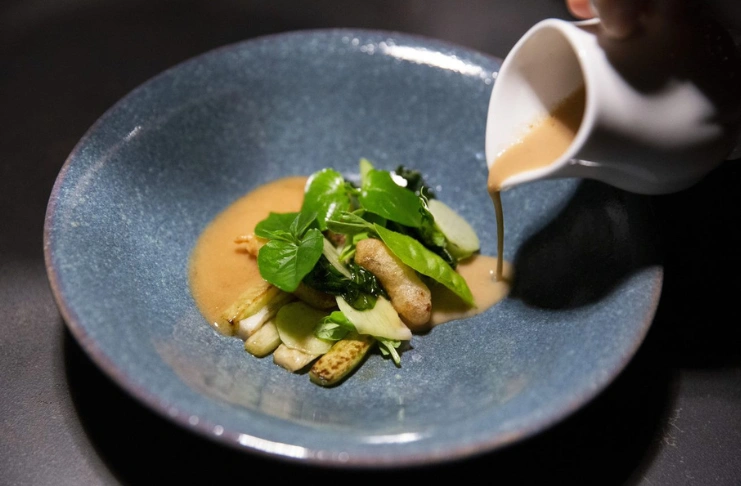
Walk into any high-end Bangkok restaurant, and you’ll see the same thing: imported lobster, wagyu beef, and French techniques dressed up with Thai flavors. It’s safe. It’s expected. But it’s precisely what Chef Tam refuses to do.
“Traditional views of what luxury ingredients are have been ingrained in our dining scene for years,” she says to the World’s 50 Best. “Thai ingredients deserve to be seen in the same light, and elevated with creativity and craftsmanship.”
Her “Anatomy of a River Prawn” dish doesn’t just serve the local crustacean; it dissects it. Each part gets its own treatment, its own technique, its own moment of glory. The body brushed with prawn oil. The tail garnished with red pepper tuiles. The head transformed into an emulsion.
“How you approach an ingredient like that is so important,” she explains. “You have to understand the ecosystem it comes from, what it feeds on, and how to handle it. Communication with the fishermen is key, as is sharing those stories with our guests.”
The Garden as Weapon
Behind the restaurant sits Baan Tepa’s spiral garden, which looks like art but functions like a laboratory. You’ll find plants like galangal, white turmeric, Siam tulips, and garlic vines here.
“With limited space, we grow ingredients that are strong in flavour and aroma, as a little goes a long way. A lot of our focus is on indigenous herbs, which we can grow almost all year round.”
Every plant here is connected to a farmer, a community, and a story. The compost comes from kitchen scraps. The herbs get harvested by the same hands that cook them. Nothing gets wasted.
“Thailand boasts many vegetables and herbs that offer distinct tastes and characters, not to mention medicinal benefits,” she says during her conversation with TimeOut.
The Night Everything Changed
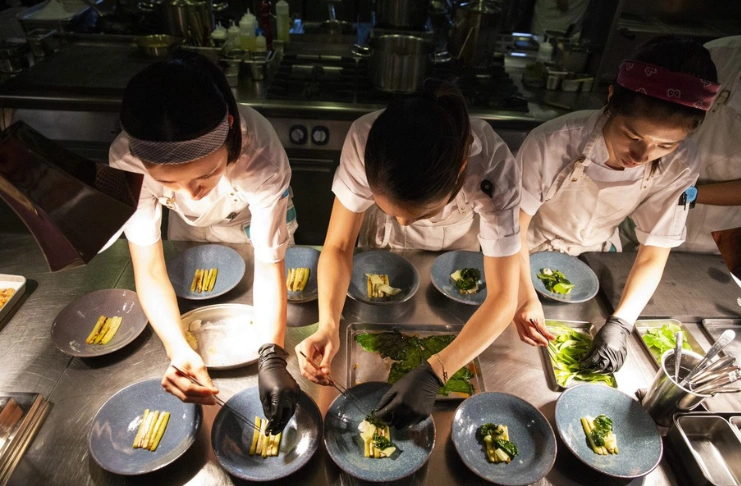
February 2024. The Michelin Guide Thailand ceremony. Chef Tam sits with her team, hoping to keep their single star. Then the unthinkable happens.
“Retaining a single Michelin star is a daunting task for any restaurant, but for us, the anticipation was nerve-racking,” she remembers during her conversation with Thaiger.
First, she wins the Young Chef Award. Then, minutes later, the announcement that stops the room cold: Baan Tepa receives two Michelin stars.
“It was a rollercoaster of emotions, but when they mentioned two stars, it was surreal,” she says.
But the real victory wasn’t the stars. It was what they represented: validation that Thai cuisine doesn’t need to apologize for being Thai. That local ingredients can compete with anything imported. And that a 31-year-old woman can lead a kitchen that the world takes seriously.
The Uncomfortable Truth
Chef Tam’s success makes people uncomfortable. Not just because she’s young, or because she’s a woman in a male-dominated industry. But because she’s proving that everything they thought they knew about Thai fine dining was wrong.
“I hate when people ask what the concept of my food is,” she shares with TimeOut. “I say Thai, but people would disagree with me. I cook Thai food, but from a modern perspective. Why can’t the concept of Thai food progress just like other aspects of Thai culture?”
She serves nam prik—chili relish—but deconstructs it. Takes the communal experience of building your own bite and reimagines it as a curator’s dream. Same flavors, different textures, completely new experience.
“To me, nam prik is at the heart of Thai cuisine,” she explains to Tatler Asia. “The version we serve at Baan Tepa delivers the same flavours; however, instead of guests having to construct their own bite, everything is curated for them.”
The Future She’s Fighting For

Chef Tam’s vision extends beyond Baan Tepa’s walls. She’s building a network of farmers and creating markets for ingredients that were once considered mere weeds.
“Now, we have high-end restaurants serving catfish, offal, Thai mackerel, and fermented fish and shrimp; things you wouldn’t traditionally expect in these kinds of establishments,” she observes. “It’s all hugely exciting.”
But the real revolution is in the kitchen. Every day, she mentors young cooks, most of them Thai, teaching them that their heritage is something to be proud of, not hidden.
“I’m basically the staff therapist,” she admits to the Michelin Guide. “I make sure everyone is welcome to talk to me about any life situation.”
The message is simple: you don’t have to choose between being Thai and being excellent. You can be both.
The Pressure and the Promise
With two Michelin stars comes pressure. Expectations. The weight of representing not just a restaurant, but a movement.
“I would be lying if I were saying that there’s no pressure that comes with it,” Chef Tam admits (Robreport). “Now, the expectations that we never really had put on ourselves before, we have to live up to that standard.”
But she’s not backing down. If anything, she’s doubling down.
“I’m just gonna go in with no expectations and just take things as they come,” she says. “I’ve never really been super prepared for anything that has happened to me or Baan Tepa, and it’s worked out OK so far.”
The Revolution Continues
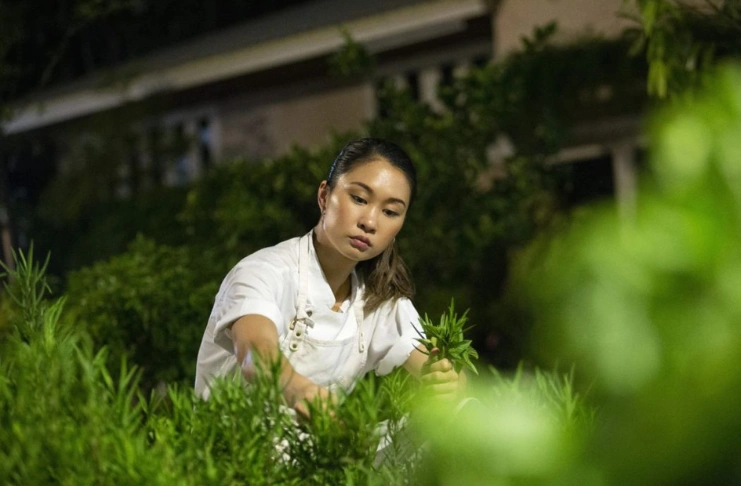
Today, Baan Tepa sits at number 44 on Asia’s 50 Best Restaurants list. Chef Tam was just named Asia’s Best Female Chef 2025. The waiting list grows longer. The garden gets bigger. The revolution spreads.
But the plastic cup still sits on her desk. A reminder that excellence doesn’t come from expensive equipment or imported ingredients. It comes from vision, persistence, and the courage to prove everyone wrong.
Chef Tam’s advice to aspiring chefs: “The chef’s life is not for everybody. You have to be sure this is what you want to do. Go and get beaten up. You have to be able to feel the pressure of a professional kitchen, withstand it, get over it fast, and grow from it.”