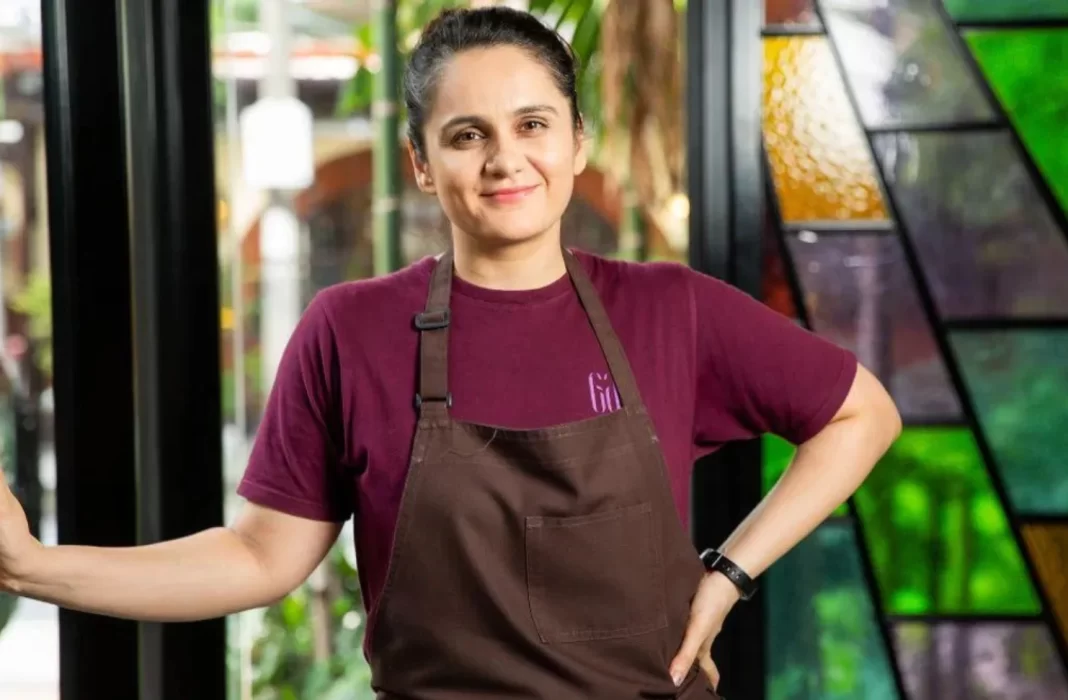

Garima Arora tried making Thai curry paste in India once. It ended up tasting like korma. So, now she flies it in from Bangkok. Twice a week. Fresh. Hand-pounded. The kind of decision that defies business logic until you taste the food.
Banng too was born out of such conviction. It sits inside the Two Horizon Centre on Golf Course Road in Gurgaon. The location often surprises people. Mumbai made more sense. That’s where Garima grew up, saved pocket money to eat at Olive and Indigo, and always imagined opening her first restaurant.
Bangkok made sense, too. That’s where Gaa earned her two Michelin stars and made her the first Indian woman to achieve this feat.
But Gurgaon happened first, maybe because the city moves fast enough to keep up with her. Or because after eight years in Bangkok and a decade before that training across Paris and Copenhagen, she was done explaining her choices to anyone.
The space justifies her choice, though. Deep red walls. Blue velvet seats. White lanterns dropping from the ceiling. Hand-painted murals covering the walls. During the day, sunlight fills the dining room, and the energy stays bright. By 11 pm, the lights dim, the music gets louder, and the room turns electric.
Garima opened Banng seven months pregnant. Her second baby is five months old now. Her toddler loves dosa and khao pad with stink beans. She’s raising two children, running a two-Michelin-starred restaurant in Bangkok, and building one in India that refuses to soften for anyone.
When asked how she manages it all, she tells The Better India, “Women don’t need to be told that they can do everything. We already know we are capable. We have been doing it for years. It is the people around the woman who need to understand that support is integral. Most women stop pushing forward when that support system crumbles.”
The Food Speaks Thai, Thinks Indian
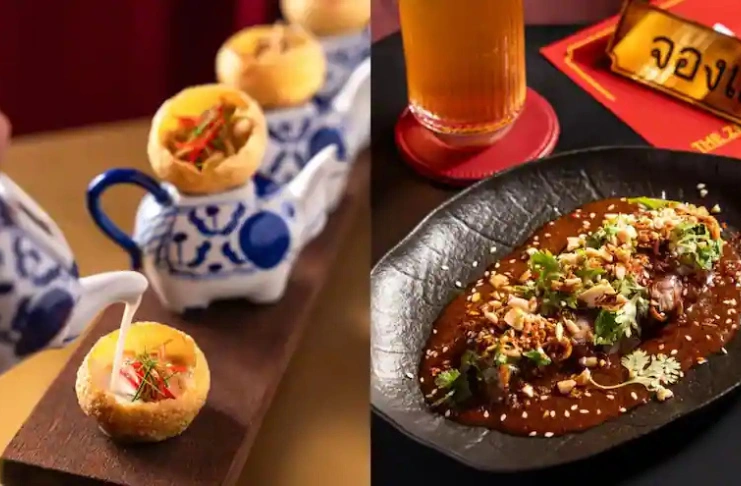
The Tom Kha Pani Puri arrives first. Always. A ceramic elephant holds chilled coconut broth spiked with lemongrass, galangal, and kaffir lime. You pour it into crispy puris stuffed with mushrooms. The dish takes something deeply Indian and asks it to speak fluent Thai.
The Seabass Ceviche follows next. Raw fish strips swim in salty lime juice loaded with Thai chilli. If you usually order medium spicy, this will reset your scale.
The Khai Jeaw, Thailand’s famous crab omelette, looks simple. Golden and fluffy, topped with Chinese celery and a sweet-sour dressing. Halfway through, the richness builds. That’s when the nam prik sauce shows its magic. One spoonful cuts through everything. The celery leaves you pushed aside suddenly make sense. The dish was always smarter than you.
The Lamb Pad Cha hits different. Stir-fried with young peppercorn and ginger, aggressive and layered. It needs the turmeric and garlic rice to make sense of it.
The White Seafood Curry changes the temperature with scallops, mussels, and seabass in coconut milk. It’s gentle. Almost quiet. The kind of dish that slows you down.
The Vegetarian Red Curry with kohlrabi and okra proves that meat was never the point. The dish just needs to be good.
Drinks Built Like Fighters
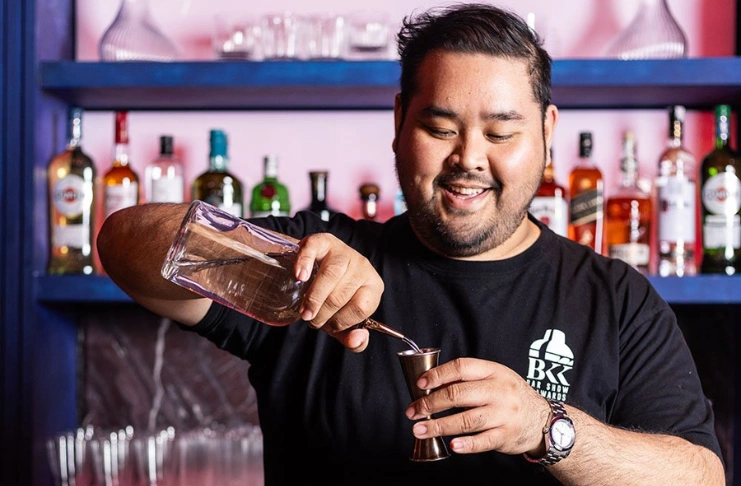
Attapon De-Silva designed the cocktail menu around Muay Thai. Flyweight. Middleweight. Heavyweight. The names tell you how hard they hit.
The Buakaw Bua Loi is a middleweight. Tequila and white wine with warm white chocolate foam on top. You sip, and the temperature shifts. Warm foam. Cold liquid beneath. It sounds gimmicky, but it works.
The Chatuchak Champa is a heavyweight. Gin infused with champa, balanced with lychee honey, lemon, and orange gel. A dried champa petal sits frozen in the ice. Pretty, yes. But also precisely balanced.
The Andaman sounds like a dare. Dry squid-infused vodka with squid ink and coconut jelly. It tastes like the ocean without drowning you in it. Savory. Strange. Somehow perfect with the food.
Desserts That Know When To End
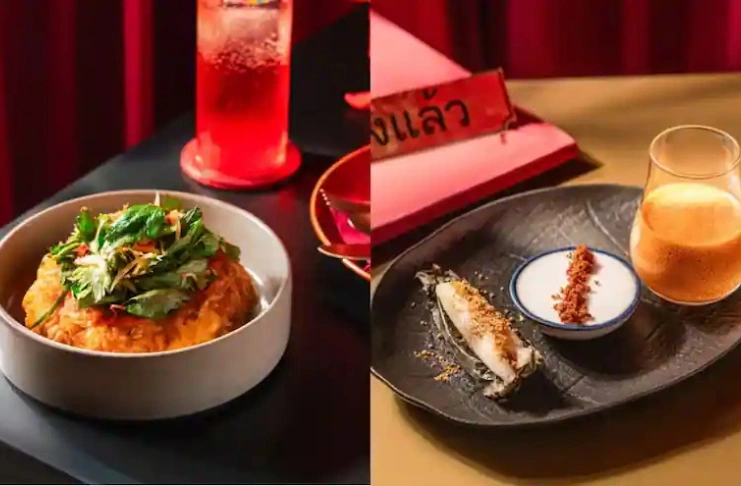
The Trio of Desserts comes with one instruction: eat them in order.
Start with Grilled Sweet Rice. Dense, sticky, rich. Move to Kanom Thuay. It looks plain until you get the toasted rice on top. Then everything clicks. Finish with Thai Tea Mousse. It looks like foam. It tastes like the best spiced chai you’ve had in months.
There’s also a DIY ice cream taco cart. Khanom bueang waffle shells filled with coconut, palm seed candy, and peanut butter. Fun. Messy. Exactly what dessert should be.
Why Thailand. Why Now.
Garima didn’t plan to stay in Bangkok. She landed there after Copenhagen, planning to come back to India. But something caught her attention. The way Thai and Indian food understand each other. The souring agents. The spice blends. The shared language of heat and balance.
“The more I explored this link, the more I realised that Bangkok would be the perfect backdrop for us to start a restaurant,” she says.
Eight years later, she’s still there. Gaa earned its first Michelin star in 2018, the second in 2023. She was named Asia’s Best Female Chef in 2019. Through all of it, she kept thinking about bringing Thai food home. The real version. The kind of food Bangkok locals eat when tourists leave.
Riyaaz Amlani of Impresario Handmade Restaurants understood what she wanted. He didn’t ask her to tone down the spice. He didn’t suggest making it more accessible. They met last year. He ate at Gaa. They talked. Then they built Banng.
The Team That Studied Under the Masters
Head Chef Manav Khanna joined Garima as an intern eight years ago. Now he runs the Banng kitchen.
Before opening, Garima took the team to Chiang Mai. They spent two weeks with Thai food master Hanuman Aspler. Twelve to fourteen hours a day in the kitchen. Learning why curry paste should stay fresh. Why are ingredients layered in a specific order? Why do shortcuts always show up in the final dish?
“With Hanuman, you learn the hows and whys of Thai cooking,” Garima says during the conversation with CN Traveller. “Understanding these nuances is possibly not something I would have instinctively done.”
That training shows up everywhere. In the White Seafood Curry that doesn’t taste muddy. In the Lamb Pad Cha that stays complex through every bite. In curries that taste like Thailand because, in a very real sense, they come from there.
What Banng Actually Does
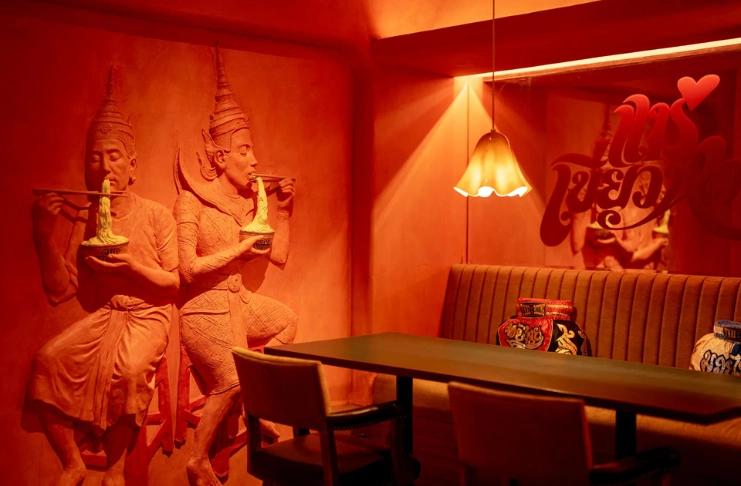
Banng exists in the space between serious food and breathable atmosphere. You can order a Heavyweight cocktail and fried squid and feel like both choices matter.
This is the restaurant Garima wanted to open for years. It took finding the right partner, the right city, the right moment. It’s what happens when someone who earned two Michelin stars in Bangkok comes home and refuses to adjust the recipe.
The curry paste still flies in twice a week. The team still works twelve-hour days to get it right. The menu still won’t apologize for heat or unfamiliarity.
Banng trusts that you’ll show up for food that respects its origins. So far, you have.