


There’s a physics principle that says when a constraint in a system changes, conserved quantities redistribute, and the system evolves toward a new equilibrium, if one exists.
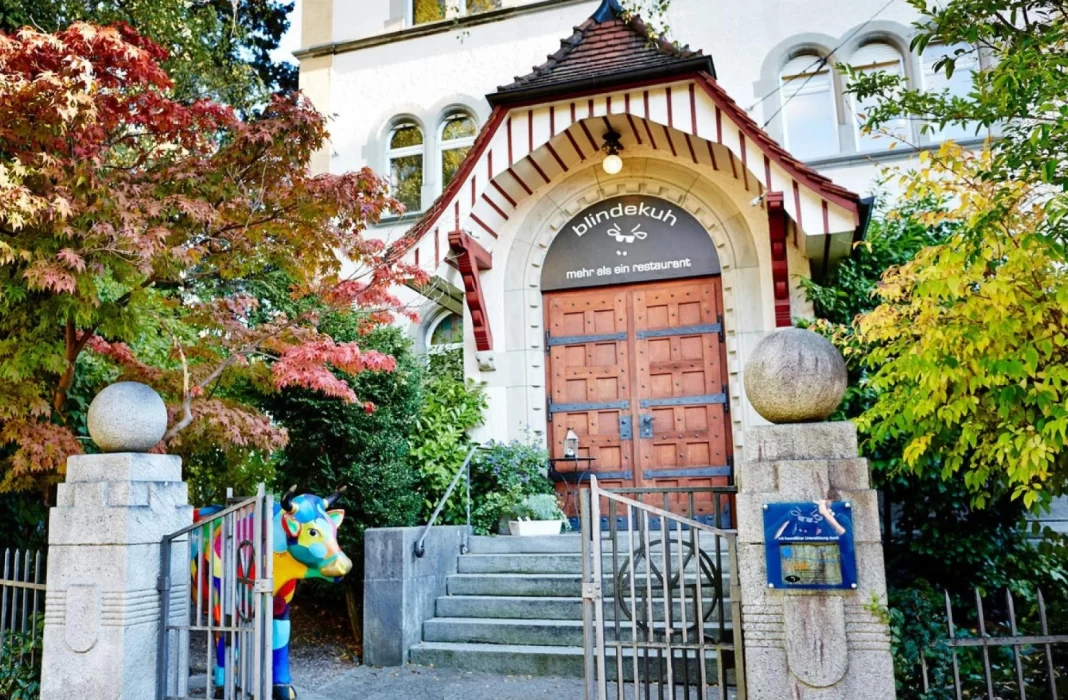
Something similar happens when you eat dinner in total darkness at Blindekuh in Zurich, where removing vision from the equation makes everything else louder, sharper, more present.
The clink of silverware, the rustle of napkins, and that flowery perfume you barely noticed in the lit lobby now follow you through the entire meal.
Blindekuh opened in 1999 as the world’s first permanent dark dining restaurant, founded by blind clergyman Jürg Spielmann and three colleagues who’d worked as guides at the Dialogue in the Dark exhibition.
The name means blind man’s bluff in German, which references both the children’s game and a Swiss saying about darkness being “as black as the inside of a cow.”
Twenty-five years later, the concept has spread globally, but Blindekuh remains the original, the place where eating without seeing became a novelty.
Best part? The restaurant employs visually impaired staff who navigate the darkness effortlessly while sighted guests fumble with forks and knock over water glasses. This role reversal was the whole point when Spielmann and his co-founders started the project. They wanted to create employment for blind people in an industry that rarely hires them, and to help sighted people understand, even briefly, what living without vision actually means.
As You Arrive…
First and foremost, staff ask you to deposit everything into lockers, including phones, watches with luminous dials, and any other devices that emit light.
Then you study the menu on the wall because once you enter the dining room, there’s no going back to check what you ordered.
At exactly the reservation time, a server calls out names and instructs everyone to line up conga-style, hands on the shoulders of the person in front. The server leads from the front, pulling back layers of blackout curtains.
Once you pass through, there’s absolute darkness.
The server, who’s done this hundreds of times, guides the line to individual seats without bumping into anything. You’re told where your fork, knife, napkin, and glass are on the table.
The bottle will always be placed behind the glass. When you need something, you call out the server’s name and wait for them to respond with their location.
What happens next depends on how attentive you’ve been. One diner in a firsthand account admitted to eating two crostini from a shared appetizer plate because she wasn’t listening when the server explained it was meant to be passed around. The server had to bring more for the rest of the table.
What Eating in Darkness Actually Does
Psychologists have studied this. When vision gets suppressed, the brain reallocates attention to other sensory pathways. Smells become more pronounced. Flavors grow more distinct. Textures that you’d normally ignore suddenly matter. A tomato tastes different when you can’t see its color. The weight of a fork in your hand guides you to the food.
Krish Ashok, an author who writes about food science, visited Blindekuh and described how the absence of visual cues forces you to be present with what you’re eating.
You can’t scroll through your phone between bites. You can’t study someone else’s plate to decide if you ordered correctly. You have to engage with the meal in front of you using only taste, smell, and touch.
The menu at Blindekuh features familiar Swiss and European dishes because serving unfamiliar food in total darkness would make people anxious about what they’re consuming.
Locating food on your plate becomes the real challenge, though. One guest repeatedly scooped and missed with a fork, eventually giving up and using their fingers to pick up salad leaves that kept evading the utensils.
By the time the main course arrives, most diners have abandoned any pretense of eating neatly. You cut the meat as carefully as possible so it doesn’t fly off the plate. You feel around with your fingertips to identify what’s there before attempting to eat it.
The servers bring lemon-scented towels at the end of the meal.
Why Spielmann Started This
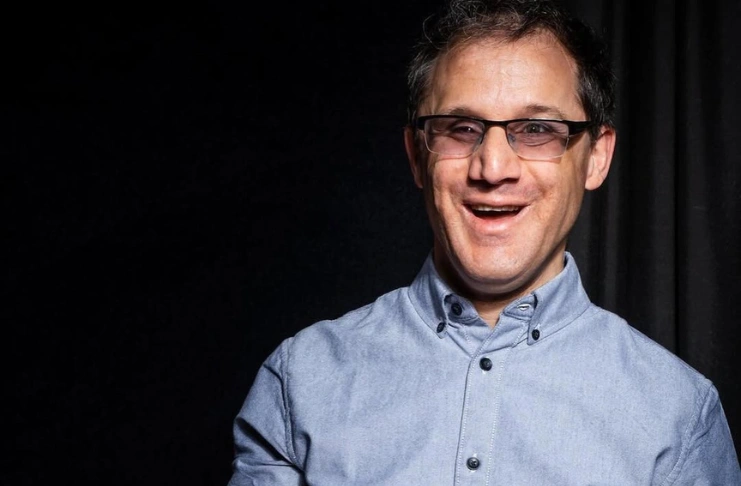
The idea came from an exhibition at Zurich’s design museum in early 1998. Dialogue in the Dark staged everyday situations in completely darkened rooms, and blind guides led sighted visitors through the spaces.
Spielmann worked there with Stefan Zappa, who was slowly losing his eyesight after working as an interior designer. Also on staff were Thomas Moser, a singer, and Andrea Blaser, a social worker. All of them were blind or visually impaired.
“The exhibition unleashed a huge amount of enthusiasm for this setup,” Spielmann recalled in an interview. “It made a tremendous impression on sighted visitors. The blind guides helped them to make their way around in absolute darkness. Sighted people would not have managed that on their own. This exchange of roles had a profound effect on us.”
What struck Spielmann most was how the dynamic changed when blind people became the experts. Normally, when meeting someone like that for the first time, the conversation starts with “Oh, how do you cope?” and the unspoken thought, “I hope I never have to.”
In the exhibition, sighted visitors needed help navigating the darkness, and blind guides provided it competently. The reversal felt exhilarating.
Toward the end of the exhibition, which had to be extended due to demand, the guides agreed they couldn’t let the experience just end. Spielmann took the lead. He knew Zappa had time, skills in interior design, and an economics background. They brought in Moser and Blaser. “I can remember nights when I was so buzzing with energy, it was more intense than anything I’d felt before, or since,” Spielmann said.
They established Blindekuh as a charitable foundation in 1998, originally called Blind-Liecht, which was renamed in 2017.
The mission was twofold:
- Offer sighted people insight into the culture of blind and visually impaired populations.
- Create sustainable employment for people who struggle to find work.
In Switzerland, as in most countries, 60 to 70 percent of blind people are unemployed even when they’re highly qualified.
The Jobs “for” Blindness
Blindekuh specifically created positions where being blind or visually impaired is an advantage, or at least not a disadvantage.
For example, sighted people cannot navigate spaces in complete darkness. But the servers at Blindekuh move through the dining room gracefully, rarely bumping into furniture or other diners, because they’ve developed heightened spatial awareness and rely on memory, sound, and touch rather than sight.
Christina Fasser, chair of the foundation’s board of trustees, emphasized the importance of part-time work here.
Many visually impaired employees receive an invalidity pension that covers part of their salary, say 50 percent, and need to earn the other 50 percent to meet living expenses. Most part-time jobs for people with vision impairments are office-based. Blindekuh, on the other hand, offers hospitality work where they interact with guests and use skills that sighted people take for granted.
“There’s a second important factor,” Fasser explained. “We offer interesting part-time jobs.” The restaurant provides a platform for what Spielmann calls PR on the job. It’s not about having a blind person give a presentation to a sighted audience. It’s about letting sighted customers experience, to some extent, what living without vision feels like.
At the Tables…
Eating in darkness creates a specific kind of vulnerability that seems to foster openness.
People here laugh, shout, call out to servers, and engage in conversations with neighboring tables they can’t see. In a way, they collaborate in the shared experience of not being able to see.
The darkness also equalizes people in ways light doesn’t. Without appearance cues, judgments dissolve. You become a voice, nothing more. Social hierarchies flatten.
One diner described going to Blindekuh with a blind colleague, both deliberately not mentioning they were visually impaired. They managed everything well enough that other guests at the shared table eventually asked if they had vision problems. When they confirmed they did, one person became deeply offended, possibly feeling studied, as blind people often do in lit restaurants.
At the end of the meal, servers lead guests back through the blackout curtains in the same conga-line formation. There’s an intermediate, dimly lit area where eyes adjust gradually before returning to the bright lobby.
Once back in the lobby, guests receive the menu with descriptions of what they ate. The game of guessing what was served becomes the final activity.
Why It’s Trending Globally
After Blindekuh proved the concept worked both financially and socially, similar restaurants opened across Europe and worldwide.
Each one of them adapted the concept to local tastes, but their core remained the same. They offered complete darkness, employed visually impaired staff, and designed menus that are actually practical in that setting.
Some kept the dishes secret until after the meal. Others let guests choose broader categories like vegetarian, seafood, or meat.
The concept became especially popular among millennials and Gen Z, who value moments that spark curiosity and fuel conversation. After all, dining in darkness offers both.
The Financial Reality
Running Blindekuh requires more staff than conventional restaurants. Guests need to be accompanied to the bathroom exit. Service takes longer because diners move more slowly in the darkness. Tables can only turn once per evening because rushing people through the experience defeats the purpose. This creates tight margins in an industry already known for thin profits.
The restaurant relies on grants for major investments, such as renovations and equipment.
Christina Fasser noted that foundations prefer funding projects with defined beginnings and ends where costs can be calculated precisely. Asking for money to retain employees during uncertain times is harder than requesting funds for a specific renovation project.
The COVID pandemic hit Blindekuh particularly hard. Insurance covered 60 percent of turnover for two months, but specifically ruled out coverage for future waves.
The Basel location, which includes a 300-square-meter event space on the roof that was fully booked before the pandemic, saw everything canceled. The space was designed for 300 people, but restrictions limited gatherings to 100, making the economics unworkable.
Despite these challenges, Blindekuh has served approximately one million customers since opening. The concept clearly resonates, and the foundation continues working to retain employees for even longer.
The Demonstration
Blindekuh proves that removing vision from dining doesn’t diminish the experience; it transforms it. You taste things more carefully. You become hyperaware of textures and temperatures. You engage with your food and your dining companions more directly because there’s nothing else to distract you.
More importantly, it shows that employing people with disabilities in customer-facing hospitality roles works when you design the environment around their strengths. At Blindekuh, blindness isn’t a limitation that the restaurant works around. It’s the qualification that makes the servers excellent at their jobs.
The role reversal that inspired Spielmann and his colleagues remains the most powerful aspect of the experience.
How? Because it shifts the question from “How do you cope?” to “How do they do this so effortlessly?”


