
Have you ever been to a place that simulates a trip to the moon? Sounds absurd? Well, there is a restaurant that draws inspiration from Edgar Allan Poe’s 1835 story about a Rotterdam man who flies to the moon in a homemade hot-air balloon.
That story, ‘The Unparalleled Adventure of One Hans Pfaall,’ is considered one of the first modern science fiction tales. And, it’s also the narrative behind Celest.
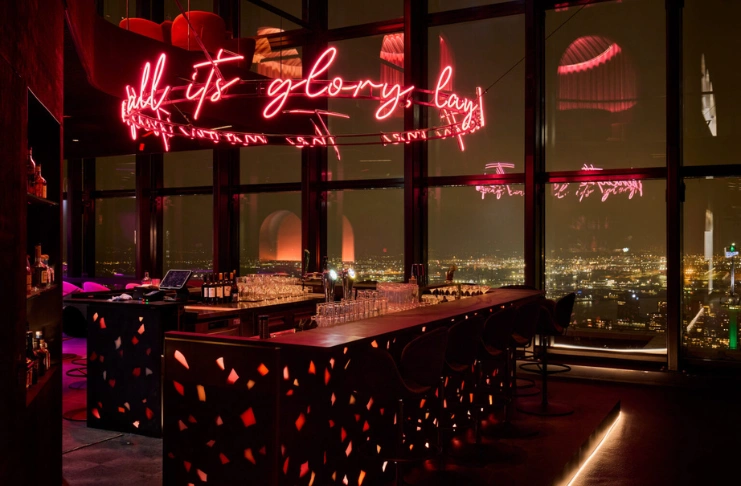
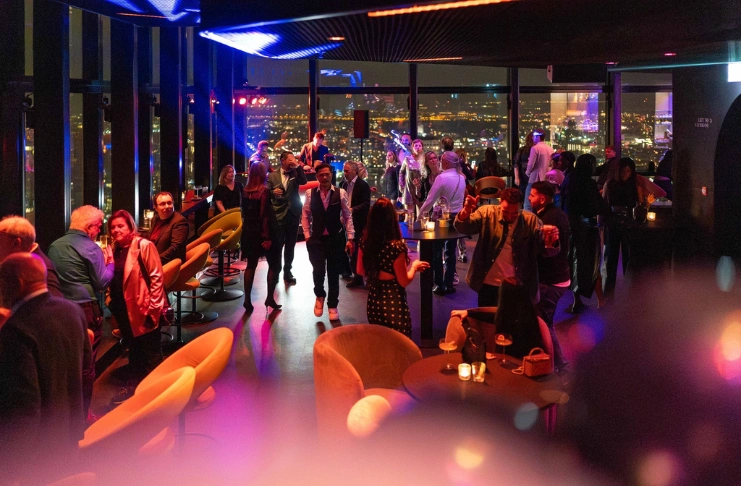
Celest, which opened in Rotterdam’s Zalmhaven Tower in late 2024, sits at 190 meters, roughly twice the height of the Euromast. The 57th floor houses the cocktail bar, and the 58th floor is the restaurant itself.
Both offer 360-degree views of Rotterdam, but the real draw is how the architecture firm Doepel Strijkers translated Poe’s story into physical space, using moon craters, hot-air balloon motifs, and lighting to “serve” the unique experience at that height.
The Story Behind the Design
Hans Pfaall, Poe’s fictional protagonist, was a Rotterdam resident fed up with poverty and the daily worries of Earth. So, he built a hot air balloon and launched himself toward the moon.
The 19-day journey, though, gave him a completely different perspective on life on Earth. After five years on the moon, he began to long for Rotterdam again.
Doepel Strijkers took that narrative seriously. The experience begins in the elevator at ground level, where visuals, sounds, and shifts in air pressure simulate ascent. One guest at the opening described feeling “a little nauseous” from the effect.
At the 57th floor, visitors encounter a lunar landscape. One floor higher, the restaurant’s interior mimics the play of light between sun and Earth that Pfaall would have witnessed from his balloon.
The unisex toilets feature a brightly lit lunar crater landscape. A 2.5-meter digital moon globe sits in the dining area. Moon pods, intimate enclosed dining spaces, reference both the balloon’s capsule and craters on the lunar surface.
The design combines 19th-century engravings with sleek contemporary elements, steel and glass, with careful attention to historical detail.
The Kitchen Team
Chef Lars Drost leads the culinary operation. He spent years as sous chef at Amsterdam’s Ciel Bleu, at the Hotel Okura, which holds two Michelin stars, and represented the Netherlands at the Bocuse d’Or. His two sous chefs, Frank van Rijsbergen and Leonardo Sussi, also come from high-level kitchens.
Each kitchen staff member was recruited through personal networks. “If everyone brings a few people, you automatically get a strong team that has the ambition to serve fantastic products,” Drost shares.
The cooking approach combines international techniques with local sourcing. Drost emphasized working directly with fishermen, farmers, and growers. “From a large catering supplier, you buy what has already been harvested. We turn it around: we visit suppliers selected by us in advance.” This means the menu changes constantly based on what’s actually in season. “We always want to surprise our returning guests. At Celest, they taste all seasons through our working method.”
The 58th-floor restaurant offers both à la carte options and a Celest Seasonal Menu.
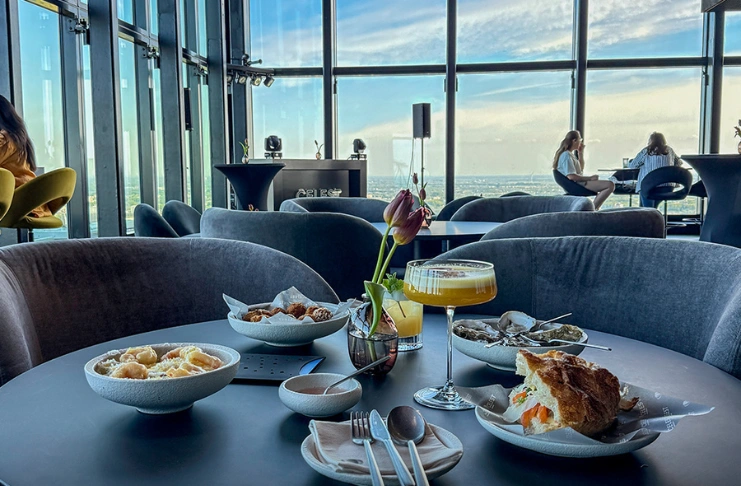
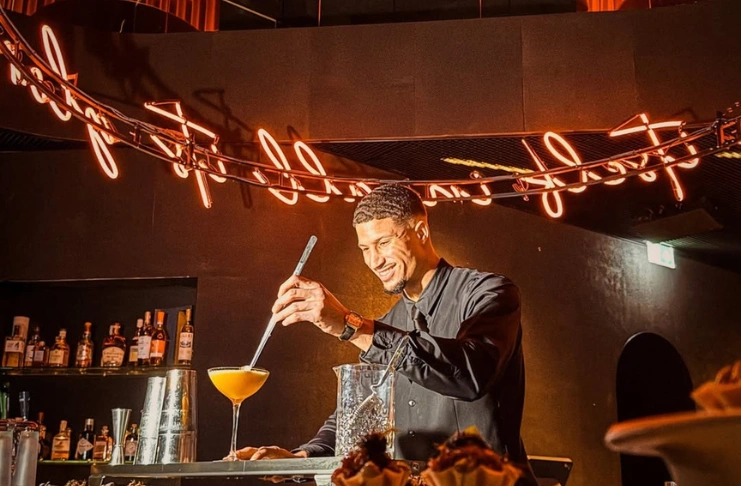
The 57th-floor bar serves food from 10:00 am onward, designed for different moments throughout the day, along with cocktails. Dishes are described as light, pure, and innovative with surprising flavor combinations.
One reviewer noted caviar served in the shape of a C, vegetable foie gras called “No gras,” and a dessert shaped like an airy balloon as a nod to Pfaall’s mode of transportation.
The Opening Night
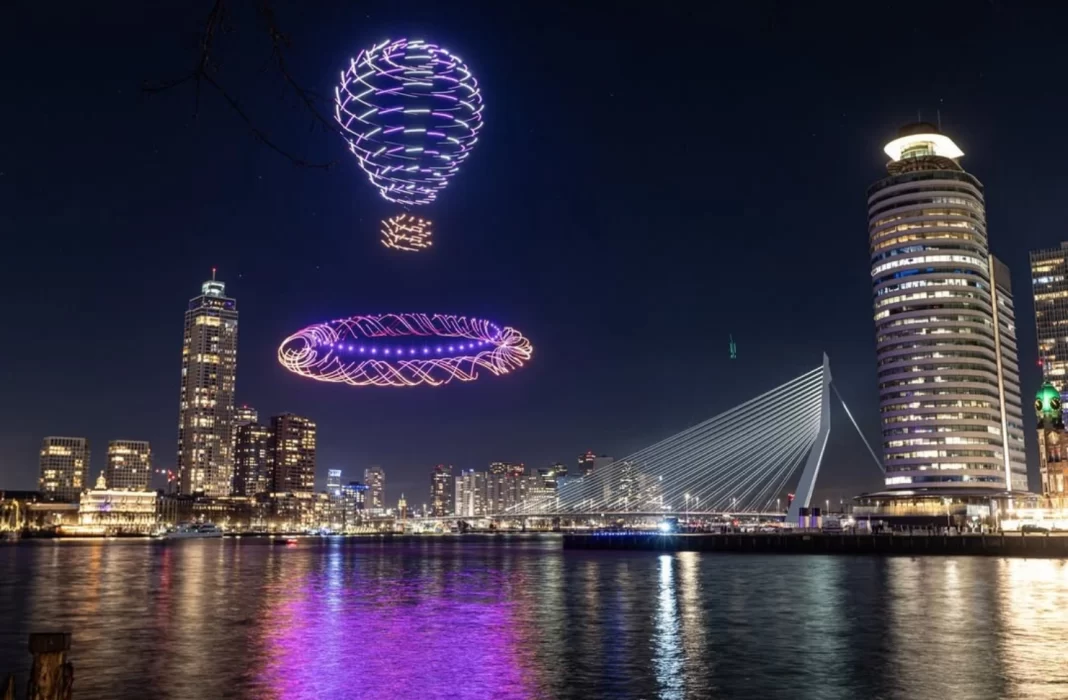
The launch in January 2025 featured a drone show with 400 drones projecting images above the Nieuwe Maas for seven minutes. Managing Director Dennis Vermeulen described it as a gift to the city after the months of preparation.
“We had a vision, a piece of storytelling the Rotterdam way. The result is modern, raw, lots of steel, glass, and details, with a nod to 1835.”
Alexia Vettier, CEO of Magnicity, emphasized the company’s approach to all their projects: “We offer breathtaking views of cities. It has become a true masterpiece, perfectly blending Rotterdam and a fine dining experience.” Magnicity operates under a CSR strategy for responsible urban tourism that prioritizes hiring local labor and working with local entrepreneurs.
Rotterdam’s hospitality scene reacted enthusiastically. Night mayor Thys Boer and various entrepreneurs expressed excitement about the addition to the city’s nightlife.
How Does It Work?
The sky bar is open on Friday and Saturday evenings from 17:00 to 01:00. Reservations are required, as space is limited and demand has been high since opening.
The venue also hosts private and corporate events: business dinners, walking dinners, drinks receptions, and anniversaries. The combination of panoramic views, thoughtful food, and personal service creates what Magnicity calls “a fully catered experience that stays with guests.”
The location matters to how people experience the food and atmosphere. At 190 meters, you’re high enough that Rotterdam’s architecture becomes pattern and texture rather than individual buildings. The view shifts depending on the time of day and the weather.
The interior’s gradual lighting changes reinforce the sense of movement, of traveling through space the way Pfaall did in his balloon.
The Science Behind
Maybe Celest “works” best because it takes its narrative seriously. The Edgar Allan Poe story is embedded in the design choices, the lighting progression, the moon imagery, and even subtle references in dish presentations.
But the fundamentals, high-quality ingredients sourced locally, skilled cooking, attentive service, and stunning views, would work regardless of theme.
The height creates natural drama. You don’t need elaborate staging when you’re eating dinner 190 meters above a city. The views do that work. What the Hans Pfaall story adds is context, a reason for the specific design choices.
For Rotterdam, a city that rebuilt itself after World War II and has always leaned more into contemporary architecture, Celest fits.
It’s modern, ambitious, and doesn’t apologize for being spectacularly tall.
Now, whether the brand maintains momentum beyond its opening buzz depends on execution. High-altitude restaurants face specific challenges: limited capacity, dependence on weather and visibility, and the novelty factor wearing off.
But with Michelin-experienced kitchen leadership, backing from a company that operates successful observation decks globally, and Rotterdam’s enthusiasm for new additions to its skyline dining scene, the future seems solid.
The fictional Hans Pfaall spent 19 days traveling to the moon, then five years there before longing for Rotterdam again. Real guests at Celest spend a few hours at most, but the goal is similar: offering a perspective shift, a chance to see the familiar city from an unfamiliar height, to float above daily concerns for a while before returning to ground level.
Sometimes that’s worth the elevator ride.