

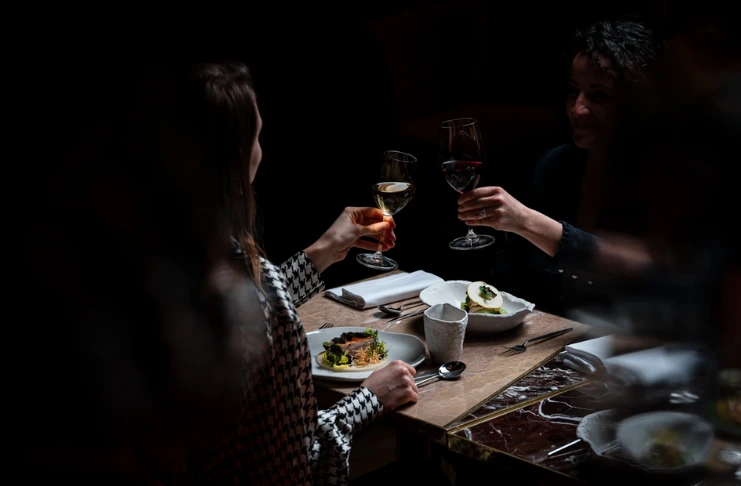

In 2004, French entrepreneur Edouard de Broglie embarked on an ambitious journey to create something unprecedented in the hospitality industry. After achieving success in the technology sector, he sought to reinvest his profits into a socially meaningful venture. His search led him to Paul Guinot of the French Blind Foundation, who had been organizing occasional dinners in darkness since 1997 to raise awareness about visual disability. Together, they transformed this charitable concept into a revolutionary business model.
On July 14, 2004, the first Dans le Noir restaurant opened its doors in Paris under de Broglie’s company, Ethik Investment. The name, meaning “In the Dark” in French, perfectly encapsulated the core experience while carrying deeper implications about challenging perceptions and confronting preconceptions. The Paris launch proved successful beyond expectations, demonstrating that this wasn’t merely a novelty but a genuinely transformative dining concept with broad appeal.
Two years later, in 2006, Dans le Noir? Crossed the English Channel to establish its UK presence in London’s historic Clerkenwell district. The London location became the brand’s first international expansion, paving the way for a global network that would eventually span multiple continents. The UK restaurant brought the complete darkness dining experience to British audiences, becoming an instant talking point in London’s dynamic culinary scene.
The Visionary
Edouard de Broglie approached Dans le Noir not simply as a restaurant chain but as a social enterprise with profound philosophical underpinnings. His vision centered on proving that businesses could achieve commercial success while maintaining strong ethical commitments, particularly regarding disability employment. From the outset, de Broglie aimed to employ approximately fifty percent of staff with severe visual impairments, demonstrating that disability doesn’t diminish profitability or international expansion potential.
De Broglie’s background as a social entrepreneur informed every aspect of the brand’s development. He viewed difference as a source of value rather than limitation, a principle that extended beyond disability to encompass broader questions about human perception and social interaction. His goal was never to create a charitable project but rather a sustainable, profitable business that would inspire other entrepreneurs to incorporate social causes into their business models. As he stated in interviews, the venture made him “a little less rich, but much happier,” capturing the essence of purpose-driven entrepreneurship.
The founder’s commitment to challenging conventional thinking extended to customer experience design. By forcing diners to surrender their most dominant sense, de Broglie created an environment where people could question fundamental assumptions about how they perceive the world, interact with food, and connect with others.
The Concept
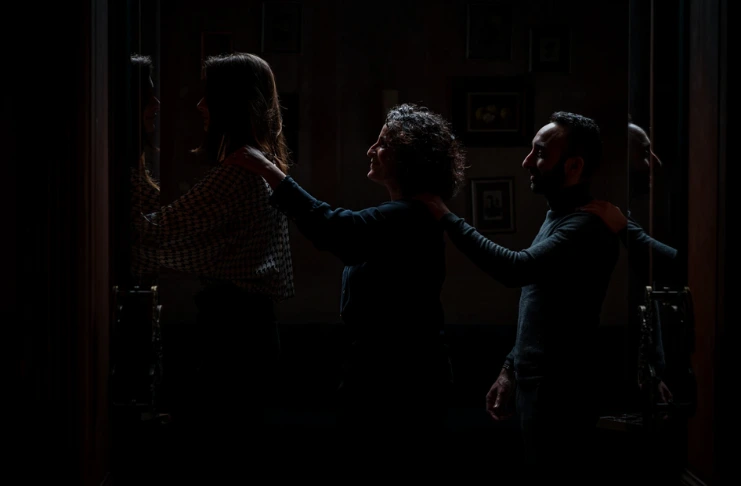
Dans le Noir operates on a brilliantly simple yet profoundly complex premise: guests dine in complete and total darkness, guided and served by visually impaired staff. This isn’t dim lighting or candlelit ambiance, but absolute pitch blackness where diners cannot see their hands in front of their faces even after extended periods of adjustment. The experience begins in a lit reception area where guests surrender all light-emitting devices, including phones, watches, and any electronic items, which are secured in lockers. They then select from surprise menus, making choices based on dietary preferences rather than specific dishes.
Visually impaired guides lead diners through curtained doorways into the dining room, with guests placing hands on shoulders in a chain formation. Once seated at communal tables shared with other diners, guests discover their cutlery, glasses, and table settings through touch alone. The darkness serves multiple purposes simultaneously: it creates a heightened sensory experience, removes visual social barriers and preconceptions, and inverts traditional power dynamics by placing visually impaired staff in positions of complete mastery while sighted guests navigate with newfound vulnerability.
The brand positions this experience across three interconnected dimensions. First, as a sensory journey that amplifies taste, smell, touch, and hearing when sight is removed. Second, as a social experiment where darkness eliminates visual judgments, reduces inhibitions, and facilitates authentic conversation between strangers. Third, as a powerful exercise in empathy and perspective, it offers sighted individuals direct experience of navigating the world without vision while showcasing the capabilities and expertise of visually impaired individuals.
The Cuisine
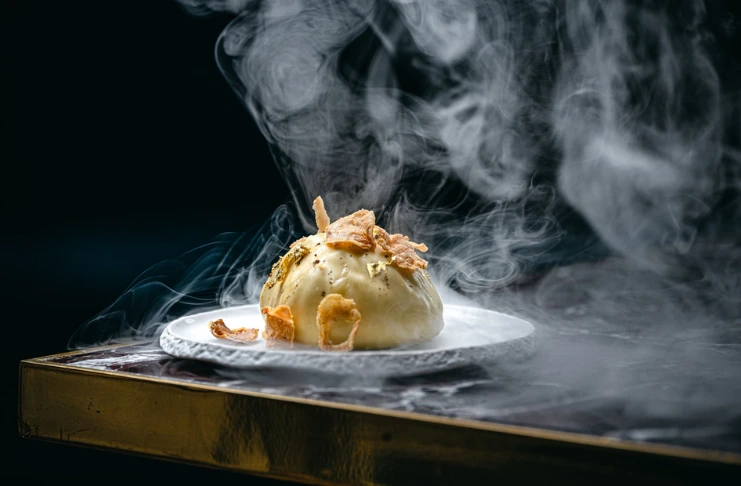
The culinary program at Dans le Noir London reflects thoughtful creativity designed specifically for consumption in darkness. Chefs craft dishes from fresh, seasonal, and high-quality ingredients with particular attention to flavor profiles, textures, and aromatic elements that shine when visual presentation becomes irrelevant. The menu changes regularly, typically on a quarterly basis, ensuring returning guests encounter new experiences.
Diners choose from color-coded surprise menus in the lit reception area: red representing meat-based options, blue for fish, green for vegetarian, and white for the chef’s special surprise selection. The surprise element proves crucial to the experience, as guests must identify ingredients through taste, texture, and aroma alone. Only after completing their meal and returning to the light do diners receive full disclosure of what they’ve consumed, transforming each course into an engaging guessing game.
The kitchen accommodates dietary restrictions and allergen requirements when communicated during booking, adapting dishes while preserving the element of surprise. Wine pairings receive equal attention, with selections made by tasting experts to complement the surprise menus. The culinary approach emphasizes harmonious flavor combinations and distinctive textures that remain identifiable and enjoyable without visual context.
The Experience
The Dans le Noir Experience typically spans approximately two hours from arrival to departure. Guests arrive at the burgundy-fronted building on St John Street in Clerkenwell, entering what appears to be a conventional restaurant with a lit bar and lounge area. Here, the transition begins. Staff explain the experience, take menu selections, and secure all personal belongings before the journey into darkness.
The guides, all of whom have visual impairments or complete blindness, possess complete confidence navigating the pitch-black environment. Some have worked at the London location since its 2006 opening, developing extraordinary expertise in serving guests, locating dropped utensils, and even escorting diners to fully-lit restrooms when needed. These staff members transform what could be disorienting chaos into a smooth, comfortable experience, offering tips like placing a finger inside a glass while pouring to prevent overflow.
Dining in absolute darkness proves surprisingly manageable, though many guests abandon cutlery protocols in favor of using bread or fingers to navigate their plates. Spills and dropped items occur, but reportedly not significantly more than in conventional restaurants. The communal seating arrangement encourages interaction between strangers, with the darkness serving as a social equalizer that facilitates surprisingly intimate conversations. Many guests report that without visual cues and social posturing, communication becomes more authentic and uninhibited.
The restaurant operates Tuesday through Friday evenings and weekend lunch and dinner services. Pricing begins from approximately £56 per person for the three-course surprise menu with wine pairing, positioning the experience as special occasion dining rather than everyday fare. Beyond restaurant service, the London location offers specialized sensory workshops, including blind wine tastings and olfactory discovery sessions that explore fragrance and smell in darkness.
Recognition and Accolades
Dans le Noir London has earned significant recognition since its 2006 establishment. The restaurant regularly ranks among the ten most original restaurants globally, a testament to its enduring appeal beyond novelty status. On TripAdvisor, it has achieved Travelers’ Choice awards and maintains strong rankings, with some international locations placing in the top tier of restaurants in their respective cities.
The brand gained considerable cultural visibility through its featured appearance in Richard Curtis’s 2013 romantic comedy “About Time,” where a pivotal scene between Rachel McAdams and Domhnall Gleeson takes place in a London restaurant. This Hollywood exposure introduced the concept to global audiences, though staff emphasize that the real experience proves far more profound than cinematic depiction can capture.
Beyond restaurant accolades, the Dans le Noir brand has expanded into perfume creation with notable success. Their Eau de Parfum de Nuit, created in 2024 in collaboration with perfumery house Symrise and perfumer Suzy Le Helley, has received multiple honors, including finalist status at the prestigious Fragrance Foundation Awards 2025, a medal at the 2024 Indies Days Grand Prix from Cosmétiquemag, and first place in Marie Claire’s ranking of best night perfumes.
The London location has become something of a celebrity destination, attracting actors, comedians, singers, and business leaders seeking unique experiences. Its sustained popularity over nearly two decades demonstrates that Dans le Noir? has transcended gimmick status to establish itself as a legitimate and valued component of London’s hospitality landscape.
A Lasting Legacy

Dans le Noir represents more than innovative dining. It stands as a bold experiment in human perception, social inclusion, and hospitality that succeeds precisely because it strips away rather than adds elements to the conventional restaurant experience. By removing sight, the brand reveals how profoundly one sense dominates our experience while demonstrating how other senses and human connections flourish when given primacy.
The UK location, now approaching two decades of operation in London, has welcomed countless guests into its darkened dining room, each emerging with heightened awareness of their own sensory capabilities and renewed perspective on disability. The visually impaired guides don’t merely serve food but serve as educators and experts, inverting typical assumptions about capability and dependence.
In an era dominated by visual culture, Instagram aesthetics, and constant digital documentation, Dans le Noir offers something increasingly rare: an experience that cannot be photographed, an environment demanding presence rather than performance. It reminds diners that food exists to be tasted, conversations to be heard and felt, and that genuine human connection remains possible when pretense becomes impossible in the darkness.


