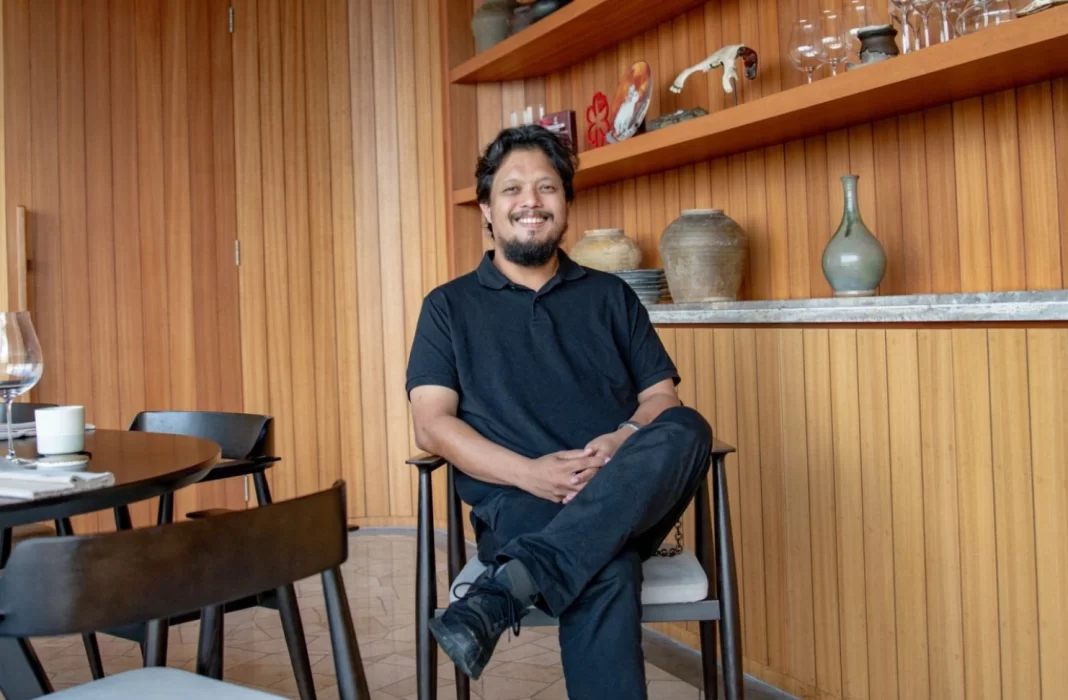

Darren Teoh never felt like he belonged anywhere. Part Chinese, part Indian, fluent in neither language, he grew up caught between cultures in a country that seemed to have clear boxes for everyone except him.
“I don’t have much of a culture except for the ones that I’ve taken from one generation before,” he admits to CNA Luxury.
That search led him down an unlikely path.
From teaching molecular gastronomy at a university to now helming Malaysia’s only two-Michelin-starred restaurant on the 48th floor of a Kuala Lumpur skyscraper, Teoh’s journey is a fever dream of determination, cultural excavation, and a stubborn faith in ingredients most Malaysians had forgotten existed.
Dewakan, literally “food from God,” is Teoh’s answer to a lifetime of not fitting in, his love letter to a country that didn’t know how to categorize him, and his defiant stand against a dining scene that prioritized imported prestige over local treasures.
The Motorcycle Days
In 2014, when Teoh opened Dewakan on the ground floor of a university campus in Shah Alam, facing a football field, most people questioned his judgment.
Fine dining restaurants belonged in five-star hotels, not academic buildings where the aura screamed “experimental project destined to fail.”
The premise was bold: serve indigenous Malaysian ingredients – things like cendawan kukur (split gill mushrooms) and kulim nuts that smell like garlic but grow on trees, at fine dining prices.
This was a time when Malaysian diners trusted portobello mushrooms over anything foraged from their own forests.
Teoh had no suppliers for these ingredients. None existed. So he’d load up his motorcycle and ride to Taman Tun market, where a Malay vendor named Aziza became his unofficial professor of ulam: the universe of roots, leaves, flowers, and fruits that indigenous communities had been eating for centuries.
“We could only use what we could get with what we had access to at the time,” Teoh recalls. Those early menus featured local prawns with fiddlehead ferns and pennywort, dishes that confused as much as they delighted.
The goreng pisang ice cream became a hit precisely because it was familiar, a bridge between the known and the radically unfamiliar territory Teoh was mapping.
The Noma Effect
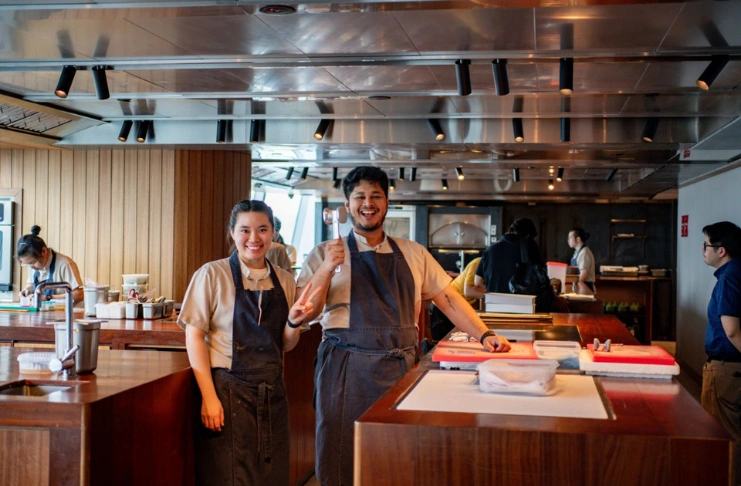
The turning point came during a few weeks at Noma in Copenhagen, where René Redzepi was busy redefining Nordic cuisine by treating local landscapes like treasure troves.
“At that time, I was like, ‘wow, these guys are nuts. They were doing all these interesting things like juicing vegetables a la minute for the freshness.”
But what really inspired him was that they had the permission to fail, to experiment, to believe that the ingredients growing in your own backyard could be as worthy of reverence as anything flown in from Europe.
“What I took back from Noma was not to be afraid of doing things, of making mistakes,” he says.
That courage crystallized into a thought: Malaysia had a “giant vacuum” in how it treated local produce. While restaurants competed to import the most exotic foreign ingredients, an entire ecosystem of flavors was being ignored, dismissed as too primitive for sophisticated palates.
The Indigenous Connection
Teoh’s fascination with indigenous ingredients stemmed from something deeper than culinary curiosity. Malaysia’s Orang Asli communities—95 distinct subgroups comprising 13.8 percent of the population- maintained an intimate relationship with the land that Teoh, rootless and culturally untethered, found magnetic.
“It has something to do with my lack of identity,” he explains. These communities knew every leaf, every root, every seasonal rhythm of their environment. They possessed knowledge that urban Malaysia had traded for convenience and global trends.
Working with these ingredients required detective work. Take the kemili, a wild yam that Teoh spent seven years trying to master. “It’s hard to figure it out, as it has a strong muddy flavor,” he admits.
The breakthrough came when he borrowed a nixtamalization technique from Peru, using alkali to turn the tough root into something resembling masa dough for flatbread.
Each ingredient demanded this level of commitment. The limau hantu, a citrus fruit from a Jakun tribe in Johor, produces teardrops of intense sourness from sacs inside its thick pith. Only two trees existed, and one died from waterlogging.
Teoh brought back seeds, but they’ll take 30 years to mature. And, Darren is definitely on it.
The Michelin Paradox
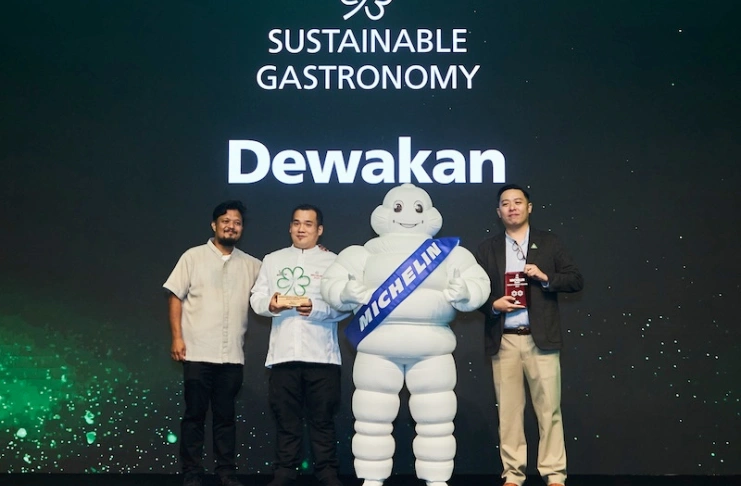
When Dewakan earned its first Michelin star, then its second, plus Malaysia’s first Green Star for sustainability, the recognition felt both validating and beside the point.
“Although we greatly appreciate receiving recognition from Michelin, earning the star is not our sole objective,” Teoh shares with Tatler Asia. “Instead, we concentrate on perfecting our craft because it is essential to us.”
The stars brought global attention to Malaysian ingredients that had been hiding in plain sight. Suddenly, international food media were writing about dabai fruit and keranji seeds, ingredients that most Malaysians couldn’t identify.
The irony wasn’t lost on Teoh: it took foreign validation to make his own country pay attention to its culinary heritage.
But the recognition also brought pressure and expectations that could easily derail the mission.
Fine dining has a tendency toward intellectual showmanship, where chefs deliver four-minute speeches about chickens with names. Teoh rejects this pretension fiercely.
“I’m not a big fan of people telling me what to do, even when I eat,” he says during the conversation with Options. “I don’t care if the chicken has a name, and I definitely don’t need a four-minute introduction to the dish.”
The Lime Leaf Oil Confession
Every chef has a secret ingredient, and Teoh’s is almost embarrassingly simple: lime leaf oil made from limau nipis that he developed while still teaching. It appears on virtually every menu.
“Sometimes when we are tasting dishes, even before I can say something like, ‘I think it needs…’ one of the guys will say, ‘You want lime leaf oil, right?'” he admits to Malay Mail, laughing at how predictable he’s become to his team.
That oil (that may seem ordinary to us) represents continuity, identity, the through-line connecting a confused kid who never felt Malaysian enough to a chef who has become one of the country’s most important cultural ambassadors.
The 48th Floor Revolution
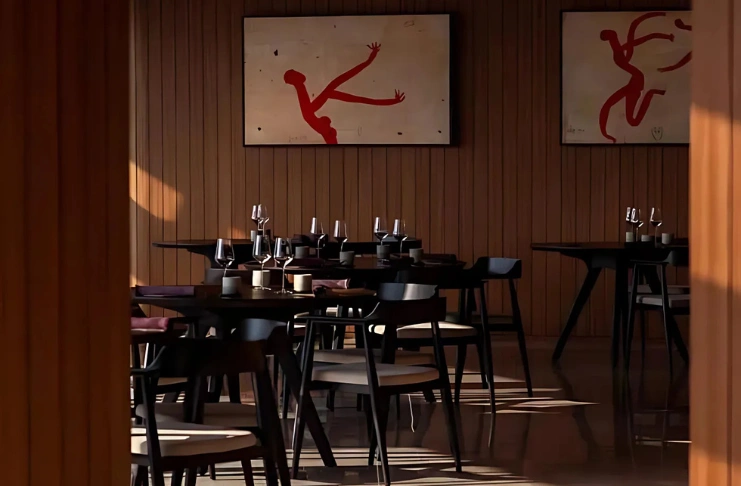
The move from university campus to the 48th floor of Naza Tower was Teoh’s chance to shed the European fine dining costume he’d been wearing: the white tablecloths, the suited servers, the whole pretentious theater that never felt authentic.
The new space, with its open kitchen and panoramic city views, allowed Dewakan to express itself more honestly.
Traditional fine dining rules were discarded. Menus could start with roast meat instead of acid. Diners could see the controlled chaos of service instead of having it hidden behind walls.
“It became a process of dismantling and rebuilding, finding new ways to excite both ourselves and our guests,” Teoh explains. The restaurant found its voice by refusing to imitate anyone else’s.
Beyond the Kitchen
Teoh’s impact extends beyond plates and reviews. His team members receive exposure trips to legendary restaurants worldwide (Noma, L’Arpège, Fu He Hui, to name a few) because he believes in investing in people without expecting direct returns.
Former Dewakan cooks have opened noodle shops, become private chefs, and landed positions at three-Michelin-starred establishments.
The restaurant industry has a reputation for chewing up young talent, but Teoh operates differently. He gifts books to staff members tailored to their growth needs, creates systems for recovery rather than punishment for mistakes, and models the kind of leadership that truly develops people.
“We’re really proud of the people who have come through our doors – those who found meaning in their time here and recognize it as a significant chapter in their lives,” he says.
The Deeper Mission
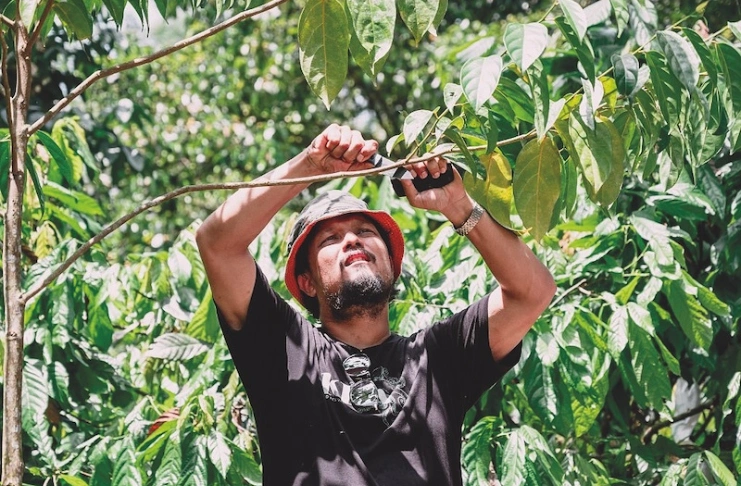
Ten years in, Teoh understands that Dewakan’s real achievement is the shift in consciousness it has catalyzed. Young Malaysians now seek out local ingredients at wet markets. Other restaurants have started exploring indigenous produce. The conversation around food security and sustainability has grown more urgent.
“Our impact is also one that grows downwards, like roots,” Teoh reflects. “Who knows, maybe in the next few years, another restaurant will emerge to do purposeful things. And that, I believe, would be our legacy.”
Malaysia imports most of its rice despite having a climate that allows year-round cultivation. The country depends heavily on foreign produce while its own agricultural knowledge fades with each generation. Dewakan represents resistance to this cultural amnesia.
For Teoh, the mixed-race kid who never felt he belonged anywhere, the answer was never to choose a side. Instead, he created a restaurant that is undeniably Malaysian, not because it fits into existing categories, but because it excavates the country’s deepest truths and serves them with uncompromising excellence.
On the 48th floor, with the Petronas towers gleaming in the distance, diners experience the taste of home they never knew they were missing.