



When Tony Lu told his friends he was opening an upscale vegetarian restaurant in Shanghai with tasting menus costing up to $120 per person, they laughed at him. “A lot of people think that if you pay 50 dollars for a steak, it feels very normal; but if someone asks you to pay 50 dollars for a turnip dish, that’s really weird,” Lu recalls telling Smithsonian Journeys.
The laughter stopped when Fu He Hui became Shanghai’s first Michelin-starred vegetarian restaurant and started commanding nearly $130 per person for seasonal tasting menus.
Today, the restaurant stays fully booked despite being what Lu himself calls “the most expensive vegetarian restaurant in Shanghai.”
How did Tony make it possible? By making diners forget that meat existed at all.
The Buddhist Business Model
Fu He Hui’s origin story reads like a case study in purpose-driven entrepreneurship.
The restaurant’s Buddhist owner made a vow to start a vegetarian establishment, but rather than opening another temple canteen, he backed Lu’s vision of luxury plant-based dining that competed on sophistication.
“We wanted a place that felt calm,” Lu explains. While most Chinese restaurants bombard diners with noise and chaos, Fu He Hui spans three floors of earth-toned private dining rooms designed around Zen minimalism. The environment itself becomes part of the value proposition.
“When guests come here, they become a different kind of person,” Lu tells Smithsonian Journeys. That transformation is what justifies the premium pricing.
Breaking the Imitation Game
Lu’s masterstroke was philosophical: rejecting the centuries-old Chinese Buddhist tradition of making vegetarian food look like meat. “We feel that if your mouth is vegetarian, your heart should be too,” he says..
By abandoning imitation, Fu He Hui could focus on what vegetables actually offered rather than what they could pretend to be. Each dish showcases a single ingredient—Yunnan aubergine, Guangdong daikon, Jiangxi bamboo—sourced directly from regional farming communities and prepared using techniques dating back to the Ming and Qing dynasties.
The restaurant’s signature White Gourd exemplifies this approach. A common, cheap ingredient gets sculpted into balls, stuffed with mashed taro, and stewed with vileplume and almonds for three hours. And it sells for $130.
The Fusion Gamble

In a country where many chefs avoid admitting they create fusion cuisine because “they think it sounds cheap and low level,” Lu embraced it strategically.
“As a vegetarian restaurant, there are limits to our ingredients, so I think we shouldn’t limit our style of cooking,” he says.
This scarcity-driven innovation fostered creativity that wouldn’t have existed in traditional meat-based kitchens. French techniques meet Indian spices meet English methods, all applied to Chinese ingredients. The constraints became competitive advantages.
“Actually, fusion food is much harder to make than simple food; you need to know the culture of many places, the spirit of the food,” Lu explains. The difficulty justified both the prices and the acclaim.
The Experience Economy
Fu He Hui operates on experience economy principles that most restaurants struggle to implement. Diners must commit three hours to their meal. No cap.
“We’re not going to rush our guests. It’s not meaningful, there’s no point,” Lu tells Smithsonian Journeys. While competitors maximize covers per night, Fu He Hui maximizes impact per guest.
Each course comes with a theatrical presentation. The lotus flower tea arrives with petals that slowly bloom when hot tea is poured over them. Baked porcini gets smoked with burning grape vines and served in sealed glass jars that release aromatic clouds when opened tableside.
These are Lu’s way of value justification for charging steakhouse prices for vegetables.
The Michelin Validation
When Shanghai received its first Michelin stars in 2016, Fu He Hui’s recognition validated Lu’s entire thesis. That star was proof that Chinese diners would pay premium prices for premium vegetarian experiences.
“From a commercial point of view, the restaurant is normally fully booked anyway, so we can’t fit any more guests in,” Lu notes. On top, the Michelin star confirmed that demand had already been captured through excellence rather than marketing.
More importantly, the recognition shifted industry perception. Lu hopes it gives “investors confidence to back this kind of restaurant,” creating a new category in Chinese dining.
The Cultural Timing
Fu He Hui’s success reflects broader shifts in Chinese society. Food safety scandals created an appetite for natural, organic dining. A younger generation has shown an openness to new tastes. Rising wealth enabled experiential spending.
“Now we all have so much information: You can go online and see videos of slaughterhouses or factory farms,” Lu explains. Transparency drove dietary consciousness, which drove premium positioning opportunities.
The restaurant positioned itself at the intersection of these trends: wealthy, health-conscious, experience-seeking diners who wanted dining that aligned with their values.
The Anti-Scaling Strategy
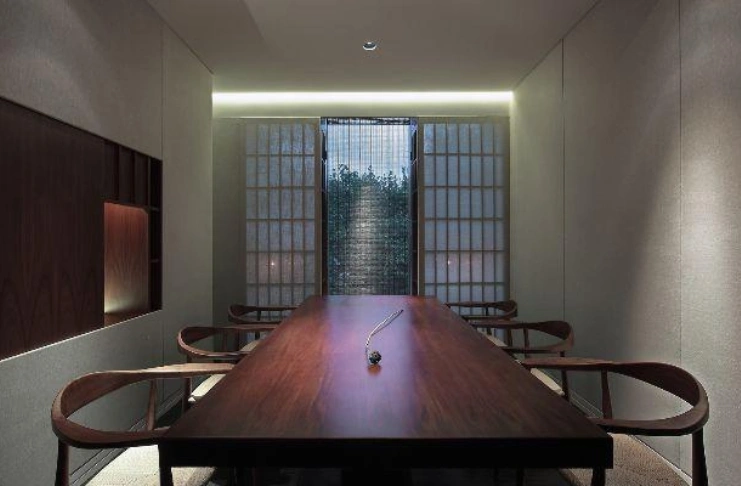
Like Sushi Saito, Fu He Hui succeeds through strategic limitation rather than expansion. Only set menus. Only seasonal ingredients. Only three-hour experiences. These constraints create exclusivity that diners readily pay for.
Lu changes 40% of the menu each season, forcing returning customers to experience novelty while maintaining core dishes that define the restaurant’s identity.
It’s planned obsolescence applied to fine dining, where previous experiences become unrepeatable, driving repeat visits.
The Turnip Transformation
The real genius of Fu He Hui lies in reframing value perception. A $50 turnip dish seems absurd until you experience the three hours of environment, service, technique, and storytelling that surround it. The turnip becomes a driver of transformation rather than sustenance.
“The key is not the value of the turnip, but how much-added value you give to it, how you cook it,” Lu explains.
That added value—sourcing from specific regions, applying historical techniques, creating theatrical presentation, providing cultural education—transforms commodity ingredients into luxury experiences.
When friends stopped laughing at Tony Lu’s expensive turnips, they started booking tables instead. The lesson for restaurateurs: sometimes the most ridiculous ideas become the most profitable realities. So, don’t give up yet.


