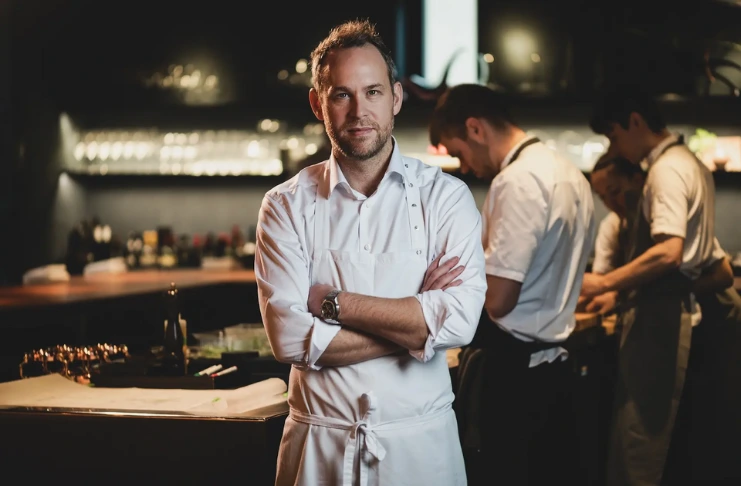

Some chefs chase perfection. Björn Frantzén has learned to clone it.
In a nondescript corner of Atlantis The Palm, accessible through a door you’d easily mistake for a service entrance, the Swedish chef has pulled off something audacious: his third three-Michelin-starred restaurant. Not inherited stars. Not legacy accolades riding on decades of reputation. FZN earned its trio within seven months of opening, joining Stockholm’s Frantzén and Singapore’s Zén in what amounts to a culinary hat trick no other chef has managed.
This isn’t about ego or expansion for expansion’s sake. It’s a proof of concept. Frantzén has decoded something elusive in fine dining: how to bottle lightning, ship it across continents, and have it strike with the same force. The formula is deliberate, the execution exacting, and the result is a restaurant that feels both intimately familiar to those who know his work and utterly revelatory to first-timers standing at that unassuming door, finger hovering over the doorbell, about to step into a world that unfolds like a beautifully choreographed secret.
The Swedish chef has accomplished what few have dared attempt: replicating excellence at scale. With FZN joining his eponymous Stockholm flagship and Zén in Singapore, Frantzén stands alone as the only chef operating three three-Michelin-starred establishments simultaneously. Each shares his signature architectural approach to dining, but FZN brings this vision to the Middle East with its own distinctive character.
A Culinary Journey Through Space
The experience begins before you taste a single bite. Ring the doorbell, and you’re admitted into a world that unfolds floor by floor, room by room. The evening opens on the second floor in a sophisticated lounge overlooking Dubai’s glittering skyline. Here, the restaurant’s philosophy reveals itself through a ritual that has influenced fine dining worldwide: the presentation of ingredients.
This is theater, yes, but purposeful theater. Guests encounter the raw materials of their impending meal, from Danish eggs to Norwegian langoustines, understanding that almost everything has traveled from afar to this desert city. Two floors, 27 seats, and a procession through spaces designed to build anticipation.
The main dining room centers on an open kitchen wrapped by a wooden counter, offering front-row seats to culinary craftsmanship. Side tables maintain sightlines to the action. Between courses, there’s even a detour through the wine cellar to a prep kitchen, where education becomes entertainment. Watching a chef demonstrate the anatomy of a live scallop, extracting its adductor muscle moments before it reaches your plate, you can’t help but appreciate the dedication to freshness.
The Frantzén Formula
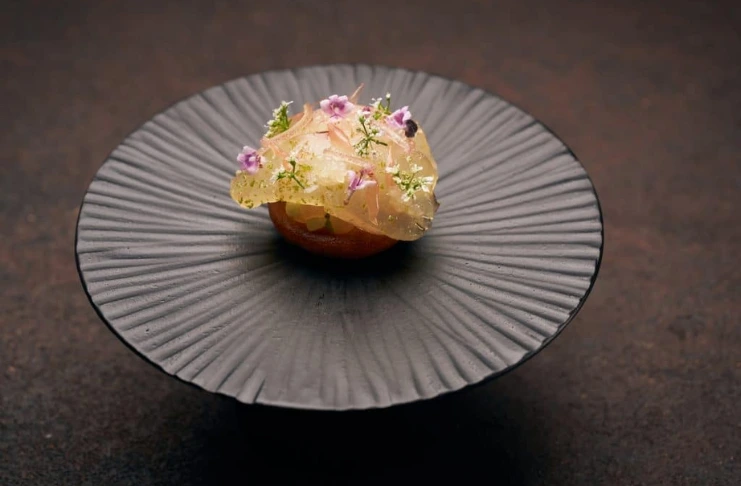
What makes this cuisine distinctive? It’s Scandinavian at its core, with Nordic ingredients and techniques forming the foundation, but Japanese precision and flavors provide the accent. Think langoustine tartare with finger limes and vanilla in a celeriac taco shell. Or buckwheat blini topped with fatty tuna, ponzu, and sansho pepper, delivered with an intensity that defies traditional Japanese restraint.
The fixed tasting menu progresses through roughly 20 compositions, each a study in contrasts: crunchy and creamy, sweet and acidic, rustic and refined. A choux pastry filled with cheese sauce arrives warm, its surprisingly light shell preventing heaviness. Later, a turbot skirt meets beurre blanc, walnuts, tahini, and caviar, nodding subtly to Middle Eastern sensibilities while remaining unmistakably Frantzén.
Signature dishes travel between locations. The onion, almond, and licorice combination has appeared at every Frantzén restaurant since the beginning, here reimagined as a velouté with toasted almonds, milk foam, and licorice cream. It’s savory yet dessert-like, caramelized yet crunchy, paired brilliantly with Madeira.
Other highlights include a Japanese chawanmushi topped with grilled razor clams, uni, and smoked beef broth, its acidic sauce cutting through richness with surgical precision. Or the guinea fowl main course, served with white asparagus, morel mushrooms filled with farce, and sauce périgourdine, accompanied by Parker house rolls and three-layer butter: French salted, truffle, and shallot confit.
Service as Art Form
In Dubai’s competitive dining landscape, service can make or break a restaurant. FZN operates like well-oiled machinery, staffed by an international team recruited largely from Frantzén’s other establishments. Water appears without asking. Plates vanish without notice. Napkins are replaced invisibly. The entire operation feels effortless, which means it’s anything but.
The warmth distinguishes it from sterile perfection. Staff inquire about your travels, marvel at connections to sister restaurants, and compare notes on their own journeys through the Frantzén empire. It’s hospitality that feels genuine rather than rehearsed, three-star caliber without pretension.
The Dubai Context
Location matters. While the menu offers minimal concessions to its Middle Eastern setting, the city’s import taxes explain the eye-watering beverage prices: wine pairings range from 1,400 to 5,000 AED, with non-alcoholic options at 750 AED. The 2,000 AED tasting menu feels reasonable by Dubai standards, particularly for this level of execution.
That FZN secured last-minute reservations in late May speaks to timing and climate. Temperatures approaching 40 degrees Celsius with suffocating humidity discourage casual tourism. Curious locals had likely already visited since the November 2024 opening. But for those willing to brave the heat, the reward is dining at a restaurant operating at full stride, its systems perfected, its team synchronized.
The Verdict
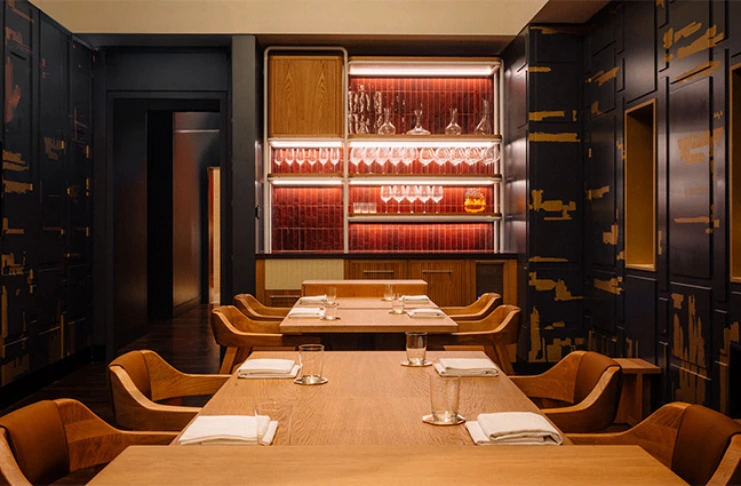
Does FZN match the aggressive flavors and distinctive character of its Stockholm and Singapore siblings? Perhaps not quite. The seasonings here tend toward mellower, more blended profiles. Dishes are technically superb but occasionally lack the “pop” that makes them truly memorable. It’s arguably a strong two-star experience elevated by service and setting to three-star status.
But this is splitting hairs at the highest level. FZN delivers what it promises: modern European fine dining infused with Japanese influences, executed with precision in an intimate, luxurious environment. From the lingonberry marshmallow with spruce oil to the matcha waffles with carrot ice cream, from the petit fours selection to the Miyazaki mango finale, each element reflects thoughtful composition.
Björn Frantzén’s vision, born from a childhood memory of steak with béarnaise, has evolved into something far more sophisticated. FZN proves that formula can be art, that replication need not diminish quality, and that excellence can be engineered across continents. In a city defined by superlatives, it earns its place among the extraordinary.