

There is the moment, that particular moment, which occurs some time after the first mouthful of tandoori masala lamb chops and before the serving of wild muntjac biryani appears on the plate, when one becomes aware that what one is partaking of is not, in fact, a curry house, nor even, strictly speaking, what anybody, as late as perhaps 12 months ago, could have called a “fine dining Indian restaurant.” No, what you are eating is something else, something that is both utterly and completely familiar, but at the same time completely unlike anything you have ever eaten before, something that has a name, and that name is Gymkhana.
Located on Albemarle Street, in the very heart of Mayfair, it opened its doors in 2013. It is a restaurant that made the culinary scene in London sit up, put down its fork, and pay attention. In fact, it took Giles Coren, the food critic for The Times, just a few short months after the opening of Gymkhana to give it his very first ever perfect 10/10 for food, where he declared, “I have eaten there three times, working my way through over 25 of their 34 savory dishes, and I can confidently say that it is quite simply the best restaurant I have ever been to.”
Three Siblings, One Big Idea
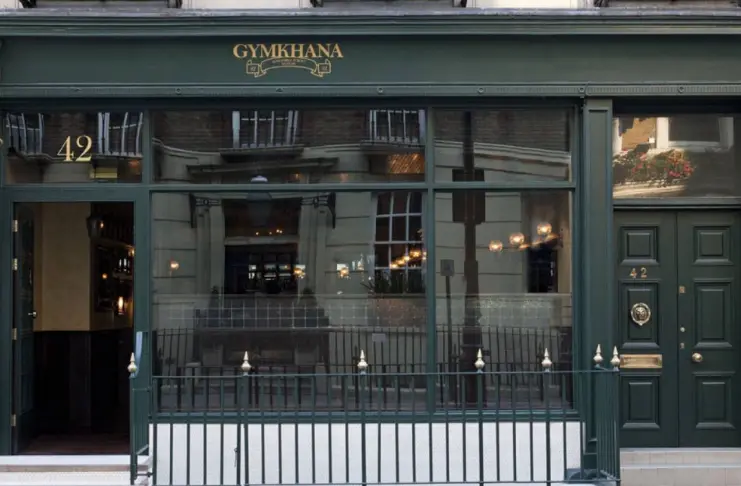
The story, like all good stories, starts with a family. The Sethis, Jyotin, Karam, and Sunaina, were born and raised in London to Indian parents and had no background in the hospitality trade whatsoever. What they did have was their experiences of visiting India during their childhood, which, from being a reluctant family duty, had gradually evolved into something else—into an obsession, an obsession with the food, the culture, and the manner in which an entire sub-continent seemed to dine with such confidence and enthusiasm.
In 2008, the three siblings opened their first restaurant, Trishna, in Marylebone, specializing in southwest Indian cuisine. This was recognized in 2012 when they earned their first Michelin star. However, their next step was to make their mark. In 2013, the siblings opened their restaurant, Gymkhana, and their name spoke for itself.
Gymkhana is an exclusive social club where people from high society can drink, sport, and eat. It was an exclusive club for people from high society in colonial India. The Gymkhana Club in Delhi, which was cited by Karam Sethi as a personal inspiration for opening their restaurant, as well as the bar and restaurant of the Delhi Golf Club, was a type of club where people from high society could drink, sport, and eat. They wanted to replicate this atmosphere and transport it to Mayfair. However, what they have created is a restaurant that is a heritage site and a party that you never want to leave.
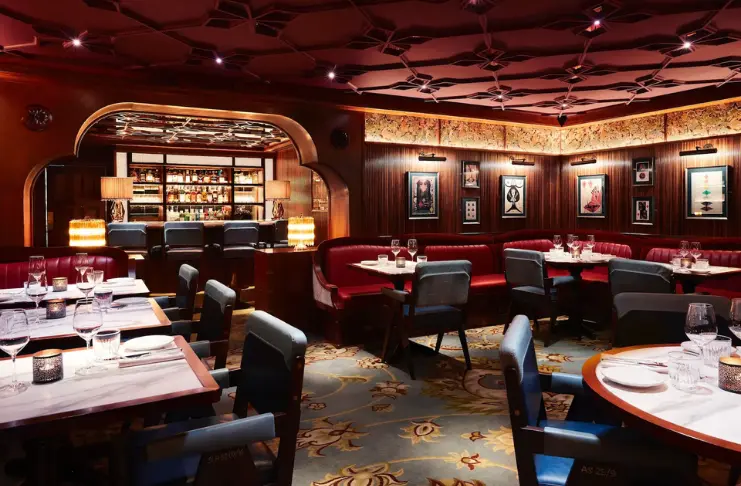
The ground floor dining room is resplendent in jade, dark wood tones, and richly patterned textiles, evoking the residential mansions of Kolkata and Pondicherry. The bar takes its inspiration from an Edwardian drawing room cabinet. Hunting trophies from the Maharaja of Jodhpur feature on the walls. Grandmother Sethi’s barometer has its home somewhere in the room, and this, this personal touch, cuts through all the pomp and circumstance like a hot knife through butter. The lower ground floor, on the other hand, has a darker, more intimate feel, and the architecture takes on a different journey altogether.
The Food That Started a Conversation
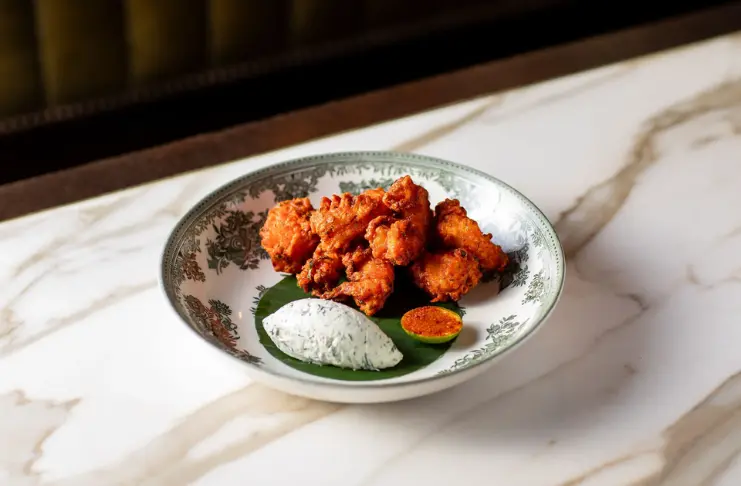
When people talk about what Gymkhana does differently, they often reach for the word “authentic.” It is, in this context, a word that carries a certain weight, and it is a word that has always been approached by Karam Sethi and his team with a certain intent. The intent has never been to replicate restaurant-style Indian food as it has been presented to Britain so far. The intent has always been to serve Indian food as it is cooked and consumed, with full-on, unapologetic flavors, and cooked with the same rigor and technical precision as any other cuisine.
The food is derived mainly from North Indian cuisine, with tandoor at its heart. Kebabs, biryanis, and slow-cooked curries made with a range of spices that can include up to 50 different components for a single Awadhi-style curry. The lamb chops, marinated for at least 24 hours before being cooked in the charcoal tandoor, have become so popular that they are ordered off every table every single service. The kid goat methi keema is a dish that can only make one understand why Indian food is considered one of the most complex cuisines in the world. The wild muntjac biryani, which uses British game and sources fragrant basmati rice unavailable elsewhere in the UK, is perhaps the purest expression of what Gymkhana is trying to do: taking ingredients from this country and treating them with the full weight of North Indian culinary tradition.
The Financial Times’ Nicholas Lander wrote of Sethi that he had “created a restaurant that delivers highly labour-intensive and flavorful dishes with style and wit.” The Independent’s Lisa Markwell described the menu as “exemplary of the fine line between comforting and imaginative.” Neither review was wrong. The dishes feel like home cooking, but home cooking with a precision behind it that takes years to master.
The kitchen today is led by Chef Director Siddharth Ahuja, who grew up in Delhi, decided he wanted to cook at the age of four, and has been at Gymkhana since 2016. He trained with the Taj Hotels group and the Oberoi Hotel group in India before moving through a series of luxury roles and eventually arriving in Mayfair. His butter chicken, rooted in the flavors of his Delhi childhood, has become another of the restaurant’s signature obsessions. Working in close collaboration with Karam Sethi, who remains food and creative director at JKS Restaurants, Ahuja has built a kitchen culture where new dishes are tested as staff meals before they ever reach a menu, where sourcing is treated as seriously as cooking, and where the standard is relentlessly, obsessively high.
The Stars, The Fire, The Second Act

In 2014, just a year after its opening, Gymkhana won its first Michelin star, a record in itself for a restaurant of its scope and ambition. The same year, it won the National Restaurant of the Year award in the National Restaurant Awards. Though the awards were important, in a sense, they were beside the point too, because the restaurant had already succeeded in something rather harder to quantify: it had become a cultural institution. The tables were already booked in advance, and the regular clientele included a who’s who of everything from City power lunches to celebrities dishing out tips on the lamb chops. Ed Sheeran, who has claimed it to be his favorite Indian restaurant, is just one of the more famous regulars.
And then, in June 2019, there was a fire in the building. Gymkhana shut down overnight. The shutdown lasted for eight months, during which the design of the place was completely redone by architect Samuel Hosker, before it reopened in February 2020. The timing, it turns out, was exquisite in its calamity—because of the virus, which came in just a few weeks after that. Yet, the restaurant reopened, the crowds came in, and the lamb chops returned. As it turns out, some things are simply irreplaceable.
The second Michelin star came in the 2024 Michelin guide, making Gymkhana the first Indian restaurant in London to be granted the honor of two stars. Ten years of consistency, of refusing to compromise, of serving 300 covers a day, lunch and dinner, with the kitchen shut only for five days of the year, had earned the most coveted award in the business.
What Makes It Different
The real question, in the end, is not whether Gymkhana is the best Indian restaurant in London, which many people would argue it is, but whether it represents something greater than that: a new paradigm in the way that British people think of and relate to Indian food. The answer to that is almost certainly yes.
In a city that has taken Indian food for granted for decades, where it has been relegated to the comfortable cliché of Friday night convenience food, Gymkhana came along and defied categorization. It is, as Karam Sethi has described it, a restaurant that sits in the space between the Brick Lane curryhouses and the high-end, Michelin-starred restaurants, bringing the passion of the former to the intensity of the latter. It is, in the truest sense of the word, a game-changer.
The 50 Best Discovery guide called it “a game-changer, the sort of place that the millennial Sethi siblings of owner JKS Restaurants would go to spend their own money rather than be taken by their parents.” That sentence says everything. This is a restaurant created by people who are passionately, obsessively in love with the food they serve. And it shows in every dish, every detail, every misstep up and down those mirrored stairs.
The wood-paneled rooms are filled every day of the week. The lamb chops keep rolling out of the kitchen. The stars are on the wall. And somewhere in the kitchen, Sid Ahuja is standing in front of the tandoor, making sure the fire is just so.