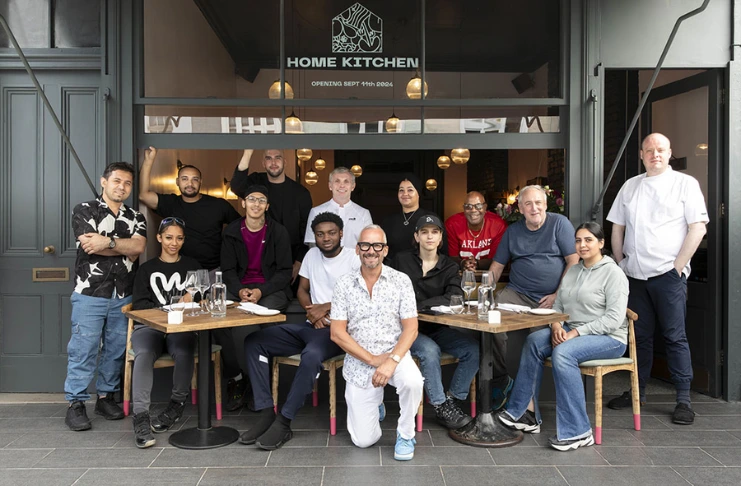

In the affluent streets of Primrose Hill, where Victorian townhouses cascade down tree-lined avenues and boutique restaurants compete for the attention of London’s dining elite, an extraordinary transformation unfolds nightly. Here, in the former home of beloved institution Odette’s, a restaurant operates on a revolutionary premise: that society’s most vulnerable can become its most valuable hospitality professionals.
This is not charity dressed as cuisine. It is fine dining reimagined as social architecture, where every perfectly plated dish carries the weight of a second chance, and where the journey from homelessness to professional excellence happens one service at a time.
The Visionary Alliance
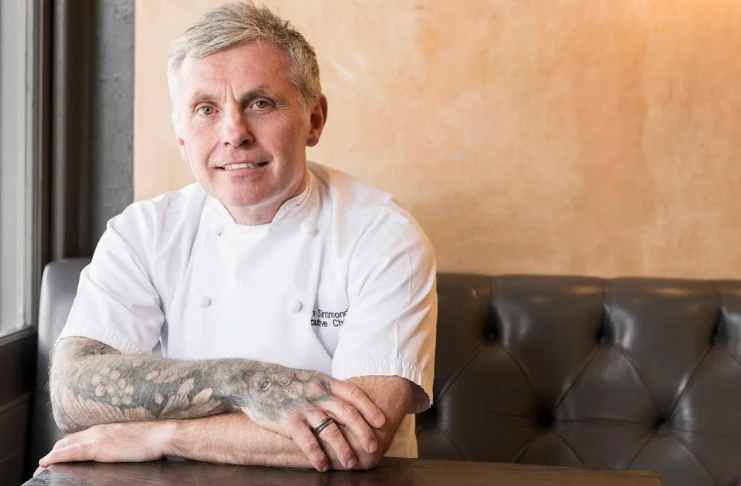
Chef Adam Simmonds, with his two Michelin stars and many AA rosettes, is the driving force behind Home Kitchen. Chef Simmonds gives voice to unsung heroes: volunteers in the hospitality industry who can change the plight of the homeless. Chef Simmonds has spent the last four years supporting and mentoring volunteers at Soup Kitchen London. He realized that, while the hospitality industry had over 400,000 job openings in the UK, many homeless people in London had the same potential as anyone else.
Alongside Soup Kitchen London director Alex Brown, Simmonds built something unprecedented in the world of fine dining’s exclusivity. Not a training program disguised as a restaurant, but a legitimate culinary destination that happens to believe in human potential over polished CVs. By partnering with Crisis, Beyond Food Foundation, The Passage, Beam, and Only A Pavement Away, Home Kitchen is building a network of resources to help people who are homeless, not just temporarily but permanently.
Home Kitchen has a comprehensive support network that is a great example of social innovation. Home Kitchen is creating 16 full-time jobs, with half of them working in the kitchen and half in customer service. Not only does this provide employment, but each recruit is also given a London Living Wage, a travel card (Zones 1-2), and a nationally recognised catering qualification through Westminster Kingsway College. This is an investment, not a charity, betting on human potential with the same conviction that traditional restaurants invest in prime locations and celebrity chefs.
The three-week intensive training program led by head chef Toby Lever transforms complete novices into functioning professionals. Staff members funded through Beyond Food Foundation’s Fresh Life course arrive with initiative, spark, and passion. What they lack in resume bullet points, they make up for with a hunger for stability and purpose that no culinary school can teach.
The Human Stories
Every dish created by the owner, Mimi, has a story of perseverance. Mimi learned to create wedding cakes through her mother’s love, who worked in the Algerian community. After losing her job, battling depression, and becoming homeless, she was on the verge of losing her passion for baking when she found the strength to continue. Now, she masters croissant lamination and ornate lemon tarts with the same devotion, describing Home Kitchen as her second family.
Kitchen porter Genet’s journey from Eritrea led through eight months in Crisis hostels before finding housing association accommodation. Language barriers made job searches futile until Crisis connected her with Home Kitchen. Her approach to the interview reveals everything about what makes this model work: honesty about imperfection, commitment to mutual understanding, and belief in collective support over individual performance.
Daily mental health check-ins distinguish Home Kitchen from traditional restaurant operations. When a staff member suffers, leaders will do everything possible to create a safe space, incorporating discussions and support. This is due to the fact that recovering from homelessness requires more than money; it needs a safe environment to feel mentally secure, a strong sense of community, and to be consistently reminded that mistakes do not indicate failure.
Having a communal meal after every service serves to unite coworkers as family. The act of breaking bread together diminishes the typical hierarchy separating fine dining kitchens. This is consistent with Chef Jones’s philosophy that “Once Service begins, we are all equal.” Both Crisis and Beam continually support their employees, in addition to the daily work of Home Kitchen leadership, to support the well-being of all staff members, creating a dual level of safety nets for those who previously had none.
The Culinary Philosophy

Simmonds’ Michelin-calibrated standards govern every aspect of the menu. The à la carte selection consists of scallop ceviche with mustard frills, guinea fowl served with confit cabbage, and monkfish served with Jerusalem artichoke. A prix fixe option allows patrons to experience Simmonds’ vision of seasonality in an organised format. The cuisine is not simplified for social purposes; rather, it is uncompromising fine dining that furthers social justice efforts.
The kitchen operates at the level of precision that any restaurant should strive for to achieve culinary greatness. Restaurant manager Zak Jones has openly said that they want to receive a Michelin star. Not because it will validate their social mission, but rather because it affirms that the highest level of gastronomy can have excellence and inclusion coexist.
The Market Paradox

There is extreme danger in the UK restaurant industry today, with many establishments forced to close due to funding cuts or even bankruptcy. One of these establishments is Home Kitchen in Primrose Hill. This restaurant continues to fill up on weekday nights and remains at capacity on weekends because customers not only come to eat the food, but also keep coming back again and again because of their love for the story behind the food. The restaurant’s transparency about its mission creates an unexpected competitive advantage. Guests are surprised to learn the background of the people who become emotionally invested ambassadors, spreading word of an establishment that serves exceptional cuisine alongside exceptional purpose.
This success challenges fundamental assumptions about the requirements of fine dining. The staff might take longer to master technical skills than career hospitality professionals, but their visible growth from nervous novices to confident professionals creates dining room energy no traditional restaurant can replicate.
Plans for Brighton and San Francisco locations signal that Home Kitchen has cracked a replicable code. Based on this model, social impact & culinary excellence are not mutually exclusive but, in fact, complement one another. The internal promotion structure within Home Kitchen already allowed extraordinary staff performance to be rewarded, creating an avenue for career development that, only several months prior, had been unfathomable for many of these employees as they sought refuge on the streets of London.
Both Genet and Mimi now aspire to open their own restaurant(s). Although these ambitious dreams were not even considered when they first began working at Home Kitchen, it is by far the greatest accomplishment of Home Kitchen. It goes beyond employment towards an individual’s own entrepreneurial aspirations, and from struggling to survive, towards dreaming of owning a business, dreaming of being a leader, and leaving behind a legacy for future generations.
A Living Rebuke
Home Kitchen serves as a constant challenge for the 42% of employers who would fire employees who are homeless. Home Kitchen has shown that the barrier is not ability, but opportunity; not talent, but trust. Each positive interaction with a service, every positive review, and every repeat customer reflects back on the stereotypes that keep people in fragile situations from getting meaningful work.
The restaurant has confirmed what Soup Kitchen London has learnt by feeding 150-200 individuals daily: the homeless are not a separate category of people, but individuals experiencing a temporary situation that can be resolved through employment. Home Kitchen has instantiated this truth every day, from serving scallop ceviche to guinea fowl, providing a professional-level customer service experience, bringing it back to customers, and giving people their lives back every day in front of our eyes.
In an industry that perpetually claims labor shortages while rejecting qualified candidates based on housing status, Home Kitchen offers a radical alternative. It suggests that the hospitality sector’s recruitment crisis and London’s homelessness epidemic might solve each other if only more establishments had the courage to see potential rather than problems, investment opportunities rather than risks.
This is fine dining’s most important experiment. Not molecular gastronomy or farm-to-table purism, but the revolutionary premise that everyone deserves the dignity of meaningful work, the chance to master complex skills, and a place at the table they help create.