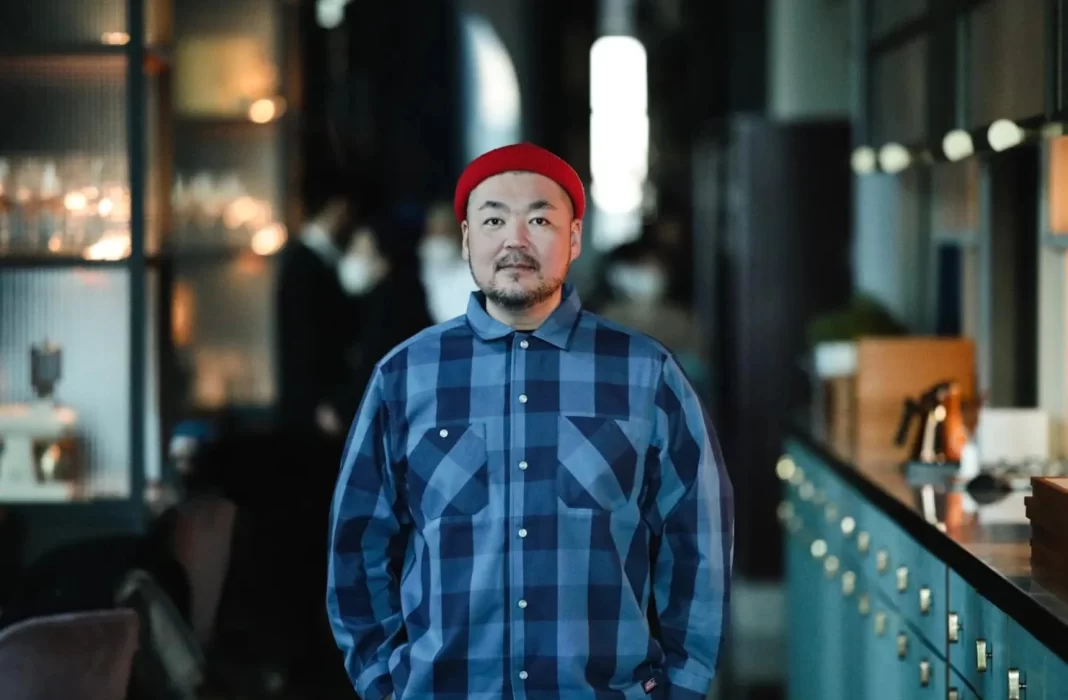

Blood sausage wrapped in bamboo charcoal. Shimabuta pork belly from a forgotten island. Momiji leaves, fried and golden, scattered like autumn confetti across a plate that costs more than most people’s rent.
This is dinner at La Cime, where Yusuke Takada consistently commits acts of culinary terrorism against everything you thought you knew about fine dining.
In Osaka’s Hommachi district, behind a minimalist facade that whispers where other restaurants scream, Takada has built something extraordinary: a two-Michelin-starred laboratory of the impossible made deliciously real.
Today, La Cime has become the epicenter of a culinary earthquake that’s reshaping how the world sees Japanese fine dining. How? That’s a whole story worth devouring.
The Awakening
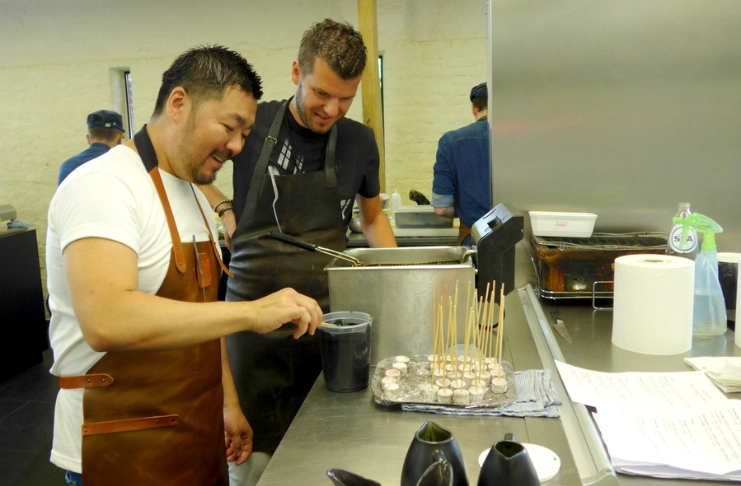
“I only discovered what a chef’s work was really like when I started being one,” Takada recalls during his interview with the Michelin Guide. “It is a job in which the hardships far outweigh the cool moments – in the ratio of 99 to 1.”
But hardship was Takada’s first teacher. After culinary school, he spent five brutal years in Osaka’s French kitchens before making the leap that would define his career.
Armed with zero French vocabulary and infinite determination, he somehow talked his way into Le Meurice, the three-Michelin-starred temple that was then owned by Yannick Alléno.
“It was the most popular restaurant in France. Just knowing I could work there made me very excited,” he remembers.
What he doesn’t say is how he survived those months of eighteen-hour days, of being screamed at in a language he didn’t understand, of questioning whether a boy from an island could ever belong in the pantheon of French gastronomy.
The Return
In 2010, Takada returned to Osaka as a man with a mission.
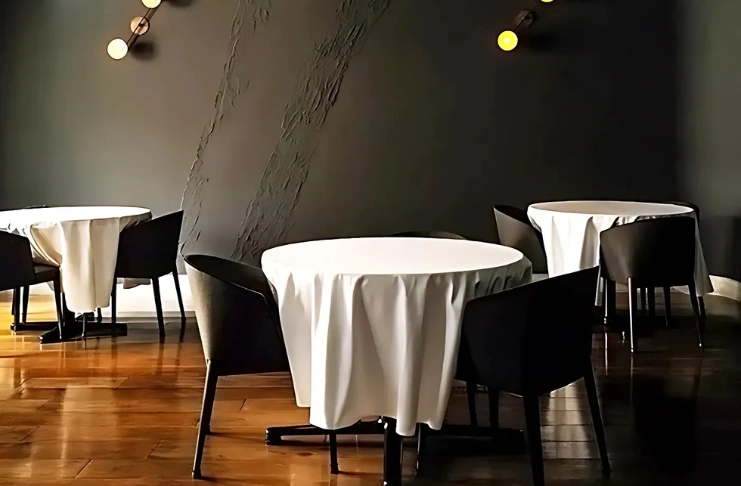
La Cime, or “the peak” in French, opened with a triangular logo representing the sacred balance between food, space, and customer. The minimalist Scandinavian interior, inspired by Copenhagen’s Noma, was a deliberate rejection of the ornate French dining rooms where he’d learned his craft.
But the real revolution was happening in the kitchen. Takada began creating 300 new dishes every year. Every morning, he’d open his refrigerator and compose something entirely new, documenting it with his camera.
“I don’t insist on a certain style. Style changes,” he explains. In a world where Michelin-starred chefs guard their signature dishes like state secrets, Takada made impermanence his signature.
The Boudin Dog
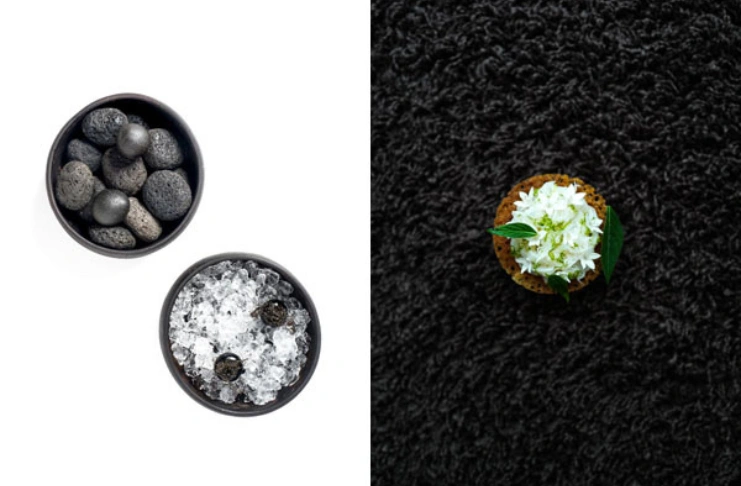
If La Cime has a manifesto, it’s served on the first bite: the Boudin Dog.
Picture this: blood sausage wrapped in dough, battered, fried, and colored jet black with edible bamboo charcoal. It’s a hot dog that looks like it emerged from a fever dream but tastes like the marriage of France and Japan that everyone said was impossible.
This single dish encapsulates everything Takada represents. Its classical French charcuterie technique meets Japanese aesthetics meets American street food irreverence. It’s serious and playful, ancient and modern, respectful and rebellious. It’s the kind of dish that makes other chefs stop mid-bite and mutter obscenities of admiration.
Keikoshoukon
But Takada’s true genius lies in his guiding philosophy: Keikoshoukon, meaning “meditation on antiquity to find a guide to the present.” He raids 17th-century French cookbooks for inspiration, then filters those techniques through memories of his grandmother’s kitchen in Amami Oshima.
Consider his Amami Pork: salt-preserved Shimabuta pork belly from his home island, paired with papaya and lime, served on a pork tuile. It’s a dish that exists in conversation with both French charcuterie traditions and subtropical Japanese flavors. The technique is classical; the soul is unmistakably his own.
The Numbers Tell a Story
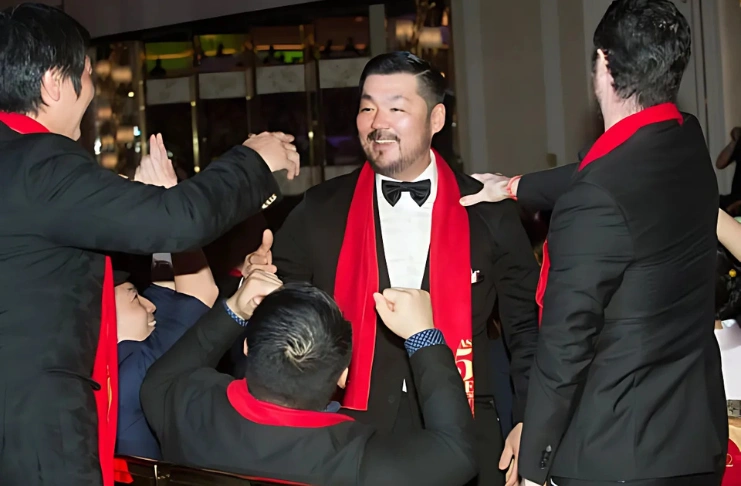
The accolades started flowing almost immediately. La Cime earned its first Michelin star in 2012, just two years after opening. “I said ‘wow!’ and I cried at the ceremony,” Takada remembers.
The second star came in 2016, and he’s held onto both ever since—a feat that’s kept him in the global top tier for nearly a decade.
Asia’s 50 Best Restaurants took notice, awarding La Cime the Highest New Entry Award in 2018. The restaurant now sits at No. 8 on the Asia list and No. 41 globally.
In 2020, Takada received the Chefs’ Choice Award as recognition from his peers that his influence extends far beyond his dining room.
The Ripple Effect
The most remarkable transformation, interestingly, happened to Osaka itself. Once overshadowed by Tokyo’s glitz and Kyoto’s tradition, Osaka has emerged as Japan’s most exciting food destination, and La Cime stands at the center of that revolution.
“Going from one star to two, we have seen more customers and a change of clientele. Besides Asian diners, those from Europe and America have started to come,” Takada notes.
Food pilgrims now plan entire trips around a single meal at La Cime, and the city’s restaurant scene has elevated itself to meet their expectations.
The Philosophy of Fearlessness
When asked for advice to young chefs seeking Michelin recognition, Takada’s response cuts to the heart of his philosophy: “Do not care too much about the people around you. Thanks to Instagram, you can follow certain chefs or culinary organizations now to see a ton of food-related content. Try not to be swayed by things like that. Keep persevering with your personal style.”
This isn’t just career advice; it’s a battle cry for authenticity in an age of algorithmic influence. While other chefs chase viral moments and photogenic plates, Takada remains focused on the deeper work of cultural translation.
The Future Peak
Today, La Cime operates with the confidence of a restaurant that has nothing left to prove and everything still to discover. Takada continues his daily practice of creating new dishes, still documenting each experiment with his camera, still listening to the whispers of his ancestors and the demands of his diners.
“After the second star, the third one is ahead,” he says simply. But for Takada, the real victory lies in the conversation. Every dish that leaves his kitchen is a sentence in an ongoing dialogue between cultures, a bridge built one bite at a time.
The boy from Amami Oshima who once watched cooking shows on a small screen has become the chef the world watches. His revolution is deep and permanent, changing not just how we eat but how we understand the possibilities of fusion, tradition, and innovation.
In the end, La Cime isn’t just a restaurant. It’s proof that the most profound revolutions begin with a single dreamer who refuses to accept that something is impossible. And in Osaka, at the peak that Takada built, the impossible happens every night at dinner.