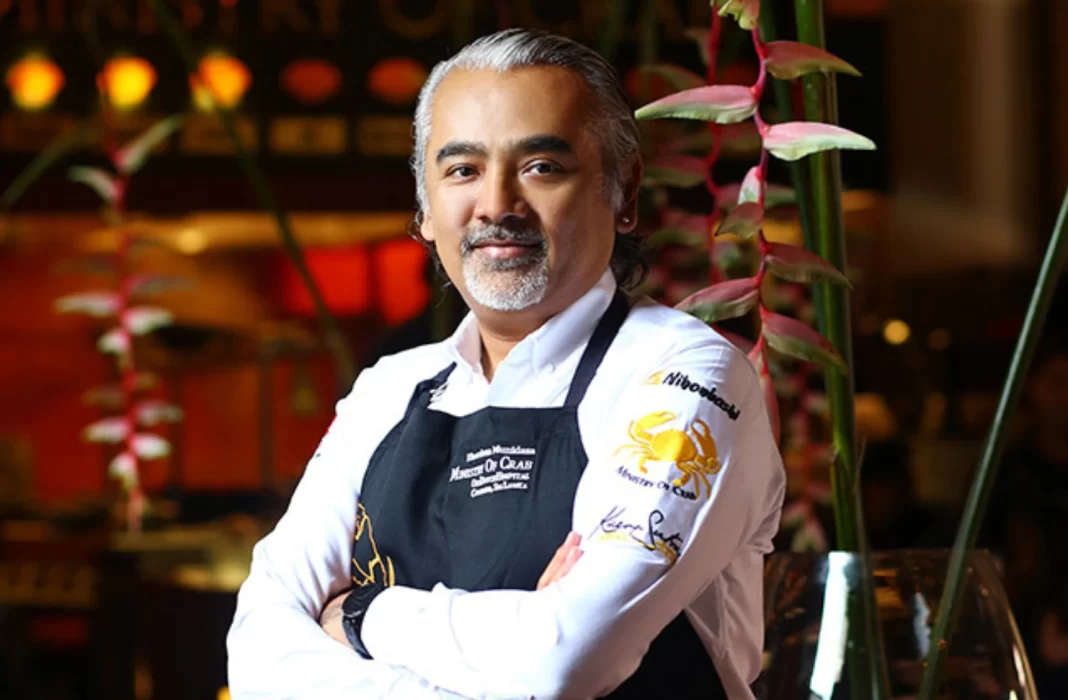

Dharshan Munidasa was filming an episode for his TV show Culinary Journeys with Dharshan when he noticed how Singapore had turned his country’s crustacean into its signature dish. Be it their Chili crab or Pepper crab, all were sourced from Sri Lanka and made famous abroad.
That’s when the idea of opening a crab restaurant (back home) hit him.
“I wanted to create a name for a crab restaurant that would have some power behind it,” Munidasa said. “These crabs were already famous in Singapore as Sri Lankan Crabs and as Sri Lankan Mud Crabs for over three decades, and I needed to create a home for the homecoming of this national treasure that sounded powerful, hence the name Ministry of Crab.”
Ministry of Crab opened in 2011 inside a 17th-century Dutch hospital building in Colombo. Munidasa partnered with cricket legends Mahela Jayawardena and Kumar Sangakkara, and together they called themselves the Ministers of Crab.
The restaurant quickly earned acclaim, appearing on Asia’s 50 Best Restaurants list every year from 2015 to 2022, and later expanded to Shanghai, Manila, Mumbai, Bangkok, and five other cities. Its success at home was equally impressive: during Sri Lanka’s 2018 tourism peak, Munidasa estimated that 5% of the country’s 2 million visitors dined there.
Was this an overnight success? Of course, no.
A Chef Who Started Cooking Because He Was Hungry
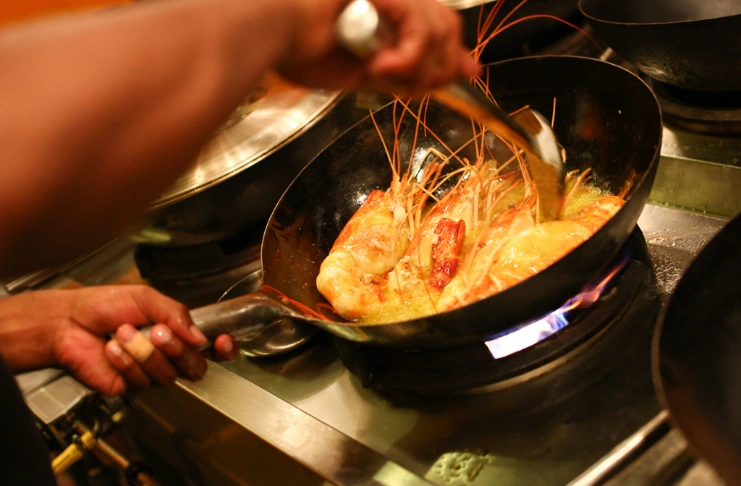
Munidasa never planned to be a chef. He was studying Computer Engineering and International Relations at Johns Hopkins University when he got tired of dorm food.
“What drove me to start cooking was subpar dorm food when I was doing my undergraduate studies at a University in the US,” he told Slurrp.
So, he started making his own meals, developing menus, and writing grocery lists. Within months, 20 students from nearby universities were showing up every Friday night for dinner.
“These initial dishes I developed in university, later translated into my first restaurant, Nihonbashi, when I returned to Sri Lanka,” he explained.
Nihonbashi opened in 1995. Born in Tokyo to a Japanese mother and Sri Lankan father, Munidasa brought Japanese techniques to local ingredients.
The restaurant became the first from Sri Lanka to make Asia’s 50 Best Restaurants list in 2013. All thanks to his cooking philosophy that draws from Washoku – a Japanese approach that respects ingredients from sourcing to plating.
“Using very good ingredients and cooking very simply is the core of this philosophy, and I make sure that it shines through at all of my restaurants,” he said.
Yet, crabs kept pulling at him. Sri Lanka’s best crabs were leaving the country. He wanted to change that.
Setting the Standards
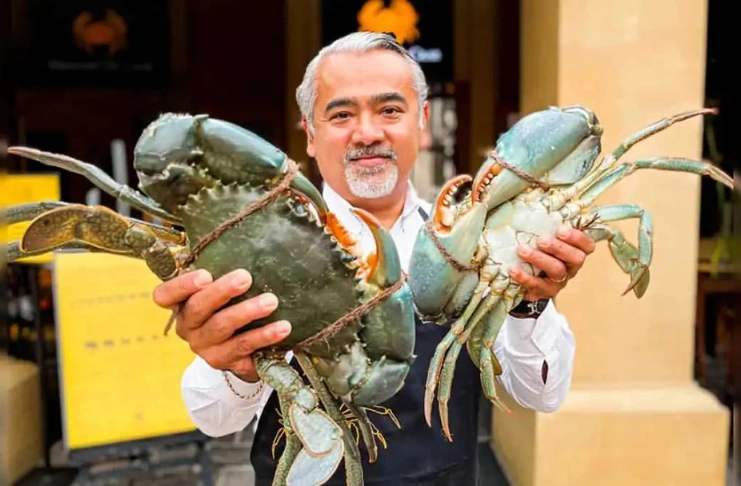
Ministry of Crab doesn’t serve every crab. Small crabs get rejected. So do crabs missing a claw or with uneven pinchers. Nothing frozen ever enters the kitchen. The smallest crab weighs half a kilogram. The largest, Crabzilla, weighs over two kilos. In between are sizes called Jumbo, Colossal, and OMG, each over a kilogram.
Prawns follow the same system. Big Prawn weighs 200 grams. Prawnzilla weighs over 500 grams.
“At Ministry of Crab, we don’t have a freezer, and I think that’s anti-technology and going back to the roots of what a restaurant should and can be,” Munidasa said. “Not everyone can do this, but we can, and we want to remind both the world and other chefs that sometimes old school is better than new school.”
Supply depends entirely on wild catch. On the best days, they prepare 200 crabs and 250 freshwater prawns. But if the catch is small, the menu adjusts.
“Every day is a special day for us, having so many guests enjoying what we serve.”
The restaurant also has strict menu policies. Munidasa doesn’t change dishes for customers.
“I do not understand why restaurants pander to every single customer’s requirements of changing a dish. If we do this, all restaurants in the world would be the same.”
He believes restaurants should educate guests. “Restaurants that keep changing their menus are second-guessing the market, their talents, or their belief in what their cuisine should be,” he explained.
From Cricket Legends to Ministers of Crabs
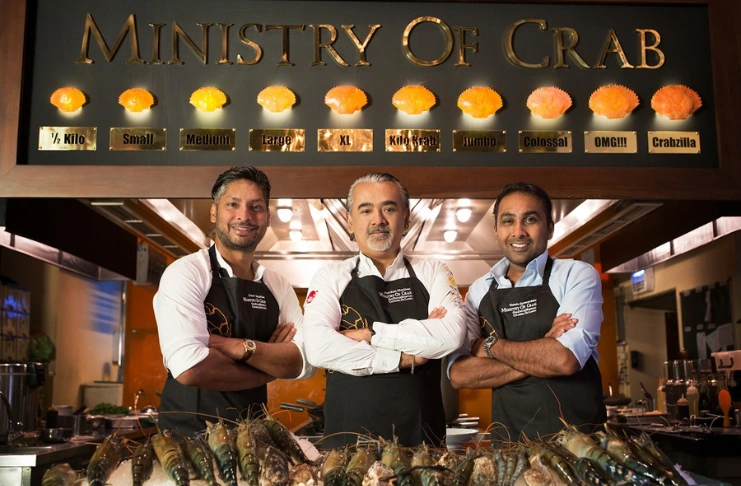
Credits: Coconuts Bangkok | From left, Kumar Sangakkara, chef Dharshan Munidasa, and Mahela Jayawardene
Mahela Jayawardena was already a regular at Nihonbashi when Munidasa pitched the crab restaurant idea. As a former Sri Lankan cricket captain, he had traveled the world during cricket tours and had a keen interest in food culture. Opening a restaurant appealed to him.
Kumar Sangakkara had similar interests. “Opening a restaurant was something both Kumar and his wife, Yehali, had always wanted to do, but admitted to not having the necessary know-how,” according to Ministry of Crab’s official history. “So, when Dharshan brought up the idea of the Ministry of Crab, it was an ideal opportunity to realize this dream.”
Later, Jayawardena became chairman. Sangakkara became deputy chairman. Both influenced the menu. Sangakkara insisted on adding chilled steamed crab with warm butter sauce. The pol sambol served with dishes comes from a Sangakkara family recipe. Jayawardena made sure chicken curry rice, one of the few non-seafood items, made the menu.
What Gets Served
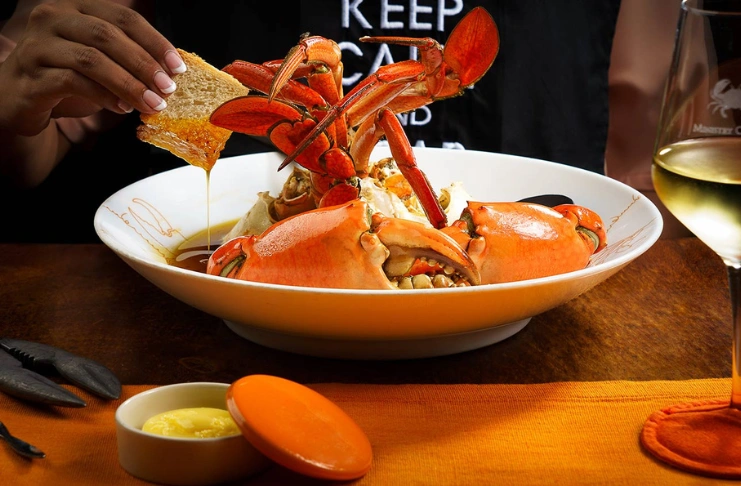
The signature dishes are garlic chili prawns with kade bread and pepper crab. The garlic chili sauce combines Italian olive oil, garlic, Sri Lankan chili flakes, and Japanese soy sauce.
One reviewer described eating a 300-gram Yodha prawn covered in the sauce: “My massive freshwater prawn was doused in the perfect portion of sauce.”
The pepper crab uses hand-crushed black peppercorns rolled on a traditional miris gala and cooked in pepper stock. “The flavor is powerful and scrumptious—a wonderful, spicy compliment to the sweet crab.”
Both dishes come with kade bread (or a wood-fired Sri Lankan bread). “To waste even a drop of the decadent sauces would be a crime.”
The restaurant also serves a drink called centella in all of Munidasa’s establishments. It’s made from gotukola, an Ayurvedic green used for memory retention and anti-aging, blended with king coconut water. “This is blended together with King coconut water to create an amazing, refreshing juice which has quite a big demand,” Munidasa explained.
The Space Itself
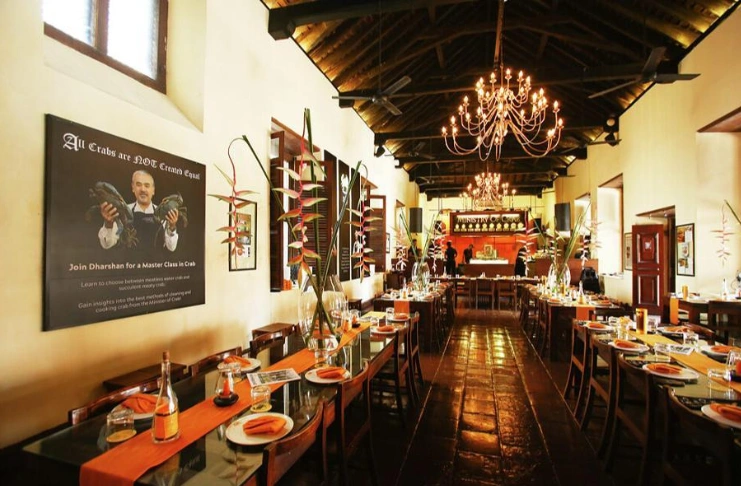
The restaurant sits in what was once the mortuary of the Dutch hospital. “Classic accents like modern rose gold chandeliers, dark wood vaulted ceilings, vibrant orange accents, and long-stemmed crab claw flowers complement the preserved floors and walls,” Miss Filatelista noted.
An open kitchen lets guests watch their meals being prepared. The attention to detail in the space matches the attention to the food.
When Munidasa was searching for a location, he wanted something that matched the restaurant’s name. “The next step was to obtain a location fit to house the restaurant, and the research began for a ‘Ministerial’ space.” The Dutch hospital building, undergoing refurbishment as part of post-war urban development, became available.
What He Tells Other Chefs
Munidasa was awarded the Order of the Rising Sun by Japan in 2023 for promoting Japanese food culture in Sri Lanka. He’s received multiple Japanese government awards over the years. But he rejects the celebrity chef label.
“I created two restaurants, and it is in my commitment to make these restaurants shine, and perhaps that is why I have become who I am,” he said.
His advice to aspiring chefs is simple: stick to your vision.
“If what you do is original, it may be so ahead of its time that you might not even realize how ahead of its time it is,” he said. “The moment you start listening to guest comments, you will lose that creativity, you will lose that edge, and eventually become the same as everyone else around you. So hold on to your guns, believe in what you do, and great things can happen.”
He also emphasizes simplicity. “Simplicity is the most difficult aspect of any cuisine.”
When asked about his dream dish to try, he mentioned omelets at La Mère Poulard in France. “It boils down to what we do as chefs, which takes a simple ingredient and makes something great out of it—I’m talking about an omelet!”
The Problem That Remains
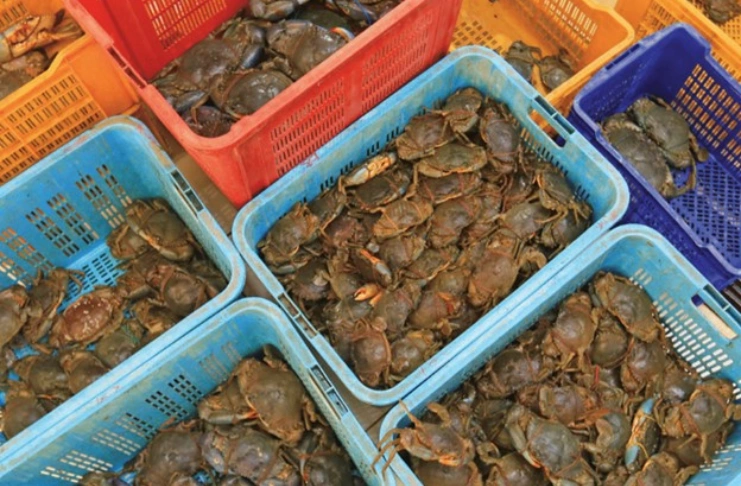
Even with the Ministry of Crab’s success, the export issue persists. When Munidasa shared a crab curry recipe with Slurrp, he added a warning: “As much as I like to share this recipe, please understand that many households in India and in Sri Lanka will not be able to get the same level of quality of Crab that the restaurant gets, simply because the best crabs are always flown out. To get these crabs into your hand is the biggest recipe that you need to figure out.”
The restaurant hasn’t solved the export problem completely. But it’s proven that Sri Lankans will pay for their own ingredient when it’s treated right.
Ministry of Crab now has seven locations across Asia. The Mumbai location opened in 2019 at Zaveri House in Khar, attracting Bollywood celebrities and ranking 23rd at the Food Food Top 30 Restaurant Awards in 2022.
But the Colombo location remains the heart of it. That Dutch hospital building with its vaulted ceilings and open kitchen, where crabs caught that morning get cooked without ever seeing a freezer, where a self-taught chef and two cricket legends built something powerful enough to match the ingredient they were celebrating.
“We’re proud to bring more of Sri Lanka into it with our spices and flavors, showcasing these crabs that come from our island,” Munidasa said.
The TV show gave him the idea. The cricket stars gave him a partnership. The crabs gave him purpose. And in return, he returned Sri Lanka’s national treasure home.