
Water. Three vegetables. Salt. That’s it. That’s the dish that earned Myoujyaku two Michelin stars and sent traditionalists into existential crisis.
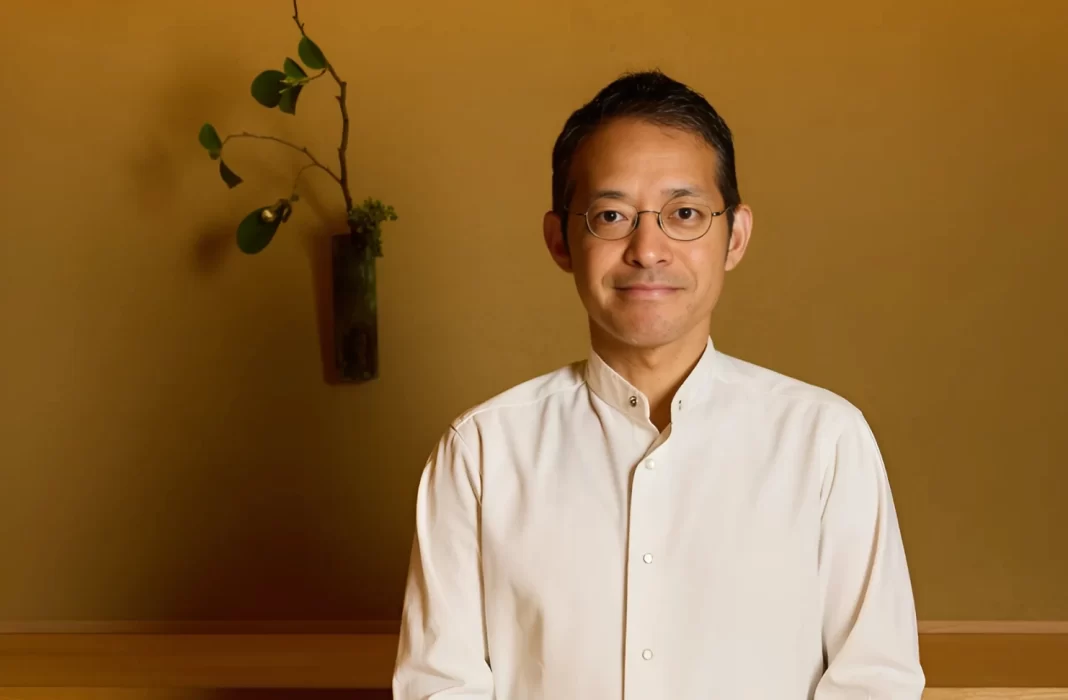
Chef Hidetoshi Nakamura has committed culinary sacrilege in the heart of Tokyo’s Nishi-Azabu district. He’s thrown out the dashi playbook that has defined Japanese cuisine for a millennium. No kombu. No katsuobushi. No centuries-old techniques passed down through generations of sushi masters and kaiseki legends.
Just water. The kind of water that flows from sake breweries in Kyotango and Ishikawa Prefecture, treated with the reverence most chefs reserve for aged wagyu.
This culinary establishment is furious. And we absolutely can’t stop talking about it.
The Heretic’s Origin Story
Born in 1976 to parents who ran a Japanese tapas joint in Senkawa, Nakamura seemed destined for conventional success. Heisei Cooking School in Tokushima. Training at prestigious restaurants in Kyoto and Tokyo. Head chef position at an Akasaka establishment. Everything was perfect.
Then he lost his mind.
Or found it, depending on your perspective.
In April 2022, Nakamura opened Myoujyaku in a quiet residential street that most taxi drivers struggle to find.
The restaurant’s name combines characters for “brightness” and “tranquility”—a philosophy borrowed from philosopher Yusuke Yamaguchi and ceramic artist Seimei Tsuji, who sought beauty in rustic simplicity.
The space, designed by architect Tetsu Kijima, feels more like a meditation chamber than a restaurant. Eight-meter spruce planks. Earthen walls. An eight-seat counter where Nakamura performs his liquid alchemy while guests watch in stunned silence.
The Water Manifesto
Most Japanese chefs build their careers on dashi mastery. The perfect balance of kombu seaweed and katsuobushi flakes. The precise timing. The delicate extraction of umami that forms the foundation of every great dish.
Nakamura threw it all away.
Instead, he sources water from two specific sake breweries. The first comes from Kyotango’s Takeno Brewery, home to the Yasakatsuru brand. The second flows from Fukumitsuya Brewery in Ishikawa Prefecture, creators of Kagatobi and Fukumasamune. These waters are, literally, his main ingredients.
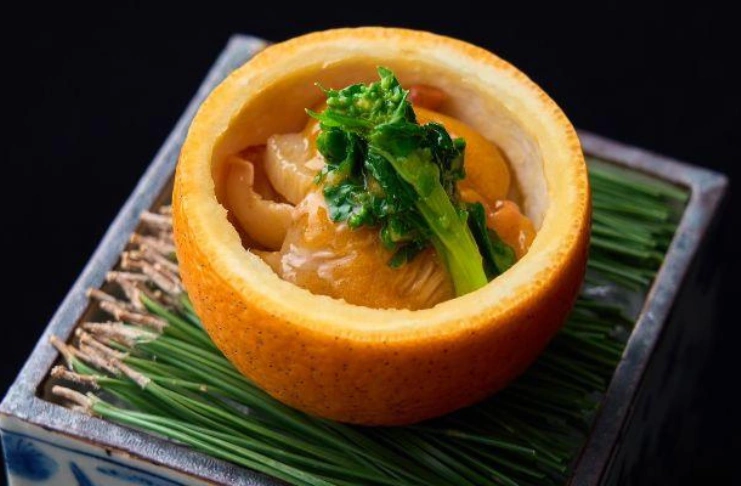
The opening course at Myoujyaku showcases this philosophy with brutal honesty. Seasonal vegetables boiled in brewery water, seasoned only with salt. The dish titled “Greetings from Myoujyaku” forces diners to confront the naked truth of each ingredient without the comfortable mask of traditional seasonings.
It’s either genius or insanity. The two-star rating suggests genius. The three-year waiting list confirms it.
The Fifteen-Course Revolution
Nakamura’s tasting menu reads like a manifesto against culinary convention. Each of the fifteen courses strips away layers of tradition to reveal something more fundamental: the voice of ingredients speaking through a liquid medium.
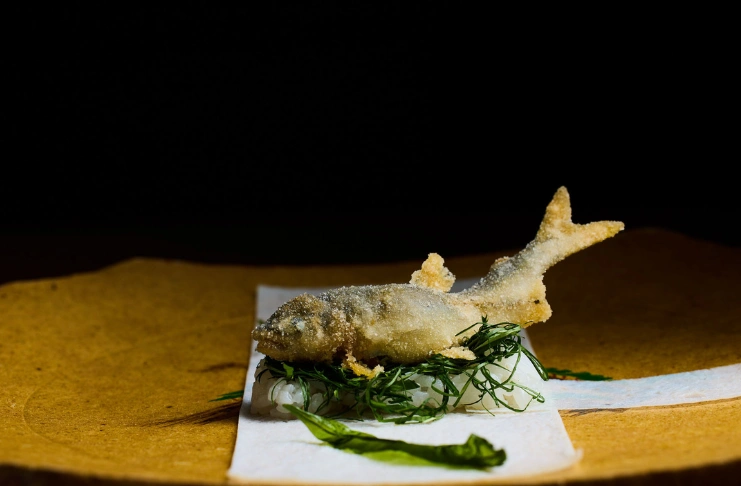
Take the ayu sweetfish course. This summer delicacy from Tenryugawa in Nagano gets the full Nakamura treatment: fried, infused with charcoal smoke, served over vinegared rice with knotweed, and wrapped in an omelet so thin it’s practically translucent.
The format remains constant throughout the year, but the fish changes – iwana Japanese char, honshishamo smelt, mehikari greeneyes fish, each allowed to express its unique character through the water’s amplifying properties.
The shimaaji striped jack course demonstrates Nakamura’s obsession with texture and liquid harmony. Roasted over rice straw, then charcoals, the fish pairs with young renkon lotus root prepared in three distinct textures – sliced, chopped, and finely grated in ponzu.
The progression creates a symphony of resistance and yield that traditional preparation methods couldn’t achieve.
But it’s the abalone course that converts skeptics. Served in a creamy broth that captures the essence of tidal pools, the dish transcends a simple mollusk. The toothsome texture plays against the flavorful liquid in ways that make diners question everything they thought they knew about Japanese cuisine.
The Craft Behind the Chaos
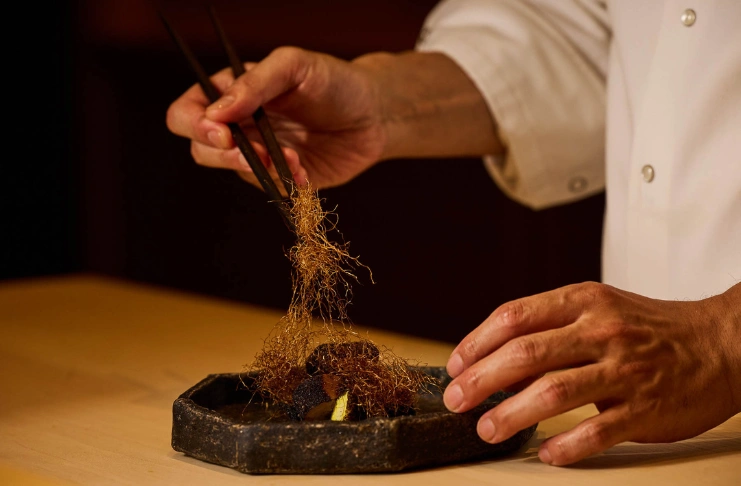
Nakamura’s revolution is almost technical. The chef uses every part of carefully grown produce, transforming potential waste into edible art. His knife skills showcase years of classical training, but applied to ingredients most chefs would consider supporting actors.
The silky squid course exemplifies this approach. Stuffed with glutinous rice and baby corn, encased in striking squid ink batter, deep-fried, and served alongside fried baby corn silks. The dish uses every element of the squid while creating textural contrasts that wouldn’t be possible through traditional methods.
Even dessert follows the water philosophy. The citrus course features konatsu, a new summer orange, and amanatsu served as individual vesicles and a meticulously prepared paste. A sprinkling of dried citrus peel adds textural complexity that complements the liquid foundation.
The Impossible Reservation
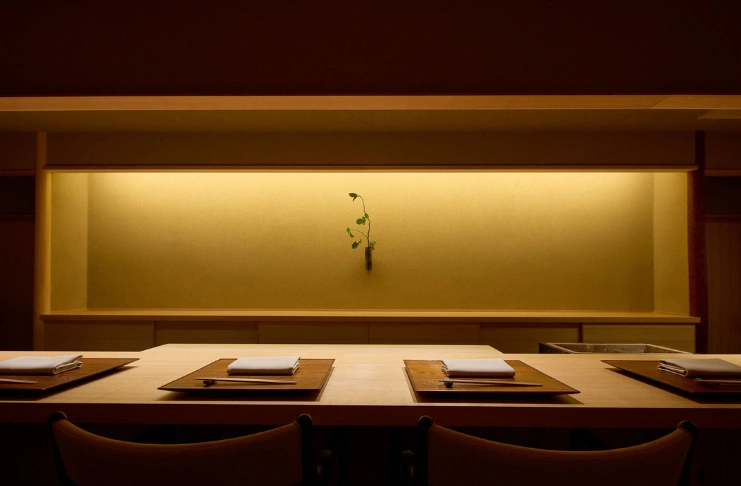
Getting a table at Myoujyaku has become Tokyo’s most exclusive blood sport. The waiting list stretches for years. The restaurant’s phone lines operate like a lottery system, with food pilgrims from around the world attempting to secure one of eight counter seats.
Still, Nakamura refuses to expand. He insists that the water wouldn’t maintain its properties in a larger space. This limitation has only amplified Myoujyaku’s mystique, turning each meal into a pilgrimage rather than a simple dinner.
Food critics fly in from Paris, London, and New York, often leaving empty-handed but carrying stories of the restaurant that’s redefining Japanese cuisine. The buzz has created a global waiting list that rivals the most exclusive establishments in the world.
The Sourcing Network
Nakamura’s ingredient network reflects his commitment to liquid purity.
The glistening Akitakomachi and Tsuyahime rice varieties come from Akita and Yamagata prefectures, respectively. Sea bream arrives from Akashi’s rich waters, sourced directly through fishermen who work the sweet spot where the ocean meets the inland sea.
Many ingredients come from a former colleague who returned to their hometown to farm, creating a network of relationships that prioritize quality over cost, story over speed.
This connection to the source allows Nakamura to maintain the ingredient integrity that his water-centric philosophy demands.
The Global Ripple Effect
Myoujyaku’s influence extends far beyond Tokyo’s F&B market. Culinary schools worldwide are incorporating water-centric approaches into their curricula.
Young chefs are abandoning traditional dashi-making techniques in favor of exploring local water sources’ mineral content.
The restaurant has sparked a movement that’s forcing the entire culinary world to reconsider the building blocks of flavor. Traditional Japanese restaurants are quietly experimenting with water-based techniques, though few admit it publicly.
The Price of Purity
The pursuit of perfection at Myoujyaku comes at a cost. Nakamura’s uncompromising standards mean that ingredients are rejected if they don’t meet his exacting specifications.
Entire shipments of vegetables are turned away if the water content doesn’t align with his vision.
The waste is significant, but so is the impact. Each dish at Myoujyaku transforms potential waste into edible art, following the philosophy of mottainai—regret over waste—that permeates every aspect of the restaurant’s operation.
The Sommelier’s Challenge
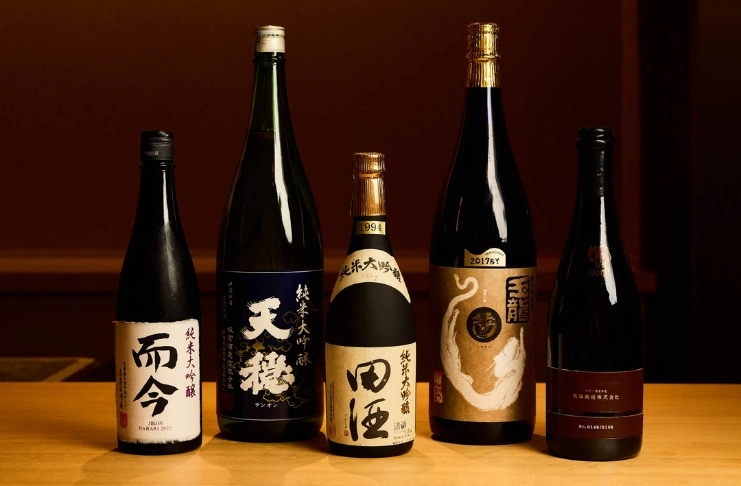
Sommelier Yuka Nakano faces the unique challenge of pairing wines with water-centric cuisine. Her selection of 100 varieties from Burgundy and Champagne, plus ten Japanese wines by the glass, must complement rather than compete with the liquid foundation of each dish.
The sake selection proves more harmonious, featuring rarer styles from Aramasa in Akita Prefecture and the highly sought-after Jikon from Mie Prefecture’s Kiyasho Brewery.
More than 30 seasonal sake brands from around the country complete the list.
Beyond the Stars
As Myoujyaku approaches its third anniversary, the restaurant shows no signs of compromising its radical philosophy. The monthly menu changes keep regular diners returning.
The addition of a small bar counter promises to extend the Myoujyaku experience beyond dinner, potentially creating a new category of water-focused cocktails that could influence drinking culture as profoundly as the food has impacted dining.
The Future of Tradition
Nakamura’s revolution raises uncomfortable questions about the nature of tradition itself. By stripping away centuries of accumulated technique, he’s revealed something both ancient and futuristic: the pure voice of ingredients speaking through water’s amplifying properties.
In a world obsessed with fusion and innovation, Myoujyaku’s radical simplicity feels like a revelation. It’s a reminder that the most profound culinary experiences often come not from adding more, but from taking away everything that isn’t essential.
The water has spoken. The culinary world is listening. And traditional Japanese cuisine may never be the same.