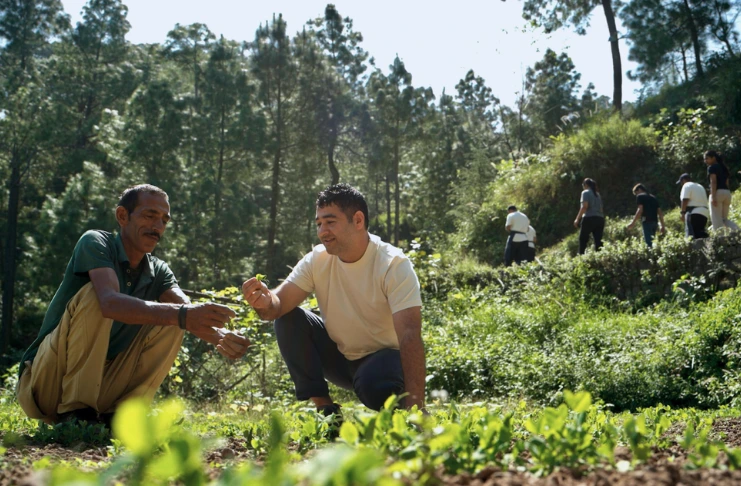

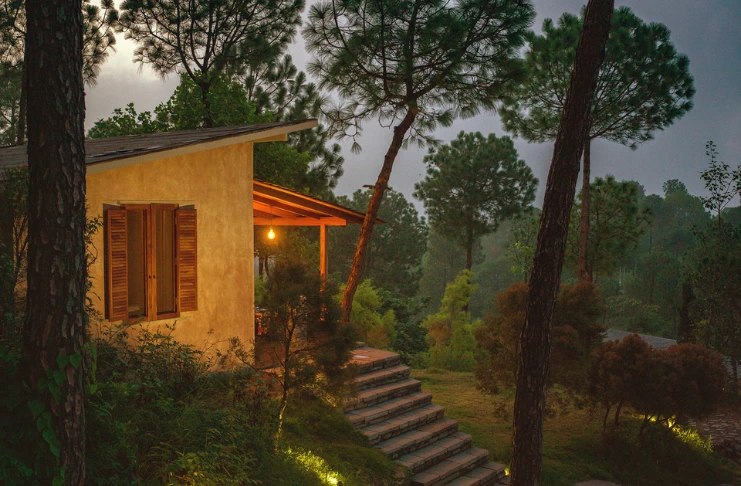
In the remote hamlet of Darwa, where pine-clad slopes cascade toward snow-dusted Himalayan peaks and the air carries the crispness of altitude, a culinary revolution unfolds at 16 tables. Here, two hours from Chandigarh through serpentine mountain roads, Chef Prateek Sadhu has built something unprecedented in Indian gastronomy: a restaurant so compelling that diners fly across continents for a single meal, then navigate winding paths to reach a dining room perched atop a cliff.
This is not fine dining transported to the hills. It is Naar, meaning fire in Kashmiri, where every dish burns with the passion of a chef who returned to the mountains that raised him, determined to showcase a cuisine the world has ignored.
The Homecoming
Prateek Sadhu’s journey to this remote corner of Himachal Pradesh follows a path that would make most chefs question his sanity. In 2016, Sadhu returned to India after training at The Culinary Institute of America and working for some of the best chefs in the world, including the world’s top three restaurants, Noma, Alinea, and The French Laundry. He co-founded Masque in Mumbai; the restaurant debuted on Asia’s 50 Best Restaurants list in 2023, making it India’s highest-ranked restaurant.
Then, in April 2022, at the peak of his success in Mumbai, he walked away. Born in Kashmir’s Baramulla district near the Line of Control, Sadhu spent his childhood jumping between paddy fields before violence forced his family to flee in the 1990s when he was six. The mountains never stopped calling. “I was born in the hills. I love being here. This is where I want to cook. This is where I want to rest,” he explains in an interview with Conde Nast India Traveller.
The partnership with Amaya, a sustainable boutique resort designed by celebrated Mumbai architect Bijoy Jain, provided the foundation. Resort founder Deepak Gupta, a dear friend of Sadhu’s, created space for what many dismissed as impossible: India’s first true destination restaurant, where the journey becomes inseparable from the meal.
The Research Laboratory
What lies beneath the sophisticated dining area of Masque is the heart of the restaurant: Amaya Lab, a transformed former cow shed that is now a culinary research centre. Sadhu and Kamlesh Negi, the head of research and a determined forager, spend many hours exploring and developing new edible roots, tubers, herbs, fruits, and green vegetables, all of which are considered by many as “out of the norm” or never before used in traditional Indian restaurants. These items are not being developed for show; rather, they are being developed so that the culinary innovations become a part of the ongoing preservation of the unique Indian food culture. This is not performance; it is preservation through innovation.
The team works within a self-imposed 50-kilometer radius, sourcing ingredients that define the Himalayan belt’s six distinct seasons. The region produces special items such as Cheese from Yak Milk in Himachal, Juniper-Smoked Lamb from Kashmir, Kashmiri Mushqbudji Rice, Ladakhi Buckwheat Pasta, Bamboo Shoot Pickles from Nagaland, and Galgal Lemons from Uttarakhand. The ingredients come not from a supplier catalog but from relationships built by travelling through mountain passes and speaking with local producers. The process of drying/fermenting/pickling, the traditional ways used by those in these communities to preserve food for many generations, creates a complexity of flavours that cannot be hurried or replaced. The Team collects mushrooms (personalised) from local stores and thinks up ideas for how to prepare them while they are driving back to the Kitchen. The immediacy of this connection is the definition of luxury, not the City Kitchen’s five-star ratings.
The Culinary Philosophy
Sadhu’s cooking philosophy rests on a simple premise: “We’re cooking the mountains.” (UpperCrust India magazine). Each menu item reflects seasonal shifts in the Himalayan mountainous environment and local culture. All dishes on the seasonal menu contain only ingredients grown or sourced in the region; thus, shellfish is not on the menu, demonstrating honesty rather than limitation in food sourcing and preparation.
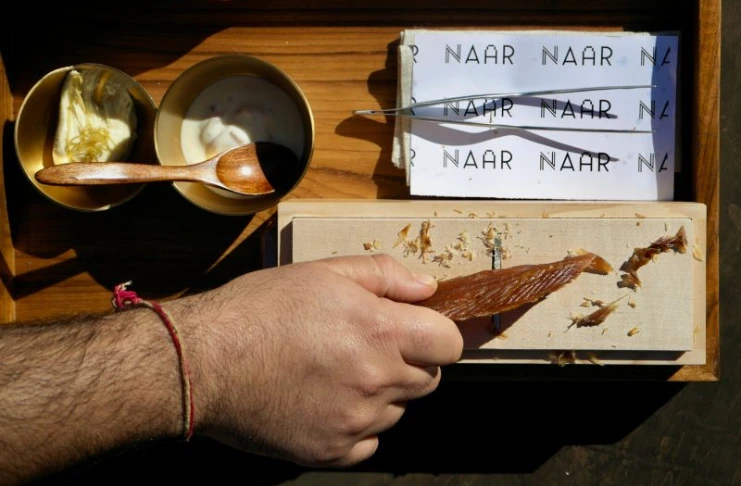
Project Trotto showcases Himalayan trout through multiple preparations: smoked fish, bone broth, cured fish seasoned with trout salted, smoked, and dried like bonito flakes. A trio of mushrooms, picked the previous day, arrives grilled and glorious. Savoury rice porridge with crispy lion’s mane nubs sits alongside smoked barbecue pork lacquered in sweet mango glaze, demonstrating that grain dishes anchor every seasonal menu.
Preserved cherries with red rice ice cream layered over chocolate cake nubs reimagines Black Forest cake through Himalayan ingredients. Pine oil and fermented pine syrup transform pine nut ice cream into edible terroir. The cheese trolley features cumin-flecked Gouda and cheddar from a nearby fromagerie operated by a Frenchman who migrated to remotest Himachal Pradesh for love, then started supplying local restaurants with artisanal products.
The Dining Experience
At the restaurant Daha, there is a maximum of 16 people dining at once. This small-group setting provides an intimate atmosphere that larger restaurants cannot recreate. Over the course of three hours, diners will be able to enjoy the scenery of the Himalayan mountains through the large windows of the pine wood-covered dining room. As guests wait for their meal and enjoy craft cocktails at The Salon (a small bar located in another separate building next to the restaurant), they can see the valley below stretching out forever.
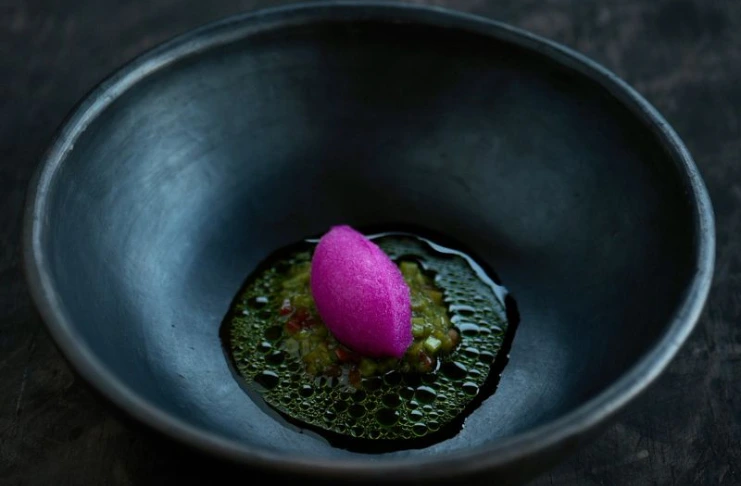
The restaurant’s kitchen (also visible from the dining room) features gentle smoldering coals for grilling vegetables and meats, and jars of pickled items line its walls. The chefs are always smiling and have a lot of patience when explaining to diners what unfamiliar ingredients are; this way, diners learn more about the food they are consuming rather than just receiving it as part of the meal. The presentation of dishes at Daha is intentionally simple; however, all of them emphasize the taste and flavor of each item over its appearance.
At meal’s end, diners gather over house-made Amaro and petit fours to discuss a gastronomic journey that introduced them to Indian ingredients they never knew existed. The cheese selection arrives with local honey from a producer who walked up to the restaurant door and asked if the kitchen wanted some. Such serendipitous relationships define mountain hospitality.
The Industry Provocateur
Naar presents a new paradigm for how people in India eat. Many people expected Sadhu, who formerly ran a restaurant called Masque, would open another restaurant in Mumbai (possibly with plans to expand into Delhi for safety), but instead he moved to a place where you need to fly and then do a lot of driving to get there, believing that the quality of food and vision would be more important than the inconvenience of getting to the restaurant.
The gamble paid off spectacularly. Time Magazine named Naar one of the World’s Greatest Places 2024. Reservations open 30 days in advance and fill rapidly with diners traveling from across India and internationally. The restaurant operates at capacity despite economic conditions that have decimated the frequency of urban dining.
This success validates Sadhu’s belief that India’s gastronomic moment has arrived. “These are exciting times for Indian food, and the market is ready for fresh and unique concepts,” he observes in UpperCrust India magazine. The 1980s were Spain’s gastronomic wave, led by El Bulli. The Nordics claimed their era with Noma. South America is currently attracting attention through D.O.M in São Paulo and Central in Lima. Next, Sadhu predicts, belongs to India.
The Team Philosophy
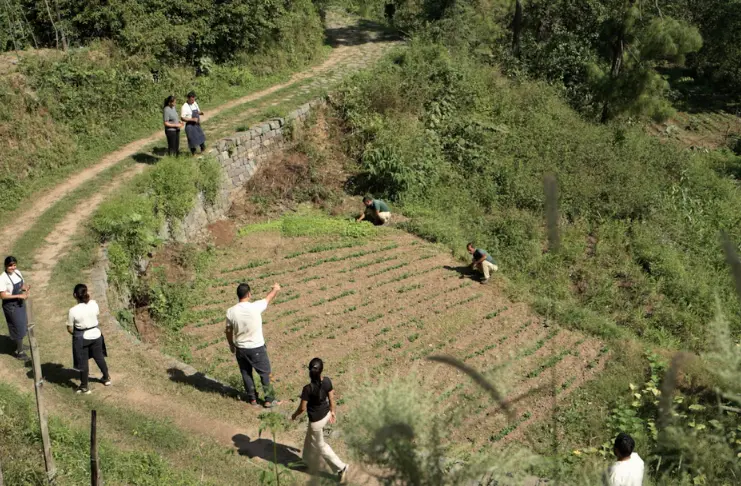
The staff at Naar live on the property, creating a community that transcends typical restaurant hierarchy. They cook together, wash clothes, and troubleshoot malfunctioning washing machines. Everyone supports everyone in ways impossible in city operations, where staff commute from distant homes after service ends.
“It’s very different when you are living in a hostel-like situation, away from your families, in a remote location without Amazon or Swiggy or Instamart,” Sadhu acknowledges. But this isolation breeds cohesion. Most meals take place in the kitchen, where spontaneous conversations and theatrical presentations spill organically from shared living.
For people accustomed to Mumbai’s relentless pace, where Sadhu juggled five meetings daily alongside running a restaurant, the mountain rhythm provides reprieve. “In cities, everybody’s running. A lot of times, you just wake up and struggle to go to work,” he reflects in The Nod Mag interview. Here, physical labor connects to purpose rather than exhaustion.
The Ingredient Manifesto
Naar’s philosophy on food goes far beyond traditional boundaries with regard to flavours that many people in India have never experienced from the highest peaks of India’s greatest mountain range. The entire menu challenges preconceived ideas of what constitutes Indian Cuisine, by creating menu items which possibly reference Chinese and Tibetan culinary traditions in Himachali cuisine, while still respecting the integrity of ingredient choices.
The story behind each recipe explains how the particular ingredients were discovered and prepared. Customers learn that the common denominator of rice across cultures is to fulfil their hunger, that fermentation adds flavours that cannot be produced by fresh preparation alone, and that there is much more to Indian cuisine than just the Northern Indian restaurants that dominate world perception.
This educational component separates Naar from restaurants’ content, focusing on simply feeding people well. Sadhu operates with missionary zeal, determined to get Indians excited about Indian food by telling stories of how mountain communities actually eat, rather than perpetuating urban myths about momos and Maggi defining Himalayan cuisine.
The Cultural Movement
Naar exists within a broader revival of regional Indian cuisine. Chef Thomas Zacharias travels across the nation, documenting local traditions. Maiyam Past Food in Auroville serves traditional fare. Chef Rachit Kirteeman works to revive Odia dishes. Collectively, these efforts constitute a culinary movement of preservation and education about India’s plurality.
Sadhu rightfully belongs among this list. His research ventures draw attention to Himalayan cuisine and its unique ingredients, shaping the local culinary landscape. But more importantly, he proves that preservation need not mean museum-quality recreation. It can mean evolution, interpretation, or innovation rooted in respect for source material.
Naar represents more than a restaurant. It is a testament to one chef’s dream and dedication, from serendipitous encounters in Ladakh to transforming a cow shed into a culinary laboratory. Every step required leaps of faith that conventional wisdom discouraged.
For diners who make the journey, rewards extend beyond exceptional food. They experience what Sadhu calls “the truth is, the mountains have always been calling. It’s only now that I’ve answered the call.” In that answer lies cuisine that showcases India’s vast potential, storytelling through flavor, and the revolutionary premise that sometimes the most famous restaurants exist not where crowds gather but where ingredients grow.