

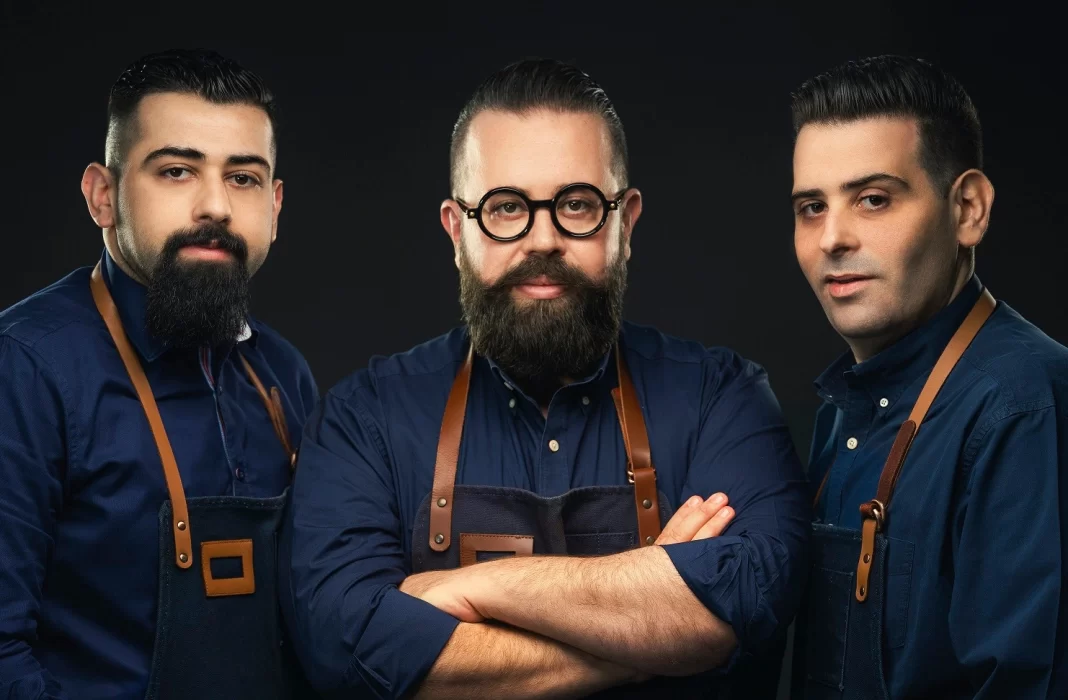

Mohammad Orfali once told Gourmand Gunno, “Fusion is Confusion.”
Yet what the Orfali brothers serve at their Dubai bistro defies every culinary label you could throw at it. Here, you see Syrian roots, French technique, Japanese ingredients, and flashes of Mexican influences in the same breath. And somehow it all makes sense.
Recently, for the third consecutive year, this family-run eatery in Dubai, headed by three brothers, took the top spot among the Best Restaurants in the Middle East & North Africa. Opened only in 2021, Orfali Bros Bistro has earned recognition that even long-established brands struggle to achieve.
And why not? After all, their mantra says it all: “Rules are meant to be bent and broken.” (As long as it still honors the tradition)
The Long Road to Thirty Seats
Mohammad Orfali started cooking at sixteen in Aleppo. His family, prominent and educated, could not fathom it. His mother, a teacher, refused to visit his restaurant. His father, an engineer, saw it as a step down. This was 1994, long before celebrity chefs became cultural currency in the Arab world.
By 2005, Mohammad left for Dubai to learn English. Then Europe. Italy, France, Spain, Scandinavia. He absorbed technique, collected influences, and studied relentlessly. He became a television chef, hosting cooking shows across the Middle East for 12 years with Discovery Networks. He developed recipes, conducted research, and shared knowledge with millions. But he was not cooking for himself.
In 2015, the Orfali brothers began giving masterclasses together, testing their chemistry as a team. The fights were frequent. Three chefs, three perspectives, zero shared professional history. They argued about everything. They went home and argued more.
But by 2021, they opened Orfali Bros with a unified vision: to serve food they loved, told through stories that connected them to their past.
Within two years of opening in 2021, they ranked 87th on the World’s 50 Best Restaurants extended list. A year later, they jumped to 46th. They earned a Michelin Bib Gourmand. Most significantly, they claimed the top spot on the Middle East and North Africa’s 50 Best Restaurants list and have held it for three consecutive years.
What Orfali Cuisine Actually Means
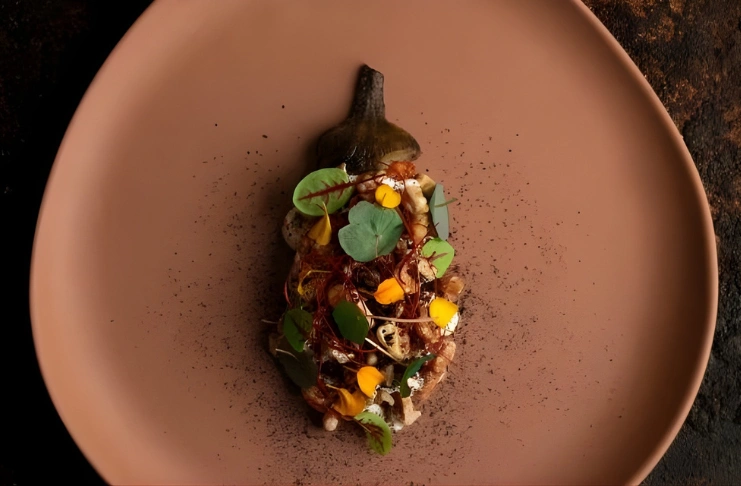
Ask Mohammad to define his cooking, and he will tell you this: they serve Orfali cuisine.
“Come With Me to Aleppo” reimagines cherry kebab with wagyu beef and pine nuts. “Orfali Bayildi” takes the classic imam bayildi and layers it with muhammara, tahini, and walnuts. When traditionalists objected to the liberties taken with the name, Mohammad renamed it with characteristic wit: “Orfali Fainted.”
The umami éclair contains porcini emulsion, fermented quince glaze, cocoa, and beef prosciutto. The caviar bun delivers pure indulgence with sour cream and roe. Every dish draws on Aleppo’s 9,000 years of culinary history, the Silk Road’s cross-cultural exchanges, French pastry training, and global ingredients that reflect the brothers’ travels and obsessions.
The through line is memory, texture, and uncompromising flavor. Nothing more, nothing less.
Upstairs, Wassim and Omar execute desserts that merge classical French technique with Arabic sensibility. The Aleppo pistachio cake layers crunchy praline with raspberry compote. The Japanese square combines black sesame cake with yuzu puree.
These are equal chapters in the Orfali story, carrying the same emotional weight as the savory courses below.
Bistronomy Without Pretense
Orfali Bros calls itself a bistronomy: bistro accessibility meets gastronomic ambition. High-quality ingredients, thoughtful technique, refined execution, but priced so people actually come back. Mohammad describes it as turning fine dining into fun dining.
No alcohol. Natural juices and non-alcoholic wines instead. No gold leaf or ostentatious plating. Guests sit at wooden tables watching the brothers and their team navigate tight quarters between ovens, siphons, grills, and plating stations. The energy is relaxed despite the precision happening in real time.
The turnover is brisk. Diners come, eat, leave satisfied, making room for the next wave. Seventy percent of guests are Dubai locals and expats who return repeatedly. Twenty-five percent are tourists. Many work in restaurants themselves, which keeps standards high and feedback honest.
During cooler months, outdoor seating expands into the Wasl 51 square. But the real experience happens inside, close enough to catch Mohammad’s eye when he explains a dish, close enough to watch pastries take shape overhead.
Community Cuisine in a Transient City
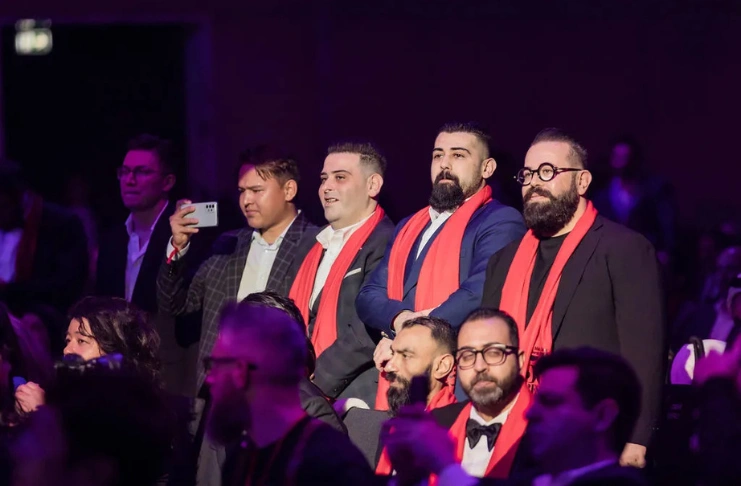
Dubai has no singular culinary heritage. It is a city of movement, of business, of global citizens passing through or putting down temporary roots. For many chefs, this presents a challenge. For the Orfali brothers, it opened a door.
Mohammad calls what they do community cuisine. At any given service, tables hold Asians from different cities, Italians, British diners, Syrians, Lebanese, Emiratis, Saudis. The question becomes: how do you bring them all together? You cook food that transcends borders without erasing your identity.
The approach works because it is honest. The broken edges in the interior design signal that this is not old-school. The open kitchen removes pretense. The storytelling behind each dish invites guests into the brothers’ world without requiring them to understand everything on the first visit.
In a city where agriculture was once nearly nonexistent, Orfali Bros sources from local farms between Dubai and Al Ain. Hydroponic and aquaponic operations now provide tomatoes grown in sand, seasonal produce available from October to March. The restaurant uses 36-month-aged Parmigiano Reggiano because Mohammad loves it. They prioritize sustainability without turning it into marketing copy.
The Burger That Changed Everything
The OB Cheeseburger started as a quiet menu item. Wagyu patty, Hokkaido milk bun, signature sauce, cheddar, caramelized onions. A simple burger elevated into something worth traveling for.
It exploded in popularity. Soon, the brothers announced 3 Bros, a new concept step from the bistro dedicated to that burger and a few signature flatbreads. The move shows their understanding of what guests want: excellence without pretension, indulgence without excess.
Beyond the Bistro

Mohammad’s vision extends past the restaurant. He identifies raw talent and nurtures it with the same intensity he brings to his own kitchen. His partnership with 29-year-old Abhiraj Khatwani resulted in Manao, a Thai restaurant that earned its first Michelin star within a year. Abhiraj was named Young Chef of the Year.
The brothers dream of opening a culinary school. They eventually want to take it to Aleppo to teach Syrian heritage and sustainability, and to show what seasonality looks like in practice. They want to preserve what war threatened to erase.
If they expand to other cities, Mohammad insists it will not be a copy-and-paste approach. Bangkok, for instance, would get a concept built specifically for that market.
The Heart of It All
Strip away the accolades, and what remains is a family kitchen. Three brothers who fought their way to synchronization. A mother who once found shame in her son’s profession now watches him cook for presidents and celebrities. A father who doubted now sees the family name recognized globally.
Orfali Bros is a convergence point for migration, memory, technical mastery, and kinship. It is proof that a Syrian child’s alleyway can become the foundation for a Michelin-starred dream. It is evidence that food is narrative, and that luxury is primarily measured by emotion.
When you eat here, you taste resilience. You taste the Silk Road. You taste three brothers who refused to be defined by borders, by categories, by expectations that were never theirs to begin with.
In a city obsessed with breaking records and building higher, that quiet refusal is the revolution Dubai needed.


