
A slender 221-foot tower at the Sabarmati River, where the past and present of Ahmedabad come together in a majestic view. The top of the building rotates once every 90 minutes, thanks to Japanese technology that withstands earthquakes and years of heavy use. The slow rotation of this observation area offers endless views, giving visitors the sense that the urban environment is alive, like a constantly updating city map. The ancient wall of Ahmedabad and the new buildings are visually connected by the Sabarmati River.
The tower is called Patang, which, in Gujarati, means “fighter kite” and is representative of the structure’s height and of the kite-flying festival, Uttarayan, celebrated by residents of Ahmedabad, Gujarat. The dining experience in Patang goes beyond eating, offering diners a progressive journey through Ahmedabad’s Geography through observation windows.
The Architectural Vision
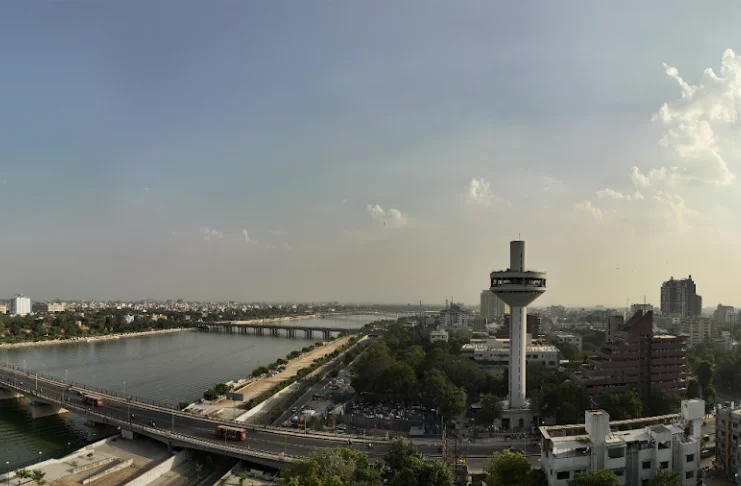
Hasmukh Patel, a famous architect of modern Indian architecture, designed the building known as Patang between 1980 and 1984, combining elements of Indian culture and architecture with modern construction techniques. Patel was inspired by chabutaros (tower-like structures) found in the state of Gujarat, which serve both a functional purpose in feeding birds and symbolize Gujarat’s culture. Patel reimagined this heritage element as a modern hospitality landmark, creating a 67-meter freestanding structure that would become Gujarat’s tallest upon opening.
The construction, overseen by builder Hasmukh Shah, represented one of the most ambitious hospitality ventures in Gujarat’s post-independence era. Patang encompasses more than just the restaurant structure itself; it also includes the adjacent Chinubhai Centre, a mixed-use commercial building totalling 8220 sq. m (88,800 sq. ft). The restaurant portion of the building has a total area of 640 sq. m. (6,900 sq. ft.) and is constructed of reinforced concrete (RCC), with an umbrella-shaped roof structure measuring 68 ft. in diameter.
The base of the restaurant rotates on a platform made from materials engineered to withstand a load of 25 kg per sq. m. The platform itself has an outer diameter of 62 ft. and an inner height of 18′. Japanese-manufactured motors rotate the base platform around its center axis, completing a full rotation approximately every 90 minutes. The building was also the first of its kind to utilise a slip-form method of construction, enabling the construction of very complex engineering structures that can rotate on a vertical axis without losing structural integrity at high elevations.
The Historic Journey
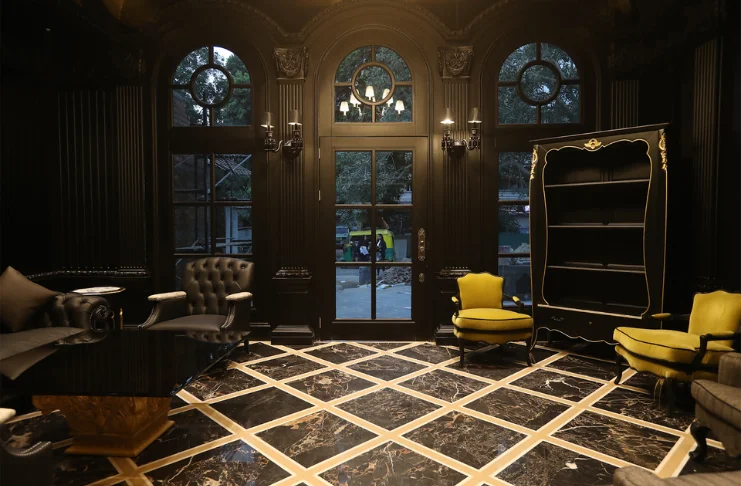
Patang opened in 1983, coinciding with India’s Cricket World Cup victory in England. The timing proved auspicious; the restaurant immediately established itself as the costliest and highest-status dining destination in Ahmedabad. According to the 2018 Limca Book of Records, it was India’s first revolving restaurant at this altitude, setting a precedent that few have matched.
But landmark status could not protect against natural disasters. The building was forced to stop operating following the 2001 Bhuj Earthquake, which caused major structural damage. After several years of inactivity, the Dharmadev Group purchased the building in 2007 and began refurbishment. Operations continued intermittently following the renovation efforts; however, the restaurant would again cease operations in early 2019, this time due to COVID-19-related issues, and had been completely renovated.
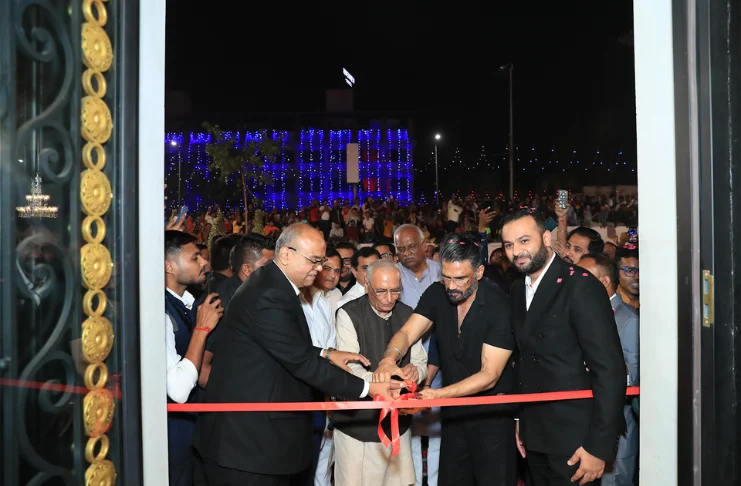
On October 24, 2023, Bollywood actor Suniel Shetty inaugurated the reimagined Patang, now rebranded as NeelAsmita Re-Evolving, marking the latest chapter in this architectural icon’s resilient story.
The Culinary Architect
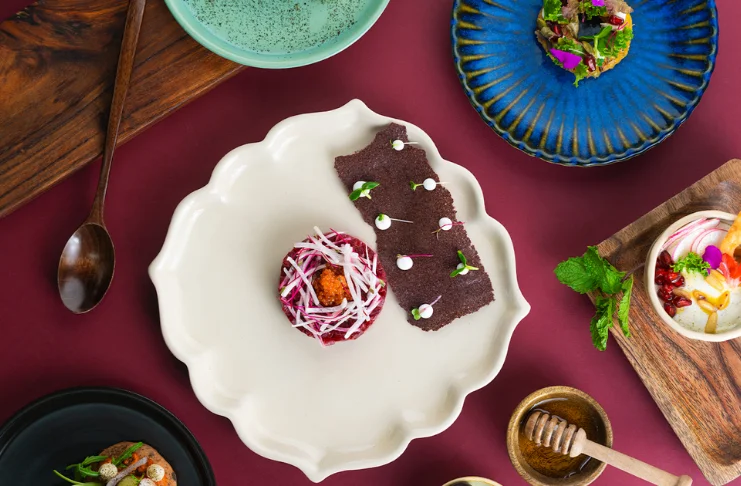
Culinary expert MasterChef Ajay Chopra is a highly regarded Indian chef, media figure, and food consultant who lends his skills and experience as an accomplished food writer to the newly designed Patang restaurant. With the addition of his Intercontinental Gold Medal from the OCLD and many years spent at leading restaurants around the world, his vision and experience combine to create a unique and innovative menu that fuses the traditional with the contemporary through the use of both Indian and international flavours. His company, Zion Hospitality, provides professional support and guidance to develop Patang into an internationally recognized Fine Dining restaurant rather than simply a local tourist attraction.
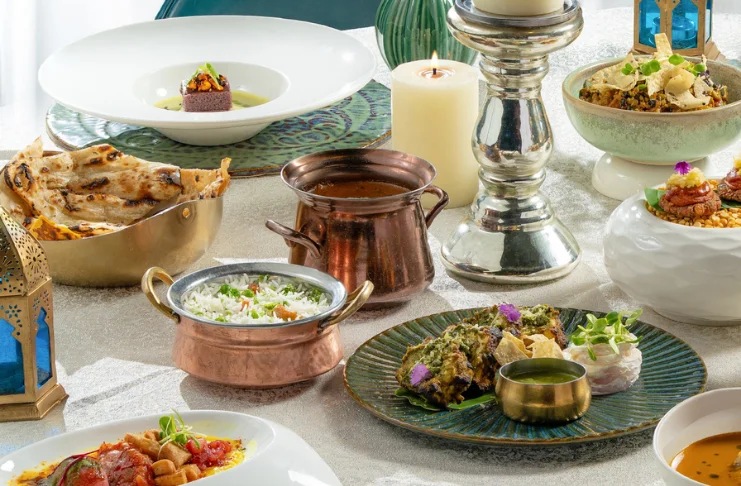
The menu at Patang changes weekly, with eight different types of cuisine offered every week (i.e., Indian, Mexican, Chinese, Continental, and Pan-Asian). The variety of textures in the food available to diners will help create an enjoyable and memorable dining experience for customers.
Starters on Patang’s menu include Green Peas Cappuccino, Manchow Soup, and Tandoori Paneer Tikka. Main courses feature paneer butter masala, Thai green curry, Hakka noodles, and Mexican enchiladas. Pizzas include margherita variations while desserts offer gulab jamun with ice cream, chocolate lava cake, and rasmalai.
The buffet-style service offers 40-45 vegetarian dishes, honoring chairman Umang Thakkar’s commitment to keeping Patang fully vegetarian.
The Panoramic Theater
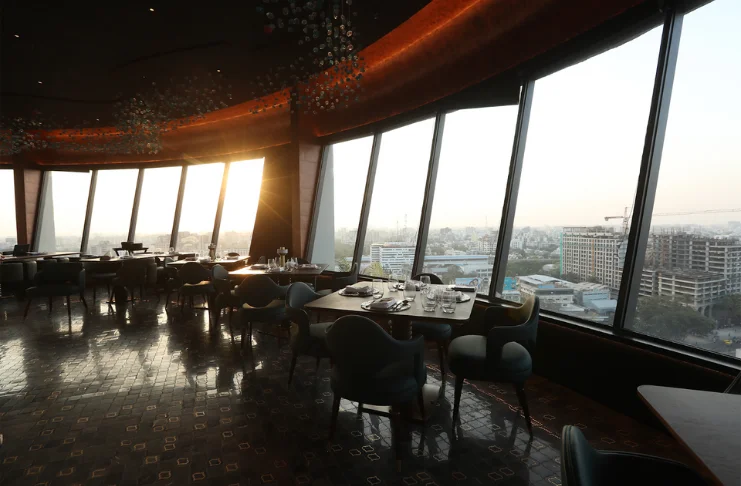
The Patang dining experience is multi-level and multi-zonal; at any given time, multiple views can be experienced within the same restaurant. The main restaurant revolves around a central axis and accommodates 110 diners. Initially intended to seat 136 people, the gradual rotation (which cannot be seen at any moment) means that all diners at some point will experience all the views during their meal.
The garden restaurant is located on the ground level and features traditional Gujarati food served in thali. This location expands vegan food options for those who wish to eat food from the Gujarati region of India. Visitors to this area can also learn about the cultural and historical significance of Ahmedabad by viewing the audiovisual display above the dining area and listening to stories from local residents. An additional educational component for guests is provided by the Heritage Museum located within the restaurant.
The massive 31×30 meter waterfall screen on the terrace, visible from nearby highways, announces Patang’s presence to a city that demands spectacle. This digital feature enables birthday celebrations reminiscent of Burj Khalifa’s projection capabilities, with images displayed on the outer body for special occasions.
The Community Commitment
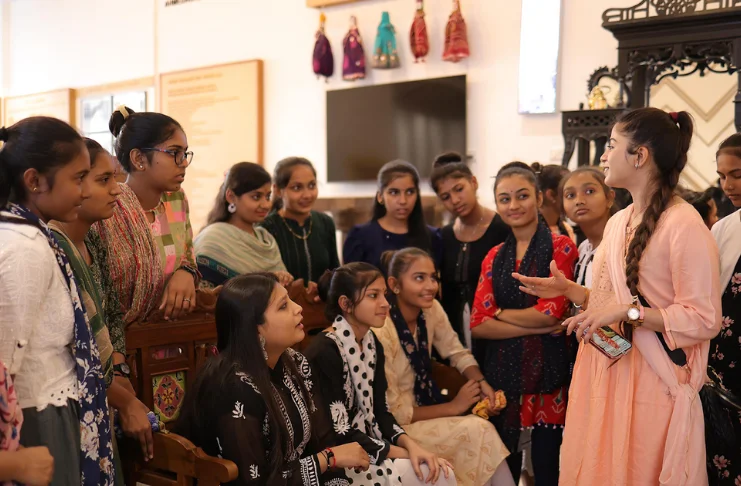
According to Umang Thakkar, the chairman of Dharmadev Group and father of Neil Thakkar, the Patang will host complimentary celebrations each week for up to 50 underprivileged children from local charitable organizations. This “philanthropic dimension” adds social responsibility to Patang’s commercial activities, helping ensure that the landmark serves the community as a whole, not just those willing to pay for it.
In addition, the conference facilities at Patang are equipped with the latest 3D audio technology, HD projectors, high-quality microphones, and individual charging stations. They will provide corporate clients and their guests with an exciting new venue for their meetings and gatherings. The “revolving restaurant” will also serve as a great location for post-meeting receptions, allowing the venue to maximize its versatility for a variety of occasions.
The 34 basic rooms provide overnight accommodation for visitors, though most guests come specifically for the dining experience rather than extended stays. This hospitality component acknowledges that, for out-of-town visitors, the meal may be part of a broader exploration of Ahmedabad.
The Riverside Context
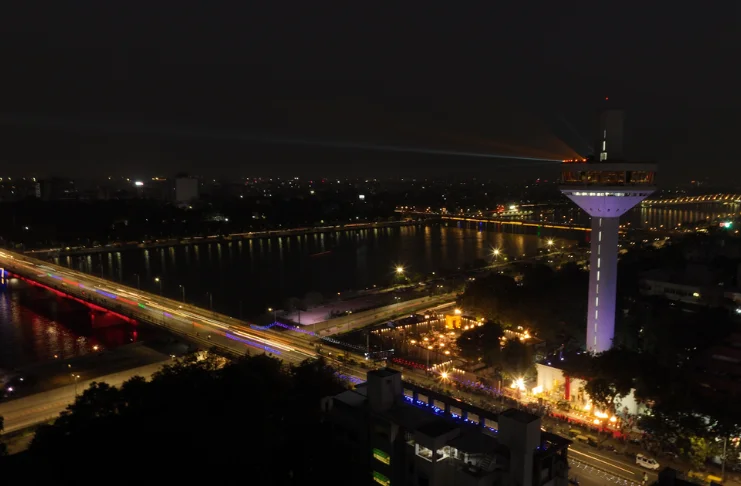
Located at the corner of Nehru Bridge on Ashram Road, Patang is strategically situated on Ahmedabad’s evolving riverfront. The Sabarmati Riverfront development has transformed both banks into recreational spaces featuring the Atal Bridge, kayaking facilities, Khoj Museum, Flower Park, Akshar river cruise, helicopter rides, sports complex, Sea World water activities, cycling paths, Gandhi Ashram, Moon Trails, and Glow Garden.
As part of the 2023 renovation project, the new accessible capsule-style lift provides easy access between all three levels of the hotel. The lift will allow guests to ascend to the restaurant’s upper level, offering an amazing view of the Riverfront and the walled City of Ahmedabad. The western riverfront location provides unobstructed views across the water toward both historic and contemporary development.
The Cultural Symbolism
Patang is an example of how the city of Ahmedabad is aspiring toward the future while still retaining its identity. The term ‘kite’ has strong connections to Ahmedabad, as the city is home to the annual International Kite Festival, held during the religious holiday known as UTTARAYAN, when thousands of colourful kites fill the sky in competition. The form of the Patang structure itself reflects the same upward direction and pole position that kites have when they are flying.
The chabutaro concept combines modern ambitions within the framework of tradition; these bird-feeding structures serve as examples of Gujarat’s traditional physical expressions of community and social responsibility toward all living beings (dharmic). By referencing this vernacular form while reaching unprecedented heights, Patang suggests that progress need not abandon heritage.
For Amdavadis, as Ahmedabad residents call themselves, Patang serves as a landmark that orients their understanding of the city. From this rotating perspective, the dense texture of the old pol neighborhoods contrasts with the spacious layouts of new developments. The river appears as a unifying element, threading through temporal divisions.
The Resilient Icon
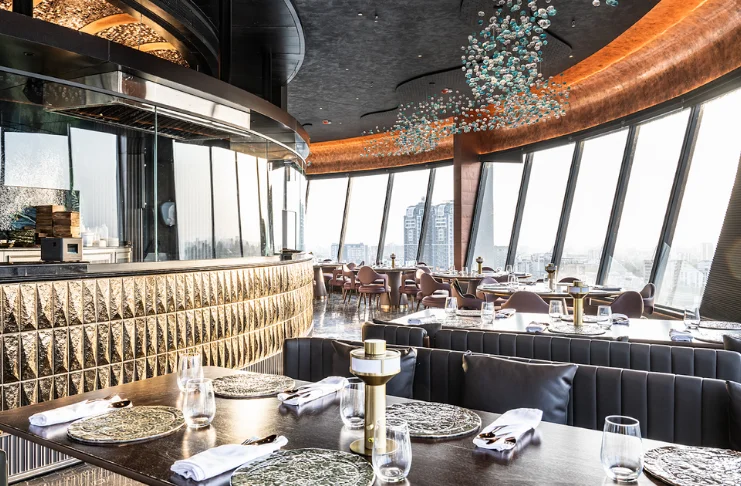
It is rare for restaurants to endure for 40 consecutive years without interruption. The obstacles of earthquakes, long-term shutdowns, changes in ownership, renovation, and reconstruction, so many times throughout its 40-year history, have proven to be immensely challenging. In addition to being very popular as an establishment for dining out, Patang holds a significant place in India’s history as one of the first restaurants to present modern-day Indian cuisine to customers, keeping pace with modern expectations. Patang has moved with the times and will continue to be a leading establishment in the Indian dining experience.
The reopening of Patang in 2023 highlights the need for restaurants to keep reinventing themselves in order to remain hypercelebrity establishments in this modern world. With ₹22 crores invested in renovation, the association with MasterChef Ajay Chopra, and the addition of a terrace and garden restaurant, along with improved online reservation systems, all demonstrate that a restaurant cannot rely solely on nostalgia in today’s dining experiences. Patang must consistently create an experience that reflects its iconic status, meal after meal, and consistently turn customers through the doors.
As many chains dominate the present-day dining experience (and continue to expand their reach) in contrast to international chains, Instagram-optimized concepts, and those with unique creative-awareness perspectives, Patang has something truly special: a sense of place, an evolution in time, and a point of view that can only be gained from height and innovation.
This is dining as geography lesson, as civic pride, as architectural achievement that feeds both body and spirit while the city slowly spins beneath.