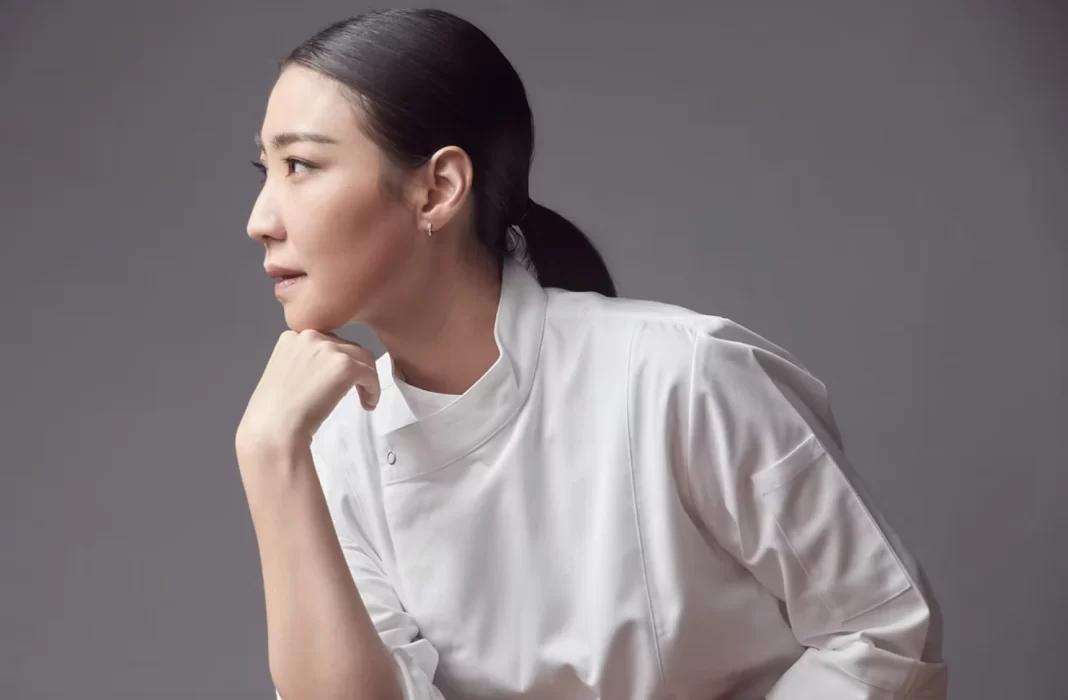

Chef Pichaya “Pam” Soontornyanakij cried when she got the call. Standing in her kitchen at Potong, surrounded by the controlled chaos of service, she learned she’d won Asia’s Best Female Chef 2024. Then came the Michelin star. Then The World’s Best Female Chef 2025.
She’s 35.
The accolades keep piling up, but here’s what matters more: she’s making people travel halfway across the world to eat in Bangkok’s forgotten Chinatown. Food critics who used to dismiss Thai-Chinese cuisine as street food now write breathless reviews about her 20-course tasting menu.
The Building That Started Everything
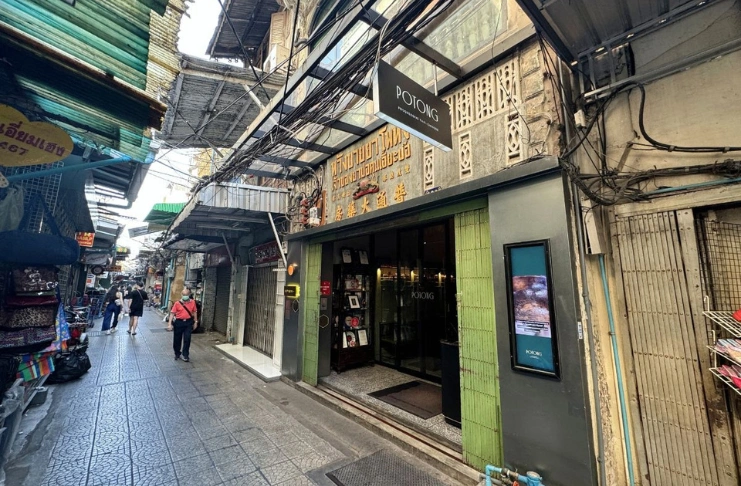
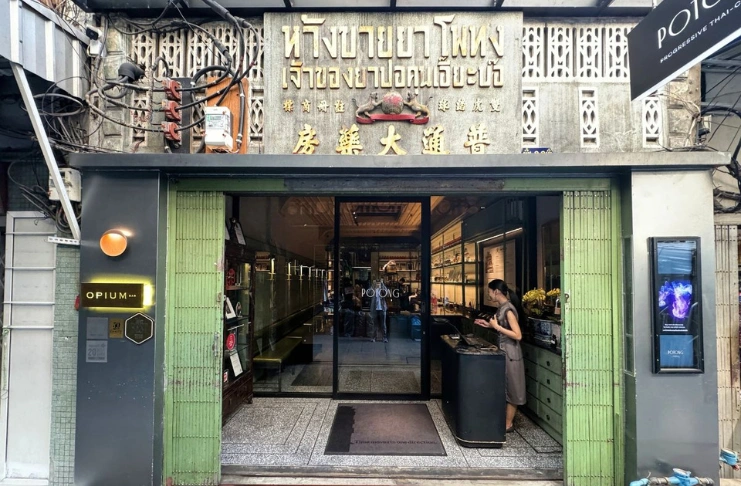
Walk down Wanich 1 Road and you’ll find a narrow five-story building that looks like it belongs in old Hong Kong. The brass nameplate still shows traces of Chinese characters – remnants from when this was her family’s herbal medicine shop, built in 1910.
“I remember my dad always talking about the Potong building because he used to live here,” Chef Pam recalled during her conversation with Bangkok Foodies. “My grandfather told me about its history. Right at that moment, on the rooftop, seeing our original ‘Potong’ logo, I decided that this would be my next restaurant.”
She spent three years renovating. Three years of planning every detail while Bangkok’s food scene exploded around trendy districts like Thonglor and Ekkamai. Everyone thought she was crazy to bet on Chinatown.
She proved everyone wrong.
The Menu That Spoke for Itself
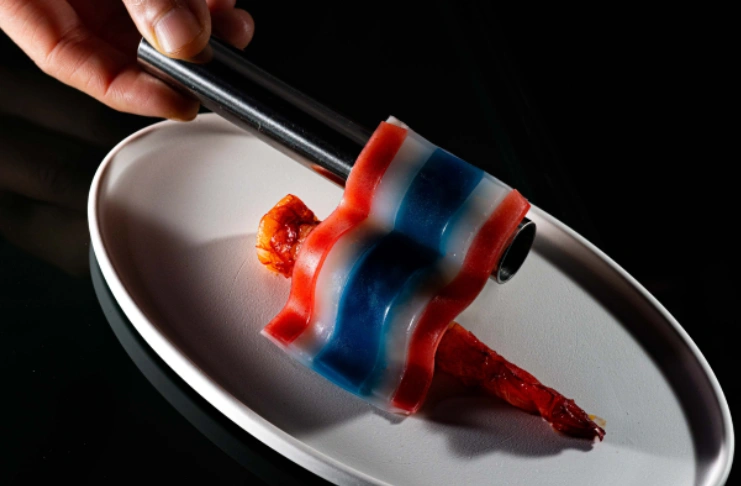
Twenty courses. Each one tells a story about 400 years of Chinese migration to Thailand, but through a technique that rivals any Michelin kitchen in Paris or New York.
Her “Historical Stories” course (crab roe, blue crab, brioche) sounds simple until you taste it. The flavors hit your palate in waves, each one unlocking memories you didn’t know you had. Her 14-day-aged duck took a year to perfect. The house soy sauce? Twelve months of development.
“I was the first to elevate and elaborate on Thai-Chinese cuisine. It’s not simple to relay this Thai historical information through food, but I always love to challenge myself to try,” she explains. (Source: Food Travel Babe)
The philosophy behind every dish centers on five elements: salt, acid, spice, texture, and the Maillard reaction, combined with engaging all five senses. The idea came to her during pregnancy.
“When we were working on the Potong project, I was still pregnant. I read a book about teaching your child… in order to make your child memorise the object, they need to have all five senses working at the same time,” she shared.
The Risk That Paid Off
Choosing Chinatown was either brilliant or insane. The Sampeng area had been slowly dying as Bangkok’s attention moved elsewhere. Property was cheaper, sure, but foot traffic was minimal.
“It’s financially risky to be located in a slow zone. But now, I’m very happy that guests appreciate everything Potong does. I love the charm the historic Sampeng gives to Potong,” she reflected in her interview with the Michelin Guide.
Now, food pilgrims book flights specifically to eat here. Hotel concierges report that Potong reservations drive entire Bangkok itineraries.
The restaurant runs at 30+ guests per night with 50+ staff – more employees than customers, which shows how serious they are about the experience.
The Global Shockwave
When Potong hit No. 13 on Asia’s 50 Best Restaurants in 2025, earning the Highest New Entry Award, it sent ripples through kitchens across the continent.
Suddenly, chefs in Singapore were reconsidering their approach to traditional dishes. Hong Kong fine dining establishments started questioning their techniques.
“A couple of days ago, guests from Australia and Singapore mentioned to me that this is the best meal they’ve ever had – that made my day. I also noticed that guests from Singapore and Hong Kong can relate their memories of the old Chinese shophouse to my heritage,” Chef Pam shared.
The success came with pressure to expand. Investors wanted Potong franchises in major cities worldwide. Chef Pam turned them all down.
“There are investors inviting Potong to expand overseas or branch out. I rejected them all because my idea for Potong remains unchanged. There is and will be only one Potong, here on Wanich 1,” she declared.
Beyond the Kitchen

Chef Pam’s influence extends past her own restaurant. Her Women for Women (WFW) scholarship program addresses a harsh reality in rural Thailand: when families can only afford education for one child, they choose the boy.
Many young Thai females in rural areas have fewer opportunities for a proper education. That’s why Chef Pam always wanted to contribute something to their aid.
Result? Her kitchen is 80% female, unintentionally, but symbolically powerful in an industry known for toxic male dominance.
The scholarship feeds into something bigger. Young chefs across Asia are suddenly seeing their grandmother’s recipes through new eyes. Heritage cuisine is having a moment, and it started in a narrow building in Bangkok’s Chinatown.
What Comes Next

Every service at Potong continues to prove the same point: Asian heritage cuisine belongs in the same conversation as any European fine dining institution.
The technique is there. The innovation is there. The stories are there.
The building renovation included a glasshouse on the fifth floor and an in-house garden. There’s a secret bar called “Blackjade” hidden behind the Opium Bar. Chef Pam keeps pushing boundaries, but always within this single building, this single story.
She could franchise Potong tomorrow and become wealthy beyond imagination. Instead, she’s chosen to make her restaurant a pilgrimage site.
And if you want to experience what she’s created, you have to come to Bangkok, to Chinatown, to this specific address with its specific history.
That decision might be the most radical thing about Potong. In a world obsessed with scaling and expanding, Chef Pam chose depth over breadth.
The revolution will continue, one service at a time, in a 120-year-old building where healing began with herbal medicine and now continues with food that tastes like home.