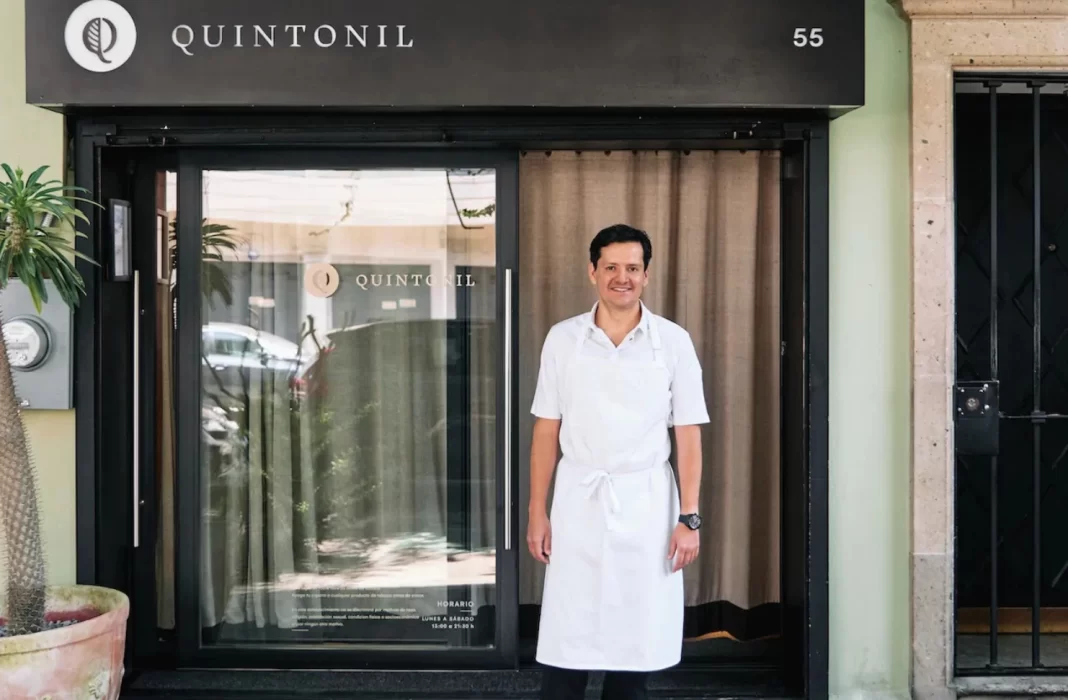

If you’re a foreigner, go to any Mexican restaurant outside Mexico, and you’ll see dining rooms full of content people eating nachos, convinced that it’s the most authentic type because there’s a mariachi photo on the wall. This portrayal could not be further from what real Mexican cuisine actually is.
Growing up, Jorge Vallejo has seen his grandmother and mother fill the kitchen with aromas and recipes passed down through generations. He has always been around food, and maybe that’s why when the time came, he was torn between becoming a veterinarian and a cook. Quite obviously, the creative path won. “The human being seeks happiness sitting at a table, and I wanted to contribute to that happiness,” he said.
He has indeed been “contributing” diligently via a restaurant called Quintonil in Mexico City.
The name ‘Quintonil’ comes from a green herb native to Oaxaca, which is a common ingredient throughout the restaurant’s menu, in dishes and cocktails, and as a philosophy for how Vallejo approaches cooking.
Quintonil currently holds the number three spot on The World’s 50 Best Restaurants list and number seven in Latin America’s 50 Best. His wife, Alejandra Flores, runs the front of house, bringing hospitality training from Les Roches in Switzerland and years working with the Enrique Olvera Group. Together, they’ve built a space that challenges every lazy assumption about what Mexican food can be.
The Problem with How the World Sees Mexican Food
“Mexico is very present at the moment, and we are proud of that,” Vallejo said in a recent interview. “But many people only see a simplified version of our cuisine. Mexico is huge; you could fit the whole of Europe in it. From the desert to the jungle, from Oaxaca to Yucatán, there are many Mexicos. This diversity must be visible. It’s about more than tacos and burritos.”
Knowing this is important because though Mexican cuisine has the same depth and complexity as French or Japanese cooking, it rarely gets treated that way internationally. People reduce it to Tex-Mex or street food, missing entirely the technical skill and cultural knowledge required to make proper mole (which can contain up to 30 ingredients), to cook underground for half a day, or to work with insects in ways that make them actually mouth-watering.
Vallejo studied at Ambrosia Centro Culinario in Mexico, worked on cruise ships, then landed stages at Noma and Pujol before opening Quintonil with Flores in 2012. His cooking philosophy centers on sourcing the best possible ingredients every day and treating them with the respect they deserve, which may sound simple until you understand the work involved in maintaining relationships with producers, understanding ecosystems, and thinking through how extraction affects communities.
What Actually Happens at Quintonil
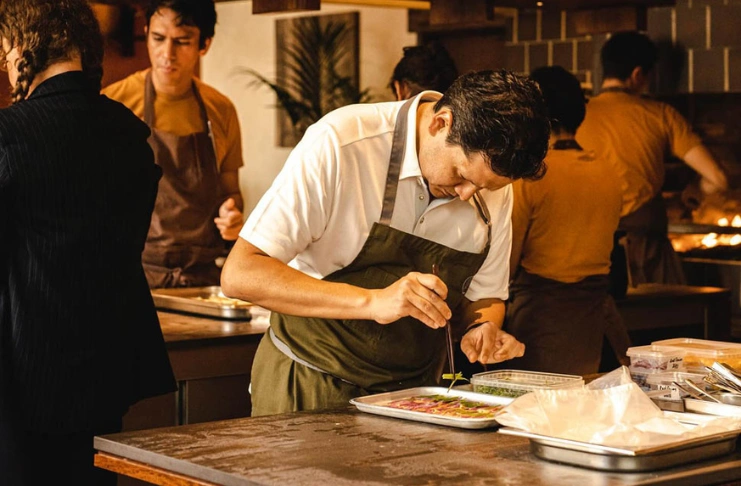
The restaurant sits in a space with high ceilings and Mexican artwork on the walls, overlooking an open kitchen. The look is chic and understated. There’s counter seating where you can watch the kitchen work through a shorter menu, and a main dining room that feels like being welcomed into someone’s home, if that home happened to serve some of the most refined food in the Western Hemisphere.
Many of the ingredients travel just 30 meters from Quintonil’s urban garden to the plate. The tasting menu changes with the seasons but consistently showcases vegetables, fish, and seafood prepared in ways that surprise people who come expecting meat as the star. “Many diners in Mexico still wait for a star dish or main to be protein, especially meat,” Vallejo told Chef’s Pencil. “I like to surprise that expectation with a dish with vegetables, fruits, and mole sauce, for example. It is a simple dish and exquisite, but not easy to prepare.”
The meal often starts with Agua de Quintonil, a cocktail made with mezcal espadín, quintonil herb, mandarin, and lemon, followed by green chileatole, a thick corn masa soup with Mexican herbs and cuaresmeno pepper.
Then comes butternut squash and tomato salad with rice horchata and pumpkin seeds, and finally, everyone’s favorite king crab in pipian verde sauce with sunflower seeds, makrut lime, and Thai basil, topped with blue corn tostadas.
That crab dish references a green curry Vallejo had in Thailand, which he compares to mole in how both are made by mixing fresh and dry ingredients, spices, and chilies, the spirits of two nations revealing themselves in their staple sauces. It’s the kind of thoughtful cross-cultural reference that shows up throughout his cooking.
The Insect Course
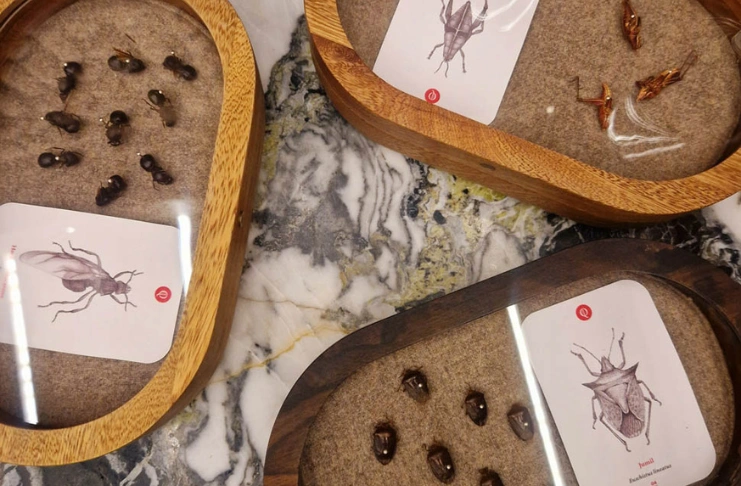
The current menu’s highlight is what Quintonil calls the Entomophagy Festival, their celebration of insects and the many ways they’re consumed in Mexico. There’s an academic display of pinned grasshoppers, large ants, and stink bugs under glass that might not be appetite-inducing if you’re squeamish about bugs, but the course as served is one of the prettiest things you’ll see on a plate anywhere, presented in a way that makes you forget what you’re actually eating.
Two main proteins anchor the experience: perfectly seared striped bass à la barbacoa in adobo de chapulin (grasshoppers), and chicatana ant chorizo, which is genuinely outstanding. Then there’s a whole range of sides and toppings to mix and match however you want. Cauliflower cream for the less adventurous. Vegetable ceviche in smoked cactus leche de tigre with a gooey texture. Confit onions and santanero beans from Oaxaca. Charred avocado tartare with escamoles (ant larvae) and vegetable chips. Salsa roja made with jumiles (stink bugs) and epazote leaves.
Everything gets served with wooden boxes of freshly made, still-warm criollo corn tortillas from Santa Maria del Llano that you can turn into your own personal tacos. The whole thing combines so many different elements, flavors, and textures while giving insight into insect-eating as an organic part of Mexican tradition and nutrition.
Understanding Mole
After visiting San Pedro Atocpan, where 92 percent of residents work in the mole industry and the town produces 60 percent of the mole made in Mexico, Vallejo knew his menu had to showcase mole properly. The sauce sounds basic, like something you’d find anywhere, but it’s actually one of the most complex in the world, made with up to 30 ingredients.
There are X kinds of moles, ranging from black to red, from mole ranchero to mole pipian, and everything in between. Every family guards its own recipe, and the competition in San Pedro Atocpan is fierce. Vallejo sources from Mole Don Luis, a family operation where they fry every ingredient (cinnamon, bay leaf, chocolate, cookies, everything), then mix and grind them until fragrant dust covers the room.
On a recent menu, it was chichilo negro mole, one of those rich, deep, spicy chile moles made with different chilies, allspice, tomatillos, and garlic, served with roasted, aged duck and charred eggplant. The kind of dish that makes you understand why mole is considered such a cornerstone of Mexican cooking, why families protect their recipes, and why entire towns dedicate themselves to its production.
How He Thinks About Sustainability
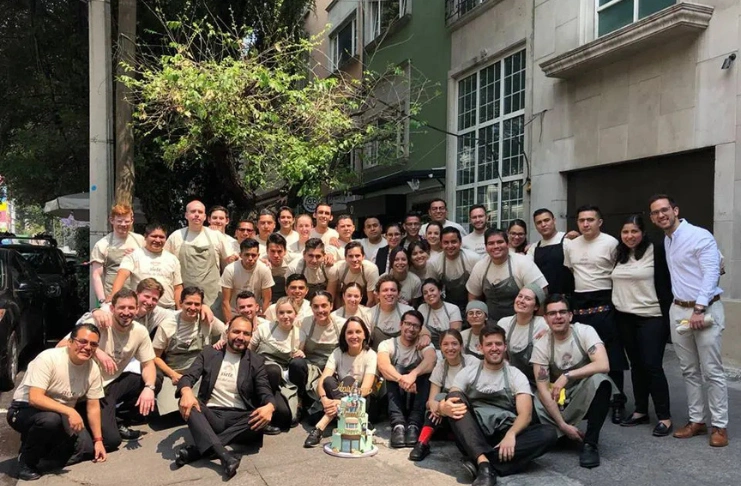
For Vallejo, sustainability is embedded in how he runs Quintonil day to day. “Sustainability shouldn’t just be central to a kitchen like Quintonil’s; it should be at the heart of every kitchen run by someone who cares about their health and the future of the planet,” he told Front Row Society.
This might mean working with producers who share similar values, and thinking about how ingredient extraction affects ecosystems and communities.
At Quintonil, for example, the trout on the menu comes from a project that helps protect the Monarch butterfly forest. All the seafood is chosen so its extraction doesn’t harm the ecosystem.
“Chefs today will have these dilemmas: what can I do as a cook to improve the environment?” Vallejo said. “The concern now is not only why it contains the best flavor and freshness, but how to take it from the earth without compromising its environment.”
Interestingly, for Vallejo, sustainability also means creating work-life balance in an industry that burns people out. “For me, sustainability starts with people, both professionally and privately,” he explained. “When someone can realize their dreams, even outside of the kitchen, a real balance is created. Yes, gastronomy is demanding. You need ambition. But you also need space to develop as a person.”
The Driving Factor
Despite the number three ranking and all the recognition worldwide, Vallejo still sees himself as someone with so much to learn. “I consider myself a romantic when it comes to cooking,” he said. “I like to think there’s still so much left to learn, and above all, many dreams to fulfill, both personally and professionally. Without a doubt, Quintonil is the greatest dream I’ve made real, a dream I share with Ale and with the entire team that works alongside us every day.”
The rankings matter because they’re motivating, he says, but they also create responsibility toward the team members who believe in them, toward guests who choose to celebrate special moments there, toward themselves because these recognitions come from remarkable collective effort. It pushes them to stay committed to their craft and their people, and it gives them freedom to be themselves.
“At the end of the day, people come to be surprised, to open themselves up, mind and spirit, to new experiences,” Vallejo said. “That gives us the freedom to cook with complete creative liberty.”
His advice to aspiring chefs? “Get up early, repeat the techniques until you cannot move your hands or feet. Forget fame and awards. Read about our ancestors. Travel, even as a stowaway, visit a milpa. Ask questions all the time, do not contain curiosity. Great chefs are wiser than experts in the art. Be observant and learn to serve, service is very important, to look at people to understand them and know what they want and what they like.”
The Bigger Conversation
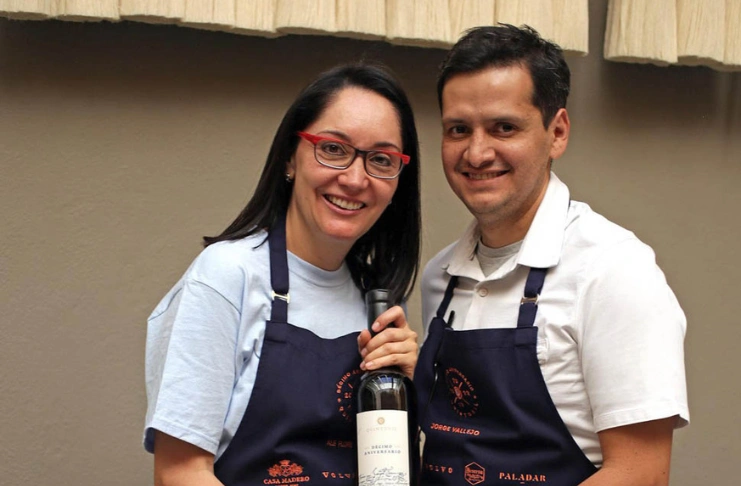
Vallejo and Flores are part of a generation showcasing Mexican cuisine’s diversity globally, joining chefs like Santiago Lastra in London and Paco Méndez in Barcelona who honor their roots while running restaurants with heart and intention.
Quintonil doesn’t adapt its spiciness for international guests or water down its approach. “We show our many Mexicos,” Vallejo said. “If it’s spicy, it should stay spicy. Spiciness is not a single sensation; there is sour, smoky, and sweet spiciness. We are just getting to know this variety.”
Mexican cuisine has proven time and again it’s capable of satisfying every kind of eater, from people searching for midnight tacos al pastor to those looking for elevated expressions of what the food can be. Vallejo’s work fits firmly in that second category, and it’s worth celebrating.