

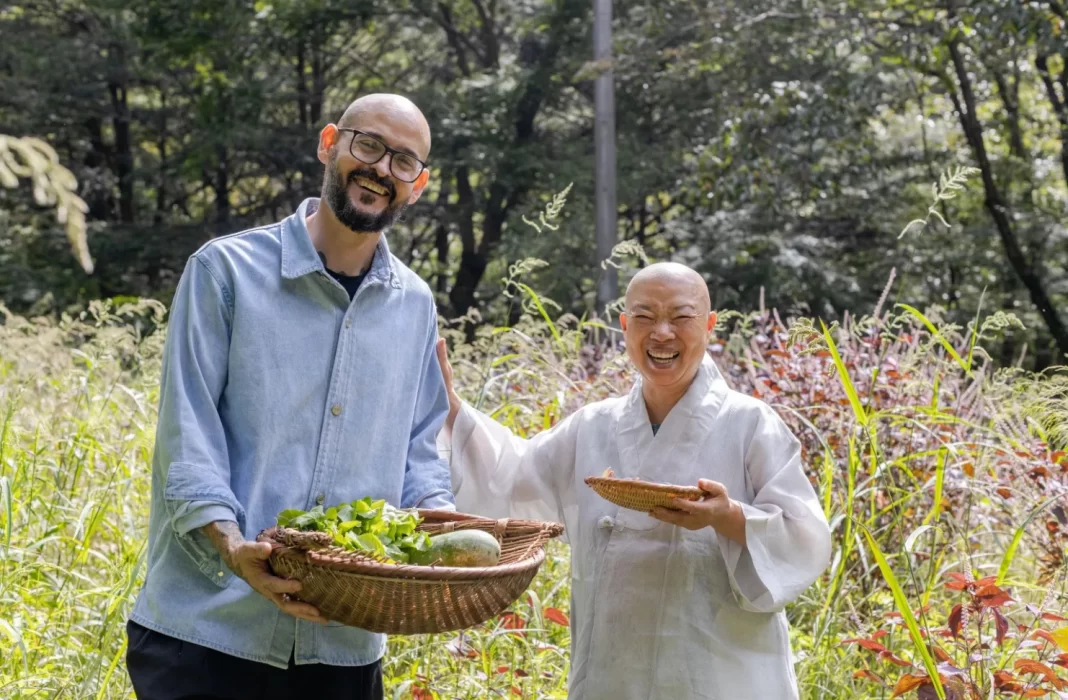

His mother’s kitchen was forbidden territory.
Aitor Zabala remembers standing outside his family’s restaurant in Barcelona, hearing his grandmother give orders in rapid Catalan. The women ran everything in his Basque family, and the kitchen was theirs. (No questions asked!)
That changed with the mandatory Spanish military service when the Army assigned him to a mess hall kitchen for one month. Those thirty days of homesick boys far from their mothers’ tables awakened something in him.
So, he called home and told his grandmother he wanted to cook. She said yes. The matriarchy had agreed.
That was 1996. Today, Zabala stands in a West Hollywood courtyard where water trickles from a stone fountain, where 14 seats sell for $495 each, where people wait months for the chance to eat food that looks like art and tastes like memory.
Somni, his restaurant, just became the first in Los Angeles history to earn three Michelin stars. (And it’s worth talking about!)
The Education of Hunger
After culinary school, Zabala apprenticed under some of the most acclaimed names of Spanish cuisine.
First came Café de La Princesa in Barcelona, where he learned the basics.
Then he called Pedro Subijana at Akelarre, the three-Michelin-starred restaurant at San Sebastian’s coastline. Subijana told him he lacked experience. But Zabala proposed working without pay for six months. If he proved himself, he might get a real position. Subijana agreed.
Those six months stretched into two and a half years. Zabala absorbed everything: the precision, the discipline, the perfection that separated great cooking from mere sustenance. But he knew there was one more mountain to climb: Ferran Adrià’s El Bullí.
El Bullí operated on a different plane entirely. Chefs flew from across the globe to stage unpaid just to witness tradition shattered and rebuilt. The waiting list stretched for years. When Zabala finally got the call at 27, the role was technically a step backward, but he took it without hesitation.
For four seasons, Zabala worked every station in that legendary kitchen. Here, he learned that food could be sculpture, theater, philosophy, and memory made tangible. When Adrià announced the restaurant would close forever, Zabala understood his formal education was complete.
Now came the test – building something of his own.
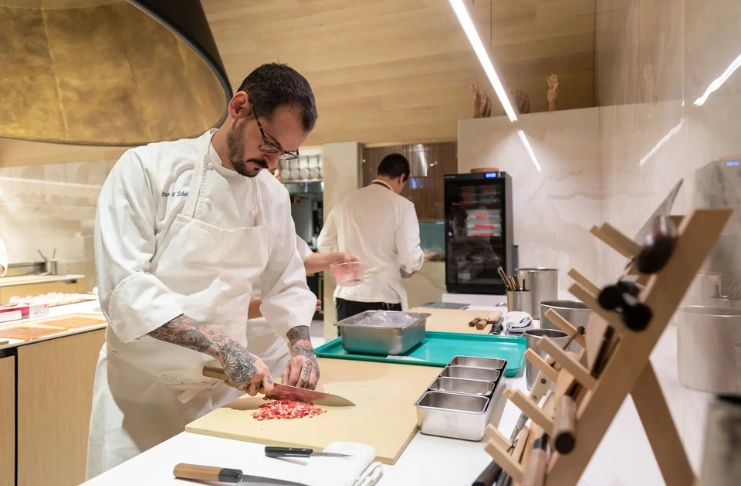
Everything that time seemed stacked against him, though. Spain’s economy had collapsed, and his savings were gone.
Thankfully, José Andrés offered him work in America. In 2010, Zabala landed in Washington, D.C., and then moved to Los Angeles to run Saam, a tasting menu concept at The Bazaar in the SLS Beverly Hills.
Los Angeles felt like Barcelona. The weather, the ocean, the mountains. He fell in love with the farmers’ markets, the year-round produce, and the possibilities that came with every season. But Saam was struggling. Some nights, they served two people at a time. Some nights, nobody came.
“We were serving as few as two people a night, but we just kept pushing,” he remembers during his conversation with Eater. “We tried to make it special regardless of how many people we were serving. It was tough to keep the staff motivated.”
His team believed anyway. Alex Stanley, his chef de cuisine, started as a line cook and stayed five years while Zabala built something that might never succeed. Hector Contreras worked in development, believing in dishes that cost more to make than they brought in. They could have earned more money elsewhere. Yet, they stayed.
In 2018, Saam became Somni. The same kitchen, the same impossible economics, the same 10-seat counter facing an open kitchen where every mistake was visible. The name meant “dream” in Catalan. It felt appropriate. Dreams were all they had.
Then the Michelin Guide came to Los Angeles. Somni earned two stars in its first year.
The Closure
It was March 2020. COVID-19 shut down the world. Restaurants died by the thousands. The SLS Beverly Hills was unable to extend Somni’s lease. The Bazaar closed. Everything Zabala had built over a decade disappeared overnight.
“The pandemic hit everyone hard,” he now tells The Hollywood Reporter, but the words are too small for what happened. His staff scattered. His savings evaporated. The restaurant that had taken ten years to build was gone in ten days.
Still, there was a ray of hope. He had partners who could have walked away. Instead, they waited. For four years and seven months, they waited while Zabala searched for a new location, navigated construction delays, and survived on faith and stubbornness.
“It took a lot of effort—personally, economically—to bring Somni back,” he says. “Obviously, I had the support of my partners, and I’m really thankful they let me survive until we could reopen.”
Some nights, he must have wondered if the dream was over.
The Comeback
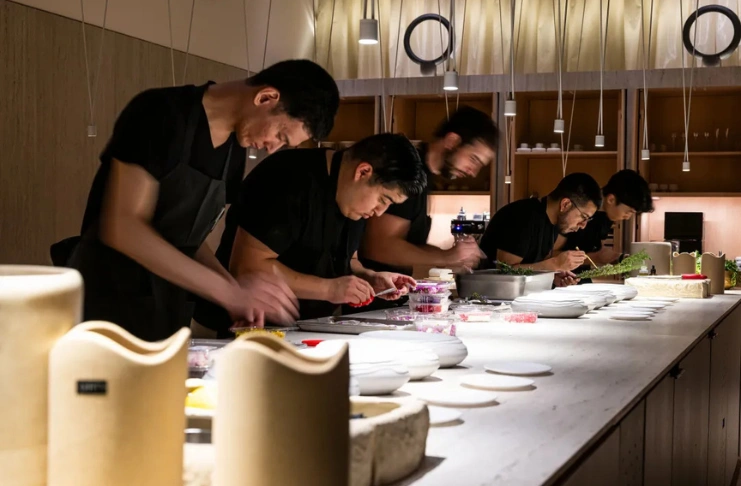
November 26, 2024. Somni reopened on tiny Nemo Street in West Hollywood, hidden behind a white steel gate, past a yellow giraffe sculpture, through a courtyard that felt like a secret garden. The new space had 14 seats instead of 10, a full kitchen instead of a corner, and custom everything.
The menu had evolved during the long closure: twenty-five courses, each a miniature masterpiece. Dashi meringue shaped like a fish, topped with caviar. Mussels floating in escabeche clouds. Pizza made from tomato water that has been dried for twelve hours straight.
Opening night sold out in minutes, every night after, too. Reservations opened once a month and vanished almost instantly. Celebrities called. Billionaires offered bribes. Zabala turned them all down.
“It doesn’t matter what system we use. It’s 14 seats, and people will always feel it’s unfair,” he says. “Everyone has to use the online system. It opens once a month, and if you’re lucky, you get a reservation.”
Even Jeff Bezos would wait in line.
The Call
June 25, 2025. Zabala was visiting family in Barcelona when his phone rang at 3 AM. Someone had leaked the Michelin results early. Three stars. The summit. Only 150 restaurants worldwide had ever achieved this level of success.
Just seven months after reopening.
The achievement made him the first Catalan chef outside Spain to earn three stars. It made Somni the first Los Angeles restaurant to reach the peak since the guide arrived in 2008. It made everything worth it.
“It’s a huge achievement because only 150 restaurants in the world have been given that honor,” he says. “It takes years and years of hard work and passion and doing better every single day.”
But the math still makes no sense. Twenty people working to serve 14 guests. Ingredients that cost more than some restaurants charge for entire meals. Profit margins are so thin that they disappear if one person cancels.
“If I wanted to make money in a restaurant, I wouldn’t open a place that serves twenty people a night,” he said years ago. “I’d open a place with 200 seats, work five days a week, and spend more time playing golf.”
Instead, he works 12-hour days creating experiences that cost $720, complete with wine pairings, because the money was never the point.
What Dreams Taste Like
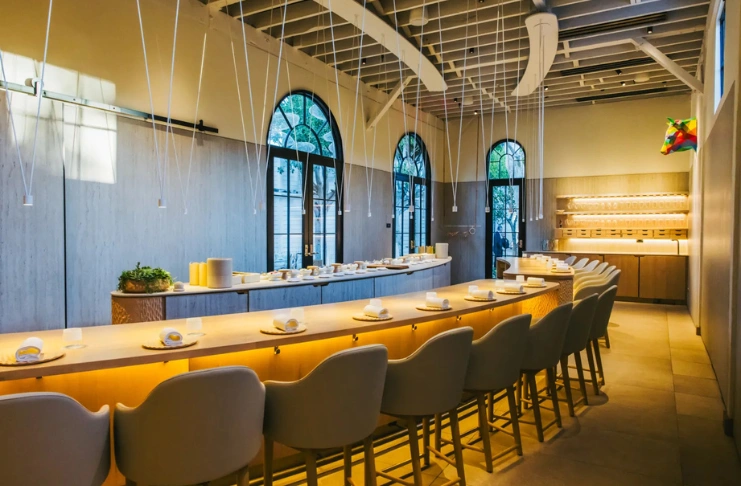
Walk through that gate on Nemo Street today, and you enter something between a restaurant and a theater. The kitchen hums with precise choreography. Twenty cooks move in synchronized ballet, ladling sauces, placing flowers, creating plates that look too beautiful to disturb.
Zabala moves among them, tasting, adjusting, pushing for perfection that exists only in his head. Each dish carries an autobiography. Each bite tells the story of a Spaniard in America, of Basque traditions meeting Los Angeles seasons, of dreams deferred but never abandoned.
“Most importantly, we want to create emotions and memories,” he says. “When they say, ‘You made me feel like this,’ that is pureness. That is really freaking cool.”
The plates are never finished, he says. Always evolving, always improving. Because perfection is a moving target and dreams demand everything you have to give.
Some nights, watching his team work, seeing guests lose themselves in wonder, Zabala must remember that forbidden kitchen in Barcelona. The boy who wasn’t allowed inside. The grandmother who finally said yes. The long road from there to here, from hunger to fulfillment, from dream to three stars.
His mother’s kitchen was forbidden territory. Now he has built his own kingdom, and the world comes to him.


