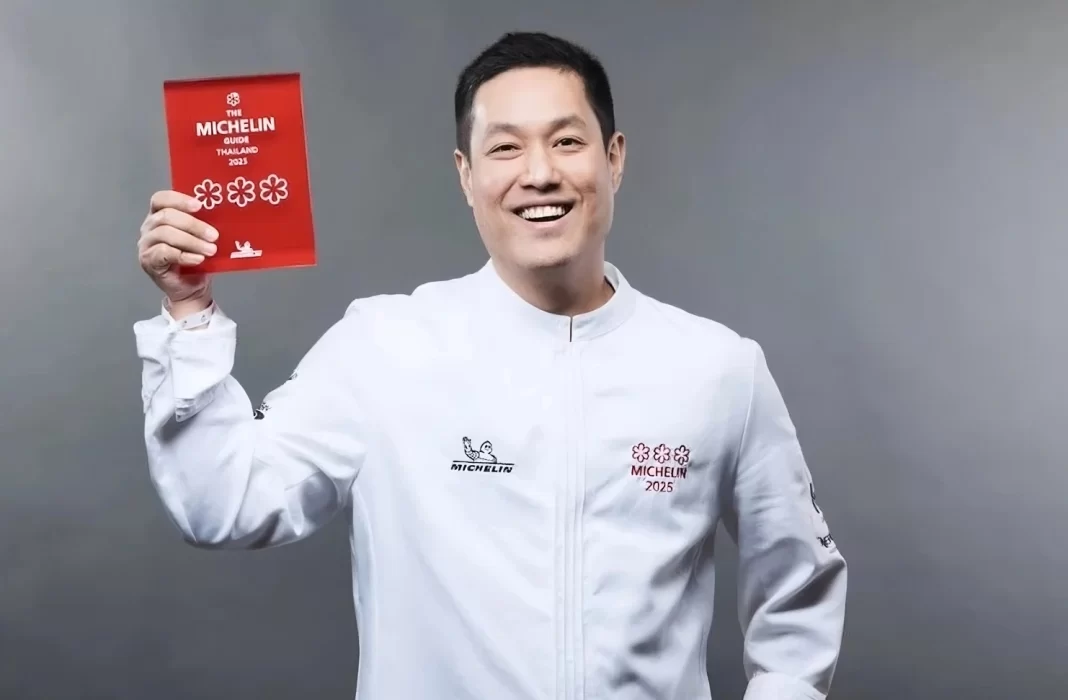

In November 2024, a small restaurant in Bangkok made culinary history. Sorn earned Thailand’s first three Michelin stars by doing something radical: cooking authentic Southern Thai food exactly as it should be cooked.
The achievement belongs to Supaksorn “Ice” Jongsiri, a self-taught chef whose only formal training came from his grandmother’s kitchen in Nakhon Si Thammarat.
While the culinary world chased fusion and deconstruction, Ice built his reputation on a simple premise: Thai food doesn’t need to be reimagined to be world-class.
From Hollywood to Grandmother’s Kitchen
Ice’s father was a celebrated Thai film director. His mother, a renowned actress. Young Ice grew up surrounded by scripts and spotlights.
Yet he found himself drawn to his grandmother’s modest kitchen instead.
“At that time, no one was home. My mother had to go shoot dramas, so my grandmother took me in,” Ice recalls during his conversation with Tatler Asia.
By age four, he could cook rice. And, by seven, he was making tom khem. While other children played, Ice learned to balance flavors and adjust seasonings under the guidance of a retired teacher who would become his most important mentor.
The 1997 Asian financial crisis forced Ice to work in Boston restaurants while studying architecture. He embraced it as education, cooking large pots of dishes for fellow students, and learning to source ingredients efficiently from Chinese supermarkets.
The Authenticity Problem
Returning to Thailand with two degrees, Ice helped run his grandmother’s small Southern Thai restaurant, Baan Ice. He eventually expanded to seven locations across Bangkok.
However, something bothered him about the direction of Thai cuisine in fine dining.
“Thai cuisine was leaning towards deconstruction or fusion, with appetizers being fish or meat courses, and the meat was medium rare. Thai cuisine doesn’t have medium rare. Then there was caviar and truffles; I felt it wasn’t right.”
Awards were flowing to foreign chefs cooking Thai food, or to Thai restaurants that had lost their identity in pursuit of fine dining credentials.
Ice saw an opportunity. And a responsibility.
A Restaurant Named After Love
Opening Sorn in May 2018 required a sacrifice. Ice poured his life savings into the venture.
He named the restaurant after his eldest son, just as his grandmother had named Baan Ice after him. The word “Sorn” derives from “sarana,” meaning both a self-made person and a place of refuge.
Critics questioned his credentials from the beginning. He hadn’t attended culinary school. He was seen as a “preppy restaurant owner” who didn’t actually cook.
In an industry obsessed with formal training and celebrity chefs, Ice seemed like an outsider.
What happened next defied every expectation. Sorn earned its first Michelin star within months of opening in 2018. The second star followed in 2019.
For five years, Ice maintained that prestigious two-star status while quietly revolutionizing how the world saw Thai cuisine.
Ancient Techniques, Modern Precision
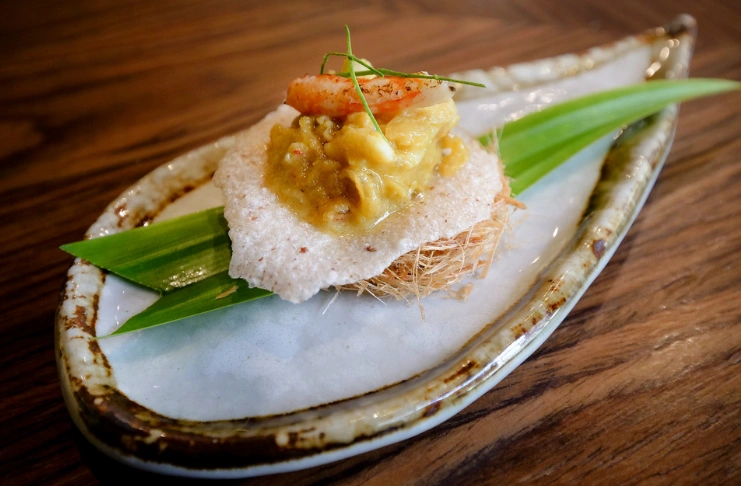
Walk into Sorn today and you enter a world where ancient techniques meet exacting precision.
The restaurant sits in a beautifully restored 90-year-old building. It seats just 40 diners for a single service each evening.
Rice is cooked in clay pots over charcoal. This method requires constant attention, which results in what diners call “dancing rice,” where perfectly cooked kernels stand upright.
“Modern technology and tools often make the flavor quite uniform; I feel like it isn’t Thai food anymore,” Ice explains. “What has been practiced for a hundred years is different from what has been done for 10 years.”
Every dish at Sorn is highly temperature-sensitive. Ice controls service with military precision, delivering each course at the exact moment when flavors peak.
The 24-course tasting menu takes diners through all 14 provinces of Southern Thailand.
Preserving Thailand, One Ingredient at a Time
Sourcing ingredients for Sorn reads like an expedition across Southern Thailand.
Budu sauce comes from Pattani and is made from fresh fish intestines rather than the traditional dead fish. Sea cicadas arrive from Mai Khao Beach in Phuket.
Bird’s eye chilies, incredibly fragrant but disappearing from cultivation, are purchased at premium prices to encourage farmers to keep growing them.
“Many ingredients are indeed disappearing because when no one uses them, the people who grow them suffer,” Ice notes.
His commitment to rare ingredients serves a dual purpose: culinary excellence and cultural preservation through commerce.
The crown jewel is the Kan Chu Piang, Ice’s interpretation of blue swimmer crab leg. In Thai households, this prized part of the crab is reserved for the most senior or most beloved family member.
At Sorn, every diner becomes that beloved child for one meal.
More Than Stars: A Cultural Revolution
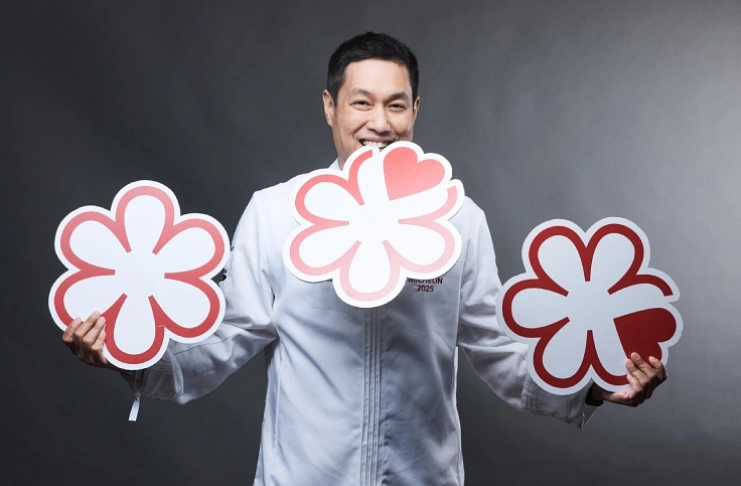
Ice’s culinary philosophy centers on three words: “Honest, Thai, and fulfilling.”
But deeper than technique or ingredients is something more fundamental: cooking with love for people you care about.
The restaurant lists ingredient sources and the people who provide them. Staff are trained to serve food and tell stories. The memories and traditions Ice builds into every dish.
The service team becomes part of the narrative, connecting diners to the cultural context that makes Southern Thai cuisine distinctive.
The reservation system has become legendary for its difficulty. Tables disappear within seconds when released online.
The exclusivity isn’t intentional. It’s simply the result of capacity meeting demand. Ice insists on single service because “if we did a second round, the quality would drop, and I would be exhausted and lose my passion.”
Three Stars, One Mission
When the third Michelin star was announced in November 2024, it represented more than personal achievement.
It was vindication of everything Ice believed about Thai food. Thai cuisine didn’t need to be deconstructed or fusionized to be world-class. Traditional techniques weren’t obstacles to excellence but pathways to it.
The achievement has opened doors for other Thai chefs to pursue their own visions without compromising their cultural identity.
It’s given Thai cuisine a new level of global respect while staying true to its roots.
Growing the Tree of Knowledge
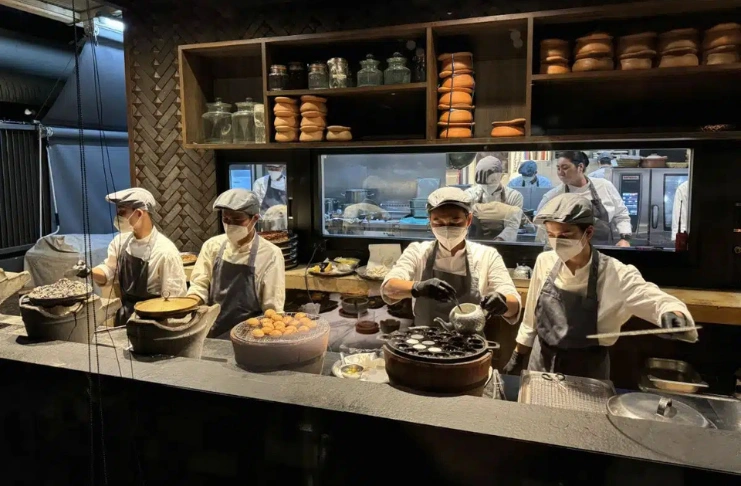
Success hasn’t changed Ice’s fundamental approach. He still arrives at the restaurant daily, tastes every dish, and insists on the traditional methods that make Sorn special.
“I never consider myself successful,” he admits in his interview with the Michelin Guide. “If you say, ‘This is perfect, it’s complete,’ then you’re done. There’s no such thing as perfection or success because there’s always something to improve.”
Looking ahead, Ice envisions expansion of his philosophy rather than Sorn itself. Key team members might open restaurants globally under the Sorn name.
The tree of knowledge that his grandmother planted in that kitchen decades ago continues to grow.
The Last Word
Today, Sorn stands as proof that authenticity can compete with innovation. Traditional techniques can produce world-class results. Formal training isn’t the only path to culinary excellence.
In that restored house in Bangkok, where sea cicadas meet ancient curry pastes and charcoal fires dance beneath clay pots, Ice has created something remarkable.
A bridge between the past and the future. Between tradition and recognition. Between a grandmother’s kitchen and the global stage.
The world’s first three-star Michelin Thai restaurant wasn’t built on revolution. It was built on remembering what Thai food was always meant to be.