


Here’s one seemingly simple question that keeps many restaurant owners up at night: “What should I actually charge for this dish?”
Get it right, and you’ve cracked the code to restaurant profitability. But fail to do so, and you join the 60% of restaurants that can’t make it through year one.
Consider this: the average restaurant’s profit margin hovers between 3-5% leaving very little room for missteps. Yet many restaurateurs rely on rough cost-plus formulas, gut feelings, and copying what the place down the street does.
In an industry where food costs have risen by nearly 20% in just the past two years, where labor expenses continue to climb, and diners scrutinize value more carefully than ever before, yesterday’s pricing strategies no longer suffice.
Solution? This guide lists some of the best restaurant menu pricing strategies that actually bring in money without pushing customers into a frenzy.
Why Strategic Pricing Actually Matters?

You can’t just slap a 300% markup on everything and call it a day. Pricing your menu means understanding the ins and outs of your food costs, what customers are willing and able to pay, and where those two meet profitably.
Without a real strategy, you either end up undercharging for dishes that take serious effort or pricing yourself out of contention for no reason.
Good pricing accounts for ingredient costs, what competitors charge, how customers think about value, and the margins you need to keep the lights on.
A case study backs this up. Pricing Solutions, for the record, worked with a restaurant that recovered 5% in annual revenue by fixing its pricing strategy, which eventually translated into a 2-3% bump in profit margins.
Another study found that pricing perception is the single biggest driver of customer satisfaction. People need to feel like they’re getting their money’s worth, even if they’re paying premium prices.
INDUSTRY INSIGHT
| According to NetSuite, menu psychology plays a crucial role in shaping customer perceptions and boosting restaurant profitability. Techniques like charm pricing (e.g., pricing at $9.99 instead of $10) create the illusion of better value, making customers more likely to choose higher-priced items. Similarly, decoy pricing, where a high-priced item makes other options seem more affordable, encourages customers to opt for mid-range options, increasing overall sales.These pricing strategies not only guide customer decisions but also enhance their satisfaction by aligning with their value perceptions. When done right, it fosters customer loyalty and helps increase profitability. By leveraging menu psychology, restaurants can improve both financial performance and customer experience. |
In short, pricing isn’t just accounting. It’s how you tell your brand story and stay in business.not only helps ensure profitability but also allows for better control over your menu’s pricing structure. By knowing the portion of your revenue dedicated to purchasing ingredients, you can make informed decisions that balance cost recovery with achieving your target food cost percentage and customer satisfaction, ensuring your menu pricing is both competitive and sustainable.
What is Food Cost Percentage?
Before you can price anything intelligently, you need to know what your food actually costs. This is foundational stuff.
Here’s how you can calculate your food cost percentage:
Food Cost Percentage = (Cost of Goods Sold / Revenue) x 100
So if a dish costs you $5.79 to make and you sell it for $18, your food cost percentage is about 32.2%. Industry standards suggest an ideal range of 28-35%, depending on your concept and cuisine.
Staying in that range means you’ve got enough left over for labor, rent, utilities, and hopefully profit. It also helps you make smarter calls on suppliers, inventory, and portion sizes.
Mind that while it’s easy to overlook small ingredients, even minor miscalculations can add up across hundreds of dishes.
Calculating Menu Prices Based on Food Cost
Once you know your costs, here’s the straightforward way to set your prices:
Menu Price = Raw Food Cost / Ideal Food Cost Percentage
Say your raw food cost is $4, and you’re targeting a 28% food cost. Your menu price should be around $14.29.
Simple formula, but you need to stay consistent across your entire menu and update it regularly when supplier prices shift, or ingredients go seasonal.
Also, don’t forget to add in hidden costs like garnishes, cooking oils, and spices, as these can cumulatively affect your prime costs and food cost percentage if left unaccounted for.
Menu pricing is never a one-time task; it’s a living, breathing part of your operations.
Incorporating Gross Profit Margin
Gross profit margin focuses on the profit made from each menu item after covering only the cost of goods sold (COGS), that is, the direct cost of ingredients.
It excludes any other expenses such as labor, rent, utilities, and marketing.
Purpose? It helps you understand exactly how much your restaurant earns from food sales before overhead costs are factored in.
How can you calculate it?
Gross Profit Margin = (Selling Price – COGS) / Selling Price x 100
For instance, if a dish sells for $14.50 and the COGS is $4, the gross profit margin is approximately 72%. High-margin items help you cover fixed costs more easily, boost your overall food sales, and create room for reinvestment.
By tracking these margins across different menu categories, you can identify which dishes actually carry the business and which ones consistently underperform at any hour.
What is Menu Engineering?
In the simplest terms, menu engineering means analyzing and categorizing menu items by sales volume (popularity) and contribution margin (profitability).
This framework helps restaurant owners and managers make data-driven decisions to optimize their menus for better performance. The four main menu item categories are:
Stars (High Popularity, High Profitability)
These are your best-performing items. They sell well and generate strong profit margins. Stars are typically customer favorites that also make financial sense for your business. They should be prominently featured on the menu, possibly with visual cues or special highlights, and kept consistent in terms of quality and availability.
Plow Horses (High Popularity, Low Profitability)
Plow Horses are popular with customers but offer lower profit margins. These items bring in volume but not necessarily revenue. Consider ways to increase profitability, such as tweaking the recipe to reduce food costs, adjusting portion sizes, or bundling them with more profitable add-ons, while maintaining their appeal.
Puzzles (Low Popularity, High Profitability)
These items are profitable but not ordered often. The key with Puzzles is to increase their visibility and appeal. This can be done through better menu placement, more enticing descriptions, staff-led upselling, or pairing them with popular sides or drinks. If customers realize their value, Puzzles can potentially become Stars.
Dogs (Low Popularity, Low Profitability)
Dogs are simply underperformers. They neither sell well nor generate significant profit.
Unless they serve a specific purpose, don’t keep them in your stack. Either rethink how they are priced and presented, or take them off the menu altogether.
A tighter menu makes space for dishes that actually sell and eases customer decision fatigue.
What is Dynamic Pricing?

It’s simply adjusting prices based on what’s happening around you, be it the time of day, demand, a holiday rush, or even the weather.
The idea isn’t to blindly charge more, but to respond to real-world conditions more intelligently.
Take Wendy’s, for example. The brand announced plans to roll out dynamic pricing in 2025. Powered by AI and digital menu boards, it helped the brand recalibrate revenue during peak hours while attracting more customers during slower shifts.
However, for this strategy to work the best, you should be super transparent. Customers tolerate dynamic pricing when they understand it, but surprise them, and you’ll lose trust.
What is Bundle Pricing?
Bundle pricing packages multiple items together at a discounted rate. This strategy simplifies customer decisions (less menu anxiety) and creates natural upsell opportunities, especially when you include high-margin items. Families and groups love them.
A classic example is the burger, fries, and drink combo. Priced right, it feels like a deal to the customer while quietly lifting your average bill.
What is Value-Based Pricing?
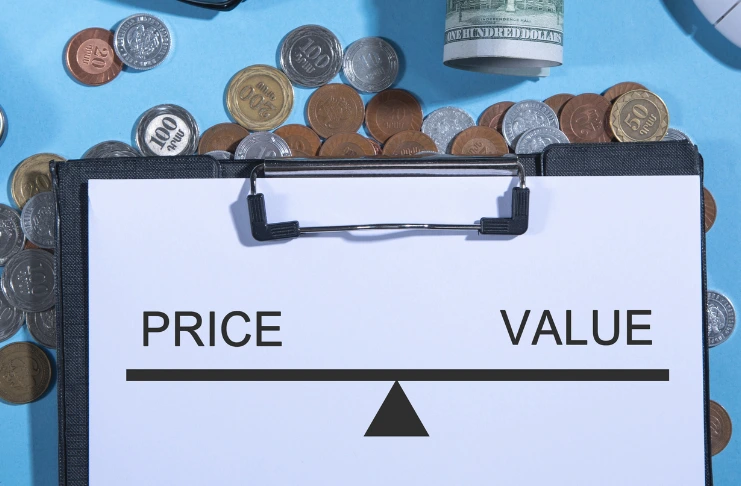
This method accounts for how the customer perceives your offering, not just what it costs you. Ingredient quality, portion size, presentation, service, ambience, and brand all shape that perception.
That’s why a burger made with organic, locally sourced beef in a well-designed space can command a higher price than the same burger elsewhere. When you understand what your audience values—and why they choose you—you earn the right to price at a premium.
Surveys, customer reviews, and competitor benchmarking can provide insight into what your diners value most, enabling better alignment of pricing with their expectations.
Mind that a strong brand can justify higher prices, especially when backed by consistency and quality.
What is Competitive Pricing?

Competitive pricing, at its core, involves setting menu prices based on what competitors are charging for similar items. However, this is kind of risky.
While it’s essential to remain competitive with market prices, blindly matching them can result in insufficient margins.
What you should do instead is conduct regular competitor analysis and identify your unique selling points that justify a price premium.For example, if you offer larger portions, organic ingredients, or a unique ambiance, highlight it. When customers understand why something costs more, they are more likely to willingly pay that little extra.
What is Meant by Psychological Pricing?

Psychological pricing is all about how people perceive prices, not how they calculate them. Just small tweaks in how prices are presented can easily influence what guests choose and how much they spend.
Three tactics restaurants use all the time:
- Charm pricing: ₹799 or $9.99 feels noticeably cheaper than a round number, even though the difference is minimal.
- Price anchoring: Placing one high-priced item at the top of the menu makes the rest feel more reasonably priced by comparison.
- Remove dollar signs: Clean typography without currency symbols makes prices feel less intimidating
These small details can subconsciously steer customers toward your choices.
Why Should You Monitor and Adjust Prices Regularly?

Pricing isn’t a set-it-and-forget-it task. Regularly reviewing it (at least quarterly or twice a year) is important to account for changes in ingredient costs, labor expenses, and market trends.
You should, at all costs, conduct regular pricing audits to determine menu pricing, analyze sales reports, and consult with kitchen staff to understand prep complexities.
Make small adjustments rather than drastic changes to minimize customer pushback, though.
Integrate feedback from servers and customers to ensure changes align with perceived value. Plus, use tools like POS analytics to flag declining profit margins and prompt timely pricing tweaks.
Responsive pricing shows you’re paying attention to your business and your guests.
How Does Strategic Pricing Drive Profit?

Strategic pricing isn’t just theory—it has proven, measurable effects on restaurant profitability. According to Deloitte Consulting LLP, restaurants leveraging strategic pricing tools, such as their Strategic Pricing Analyzer, have reported a 1-3 percentage point improvement in profit margins. This improvement comes from aligning menu prices more closely with consumer willingness to pay, allowing restaurants to maximize their revenue potential without overpricing or underpricing their offerings.
These restaurants fine-tune their menu pricing to strike the right balance between value perception and revenue generation. This real-world data underscores the importance of pricing as both an art and a science—an essential lever for improving profitability while maintaining guest satisfaction.
By understanding customer price sensitivity and optimizing menu prices based on this data, restaurants can maintain customer satisfaction while also contributing to profitability.
Conclusion
Effective menu pricing is part art, part science, all strategy. It’s about covering costs, driving profit, and communicating what your restaurant stands for.
Understand your food cost percentages, use different pricing models strategically, and keep tabs on your menu performance. Test, measure, & refine – that’s the formula.
Remember: Pricing isn’t static—it’s dynamic. The restaurants that thrive treat pricing adjustments as opportunities to strengthen their value proposition, not necessary evils to avoid.
When your pricing is consistent with your concept, cuisine, and audience, it signals who you’re for, what you stand for, and where you sit in the market. Done right, pricing reinforces your brand every time someone opens the menu.
Frequently Asked Questions
1. What is the best pricing strategy for a restaurant?
There’s no single best answer. Most restaurants combine cost-plus pricing with value-based pricing to meet expenses while charging what customers feel the experience is worth.
2. What are the 4 types of pricing?
The four main types of pricing include: Cost-plus pricing, Value-based pricing, Competitive pricing, and Dynamic pricing
3. Which pricing approach is for a restaurant?
Most restaurants use cost-plus pricing for basic margin protection. Some also apply value-based pricing and menu-engineering strategies to further profitability and customer appeal.
4. What are the three ways of pricing menu items?
Menu items are usually priced using food cost percentage, gross profit margin, or perceived customer value. You can use a mix of all of them.
5. What is the rule of thumb for restaurant pricing?
A typical rule of thumb is to set menu prices so that food costs are about 28–35% of the selling price. This allows room for overhead and profit.
6. How to calculate restaurant food cost?
Restaurant food cost is calculated using the formula:
Food Cost Percentage = (Cost of Goods Sold / Total Food Sales) × 100
7. How do restaurants set their menu prices?
Restaurants set menu prices based on ingredient costs, desired profit margins, competitor pricing, and customer value perception. Pricing is regularly reviewed for market shifts.
8. What is the best pricing strategy for restaurants?
The best strategy combines cost-based pricing for financial safety with value-based and psychological pricing to boost customer appeal and perceived worth.
9. What is the markup on a restaurant menu?
The markup on restaurant menu items typically ranges from 200% to 300%, meaning a dish that costs $5 to make might be priced between $15 and $20.
10. What is the menu cost price?
Menu cost price refers to the total ingredient cost required to prepare a specific dish. It forms the base for setting the selling price.
11. What percentage should food cost be in a restaurant?
The ideal food cost percentage for a restaurant is generally between 28% and 35%, though fine dining may allow for lower margins due to higher perceived value.
12. How to do cost control in a restaurant?
Cost control involves tracking inventory, minimizing waste, negotiating with suppliers, optimizing portion sizes, and regularly reviewing menu profitability and pricing.


