
Are you thinking about launching a buffet restaurant or converting your current operation into an all-you-can-eat model? Or maybe you’re just curious how buffets actually make money. Either way, understanding the economics, advantages, and trade-offs of buffet dining, including concerns about food wastage, is critical before committing to this format.
This guide covers whether buffet restaurants are truly profitable, how they compare to à la carte, and the operational realities that define both models. If you’re weighing your next move in the food business, read this before deciding.
What Are the Fundamentals of Buffet Restaurants?
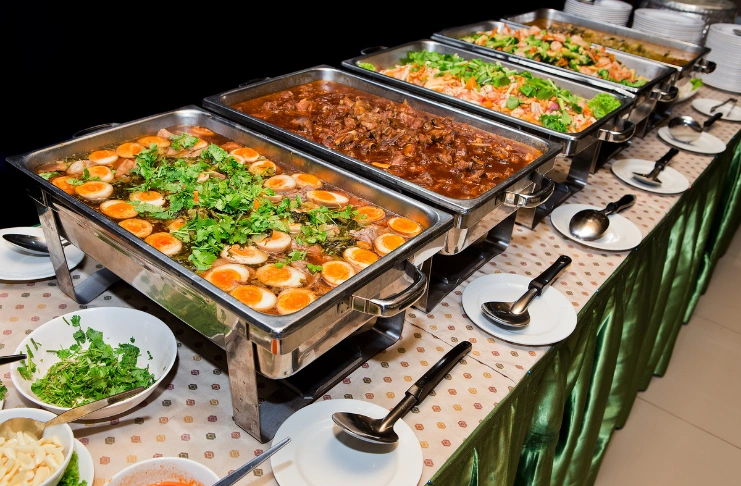
Buffets operate simply: guests pay a fixed price for unlimited access to dishes displayed at serving stations. This self-service model creates a distinctly different dining experience from traditional sit-down restaurants.
Unlike à la carte establishments, where customers order specific dishes from a menu, buffet restaurants invite diners to serve themselves from various options. Food items are typically displayed on a long table or series of stations, kept at safe temperatures in chafing dishes or on heated surfaces.
Are Buffet Restaurants Truly Profitable?
Buffet restaurants can be surprisingly profitable when managed effectively. Let’s look at what the numbers tell us about their financial performance.
Revenue Potential
The latest industry statistics reveal that buffet restaurants in prime locations typically generate annual revenues between $500,000 and $1.5 million. Where exactly you lie in this range depends on:
- Your restaurant’s size and capacity
- Location demographics
- Menu quality and variety
- Operational efficiency, and
- Marketing effectiveness
Profit Margins
Contrary to what some might expect, buffet restaurants often maintain healthy profit margins. The 2025 market forecast for cafeterias and buffets indicates:
- Average profit margins range from 5% to 15%
- Well-managed operations consistently achieve double-digit margins
- Specialty and themed buffets often reach the higher end of this spectrum
Such ratios are comparable and very favorable when juxtaposed with the restaurant sector’s average net profit margin of 3-5%. This implies that in their best forms, buffets could actually prove to be even more lucrative than traditional dining establishments.
INDUSTRY INSIGHT
| A report says buffet restaurants bring in about $6 billion in revenue yearly in the United States. While this segment has seen only a modest 1.7 percent growth annually over the past five years, financial viability rests less on explosive growth and more on volume-based economics and operational efficiency. Unlike à la carte models that rely strongly on check size and server turnover, buffets succeed in their maximal throughput, especially at peak hours. With appropriate cost controls in place, the high footfall and fixed pricing will yield strong margins, even on relatively slim per-head revenue. |
What Are the Pros and Cons of Buffet Restaurants?

Buffet restaurants offer a different service model that could be very appealing to both the operators and consumers: high efficiency, fast-paced, and good value. However, the benefits and dangers of the buffet service model can both be very profitable.
1. The Allure of Efficiency
Buffets operate on volume and speed. With guests serving themselves, labor demands are lower, leading to 15–25% savings on staffing costs compared to plated service.
This reduction in front-of-house staffing and batch-cooked menus allows kitchens to function at peak efficiency.
There’s no back-and-forth with servers, and no time is lost to individual plating. Guests typically spend 25% less time at their tables, which means faster turnover (usually 3+ per hour) and more covers per hour.
2. Variety That Sells Itself
There’s a built-in magnetism to buffet dining: endless choice. Customers walk into a space where a variety of food is already ready.
The most appealing thing about the system is the fact that the offerings can satisfy both groups and individuals. People eat what they wish to eat, and they eat the quantities they wish to. The flexibility of the system allows people to try different dishes without any form of consequences.
3. Value That Drives Volume
One of the appeals that casual buffet restaurants offer is that of value for money. Eating out is expensive, but with a fixed amount that is paid for a meal that is quite substantial, diners feel that they are being treated generously.
4. Waste: The Inescapable Tradeoff

Behind the “abundance that buffet offers” lies a problem: how much food is too much? Because guests serve themselves, predicting food consumption patterns accurately is nearly impossible. As a result, buffets typically see nearly 50% food waste (according to Peggy Chan, a social entrepreneur). The more unpredictable the traffic, the more volatile this waste output will be.
5. Quality Takes a Hit
Consistency is another casualty of the buffet format. Dishes must hold up for long periods in warming trays or chilled compartments. Over time, even the best-prepared food loses its integrity. Textures turn mushy, sauces congeal, and proteins dry out.
This is an ongoing challenge for restaurants aiming to maintain a premium image.
6. Safety Is a Constant Battle
In contrast to à la carte dining, where all dishes are controlled by the kitchen, a buffet offers much more access to all who are in attendance. This means sharing utensils, being openly exposed, and many human interactions.
Contamination can become a lurking danger, particularly at peak service periods. Buffet stations demand constant monitoring and organized, disciplined methods of handling. They do not easily accommodate the regular use of fresh cutlery for each dish.
7. A Profitable Model But Only in Motion
When they are working well, buffet restaurants are essentially machines: they serve more people in a given period of time and realize high levels of gross revenue simply based on volume. It is a cruel reality, though: downtime means more waste. There is a lack of safety protocol when there is a lag time. It is ironic: the key ingredients that make a buffet restaurant successful can be detrimental if proper controls are not implemented.
How Do Buffet and À La Carte Formats Compare?

If you are still trying to weigh the pros and cons of running a buffet or an à la carte restaurant, this section will give you a direct comparison of their pricing, customer behavior, brand identity, and more. This is because your decision can greatly influence how your restaurant is perceived in the marketplace and how profitable it can become.
Cost Structure
Buffet restaurants charge a fixed food price for unlimited food service. This helped in efficient revenue forecasting, and as a result, food arrangement and food pricing became more efficient. But in turn, there were increased chances of wastage if not demanded appropriately.
In contrast to buffet-style restaurants, à la carte restaurants charge by dish to maximize earnings for every single order. Perhaps due to the expectation of a better margin for every plate served, such an eating arrangement can employ more employees to attend to customers.
Customer Behavior
People who eat at buffets look for variety, convenience, and value for money. This is why buffets tend to do well as a family or group dining or tourist option. At a buffet, patrons get value for money since they get to choose how much of each item they take, giving a sense of indulgence and discovery. At the same time, buffets tend to draw people who are on a tight or cheap budget, reducing the potential for high prices.
À la carte restaurants also have the ability to appeal to customers searching for customization, quality food, and good service. Customers would want servers to pay attention to them, food to be freshly prepared and presented à la carte.
Brand Perception
Buffet restaurants are considered to be associated with affordable eating and are preferred for high-traffic spots such as shopping malls, hotels, and entertainment centers. The buffet system reinforces an image of a generous brand promise, but the key is to retain the freshness associated with it.
À la carte restaurants, on the other hand, are considered to have a premium brand if the focus is on skill, ingredients, or presentation. This type of restaurant is suited for up-market, specialized, or experiential dining, appealing to the most discerning epicure interested in premium cuisine.
Operational Complexity
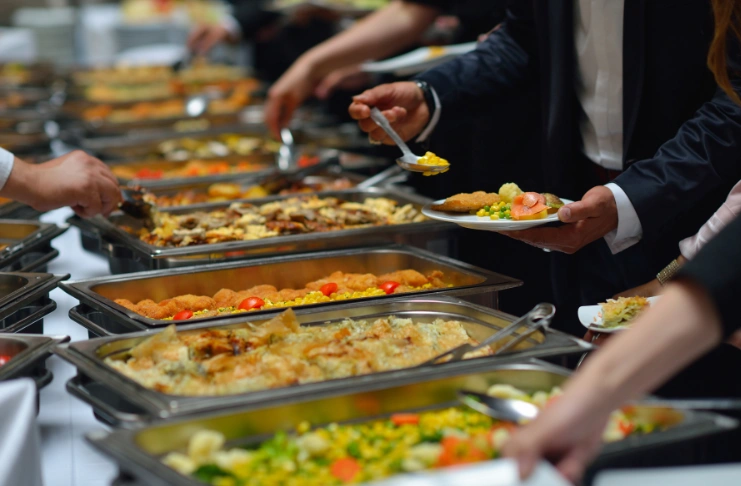
The buffet system promotes efficiency in operating a restaurant because dishes are prepared in batches, reducing the workload for the kitchen staff. There is no need for many waiters to service the clients who can serve themselves, thus reducing labor expenses. However, issues concerning health hygiene, refill mechanisms, and waste could pose challenges to the efficiency of the buffet system if not properly addressed.
In à la carte, on the other hand, the restaurant trusts in the expertise of its kitchen and dining hall staff in order to serve customers their own personal dishes. Although in this way the food is freshly made, this type of system requires more labor and better item control in order to avoid spoilage.
Profitability Potential
Buffet eateries are successful through high volume, which enables them to maintain profitability based on fast table turns, economies of scale, and beverage upsales. The downside to buffets is the challenge of managing food waste, which affects portion control.
À la carte restaurants usually enjoy higher profit margins for each dish, but they must necessarily be manned with a steady stream of clients and effective pricing strategies to maintain profit. Although higher-priced menus enable a restaurant to set higher prices, client retention is crucial.
Conclusion
Whether you offer a buffet system or à la carte, this is largely contingent upon the target market, operational capacity, and desired brand image and positioning. Buffets work perfectly for high-volume restaurants, where you know how much you will take in, and à la carte is where quality matters most.
Frequently Asked Questions
1. What are the advantages and disadvantages of a buffet?
Advantages: High customer volume, lower front-of-house labor costs, and perceived value for money.
Disadvantages: High food waste, challenges in quality control, and increased food safety risks.
2. What are the benefits of buffet?
Buffets are known for their variety of food offerings, efficiency of food service, fixed pricing for consumers, as well as allowing consumers to control their food portions. This is also a money-saving concept for food establishment owners in
3. What makes a good buffet restaurant?
A successful buffet balances variety, freshness, food safety, and operational efficiency. Frequent replenishment, clean presentation, and strategic menu planning are key.
4. What is an advantage for customers when serving food at a buffet?
Customers get instant access to food, the flexibility to try different items, and the liberty to choose portion sizes.
5. Which of the following is an advantage of buffet service?
Efficient service without wait times and the ability to cater to diverse dietary preferences are core advantages of buffet service style.
6. What are the advantages and disadvantages of self-service?
Advantages: Faster service, lower labor costs, and customer flexibility.
Disadvantages: Less personalized service, hygiene concerns, and potential for over-portioning or food waste.
7. What restaurant is the most profitable?
Quick service restaurants are the most lucrative, and this is largely comprised of franchises like McDonald’s and Chick-fil-A. In terms of buffets, Golden Corral stands out in the crowd.
8. What are the disadvantages of buffets?
The issues that could come up at buffets concern possible food waste, temperature inconsistencies, sanitation problems, and predicting demand.
9. What is the average profit margin for a buffet?
Their profit margins are usually between 5% and 15%, although these can fall dramatically if the company’s waste disposal is ineffective or if the traffic is irregular.
10. What makes a buffet successful?
Buffett’s success hinges on high customer turnover, tight cost control, quality food rotation, and strong hygiene protocols.
11. What is the difference between a buffet and a la carte restaurant?
Buffets offer fixed-price, self-serve meals with unlimited access to multiple dishes. À la carte restaurants serve individual, made-to-order dishes priced separately.