

Planning your nightclub’s layout? You’re about to make decisions that’ll either have guests raving about your venue or struggling to navigate through it. Your nightclub floor plan design determines how much money you’ll make and whether people will want to come back.
Let’s walk through exactly how you can design your nightclub that works for both your guests and your bottom line.
How to Design a Nightclub Floor Plan That Actually Works?
Below are some proven tips on how to structure your nightclub layout for improved flow, increased revenue, and repeat business.
1. Start With Your Space’s Natural Flow
Before you place a single table or bar, walk through your empty space and observe how people naturally move. Most guests enter, pause to get their bearings, then head toward either the bar or dance floor. Your layout should work with these instincts, not against them.
Here’s what works: Create clear sightlines from the entrance to your main attractions. When someone walks in, they should immediately see the dance floor and know where to get drinks. If they have to hunt for the bar or can’t see the action, you’ve already lost momentum.
2. Map Out Your Essential Zones First

Think of your nightclub floor plan as a city with different neighborhoods. Each zone serves specific purposes, and they all need to connect smoothly.
First, you need space for security, coat check, and that crucial moment when guests decide if your vibe matches what they’re looking for. Plan for at least 8-10% of your total floor space here.
Your dance floor comes next. This is where the magic happens, so don’t shortchange it. A good rule of thumb is to dedicate about 10 square feet per person to a dance floor. You can experiment with different shapes and aesthetics to fit the overall architecture of your club.
The key is making sure your dance floor feels like the heart of the venue, not an afterthought tucked in a corner.
3. Position Your Dance Floor Like a Stage
Your dance floor placement can make or break the energy in your room. Center it where it’s visible from multiple angles. This will create FOMO for people sitting at tables and naturally draw them in.
Here’s a pro tip: Slightly elevate your dance floor if your ceiling height allows it. Even 6-12 inches makes a huge difference. Guests feel like they’re part of the show, and everyone else gets better views of the action. Just make sure you include ramps for accessibility.
INDUSTRY INSIGHT
| A well-designed nightclub floor plan directly impacts guest experience, energy flow, and revenue generation. In fact, according to the 2023 International Association of Nightlife Professionals report, venues incorporating LED technology into their dance floor design see a 22% increase in customer satisfaction and social media mentions, driving higher foot traffic and brand recognition. Plus, The Knot’s 2023 Study highlights a growing preference for interactive floor plans, where experiential zones replace traditional ballroom layouts. These trends emphasize the importance of dynamic, immersive spaces that cater to modern guests’ evolving preferences. |
4. Design Your Bar to Pull Guests In

Your bar serves as a profit center that needs strategic positioning. Place your main bar where it anchors the dance floor area. This creates natural gathering spots and keeps the energy flowing between drinking and dancing.
Consider multiple bar locations if your space allows it. A second bar near seating areas or by the entrance captures different spending moments. You’ll reduce wait times during peak hours, which means happier guests and more sales.
Don’t forget about self-service options for VIP areas. Bottle service stations let you charge premium prices while reducing staff workload. Position these in elevated areas where guests feel special but still connected to the main action.
5. Use Seating to Shape the Vibe
Your seating strategy should cater to different group sizes and spending levels. Mix booth seating for intimate groups with communal tables for larger parties. Bar-height seating along walls maximizes capacity without eating up floor space.
VIP seating deserves premium positioning. Think of elevated areas with the best views of entertainment. These spots should feel exclusive but not isolated from the energy. Price them accordingly because location drives perceived value.
Keep furniture flexible when possible. Modular seating lets you reconfigure for different events while maintaining your core layout. Just make sure everything feels intentional, not thrown together.
6. Light Like It’s Part of the Architecture
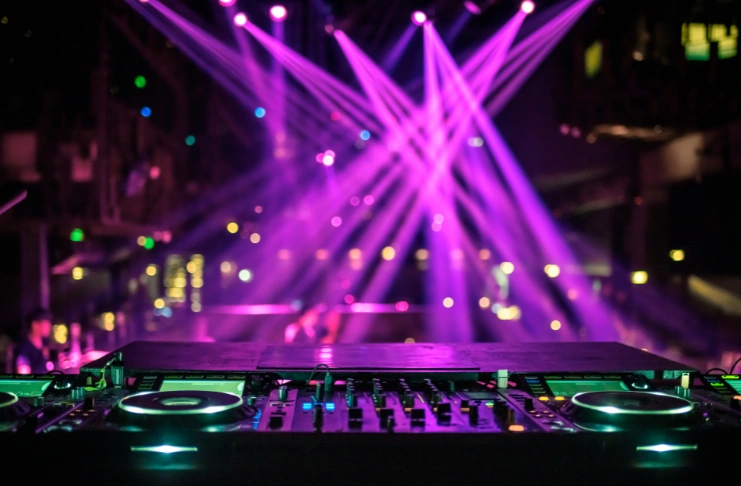
Lighting is a functional element that needs infrastructure planning from day one. Your floor plan needs to accommodate electrical runs, control panels, and lighting fixtures without creating safety hazards or aesthetic eyesores.
Different zones need different lighting approaches. Your dance floor wants dynamic, energy-building effects. Seating areas need ambient lighting that encourages conversation. Bar areas require functional task lighting mixed with atmospheric elements.
Plan for dramatic lighting fixtures as focal points, but make sure they don’t block sightlines or create head-knock hazards. Ceiling height variations can enhance effects while adding visual interest to your space.
7. Let the DJ Booth Lead the Room
Your DJ booth controls your venue’s energy. Position it where DJs can see the dance floor and read the crowd. This usually means elevating it and centering it relative to the dancing area.
Technical requirements drive much of the planning here. You need serious electrical power, audio connections throughout the venue, and climate control for sensitive equipment. Plan these infrastructure needs early because retrofitting costs a fortune.
Consider acoustics, too. Your DJ booth should have good sound isolation so performers can monitor their mix without interference from room noise or other audio sources.
8. Design Traffic Flow That Actually Works

Nothing kills a vibe like bottlenecks. Your floor plan should create multiple pathways between popular stations. Guests should be able to move from bar to dance floor to seating without fighting through crowds or narrow passages.
Build wide corridors for accessibility compliance and emergency egress. It will also make your space feel more comfortable and upscale.
Use furniture placement to guide traffic naturally. A strategically placed planter or seating group can direct flow without obvious barriers.
Remember, the best layouts feel intuitive. Guests don’t think about navigation; they just move comfortably.
9. Bake Safety and Accessibility Into the Blueprint
Building codes aren’t suggestions, and accessibility isn’t optional. Your floor plan must accommodate emergency egress requirements from the start. This means minimum exit widths, maximum travel distances, and clear pathways that don’t get blocked by furniture or crowds.
Accessibility creates good business. Ramps, accessible restrooms, and clear pathways benefit everyone while expanding your potential customer base. Plan these features early because retrofitting costs way more than initially building them right.
Calculate realistic capacity based on your actual layout. Account for furniture, equipment, and how people actually use space. Overcrowding creates safety issues and poor experiences.
10. Don’t Neglect the Areas Guests Never See
Your back-of-house planning affects everything guests experience, even if they never see these areas. Adequate storage for liquor, food, and supplies prevents those awkward moments when you run out of popular items at midnight.
Staff areas like break rooms and offices improve employee satisfaction and reduce turnover. Happy staff create better guest experiences, which directly impacts your success. Connect these areas to public spaces through discrete corridors that don’t disrupt the guest experience.
Don’t forget utility areas for HVAC, electrical panels, and audio equipment. These need maintenance access but should remain acoustically isolated from entertainment areas. Nobody wants to hear your air conditioning over the music.
Conclusion
Your nightclub floor plan will determine whether guests spend money and return for more. Every zone placement, traffic pattern, and seating arrangement affects your revenue potential. Start with natural guest flow patterns, position your dance floor as the energy center, and strategically place bars to maximize sales opportunities.
Remember that successful nightclub design balances guest experience with operational efficiency. Your layout should feel intuitive to guests while supporting smooth staff operations. The most profitable venues create multiple revenue streams through smart space allocation, dedicating 45-55% of their area to income-generating zones.
Take time to plan infrastructure elements like lighting, sound, and safety features from the beginning. These decisions become expensive to change later and directly impact your venue’s atmosphere and compliance. With thoughtful planning and strategic design choices, your floor plan becomes the foundation for a thriving nightclub business.