
The restaurant industry is changing fast. Cloud kitchens are leading this transformation, offering food entrepreneurs a way to start their food business without the massive overhead of traditional restaurants.
You don’t need a dining room, servers, or expensive prime real estate. Ghost kitchens operate purely for delivery, cutting costs while reaching customers through food delivery apps. This business model has exploded in popularity, with the global cloud kitchen market valued at $73.18 billion in 2024 and projected to grow at 11.9% annually through 2030.
If you wish to earn your share of this profitable market, this guide will walk you through everything you need to launch and scale your cloud kitchen business.
What Are Cloud Kitchens?
Cloud kitchens are commercial kitchen spaces designed exclusively for food delivery. Unlike traditional restaurants with physical storefronts and dining rooms, ghost kitchens focus solely on preparing food for online orders.
These virtual restaurants operate from shared or private commercial kitchen spaces. You cook, package, and hand off orders to delivery drivers without ever serving customers face-to-face. The entire operation is facilitated through delivery platforms such as DoorDash, Uber Eats, and Grubhub.
Why Choose Cloud Kitchens Over Traditional Restaurants?
Starting a cloud kitchen business offers significant advantages over opening a brick-and-mortar restaurant. The numbers speak for themselves.
Lower startup costs represent the biggest advantage. Traditional restaurants typically require an initial investment of $175,000 to $750,000. Cloud kitchens need less than $50,000 to get started. That’s a fraction of the cost.
Faster time to market means you can start serving customers within weeks: no lengthy construction, no complex permits for seating areas, no hiring and training front-of-house staff.
Reduced operational complexity simplifies your daily management. You handle kitchen operations, food quality, and delivery coordination. That’s it.
Scalability becomes much easier. Want to test a new menu concept? Launch a virtual brand. Want to expand to new areas? Partner with additional delivery services without the need to open new locations.
Lower risk protects your investment. If a concept doesn’t work, you can pivot quickly without being locked into expensive lease agreements or dining room layouts.
How Do Cloud Kitchen Business Models Work?
Cloud kitchens operate through several distinct business models, each offering different advantages and challenges.
Single-brand cloud kitchens specialize in a single restaurant concept. You develop a specific cuisine, menu, and brand identity. This approach allows deep specialization but limits your market reach.
Multi-brand cloud kitchen operations manage multiple virtual restaurants from a single kitchen space. You might serve pizza, burgers, and Asian cuisine simultaneously. This diversifies your revenue streams and maximizes kitchen utilization.
Shared kitchen spaces let you rent kitchen time in facilities used by other food businesses. You pay for what you use, reducing fixed costs. However, you have less control over the space and equipment.
Private cloud kitchens give you complete control over your kitchen space and operations. Higher upfront costs but maximum flexibility and scaling potential.
Franchise cloud kitchens let you operate established restaurant brands in a delivery-only format. You benefit from proven concepts but pay franchise fees and follow strict operational guidelines.
INDUSTRY INSIGHT
| The shift toward virtual restaurants is accelerating rapidly. By the end of 2025, 40% of restaurant operators are expected to launch virtual-only brands, capitalizing on the low overhead costs and flexibility of cloud kitchens. This trend is driven by changing consumer preferences and the proven success of delivery-only business models. |
What Types of Food Work Best for Ghost Kitchens?
Not all cuisines translate well to delivery. You need foods that travel well, maintain quality during transport, and appeal to delivery customers.
Burgers and sandwiches account for a 25% market share in the cloud kitchen market. They’re portable, familiar, and hold up well during delivery. Consider gourmet burgers, specialty sandwiches, or regional variations.
Chicken-based offerings capture 20% of the market. Fried chicken, chicken sandwiches, and wings are among the most popular delivery options. They’re filling, shareable, and have broad appeal.
Pizza and pasta represent 8% of the market but offer high margins. These Italian staples are delivery classics that customers expect to order online.
Seafood options account for 12% market share. Fish tacos, poke bowls, and seafood pasta work well for delivery when properly packaged.
Mexican and Asian cuisine combine for 11% of the market. Tacos, burritos, stir-fries, and noodle dishes are well-suited for travel and offer diverse flavor profiles.
In short, choose foods that:
- Maintain temperature and texture during transport
- Package well without becoming soggy
- Appeal to your target audience
- Offer reasonable profit margins
- Don’t require assembly at delivery
How Much Does It Cost to Start a Cloud Kitchen?
Understanding your startup costs helps you plan financing and set realistic expectations. Ghost kitchens require significantly less capital than traditional restaurants, but costs vary based on your chosen model.
Kitchen space rental typically ranges from $2,000 to $10,000 per month for private spaces. Shared kitchens charge $20 to $40 per hour of use.
Equipment costs range from $20,000 to $50,000, depending on the complexity of your menu. Basic setups need cooking equipment, refrigeration, and prep tools. Specialized cuisines require specific equipment.
Initial inventory costs $2,000 to $8,000 for food, packaging, and supplies. Start with a focused menu to minimize initial investment.
Licensing and permits cost $1,000 to $5,000, depending on your location. You’ll need business licenses, food service licenses, and health permits.
Marketing and branding require an investment of $2,000 to $10,000 for logo design, menu photography, and initial promotional campaigns.
Working capital of $10,000 to $30,000 covers your first few months of operations while you build a customer base and refine operations.
Total startup costs typically range from $40,000 to $200,000, making cloud kitchens accessible to many food entrepreneurs who might not have been able to afford traditional restaurants.
What Licenses and Permits Do You Need?
Operating a cloud kitchen requires specific licenses and permits. Requirements vary by state and city, but certain permits are universal. To name a few:
A business license establishes your legal entity. Register your business name and structure (LLC, corporation, etc.) with your state.
A food service license allows you to prepare and sell food commercially. Apply through your local health department.
A resale permit lets you purchase ingredients and supplies without paying sales tax. Your state revenue department handles these permits.
Workers’ compensation insurance is mandatory if you hire employees. Coverage protects both you and your workers.
General liability insurance protects against accidents and incidents related to food. Delivery services may require specific coverage amounts.
A fire department permit ensures your kitchen meets fire safety standards. Schedule inspections before opening.
Building permits may be required for kitchen modifications or the installation of new equipment. Check with your local building department.
Start the permit process early. Some approvals take weeks or months. Work with local authorities to understand specific requirements in your area.
How to Choose the Right Location and Kitchen Space?
The location strategy for cloud kitchens differs significantly from that of traditional restaurants. You’re not attracting walk-in customers, so prime retail locations aren’t necessary.
Delivery radius should be your primary consideration. Position your kitchen space to serve densely populated areas within a 3-5 mile radius. This ensures fast delivery times and lower delivery costs.
Kitchen space requirements depend on the complexity of your menu and your projected volume. Allow 200-400 square feet per virtual brand you plan to operate.
Shared vs. private kitchens each offer distinct advantages. Shared kitchens provide lower startup costs and flexibility. Private kitchens offer complete control and unlimited hours of use.
Proximity to delivery drivers reduces pickup times and improves efficiency. Choose locations near major delivery service hubs or busy restaurant districts.
Parking and accessibility matter for delivery drivers. Easy pickup access improves driver satisfaction and reduces wait times.
Utility capacity must support your equipment needs. Ensure adequate electrical, gas, and water supply for your planned operations.
Zoning compliance is crucial. Verify that commercial food preparation is allowed in your chosen location.
What Equipment Do You Need for Your Cloud Kitchen?
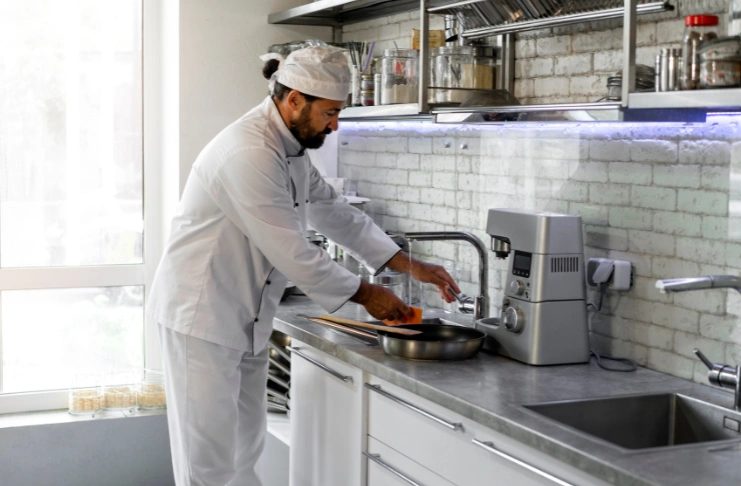
Equipment needs vary based on your menu, but certain items are essential for most cloud kitchen operations.
Cooking equipment forms the foundation of your kitchen. You’ll need ranges, ovens, fryers, or grills, depending on your menu. Buy commercial-grade equipment that can handle high volume.
Refrigeration is crucial for maintaining food safety and effective inventory management. Install walk-in coolers, reach-in refrigerators, and freezers as needed.
Prep equipment includes food processors, mixers, slicers, and cutting boards. Efficient prep tools speed up your operations.
Storage solutions keep ingredients organized and accessible. Install shelving, storage containers, and dry goods storage.
Packaging stations should be organized for efficient order assembly. Include space for containers, bags, utensils, and labeling.
A point-of-sale system manages orders from multiple delivery platforms. Choose systems that integrate with major delivery apps.
Delivery logistics equipment includes insulated bags, warming equipment, and order tracking systems.
Buy quality equipment that will last. Cheap equipment breaks down frequently and disrupts operations. Consider leasing expensive items to preserve cash flow.
How to Set Up Your Kitchen for Maximum Efficiency?
Kitchen layout directly impacts your operational efficiency and profitability. Design your space for smooth workflow and high-volume production. How?
Create distinct zones for different functions. Separate preparation areas, cooking stations, packaging areas, and storage areas. This prevents cross-contamination and improves efficiency.
Implement a logical flow from ingredient storage to final packaging. Raw ingredients should move through prep, cooking, and packaging without backtracking.
Maximize vertical space with wall-mounted storage, overhead shelving, and hanging tools. Cloud kitchens often have limited floor space.
Install adequate ventilation to handle the heat and odors generated by cooking. Poor ventilation creates uncomfortable working conditions and may violate health codes.
Plan for peak volumes by designing stations that can handle your busiest periods. Include quality control stations where orders are checked before pickup. This reduces errors and improves customer satisfaction.
What Technology Do You Need?
Technology drives cloud kitchen operations. The right tech stack streamlines ordering, cooking, and delivery processes.
Kitchen display systems display incoming orders and track the progress of preparation. These replace paper tickets and improve accuracy.
Inventory management software tracks ingredient usage and alerts you when supplies run low. This prevents stockouts and reduces food waste.
Order management platforms consolidate orders from multiple delivery apps into one system. This simplifies operations and reduces errors.
POS systems designed for cloud kitchens handle multiple virtual brands and delivery platforms simultaneously.
Delivery tracking tools monitor order status and delivery times. This helps you identify problems and improve service.
Customer feedback systems collect reviews and ratings from delivery platforms. Monitor these regularly to ensure food quality and service standards are maintained.
Analytics platforms track sales, costs, and profitability across different virtual brands and delivery channels.
Invest in reliable technology. System failures during peak hours cost you money and frustrate customers.
How to Develop Your Menu for Delivery?
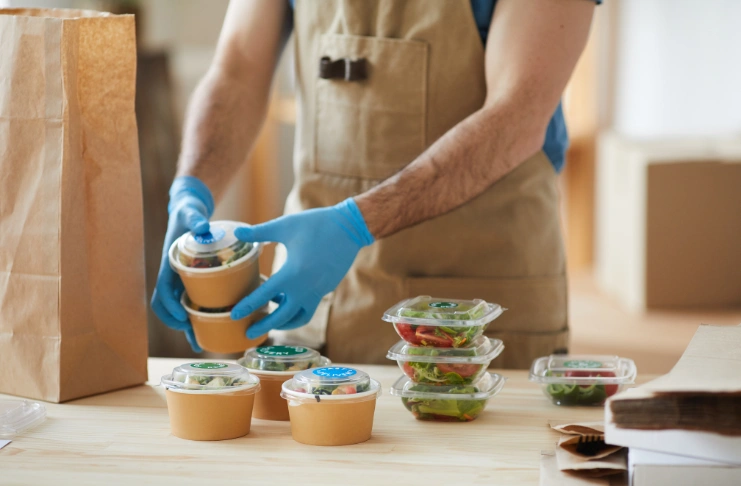
Menu development for cloud kitchens requires different thinking than traditional restaurants. Every dish must work well for delivery while maintaining profitability.
Focus on delivery-friendly items that maintain quality during transport. Avoid foods that become soggy, separate, or lose their temperature quickly.
Optimize packaging for each menu item. Test different containers to find options that preserve food quality and enhance presentation.
Consider the preparation time for each dish. Complex items that take 15 minutes or more to prepare may not be feasible during peak delivery hours.
Price for profitability, including delivery platform fees, packaging costs, and delivery expenses. Your food costs should typically be 28-32% of menu prices.
Keep menus focused rather than extensive. A smaller menu allows better execution and inventory management.
Test items thoroughly before launching. Self-order from your kitchen through delivery apps to experience what customers receive.
Plan for dietary restrictions by offering vegetarian, vegan, and gluten-free options. This expands your potential customer base.
How to Create Multiple Virtual Brands?
Operating multiple virtual brands from one kitchen space maximizes revenue potential and spreads risk across different concepts.
Develop distinct brand identities for each virtual restaurant. Different names, logos, and menu designs make each brand feel unique to customers.
Choose complementary cuisines that share common ingredients and equipment. This reduces inventory complexity and equipment costs.
Stagger peak hours by choosing concepts with different busy periods. Breakfast concepts peak in the morning, while late-night snacks surge after 9 PM.
Create shared base ingredients that work across multiple brands. Ground beef could serve burger, taco, and pasta concepts.
Maintain quality standards across all brands. Poor performance in one virtual brand can hurt your overall reputation.
Track performance separately for each brand. Monitor sales, costs, and customer feedback to identify your strongest concepts.
Test new concepts with minimal risk. Launch a virtual brand with a small menu and limited marketing investment.
How to Partner with Delivery Platforms?

Delivery platforms are your primary sales channel. Choose the right partners and negotiate favorable terms.
Major delivery apps, such as DoorDash, Uber Eats, and Grubhub, reach the largest number of customers. Start with these platforms for maximum visibility.
Understand commission structures before signing agreements. Most platforms charge 15-30% commission on each order plus processing fees.
Negotiate terms where possible. High-volume operators may secure better commission rates or promotional opportunities.
Maintain consistent availability across all platforms. Frequent unavailability hurts your ranking in search results.
Optimize your listings with high-quality photos, detailed descriptions, and competitive pricing to enhance your online presence. Your listing quality directly impacts order volume.
Monitor platform performance and adjust strategies based on data. Some platforms may be more suitable for specific cuisines or periods.
Diversify your platform mix to reduce dependence on any single delivery service. This protects your business if platform policies change.
How to Price Your Menu Items?
Pricing strategy for cloud kitchens must account for delivery platform fees while remaining competitive with other options.
Calculate actual costs including ingredients, packaging, labor, and delivery platform commissions. Most platforms charge 15-30% commission.
Target food costs of 28-32% of the menu price. This leaves room for platform fees, labor, and profit margins.
Research competitor pricing on delivery platforms. Keep the price significantly above competitors only if you offer clear value advantages.
Consider bundle pricing to increase average order values. Combo meals and family packs often have better margins than individual items.
Test price points regularly. Small price increases often don’t significantly impact order volume but improve profitability.
Factor in delivery fees when customers evaluate your pricing. High delivery fees make your food seem more expensive.
Offer value options alongside premium items. This appeals to price-sensitive customers while maintaining higher-margin options.
How to Manage Inventory and Supply Chain?

Implement just-in-time ordering to minimize storage costs and reduce food waste. Order ingredients based on projected demand.
Track ingredient usage across all virtual brands. Some ingredients may be used in multiple concepts, which can affect ordering quantities.
Establish reliable suppliers who can deliver consistently. Late deliveries can shut down your operations.
Negotiate payment terms with suppliers. Net 30 payment terms improve cash flow compared to paying on delivery.
Monitor food costs weekly and adjust purchasing based on price fluctuations. Seasonal ingredients may require menu adjustments.
Implement portion control to maintain consistency and control costs. Standardized portions ensure predictable food costs.
Plan for peak periods by maintaining adequate inventory for busy days and seasons. Running out of popular items costs sales.
How to Hire and Train Your Team?
Staffing needs for cloud kitchens are simpler than traditional restaurants, but quality staff remain crucial for success.
Start with core positions, including cooks, prep staff, and a kitchen manager. You don’t need servers or host staff.
Hire experienced cooks who can work efficiently under pressure. Peak delivery hours require fast, consistent execution.
Cross-train employees to handle multiple stations. This provides flexibility during busy periods and staff shortages.
Implement standardized procedures for food preparation and order fulfillment. Consistency is crucial for customer satisfaction.
Focus on food safety training since you can’t directly observe customer consumption. Proper handling prevents foodborne illness.
Monitor key performance metrics, including order accuracy, preparation times, and customer ratings. Address problems quickly.
Offer competitive wages to attract quality staff. High turnover disrupts operations and increases training costs.
How to Market Your Cloud Kitchen?
Optimize delivery app listings with professional photos, compelling descriptions, and competitive pricing. This is your primary marketing channel.
Build a social media presence on Instagram and TikTok. Share behind-the-scenes content and mouth-watering food photos.
Collect customer data through loyalty programs and email marketing. Direct relationships reduce dependence on delivery platforms.
Encourage customer reviews on delivery platforms. Positive reviews improve your ranking and attract new customers.
Partner with local influencers who can promote your food to their followers. Authentic endorsements drive trial orders.
Offer promotional deals strategically. New customer discounts and limited-time offers can boost order volume.
Focus on food photography since customers only see your food in photos. Professional images significantly impact ordering decisions.
What Are the Key Performance Metrics?
Tracking the right metrics helps you optimize operations and improve profitability. Focus on metrics that directly impact your success.
Order volume indicates market demand for your concepts. Track daily, weekly, and monthly order counts.
The average order value indicates the amount customers spend per order. Higher values improve profitability.
Customer acquisition cost measures the amount spent to acquire each new customer through marketing and promotions.
Customer lifetime value refers to the total revenue you’ll generate from each customer throughout their relationship with your brand.
The food cost percentage should be between 28% and 32% of revenue. Higher percentages indicate pricing or portion control issues.
Order accuracy affects customer satisfaction and reduces costly remakes. Track errors and implement improvements.
Delivery times impact customer satisfaction and platform rankings. Monitor preparation and pickup times.
How to Scale Your Cloud Kitchen Business?
Scaling cloud kitchens offers multiple pathways for growth. Choose strategies that align with your resources and market opportunities.
Expand to new delivery areas by opening additional kitchen locations. Each location should serve a distinct geographic area.
Launch additional virtual brands from the existing kitchen space. This maximizes revenue from your current investment.
Increase operating hours to capture more meal occasions. Late-night and early morning hours may have less competition.
Add catering services for larger orders and corporate clients. This diversifies revenue beyond individual delivery orders.
Develop franchise opportunities if your concepts prove successful. Franchising provides rapid expansion with lower capital requirements.
Partner with other businesses, such as grocery stores or gas stations, to establish pickup locations. This expands your reach without full kitchen investments.
Invest in automation to handle higher-order volumes with fewer staff. Automated systems reduce labor costs and improve consistency.
What Does the Future Hold for Cloud Kitchens?

The cloud kitchen industry continues evolving rapidly, creating new opportunities and challenges for operators.
Market growth is expected to continue, with the global cloud kitchen market projected to grow at an 11.9% annual rate through 2030. This growth creates opportunities for new entrants and expansion.
Technology integration will become more sophisticated. AI-driven menu personalization and automated food preparation will become standard.
Platform consolidation may reduce the number of primary delivery services. This could increase commission rates but also create opportunities for new platforms.
Regulatory changes may impact operations as governments develop specific rules for ghost kitchens and delivery services.
Consumer preferences will continue shifting toward convenience and delivery. This trend supports long-term growth for cloud kitchens.
Competition will increase as more operators enter the market. Success will require operational excellence and unique value propositions.
Sustainability will become increasingly important. Eco-friendly packaging and waste reduction will influence consumer choices.
Conclusion
Cloud kitchens represent a fundamental shift in how restaurants operate. The business model offers lower costs, faster startup times, and greater flexibility than traditional restaurants. Success requires careful planning, operational excellence, and customer focus.
Frequently Asked Questions
1. Is cloud kitchen profitable?
Yes, cloud kitchens can be highly profitable due to lower overhead costs, no front-of-house staff, and reduced rent compared to traditional restaurants. Profit margins typically range from 15% to 25%.
2. What is cloud kitchen?
A cloud kitchen is a commercial kitchen space designed exclusively for food delivery, with no dining room or customer seating.
3. Can I invest in a cloud kitchen?
Yes, you can invest in cloud kitchens by either starting your own operation or investing in existing cloud kitchen companies. Startup costs typically range from $40,000 to $200,000.
4. What is the revenue of CloudKitchens?
CloudKitchens, the major provider of shared kitchen spaces, is a privately held company that doesn’t disclose specific revenue figures. The company operates hundreds of locations globally.
5. Is CloudKitchens profitable?
CloudKitchens operates profitably by renting kitchen spaces to multiple food operators, generating revenue from rent and services while maintaining lower overhead costs compared to traditional restaurant spaces.
6. Can I open a cloud kitchen in the USA?
Yes, you can open a cloud kitchen anywhere in the United States, provided you have the proper licensing, permits, and comply with local regulations. Requirements vary by state and city.
7. Can I run a virtual kitchen from home?
Most states prohibit commercial food preparation in home kitchens due to health and safety regulations. You’ll need a licensed commercial kitchen space.
8. How much does it cost to start a ghost kitchen?
Ghost kitchen startup costs typically range from $40,000 to $200,000, depending on equipment needs, kitchen size, and location.
9. What is the business model of a cloud kitchen?
Cloud kitchens operate by preparing food exclusively for delivery through third-party platforms, eliminating dining room costs while focusing on online orders and delivery fulfillment.
10. How do I start a cloud kitchen business?
Begin by researching local regulations, securing a suitable kitchen space, obtaining the necessary permits, developing your menu concept, establishing partnerships with delivery platforms, and hiring staff.
11. What is the minimum investment for cloud kitchen?
The minimum investment for a basic cloud kitchen setup is approximately $40,000, covering equipment, licensing, initial inventory, and working capital for the first few months.
12. How do I set up my cloud kitchen?
The setup involves securing kitchen space, obtaining permits, installing equipment, creating efficient workflows, partnering with delivery platforms, and hiring staff before launching operations.
13. Are ghost kitchens profitable?
Ghost kitchens can be highly profitable when appropriately executed, typically achieving 15-25% profit margins due to lower overhead costs and focused operations compared to traditional restaurants.