The first time Yoshihiro Narisawa served actual soil to a customer, the kitchen held its breath.
It was 2003, and most fine dining establishments were still obsessing over French technique and European ingredients. And here, Narisawa was doing something unthinkable: he was serving the “real dirt” to the customers.
Twenty-two years later, that audacious moment has rippled across continents.
Restaurants worldwide now chase “local sourcing” and “sustainable dining” like holy grails, but they’re chasing shadows of what Narisawa achieved when the rest of the culinary world was still playing it safe.
The Revolution Started in Silence
Walk into Narisawa today, tucked away in Aoyama’s elegant corridors, and you’ll find: A two-Michelin-starred restaurant that closes at 8 PM. A world-renowned chef who spends his weekends in forests. And a menu that changes daily based on what nature decides to offer.
“We want to ensure that our staff can work in good health and balance work with family life. We have a closing time of 8 p.m. and have an efficient clean-up process to encourage staff to get proper rest,” Narisawa explains, matter-of-factly describing what amounts to a revolution in an industry notorious for destroying lives. (Source: Tokyo Weekender)
This wasn’t always the plan. Like many Japanese chefs of his generation, Narisawa fled Tokyo at 19, convinced that real culinary knowledge lived in Europe.
He trained under legends: Paul Bocuse & Joël Robuchon, absorbing techniques that would have made him another excellent French-trained chef. Instead, something else happened.
The Mountain That Changed Everything
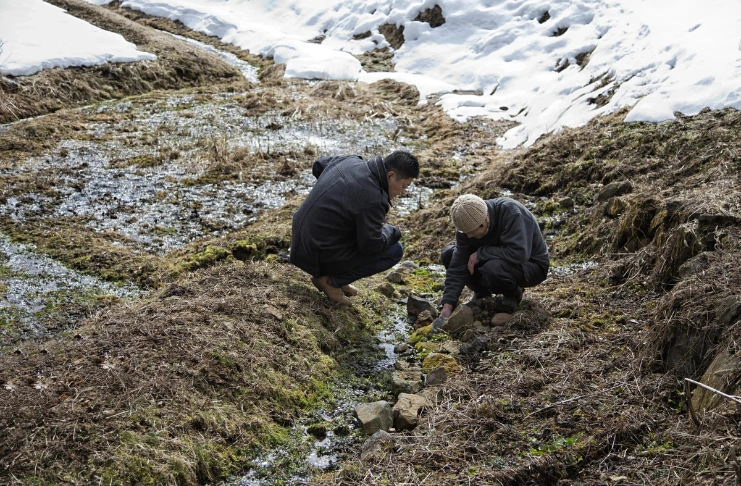
In 1996, freshly returned from Europe and running his first restaurant in Kanagawa, Narisawa climbed a mountain in Nagano Prefecture. He was sourcing vegetables at an altitude of 1,000 meters – conditions most would consider hostile for farming. What he found there rewrote his understanding of flavor.
“The location experiences drastic temperature changes between day and night, but this uncompromising climate is what cultivates the rich, uniquely delicious flavors of its produce,” he discovered. That moment of revelation that struggle creates depth, and that adversity breeds extraordinary taste, became the foundation for everything that followed.
It was his first encounter with satoyama culture, the Japanese philosophy of living in harmony with nature’s cycles. But where others saw tradition, Narisawa saw the future of global cuisine.
Foraging for Tomorrow
By 2003, when Les Créations de Narisawa opened in Tokyo (later simplified to just Narisawa), the chef had developed something unprecedented. He called it “innovative satoyama cuisine,” but that clinical term fails to capture its radical nature.
Picture this: a dish called “Satoyama Scenery and Essence of the Forest” where “moss,” “earth,” and “branches” are crafted from dried tofu residue, bamboo charcoal, and candied burdock root.
Alongside it, a cup containing the actual essence of cedar and oak wood, extracted like dashi stock. It’s nothing short of an edible landscape that challenges every assumption about what fine dining should be.
“I want to capture scenery, I’m painting a canvas, and representing nature. Every ingredient captured on my plate is living and breathing,” Narisawa explains in his conversation with StarChefs.
This isn’t chef speak or marketing copy. He literally serves living, breathing ingredients that tell stories of specific Japanese landscapes.
The Authenticity Wars
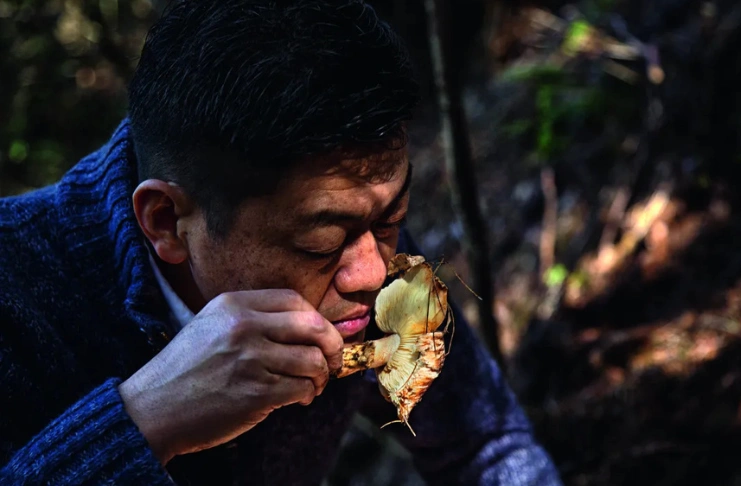
While restaurants worldwide scrambled to import exotic ingredients and chase Instagram-worthy presentations, Narisawa moved in the opposite direction.
He banned international ingredients almost entirely, except chocolate, coffee, and some peppers. Everything else came from Japanese soil, Japanese waters, Japanese forests.
“I can’t conceive the idea of a chef separated from his own environment,” he states, a philosophy that sounds simple but represents a seismic shift from the globalized fine dining norm. (Source: Eater)
This wasn’t nationalism or xenophobia. Narisawa had figured out that authenticity couldn’t be imported, borrowed, or faked. It had to be earned through relationships, through understanding, through years of conversations with farmers and fishermen whose families had worked the same land for generations.
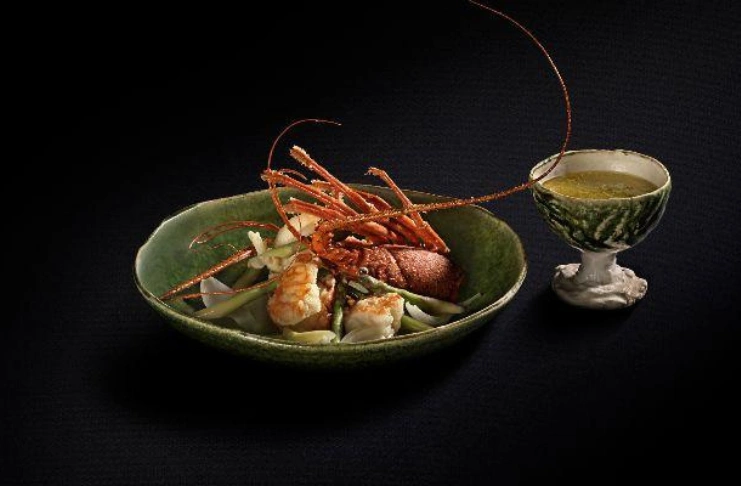
He doesn’t just buy from these producers; he partners with them. There’s a pool beneath his restaurant where live fish, langoustines, and prawns arrive fresh each morning from specific fishermen he’s worked with for decades.
His organic vegetables come from growers who’ve maintained their practices for 10-20 years, long enough to prove their commitment beyond certification requirements.
The Global Awakening
By 2013, when Narisawa topped Asia’s 50 Best Restaurants list, something had shifted in the culinary universe. Suddenly, restaurants from Copenhagen to São Paulo were talking about local sourcing, seasonal menus, and environmental sustainability. The language Narisawa had been speaking for a decade became the industry’s new vocabulary.
But most missed the deeper point. They copied the techniques without understanding the philosophy. They foraged for novelty, not necessity. They sourced locally for marketing, not meaning.
Narisawa’s influence runs deeper than imitation. He proved that a restaurant could be simultaneously cutting-edge and rooted, innovative and traditional, globally relevant and locally focused. He showed that sustainability wasn’t a constraint on creativity. Instead, it was fuel for it.
The Ripple Effect Continues
Today, twenty-two years after that first soil soup, Narisawa continues pushing boundaries that others are just discovering. He’s researching fermentation techniques that could revolutionize food preservation. He’s opening cultural centers in rural Japan to teach cooking classes and prevent the exodus of young people from farming communities. He’s exploring connections between gastronomy and medical care.
“Medical care and gastronomy to keep good health,” he hints when asked about his next direction, suggesting another paradigm shift brewing in his always-thinking mind. (Source: S.Pellegrino Young Chef Academy)
Meanwhile, the global restaurant industry continues catching up to ideas he pioneered decades ago. Farm-to-table restaurants proliferate, but few achieve the depth of his producer relationships. Sustainable dining becomes mainstream, but most interpret it as ingredient sourcing rather than a holistic philosophy. Seasonal menus multiply, but rarely with his commitment to daily change based on actual availability rather than planned rotation.
The Prophet’s Paradox
Here’s what makes Narisawa’s story truly extraordinary: he achieved global influence by going deeper local, not broader international. While others chased trends, he chased truth. While others courted critics, he courted farmers. While others built empires, he built relationships.
The irony is perfect. A chef who refuses to open restaurants outside Japan has influenced restaurants on every continent. A man who sources ingredients from a single country has changed how the world thinks about food. A traditionalist practicing ancient satoyama principles has become one of modern gastronomy’s most forward-thinking voices.
In that sense, the first soil soup becomes a declaration. It announced that the future of fine dining wouldn’t be found in imported luxuries or elaborate techniques, but in the ground beneath our feet, if we knew how to listen to it.
Twenty-two years later, the world is still learning to hear what Yoshihiro Narisawa understood that day in the Nagano mountains: that the most profound flavors come not from fighting nature, but from finally understanding how to work with it.