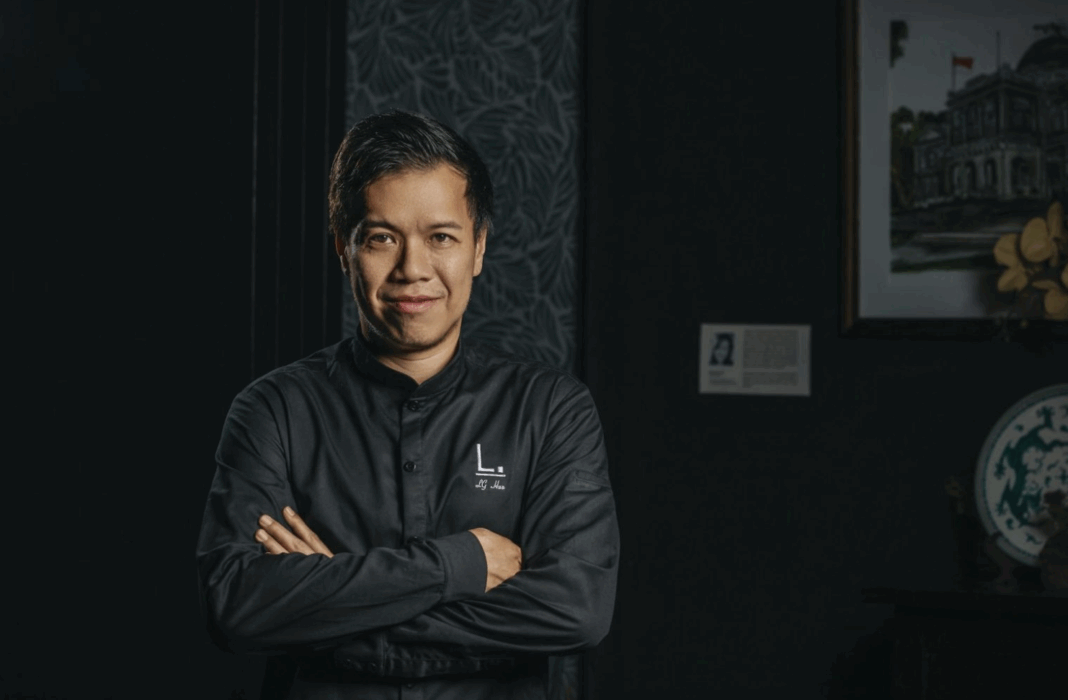

Han Li Guang turned cereal prawn into ice cream, and the food world lost its mind.
The year was 2014. Singapore’s dining scene was predictable: hawker centers for authenticity, hotel restaurants for luxury. No one paid $300 for deconstructed local food. No one except the ex-banker who decided those rules were “meant to be broken.”
Today, Labyrinth holds a Michelin star, ranks #11 on Asia’s 50 Best Restaurants, and has spawned countless imitators. What began as a provocation is now the benchmark.
Against All Odds
Han walked away from his Citibank salary to work weekends for free at Italian restaurant Garibaldi. Friends called him crazy. He called it necessary.
“I knew that this was not the year for my inner artist to express itself. It’s not the year to dream. It’s the year of being practical,” Han shared with Tatler Asia.
However, practical for Han meant doing the impossible: making Singapore food worthy of global recognition.
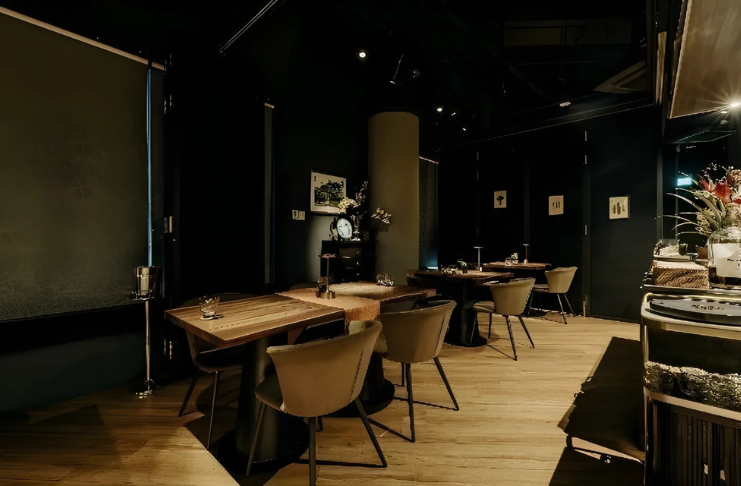
The early reviews were somewhat harsh. Critics hated the dark interiors. They called his “Neo-Sin” approach gimmicky. Soft-boiled eggs that were actually mango mousse? Chili crab served with ice cream? Food purists used words like “sacrilegious.”
Han kept cooking.
Digging Up Dead Dishes
While other chefs chased trends, Han became an archaeological chef. He hunted down recipes from Singapore’s forgotten past, tracking elderly cooks who remembered dishes that died with their creators.
Laksa Siglap was extinct. This coastal village dish from Kampung Siglap had vanished from Singapore’s collective memory. Han found the recipe, studied it, and brought it back as laksam noodles in mackerel broth with tamarind and coconut milk.
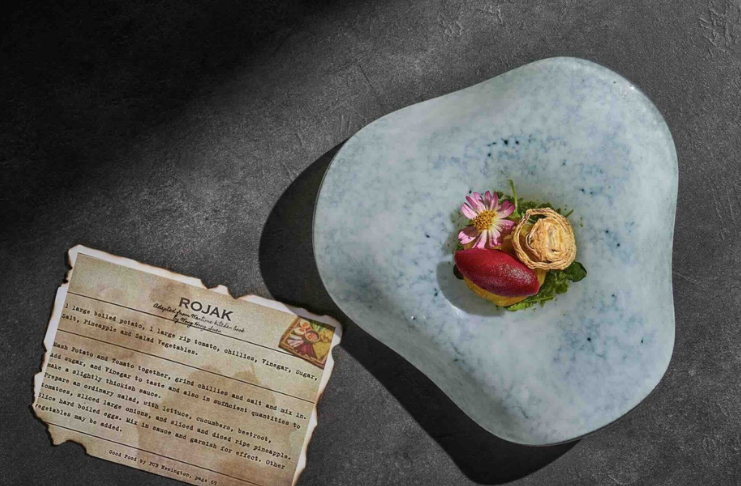
Wartime Rojak told an even darker story. Based on a 1940s recipe from Japan’s occupation period, this salad used whatever vegetables were available when traditional ingredients weren’t. Han presents beetroot, pineapple, and sugar snap peas as both historical documents and modern art.
“The result is a brand new degustation menu with a series of surprising new dishes that have been resurrected after a deep dive into Singapore’s gastronomic history,” food critic Leslie Tay wrote after experiencing the 2024 menu refresh.
The Great Deception
Han’s signature move is the beautiful lie. His Char Kway Teow contains zero kway teow noodles. Instead, fish maw is rehydrated, steamed, and trimmed to look identical to flat rice noodles. The texture matches. The flavor improves. Your brain can’t process what just happened.
The Chicken Rice uses Japanese koshihikari rice cooked in donabe claypots with chicken stock and aromatics, served with braised cockscomb instead of regular chicken. It’s more Chicken Rice than Chicken Rice while being completely different.
Even the Ramly Burger gets the full treatment. Those tomato meringue “buns” dusted with sesame seeds hold aburi beef tartare seasoned with Worcestershire and Maggi sauce, wrapped in a delicate omelet, and finished with special “Ramly sauce” containing curry powder and sweet chili.
Each bite questions reality.
The Economics of Revolution
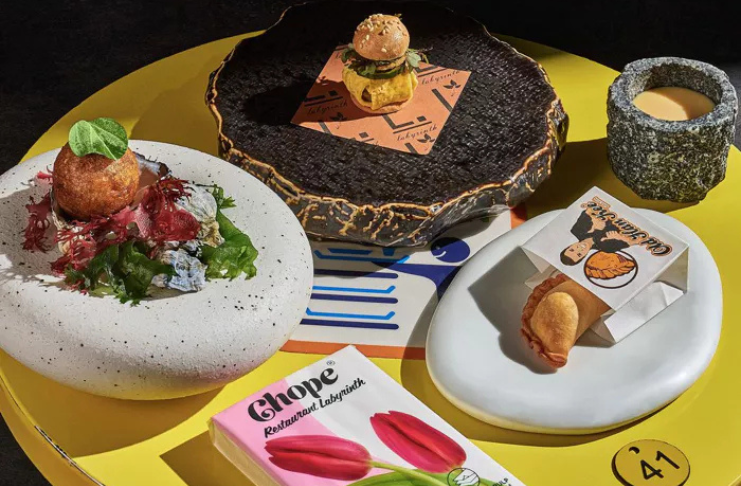
Converting Singaporeans to pay fine-dining prices for elevated hawker food was a financial warfare against preconceptions.
“There’s always a misconception that local produce is inferior and cheaper than imported produce. The challenge has been to change the perception of Singapore food; to convince Singaporeans that our cuisine is worth a Michelin Star,” Han explained.
The math was brutal. Local diners expected hawker prices. Tourists wanted familiar luxury. Han chose neither, betting everything on a third option: making local food so extraordinary that price became irrelevant.
The gamble worked. Labyrinth now sources 90% of ingredients from local farms and fishermen, proving Singapore’s land-scarce environment could still produce world-class ingredients.
Surviving the Impossible
COVID-19 should have killed Labyrinth. With 60% tourist clientele evaporating overnight, Han faced mathematics that didn’t add up.
“We lost the tourist market, we lost the corporates, we lost the events market,” he admitted. The logical move was bankruptcy. Han chose evolution instead.
He temporarily closed Labyrinth and launched Miss Vanda by Labyrinth, serving elevated hawker fare at accessible prices. The shutdown became laboratory time. When Labyrinth reopened, it was stronger, smarter, and more focused.
The Star
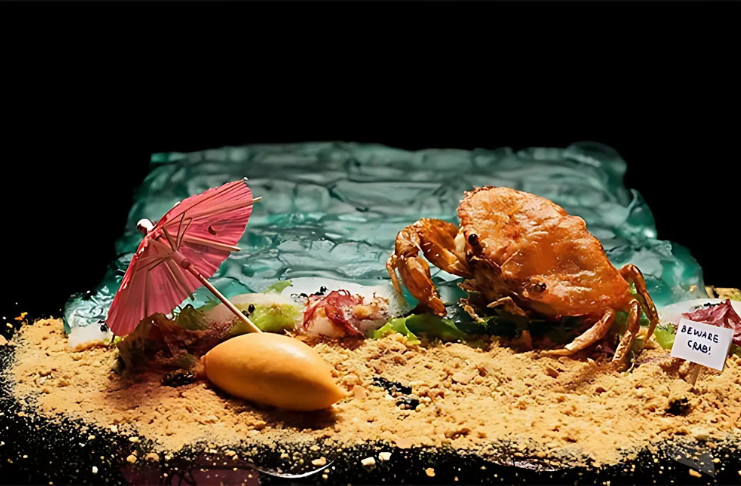
The 2017 Michelin star announcement caught everyone off guard, including Han’s four-person kitchen team.
“We were in a state of disbelief and excitement, and in need of a good, strong tipple,” Han recalled. “The entire team at Labyrinth popped a bottle of Cristal champagne that I have been keeping in my chiller for a special occasion (at that point, it had been kept for over three years already; thank goodness it did not go flat!).”
The celebration was pure Labyrinth: unexpected, emotional, and absolutely authentic. After the ceremony, Han went straight back to celebrate with his team and business partners. The following week, they hit their favorite tze char restaurant, Keng Eng Kee.
Why was this star so special? It was a validation that when everyone says your idea is impossible, you might be onto something world-changing.
The Playbook for Cultural Revolution
Han’s method is deceptively simple: respect the emotion, revolutionize the execution. Every dish starts with a childhood memory, and is then rebuilt using scientific precision and premium ingredients.
The Hainanese Curry Puff references Old Chang Kee but uses Japanese sweet potatoes, oyster mushrooms, and Iberico pork trimmings. The Roti Boy combines Bordier seaweed butter with Singaporean Tiong Hoe coffee craquelin in sweet brioche dough.
Their presentations unfold as performance art, rich with cultural cues. Tissue packets mark seats at hawker tables, sizzling cow-shaped plates revive the Cairnhill Steakhouse, and edible candles molded from cow oil anchor the meal in memory and spectacle.
Each element serves the larger narrative: Singapore food deserves the same reverence as any cuisine in the world.
Global Impact
The influence extends far beyond one restaurant. Labyrinth has become the template for how local cuisines can achieve global recognition without cultural betrayal. Food critics study Han’s techniques. Young chefs across Southeast Asia copy his approaches.
“To me, a Michelin star is an amazing recognition of the entire team’s hard work, on an international scale. It is also an affirmation that the style of cuisine that I have embarked on (authentic modern Singaporean) and have been championing is moving in the right direction,” Han reflected.
Singaporeans who once flew to Paris for fine dining now understand that world-class cuisine existed in their hawker centers all along. They just needed someone brave enough to show them.
The Next Decade of Disruption
Ten years later, Han isn’t slowing down. The 2024 menu refresh represents his most ambitious archaeological dig yet, bringing in light recipes from Singapore’s darkest periods and brightest moments.
The Bak Kut Teh Consommé is entirely plant-based – an oxymoron that somehow captures the essence of pork bone soup using shiitake mushrooms, kombu, and aged tangerine peel.
The Cereal Prawn becomes dessert: oatmeal ice cream infused with 20-year-old Shaoxing wine, salted egg foam, warabi mochi, and goji berries soaked in 8-year-old Shaoxing wine, served with a branded cereal box filled with puffed rice and sakura ebi.
Each dish pushes further into impossible territory while staying rooted in Singapore soil.
The revolution that started with one banker’s crazy idea has become a movement. Labyrinth proved that authenticity and innovation aren’t opposites – they’re fuel for each other.
So, this was the story of a lawyer-turned-chef who made Singapore eat its own history and love every bite.