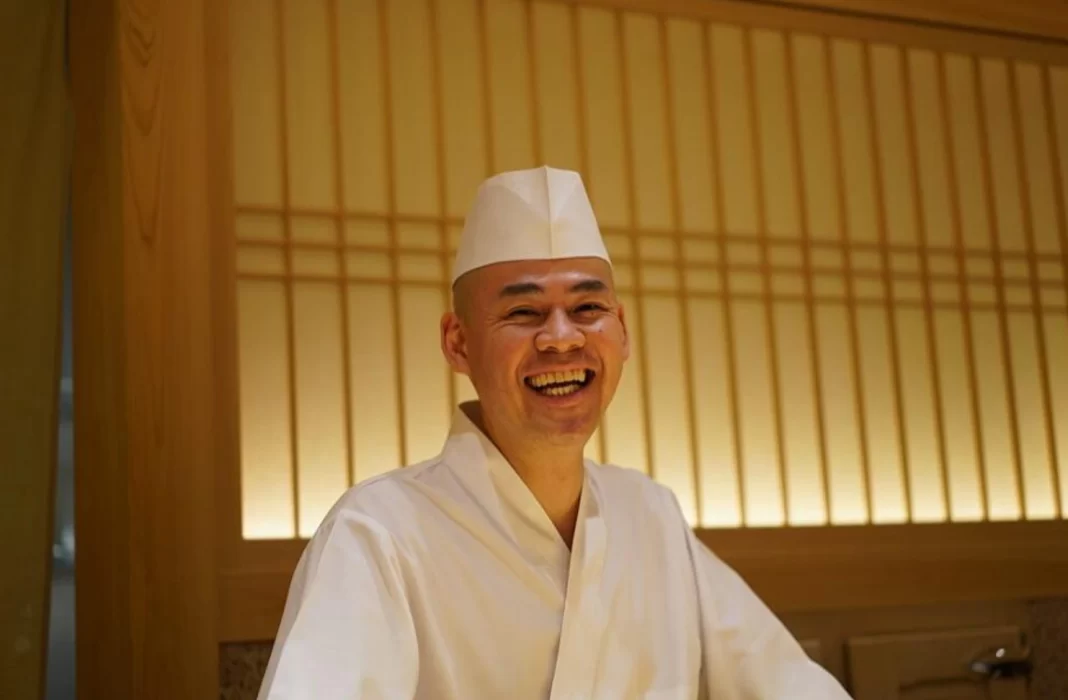

“I used to think that sushi was cold,” admits Takashi Saito, chef-owner of Sushi Saito and the youngest sushi chef to head a three Michelin-starred restaurant.
This was his reality until after high school, when he was working part-time at a fishmonger’s and the owner brought him for a celebratory meal at a proper sushi restaurant. That was the first time Saito had a formal sushi course seated at the counter.
“The God of Sushi” laughs, “Before, I’d only eaten sushi that was delivered to the doorstep.”
Then came his first bite of Edomae-style sushi. “I come from Chiba, where the shari (sushi rice) has sugar added to it and is less refined. But after coming to Tokyo, I ate sushi that was seasoned with red vinegar or just salt. The difference in the taste of the shari touched me,” he tells the Michelin Guide.
And the most important thing: “The rice was warm.”
That moment of surprise has become the foundation of what many consider the most transcendent sushi experience on Earth.
The Sacred Space
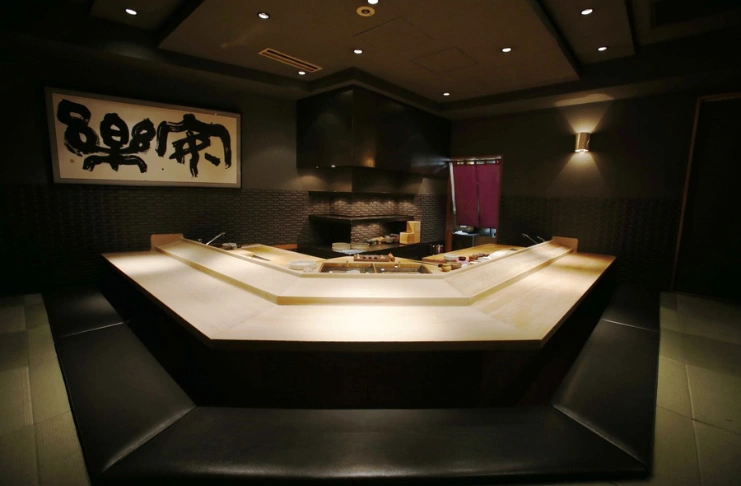
Tucked away in Tokyo’s Roppongi Hills, Sushi Saito occupies just eight seats arranged around a counter of finest Hinoki wood.
Here, behind this altar of aged cedar, Saito has spent nearly two decades perfecting what he calls the fundamental truth about his craft.
“Surely in this world, sushi is the only kind of food that is ‘pressed’ in front of you, and then eaten directly in that manner. Right in front of you, made by the hands of another person and eaten in front of that person,” he mused. “I really have not seen anything in this world that’s eaten like this.”
The Economics of Impossibility
Here’s what makes Sushi Saito’s model fascinating from a business perspective: artificial scarcity isn’t artificial when it’s mandated by excellence.
When the Michelin Guide Digital team first visited in late February, they discovered the restaurant was already booked through the entire year.
Eight seats. Two seatings per evening. 365 days. The maximum theoretical capacity hovers around 5,840 diners annually, assuming zero cancellations and perfect attendance.
Compare this to any chain restaurant’s single location, and the numbers reveal Saito’s radical bet: charge exponentially more for exponentially better, rather than serve exponentially more for incrementally better.
French top chef Joel Robuchon declared Sushi Saito the finest sushi restaurant in the world. When acclaim reaches that altitude, expansion becomes the enemy of reputation.
The Apprenticeship Investment
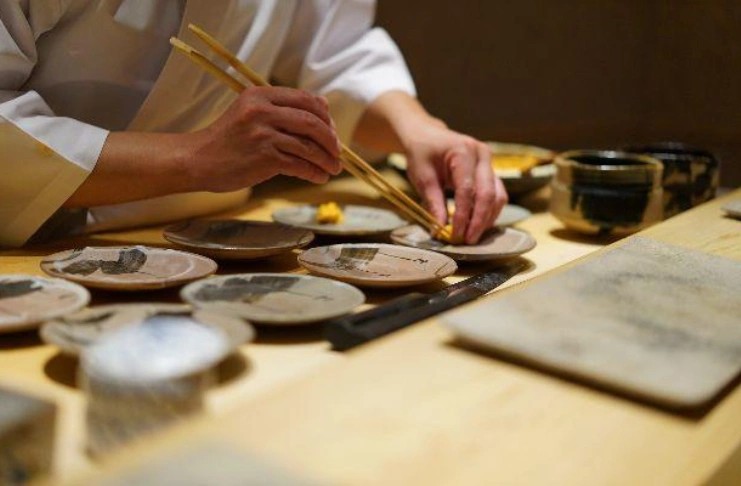
Saito’s approach to human capital mirrors his approach to expansion: intensive, selective, and transformative. His traditional training began at 18 with the renowned Sushi Kyubey, followed by ten years under Shinji Kanesaka.
“I think the first three years are the most important, which shop you choose, the type of practice and training in those three years. In the next five years, the next 10 years, the difference will emerge,” he tells the Michelin Guide.
Saito currently mentors 10+ young chefs, with the explicit goal of having graduates “get their own shop one after another.” Rather than hiring quickly to staff multiple locations, he invests years developing a single chef who can eventually represent the Saito standard independently.
The model works. Protégé Ikuya Kobayashi now operates the Hong Kong outpost, maintaining identical ingredients, techniques, and standards.
The Omotenashi Advantage
While Western business culture often treats customer service as a cost center, Saito has made omotenashi (the Japanese art of selfless hospitality) his primary differentiator.
“To put it simply… it’s about welcoming the customer.. that feeling. To welcome the customer, we must make preparations. For example, in our appearance, our techniques, and in our heart as well,” he explains.
This represents a fundamental inversion of typical restaurant economics. Instead of maximizing table turnover, Saito optimizes for customer transcendence, and instead of standardizing experiences, he meticulously personalizes them.
The result? Customer loyalty is so intense that diners book their next reservation before finishing their current meal.
The Perfectionist’s Dilemma
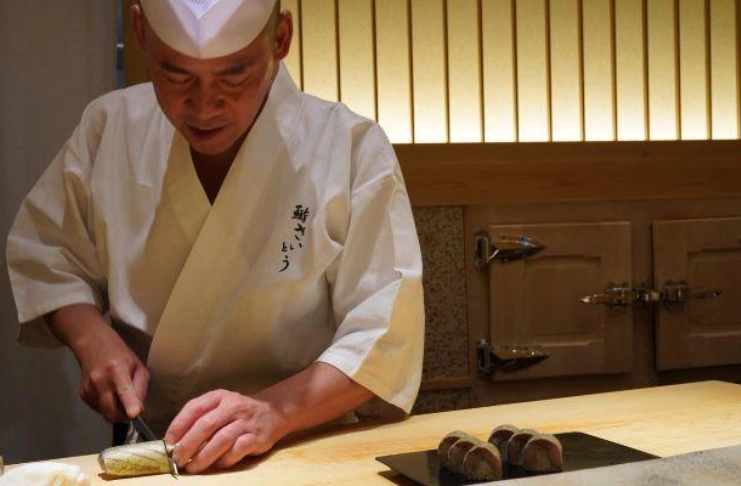
Perhaps most revealing is Saito’s refusal to declare victory. Despite three Michelin stars and international acclaim, he maintains: “10 years or 20 years later, when I’m about 60, if Sushi Saito is still around, maybe I’d have succeeded a little.”
By constantly moving the success goalposts, Saito ensures his team never becomes complacent. The restaurant operates in perpetual pursuit mode, where yesterday’s perfection becomes today’s baseline.
The Irreplicable Art
“There’s no recipe for the formation of the sushi. It cannot be written down,” Saito tells the Michelin Guide.
There is only one rule that “hasn’t changed. And I don’t think they will change in the future either,” he says.
“The rule of sushi is to eat it as soon as it’s prepared.” This intimacy defines everything at Sushi Saito.
Each piece Saito creates with his “light touch” holds so well together in his hands but scatters perfectly in a diner’s mouth. The fish arrives daily from Tsukiji, selected by Saito himself in the pre-dawn hours.
Silken slices of kohada gleam like platinum under the counter’s soft light. The ōtoro dissolves before you can properly chew. Hokkaido Uni delivers complex umami that overwhelms your palate.
But it’s the rice that really reveals Saito’s understanding of his craft. Seasoned with aged red vinegar, warmed to precisely the right temperature, each grain is distinct yet cohesive.
“The rice was warm,” he said all those years ago, and warmth remains the through-line of everything he creates.
This creates the ultimate business moat: true competitive advantage that cannot be systematized, franchised, or replicated at scale.
When McDonald’s succeeded, it was because Ray Kroc could document every process, train any employee, and replicate the experience anywhere. When Sushi Saito succeeds, it’s because Takashi Saito has made himself irreplaceable through mastery that exists in his hands.
The Most Difficult Service
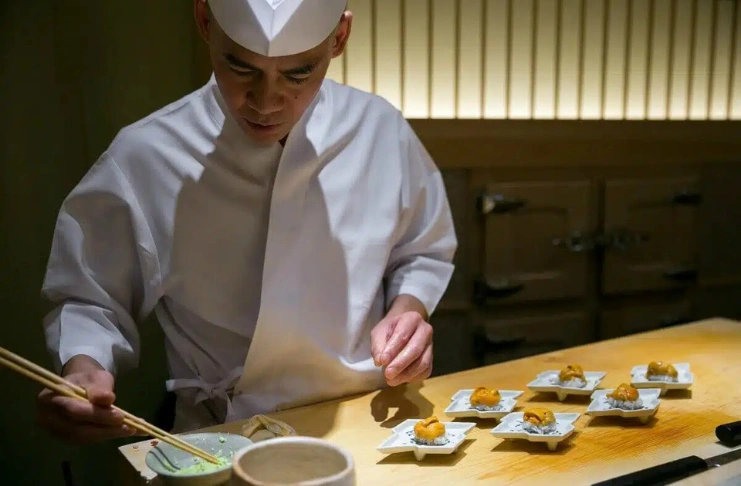
The most emotionally challenging service of his career? When his parents sat across the counter from him.
“They’ve known me since I was a baby. My hands shook the most while I was forming the sushi; my mother cried. As for my dad, well… he didn’t say anything, but even as we talk about it now, I can feel the tears coming on.”
“It was the best way to repay my parents… while I was forming the sushi. Even now I feel moved within me,” he recalls.
The Daily Ritual
Opening more outlets in Japan clearly isn’t Saito’s priority. Rather, he would prefer to spend each day presenting the best the season has to offer for his guests.
He will personally select the cuts of fish every morning from Tsukiji, and for the Hong Kong location, these will be flown in for lunch service the same day. From the soy sauce to the rice to his signature mild red vinegar, the ingredients will be identical to what’s served in his Tokyo establishment.
The man who visits Tsukiji every morning says sushi has made him stronger and helped him understand people better.
That first warm bite of rice surprised young Takashi Saito. Now, decades later, he continues perfecting that experience eight seats at a time, guided by the simplest rule: eat it as soon as it’s prepared. Because that’s the only rule of sushi.