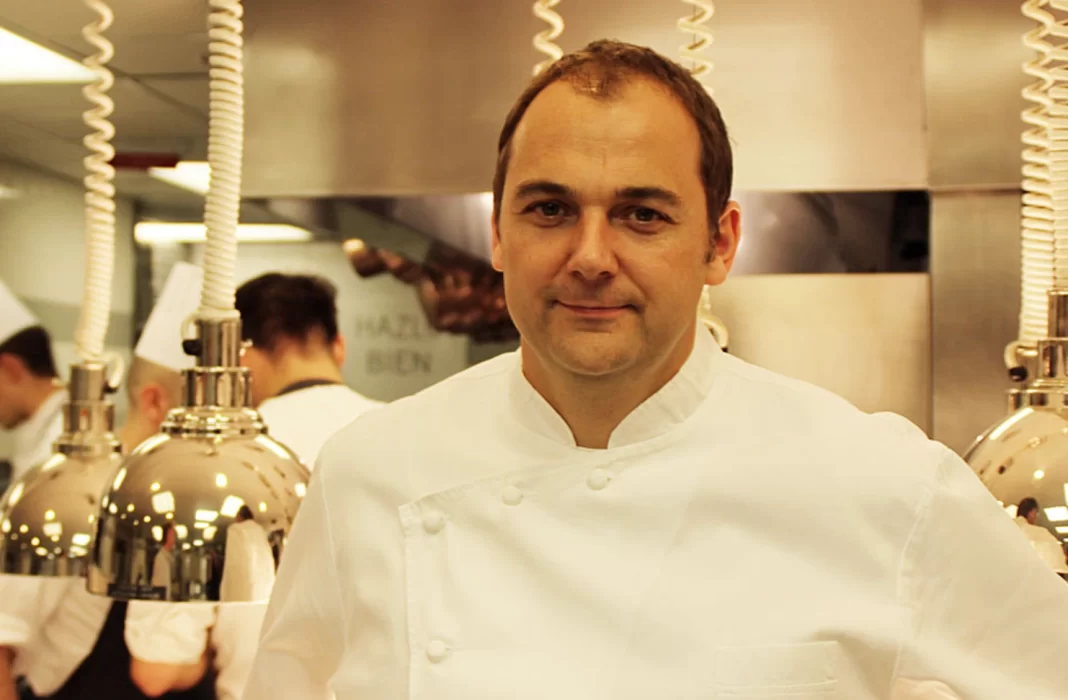

Daniel Humm was never going to be a world champion cyclist. He knew it at fifteen, standing somewhere in the European top ten, watching riders disappear into the distance. After all, number ten in the world sounds impressive until you realize it means nine people are faster.
So he stopped.
He walked into a kitchen instead, and twenty years later, he’s running what many consider one of the best restaurants on the planet. Eleven Madison Park. Three Michelin stars. Fully booked since August 2009.
A place where Roger Federer and the Kardashians eat next to young kids saving up for months just to taste what Humm and his team are building in that soaring Art Deco lobby in Manhattan’s Flatiron district.
But here’s the thing about Humm’s story: it’s not a redemption arc. The same competitive fire that made him chase cyclists up Swiss mountains now drives him to constantly reinvent his restaurant, never serving the same thing twice, and turning a half-empty dining room during the 2008 financial crisis into a reservation you can’t get.
This is the story of someone who learned early that second place doesn’t matter, and then spent his entire culinary career making sure he’d never finish second again.
The Room That Saved Everything
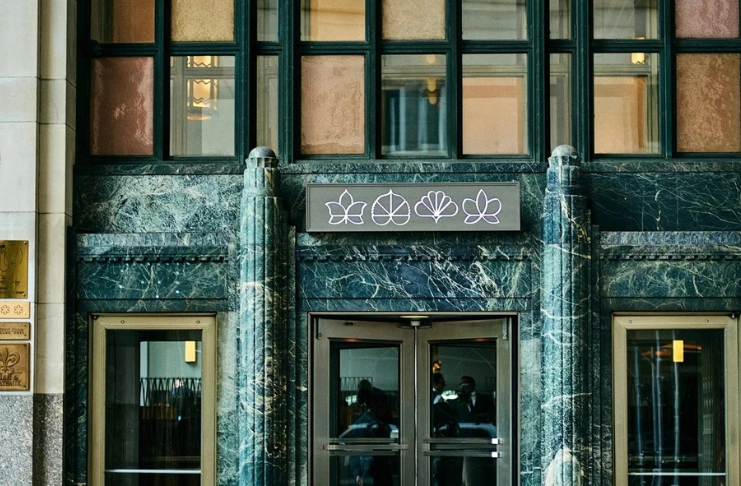
When Humm and his business partner Will Guidara took over Eleven Madison Park in 2006, they inherited a space that was almost too grand for its own good.
The ceilings stretch toward heaven. The windows frame Madison Square Park like a painting. The room was built in the 1920s to serve as the lobby of what was intended to become the world’s tallest building, until the Great Depression halted construction at the 29th floor.
That unfinished ambition hangs in the air. You can feel it when you walk in. Humm felt it too, and he understood that the room was already doing half the work.
His job wasn’t to compete with it. His job was to make the food, the service, and the entire experience live up to what those ceilings promised.
But in 2008 and early 2009, the room remained mostly empty.
The financial crisis had gutted New York’s appetite for expensive meals. Humm, Guidara, and Danny Meyer—who still owned the restaurant then—would look at each other and wonder if they needed to change course. Their food costs were too high. Labor costs were crushing them. The restaurant was losing money.
Then Frank Bruni from the New York Times started showing up. Five, six times. The team knew what was happening. They kept pushing. And when Bruni came for what they suspected was his final visit, the dining room was still empty. So Humm and Guidara invited fifty friends to fill the seats.
A small trick. But it worked, and the restaurant has been fully booked every night since.
Miles Davis and Eleven Words
After Moira Hodgson gave them three and a half stars in the New York Observer in 2006, she wrote that the restaurant needed a little more Miles Davis.
Humm and Guidara took it seriously. They studied Miles. They read about him, listened to his music, and talked to people in his world. They then distilled what they learned into eleven words—qualities like “forward-moving,” “endless reinvention,” “collaborative”—and hung that list in the kitchen.
Those words became scripture.
Miles never played the same piece the same way twice. He’d start an old song in Paris, and the audience wouldn’t recognize it for two minutes. When they finally did and started going crazy, he stopped and asked if they were stupid. That intensity, that refusal to repeat himself, became Humm’s go-to.
In 2010, he completely changed the menu format. Sixteen words. Four meats, four vegetables, four fish, four desserts. Each word represented a key ingredient, and the dish was built around it. Guests chose what they liked, didn’t like, or really liked. The kitchen created the menu based on that dialogue.
The New York Times predicted it would be the end of Eleven Madison Park. Instead, it became the beginning of something more confident. Something that finally felt like Humm and not the French cuisine he grew up cooking in Switzerland.
The Boy from Switzerland Who Didn’t Fit
Humm is Swiss, but he doesn’t feel Swiss anymore. He loves New York with the intensity of someone who found the place he was supposed to be all along. Switzerland, he says, is closed-minded. Critical. Complicated. New York is open. You can make friends here. You can express yourself however you want.
He arrived in the city carrying two suitcases and a handful of dollars, speaking no English. That American Dream rhetoric is easy to mock until you meet someone who actually lived it.
Humm didn’t come to New York to cook French food in a French style. He came because this was the only city big enough to hold what he was trying to build.
He runs marathons now. Twelve miles in Central Park before his workday starts. The competition never left. It just found a new outlet. The Michelin stars, the World’s 50 Best ranking, the reviews – they are trophies. He admits that freely. He’s not interested in pretending he doesn’t care about winning.
But he’s also learned that winning doesn’t make things easier. When he was younger, he thought three Michelin stars would mean the work would take care of itself. It doesn’t. It gets harder. You become the one being chased. Everyone copies you. You have to keep moving, keep reinventing, keep finding new ways to make people stop and say they’ve never seen anything like this before.
The Philosophy of Make It Nice
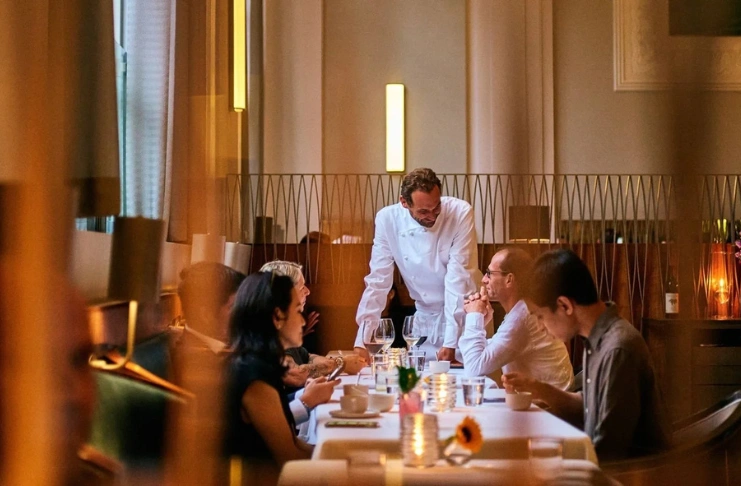
Humm and Guidara named their restaurant group Make It Nice. It sounds simple, almost precious. But it’s the entire philosophy compressed into three words. Make the food nice. Make the service nice. Make the wine list nice. Make the way you treat each other nice. Make the way you greet guests nice.
It extends beyond the restaurant. If someone drops a scarf on the street and doesn’t notice, the person who picks it up and returns it is the employee Humm wants. Not because they were told to. Because they’re that kind of person.
He stopped calling it the back of the house and the front of the house. Now it’s the kitchen and the dining room. Cooks come to the table and explain the food. They might not be as polished as waiters, but they have passion because they made the dish. The separation between cooking and serving disappeared because Humm decided it should.
This is what passion looks like when it’s channeled correctly. Humm doesn’t just want a great restaurant. He wants a culture. A religion. A place where 200 people line up on a Saturday morning to buy croissants because they can’t afford the $365 tasting menu yet, but they want to taste what Eleven Madison Park represents.
What’s Next?
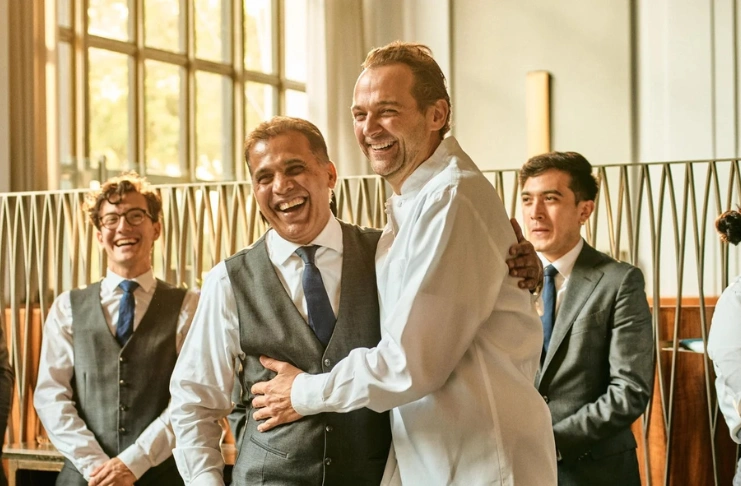
In 2021, Humm made Eleven Madison Park entirely plant-based. The first three-Michelin-star vegan restaurant in the world. Some guests weren’t ready. Some still aren’t. But Humm believes plant-based haute cuisine is the future. He may be a little ahead of the curve, but not too far.
He’s adapting the music to make the restaurant feel younger. Expanding the bar menu. Planning more accessible offerings. The bakery on Saturdays is just the beginning. He wants young people who can’t afford the full experience yet to have some version of it. To feel connected to what he’s building.
Because that’s what this has always been about. Not the stars. Not the rankings. Not even the food, really. It’s about creating something people want to be part of. A team that shows up on time and doesn’t call in sick. A dining room that feels like coming home, even though everything about it screams going out. A restaurant where the stress of the day disappears the moment you start thinking about what you want to eat.
Humm still doesn’t know anything but cooking. His happiest moments are running through the woods or riding his mountain bike up a mountain, dirty and tired with nothing but a water bottle.
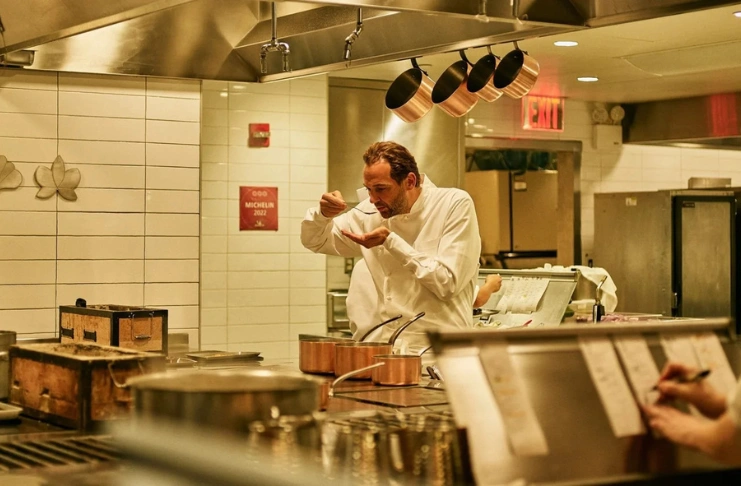
But six days a week, he’s in that kitchen in the Flatiron district, standing under those too-high ceilings in a building that was supposed to be the tallest in the world, serving food to people who waited months for a table.
He came to New York because he couldn’t win in cycling. He stayed because he found something better than winning. He found a room, a team, and a reason to never stop moving forward.