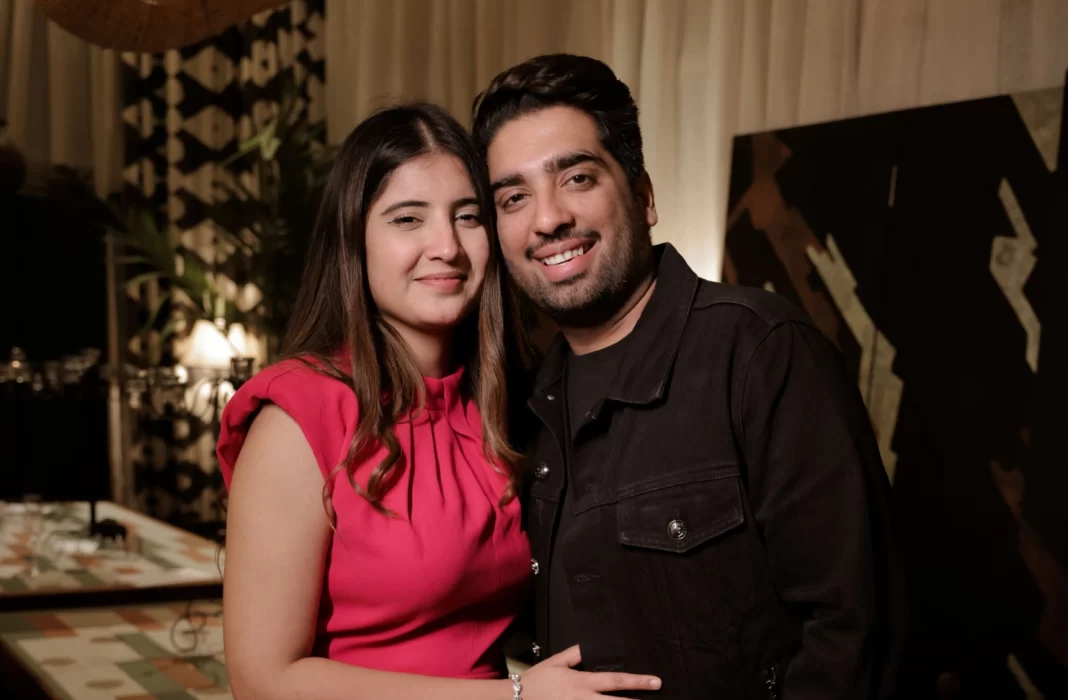

Ever heard of contrarian timing? It’s when you zig while everyone else zags. That’s exactly how Chrome Asia Hospitality began.
It was 2020. Pandemic. “While the world was shutting down and the industry was in turmoil, landlords were offering prime spaces at historically low rentals because so many restaurants had unfortunately closed,” Nikita recalls. “Instead of seeing it as purely a crisis, we [Nikita and Pawan Shahri] saw it as a rare window to enter the market, lock in great locations, and build something for the long term.”
Their logic? “If we could build in the toughest year, we’d build the resilience to scale in any market.”
Five years on, Chrome Asia Hospitality operates 10 restaurants across India, from Mumbai staples like Gigi, Lyla, and Eve to its Goa outpost KAIA, with its newest concept, Late Checkout, added to the Mumbai portfolio.
Speaking with The Restaurant Times, the duo behind Chrome Asia reveals how they built an empire on instinct, survived by trusting each other, and why they think most restaurateurs are doing it all wrong.
When Design Comes Alive
Before Chrome became Chrome, there was Eve. Their first restaurant. The place where they figured out who they were going to be.
“The most defining decision we made was to treat design and storytelling as being just as important as food and service,” Pawan explains. “That decision to obsess over detail and to build a brand experience rather than just a dining room set the DNA for Chrome Asia Hospitality. It taught us that if we stayed true to that philosophy, everything else would follow.”
While most restaurants think about food first, Pawan and Nikita flipped that. They decided that the space, the story, the feeling, all of it mattered just as much as what was on the plate. And it worked.
The Makeover
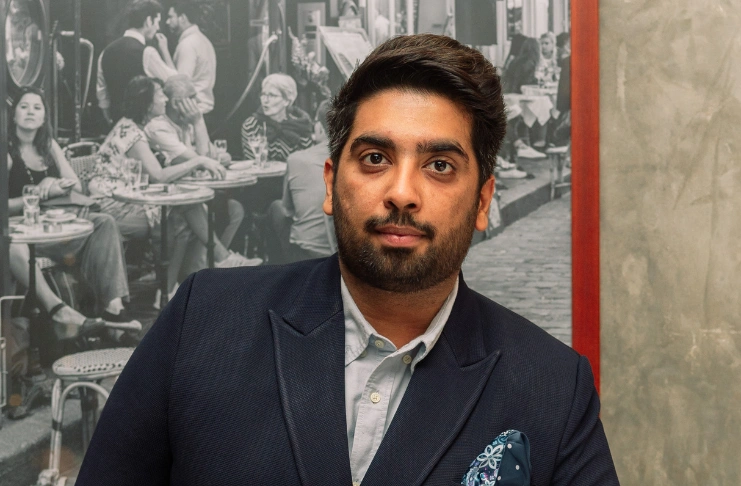
Walk into Gigi, or Late Checkout, or any of the Chrome properties, and you’ll notice something. They feel completely different but somehow connected like siblings with distinct personalities, but the same DNA.
That’s intentional.
“We don’t build ‘restaurants,’ we build characters,” Pawan explains. “Each one has its own story, but the common DNA is detail, design, and soul, that’s what makes them feel distinct yet unmistakably Chrome.”
This “character-building” approach taps into the fundamentals of how young people navigate identity today. In an era of multiple social media personas, Chrome’s various spaces offer physical manifestations of different aspects of the self. You’re not the same person at Late Checkout that you are at Gigi, and that’s exactly the point.
Late Checkout exemplifies this philosophy. “The vision was to take a forgotten textile mill and reimagine it without erasing its history, keeping the bricks and raw structure but opening it up with a soaring glass roof and layering it up with modern luxury design.”
But the deeper intention reveals the genius: “We weren’t trying to make something ‘pretty’; we were trying to create a space with attitude, one that could stand next to the best bars in the world and still feel uniquely Bombay.”
That last phrase, “feel uniquely Bombay,” is the crux of it all. With Chrome, the goal is to create a space that feels authentically local while satisfying globally sophisticated tastes.
The Friction or Chemistry?
Pawan and Nikita Shahri bring opposite strengths to the table. And maybe that’s why they work so well together.
“We’re wired differently. Pawan is extremely numbers-driven, focused on scalability, operations, and long-term strategy. He ensures the business model is solid and can sustain growth,” Nikita explains. “I, on the other hand, lead with creative vision: design, storytelling, and the brand experience.”
This creates what they call “productive tension.” “The friction keeps us sharp. It’s why our concepts feel ambitious, but also work in the real world.”
One partner dreams big, while the other ensures the dreams pay the rent. One sees the vision, the other builds the systems to execute it.
Cracking the Code on Gen Z Dining
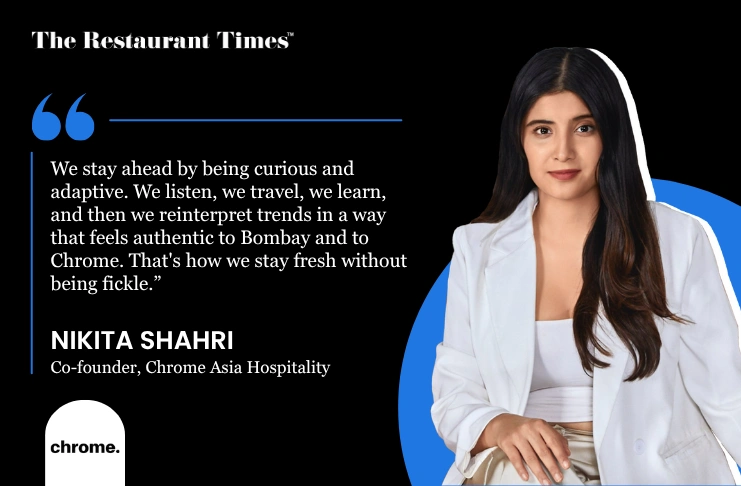
The speed at which Chrome’s restaurants build a following has become their signature. Literally. Gigi turns into a celebrity hotspot almost overnight. Late Checkout has lines before it even officially opens. Every launch feels like a map to where the city’s dining culture is headed next.
What’s the secret?
“I think what we’ve cracked is that for Millennials and Gen Z, dining out isn’t just about food, it’s about identity,” Pawan observes. “They’re not just ordering a meal; they’re choosing a mood, a backdrop, a community to belong to. We design with that in mind. Every Chrome outlet is built as an experience-first space, the playlists, the lighting, the details on the walls, so that it feels instantly shareable and personal.”
That lens also shapes how they view the “Instagrammable” label. Some restaurants would be offended by it, as if being photogenic somehow makes you less serious. Not these two.
“We don’t mind being called Instagrammable as long as people also see the depth behind it. Because for us, design is not just about a pretty corner for a picture, it’s about building an atmosphere that people want to return to again and again. Our work has always been about storytelling. Why a certain chandelier, why a 30-foot library wall, why a greenhouse roof in a mill? Every design decision has a narrative.”
Instagram might bring people in, but the story is what brings them back.
Scaling With Soul
Scaling a restaurant, or any business for that matter, usually diverts from what made the original special. After all, how do you scale intimacy? How do you systematize the “It” factor?
“The most challenging transition was going from one restaurant to ten in just a few years,” Pawan admits. “Running a single outlet is very founder-driven; you can be hands-on with every decision. But when you scale, you quickly realize you can’t be everywhere at once.”
Their solution? Instead of standardizing everything, focus on the core philosophy while letting the execution vary.
“The challenge is moving from ‘owner-led’ to ‘system-led’—building processes, empowering teams, and making sure the culture and quality are consistent no matter which outlet a guest walks into.”
But some things never change. “For us, whether it’s a 2,000 sq ft neighborhood café or a 10,000 sq ft destination bar, the philosophy is the same: the space must have character, authenticity, and a clear identity. If the space doesn’t have soul, it doesn’t get the Chrome name.”
Curating Tables for All
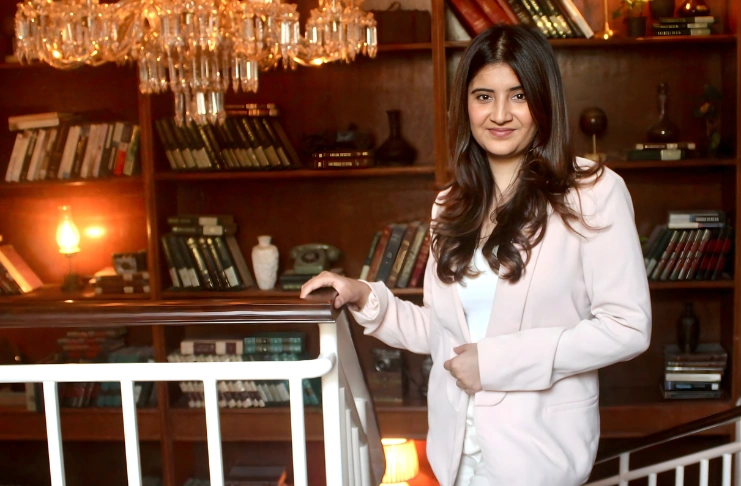
The best thing about Chrome is its impact beyond hospitality.
“Being recognized as a Social Samosa Superwoman 2025 was incredibly meaningful to me [Nikita] because hospitality is still a very male-dominated industry,” she reflects. “For me, this recognition wasn’t just about a title; it felt like validation that women can lead with both creativity and business acumen, and that our voices matter in shaping this industry.”
But recognition comes with responsibility. “Awards come and go, but what lasts is the change you create. My vision is to make sure more women in hospitality don’t have to fight for a seat at the table. They walk in knowing it’s theirs.”
What Everyone Gets Wrong
Chrome also consults for restaurants across the country. After working with over 50 establishments, they’ve seen the same mistakes over and over.
“The most common issue is people underestimating how tough this industry really is,” Pawan explains. “Many jump in thinking a restaurant is just about good food and pretty interiors, but they overlook the backbone: location economics, operational consistency, staff culture, and cash flow.”
The advice they give every client? “Focus on fundamentals. Nail your unit economics, keep the menu sharp and executable, and invest in training your people. And most importantly, don’t try to be everything to everyone. Clarity of concept is what makes a restaurant stand out and survive. A strong idea executed well always beats a scattered one.”
Remember, success comes from understanding exactly who you are and who you serve, then executing that identity flawlessly across every touchpoint.
The Legacy Question
As Chrome continues expanding with plans for 35-40 outlets across India, the question becomes what they’re really building beyond restaurants.
“We want to be remembered for shaping culture, not just cuisine. If our restaurants become the backdrop of people’s best memories, that’s our legacy.”
What started as two different approaches to the same vision has become proof that the best partnerships aren’t built on similarity. They’re built on complementary differences that create something neither person could achieve alone.
Nikita brings creative vision and storytelling. Pawan brings commercial discipline and systems thinking. Together, they’ve created spaces where both sides of the equation matter equally. Where every design decision serves the narrative, and every narrative decision serves the business.
They’ve shown that when creative vision and commercial reality work together rather than against each other, you don’t get compromise. You get something entirely new. You get restaurants that become characters, spaces that become stages, and meals that become memories.