


Forty-five minutes from Dubai’s city centre, beyond the last reach of urban sprawl and into the Al Marmoom Desert Reserve, Bab Al Shams Desert Resort sits within the golden dunes of the Arabian landscape. Here, at the resort’s beating heart, Al Hadheerah operates as something more complex than a restaurant. It functions as an Arabian theatre of open-air dining and live entertainment with roots in ancient, diverse Arabic cultures.
The name translates directly: Al Hadheerah means “the present” in Arabic, though guests often encounter it as a bridge between temporal states. The restaurant occupies a space designed to evoke a traditional desert fort, open to the sky, surrounded by sand that extends without interruption to the horizon. This is dining stripped of walls and ceilings, where the desert itself becomes architecture.
The Culinary Foundation
Mohamed Ferjani leads the kitchen as chef de cuisine, bringing 25 years of experience across Egypt and India to the role. His approach centres on a signature preparation that requires both patience and precision. The whole lamb Ouzi cooks underground for more than four hours with a special mixture of herbs and spices, though during Ramadan service, the cooking time extends to eight to ten hours.
This underground cooking method follows Bedouin traditions, where meat buried beneath hot sand and coals develops flavours impossible to replicate in conventional ovens. The lamb emerges tender enough to pull apart without resistance, infused with smoke and earth alongside the spice blend that remains Chef Ferjani’s closely held formula.
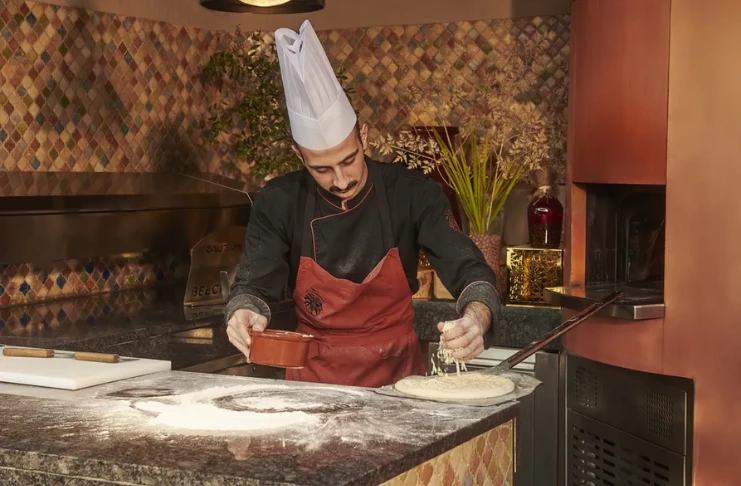
The restaurant operates ten live cooking stations, each dedicated to specific preparations. An Arabic grill station handles multiple varieties of meat. A seafood counter prepares fish to order. The Mongolian grill offers a different approach to proteins. A manakeesh station produces flatbreads throughout service. Additional stations focus on Emirati, Moroccan, and Egyptian cuisines, creating a culinary map of the Middle East within a single venue.
The buffet format allows movement between stations, encouraging exploration rather than commitment to a single course progression. Guests build their own narratives through food, returning to preferred stations or sampling systematically. The chocolate fountain anchors an extensive dessert selection that includes sticky date pudding, loukemat, kunafa, Turkish delight, and basbousa.
The Performance Element
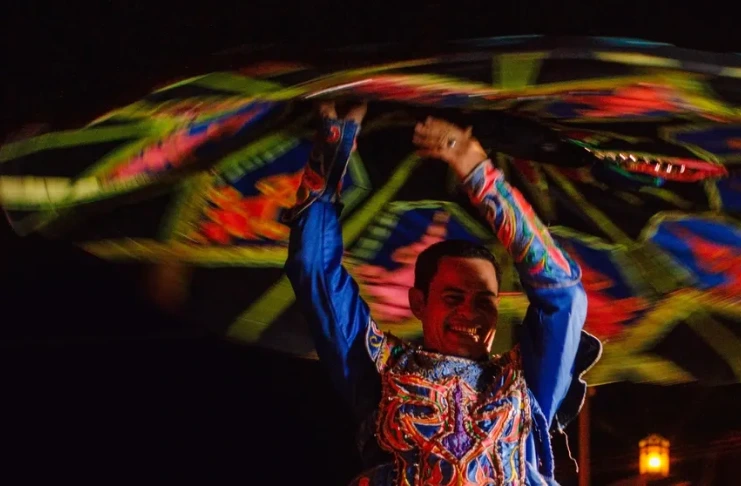
Entertainment at Al Hadheerah operates on multiple simultaneous tracks. Belly dancers perform the ancient art every evening, while Tanoura dancers execute the Sufi-derived Egyptian dance form distinguished by multicoloured skirts. A live DJ provides contemporary energy, while singers accompanied by Oud instruments and percussionists deliver traditional melodies. Falconry displays demonstrate the Bedouin practice of working with these birds, while camel caravans and horse shows recreate the transportation methods that defined desert life.
The performances don’t follow a fixed schedule or formal staging. Entertainment flows throughout the evening, with different elements emerging and receding like patterns in sand. Dancers move between tables. Musicians shift positions. The falcon handler allows guests close encounters with the birds after demonstrations. This mobile, permeable approach prevents the dinner from feeling like a show with assigned seating; instead, the entertainment surrounds and infiltrates the dining experience.
On Thursday and Friday evenings, fireworks punctuate the night sky, adding visual drama to the desert darkness.
The Souk Experience
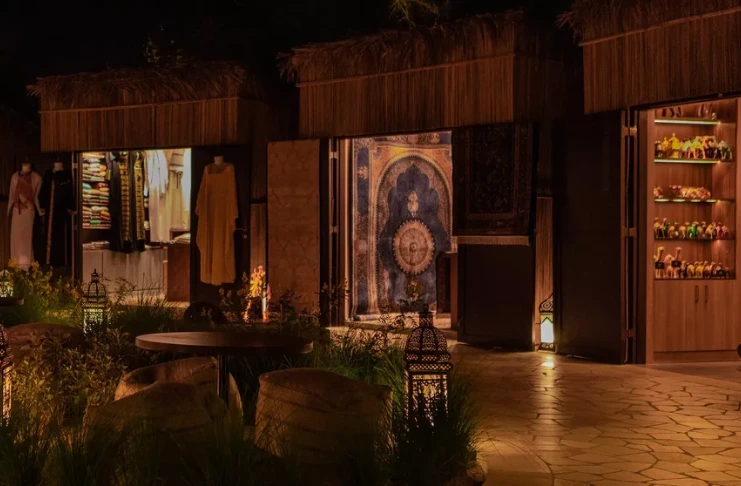
Adjacent to the dining area, a colourful souk experience features handmade carpets, exotic custom-made perfumes, sand art, and camel wool pashminas. This pre-dinner element allows guests to engage with traditional crafts before settling into their meals. The souk operates as both commerce and context, establishing the cultural framework within which the food and entertainment make sense.
Following dinner, activities extend beyond passive observation. Guests can ride camels through nearby dunes or hold falcons on gloved arms, transforming spectators into participants. These interactive elements distinguish Al Hadheerah from conventional dinner entertainment venues where audiences remain seated throughout.
Under Chef Ferjani’s direction, Al Hadheerah won Best Casual Dining Experience World at the Hotel of the Year Awards 2015. This recognition, now nearly a decade old, established credentials that continue to support the restaurant’s reputation.
Current pricing operates on a two-tier structure. Sunday through Thursday, the experience costs AED 399 per person for adults and AED 200 for children. Friday and Saturday rates increase to AED 499 for adults and AED 250 for children, with the premium justified by fireworks displays. Children aged three and below dine without charge.
These rates include the buffet, soft drinks, and all entertainment. Alcoholic beverages carry additional charges. The pricing positions Al Hadheerah at the upper end of Dubai’s dining market while remaining below fine dining restaurant levels, reflecting its casual-yet-elevated approach.
Bab Al Shams sits 45 minutes from Dubai’s city centre, a distance that creates necessary separation from urban density. The resort designed itself to resemble a fortified rural Arab village, with low-rise architecture in earth tones that doesn’t compete with the landscape. The location within Al Marmoom Reserve means native fauna, including gazelles, birds, and geckos, sometimes wander through the property.
This geographic isolation serves the restaurant’s concept. The drive through increasingly sparse development, past the last petrol stations and shopping centres, into the desert where artificial light disappears, prepares guests for an experience defined by absence: no walls, no roof, no soundtrack beyond live performance and conversation.
The Heritage Village, situated adjacent to Al Hadheerah, offers additional context. Guests can explore reconstructed traditional dwellings and learn about historical Bedouin life, though most visit the village after dining rather than before, using it to extend the evening.
The Broader Context
Al Hadheerah exists within Bab Al Shams but has developed an identity that extends beyond the resort. Many guests visit solely for dinner without staying overnight, treating it as a destination restaurant rather than a hotel dining option. This distinction matters: the restaurant must satisfy both resort guests seeking convenience and outside visitors who have made the deliberate journey specifically for this experience.
The balance between authenticity and accessibility defines Al Hadheerah’s approach. Traditional cooking methods like underground lamb preparation coexist with modern buffet logistics. Live entertainment honours historical cultural practices while accommodating contemporary expectations for continuous stimulation. The setting evokes Bedouin heritage while providing the comfort and service standards associated with five-star hospitality.
The Al Hadheerah Experience
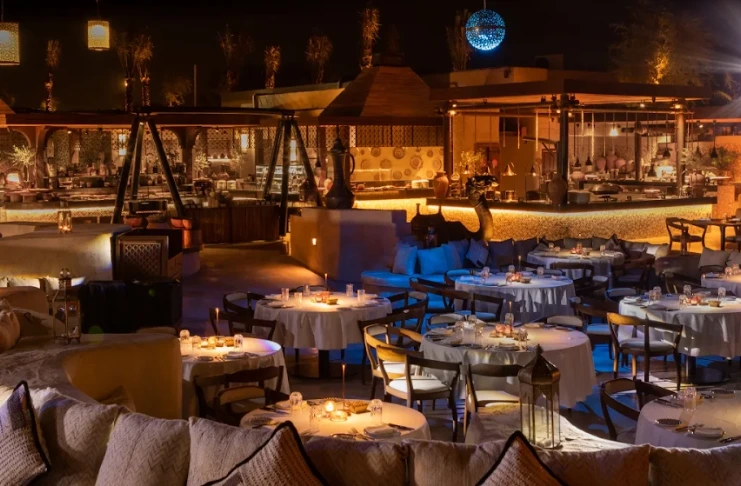
Ultimately, Al Hadheerah trades in contrasts and their resolution. The vulnerability of dining without walls under open sky meets the security of professional service and reliable quality. Ancient cooking methods deliver food to guests holding contemporary expectations. Traditional entertainment forms play to international audiences. The profound darkness of the desert accommodates candlelight sufficient for navigation and atmosphere.
To experience Al Hadheerah is to cross a bridge linking the past to the future, as the soul of Arabian heritage comes alive under the desert stars. This description, while promotional in tone, accurately captures the restaurant’s essential character. It offers not simulation but interpretation: taking elements of Bedouin hospitality and desert living, refining them for comfort and consistency, then presenting them in a format accessible to visitors unfamiliar with the source material.
The success of this approach shows in the restaurant’s longevity and continued demand for reservations. Nearly two decades after opening, Al Hadheerah maintains relevance in Dubai’s constantly evolving dining landscape by offering something genuinely difficult to replicate: an evening where location, food, and performance combine into an experience that feels simultaneously ancient and immediate, carefully constructed yet somehow inevitable given the setting.
For those seeking authentic Emirati cuisine in Dubai’s competitive dining market, or for visitors wanting cultural context alongside their meal, Al Hadheerah provides both without requiring guests to choose between comfort and authenticity. The restaurant has found a sustainable middle ground where tradition and hospitality meet under a vast desert sky.


