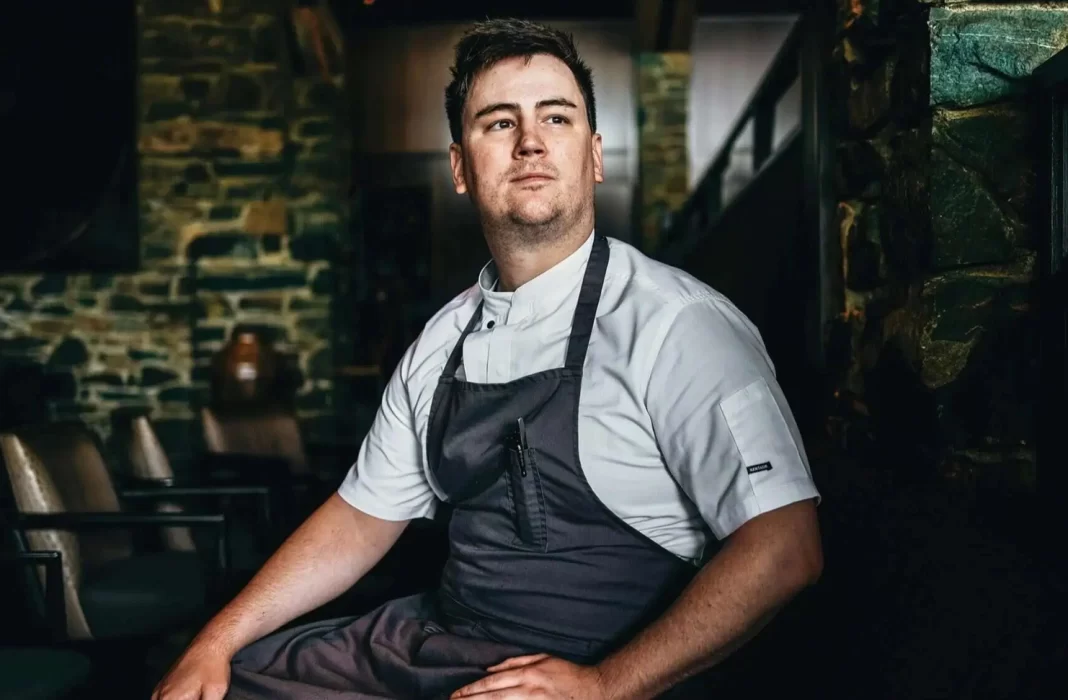

James Huffman walked past Canlis ten years ago and saw a cook step out the side door. He asked if he could turn in his resume. The cook took him inside.
That moment of luck, or timing, or whatever you want to call it, changed everything not just for Huffman, but for Canlis itself.
In June, after a search that drew 74 applicants from around the world, Canlis named Huffman its executive chef. He’s the first person born in Seattle to hold that title in the restaurant’s 75-year history.
The decision surprised people because Canlis has a pattern of hiring chefs from elsewhere. For example, Jason Franey came from Eleven Madison Park. Brady Williams came from Roberta’s. Aisha Ibrahim came from Bangkok after cooking at Michelin-starred restaurants across the globe. All three eventually left Seattle chasing their own stars.
However, Huffman, 33, isn’t going anywhere. He grew up in Lake Forest Park. He started washing dishes at 15. He went to culinary school at Edmonds Community College. He cooked at Purple Café in Kirkland, then Café Juanita. Then Canlis. For nine years, he worked the line, moved up to sous chef, then executive sous chef. He learned the rhythm of the place. He knows the team. He understands what Canlis is trying to do.
“James is from this place, and he’s of this place,” owner Mark Canlis told Seattle magazine.
That matters now more than it used to.
The Legacy
The story begins with Nicholas Kanlis, a Greek immigrant who (according to family lore) swam from Lesvos to Turkey, eventually making his way to America.
In 1910, he and his wife opened The Food Palace and Fish Grotto in Stockton, California. It was a mom-and-pop shop from the old world that raised their son, Peter Canlis.
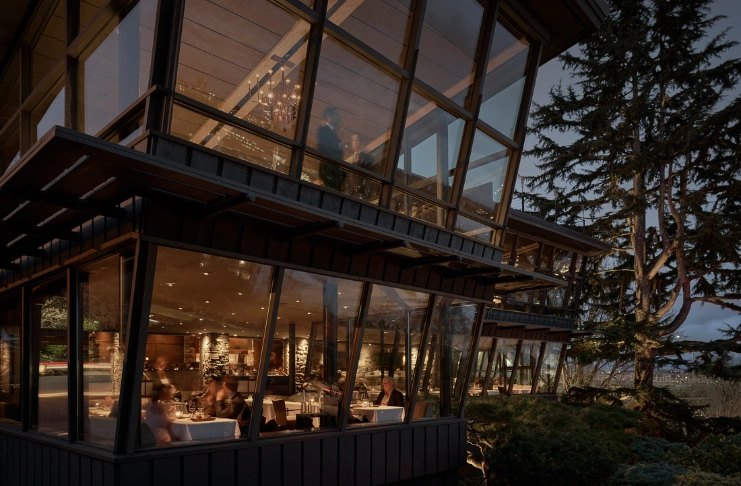
In 1950, Peter Canlis came to Seattle with a vision. As an outsider, he couldn’t secure a location in the city center, so he took a piece of land “way outside the city.” His response became family legend: “If it’s within a dollar’s cab ride of downtown, they’ll come.”
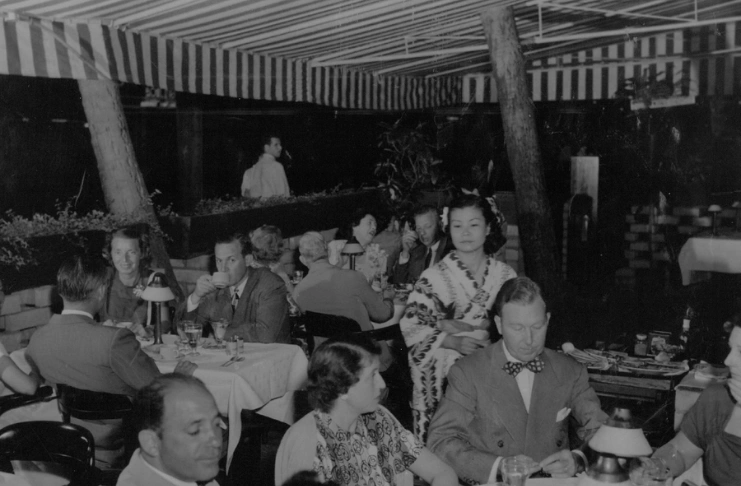
Peter’s strategy was to build the most beautiful restaurant in the world. He hired then-undiscovered architect Roland Terry to create a space that felt like a home. He bet on local Northwest artists. He hired women of Japanese descent who had recently endured internment as server captains, a traditionally male role. It was 1947, and this move changed American fine dining. The Broiler in Hawaii had proven its concept: exchange European pretension for Japanese warmth and hospitality. Seattle fell for it overnight.
In 1977, Peter passed the restaurant to his son and died of cancer the same year. The second generation were reluctant restaurateurs, wary of the toll restaurant life took on their families.
For 30 years, they chose family first at every turn, shrinking the business to focus on their marriage and children. They also deepened their understanding of hospitality as a turning toward “the other.” The foreigner. They believed we fundamentally need one another and were made for relationships.
In 2007, brothers Mark and Brian Canlis took over, committed to living out the idea that it’s worth putting other people first.
The restaurant has endured three generations, seven decades, and a worldwide pandemic. Food & Wine Magazine called Canlis “one of the 40 most important restaurants in the past 40 years.” It has received 22 consecutive Wine Spectator Grand Awards and been nominated for 15 James Beard Awards, winning three.
The Search
As already mentioned, Canlis has a pattern of hiring chefs from elsewhere. So, when Ibrahim announced her departure in February, Mark Canlis wasn’t sure what came next. His brother Brian had just left to start a project in Nashville. The restaurant was facing rising costs and an uncertain economy.
So, the search for a new chef began.
Sixty-five candidates made it into what Canlis called “the system.” One interview question asked chefs to submit a 60-second video of themselves doing something wholeheartedly that they clearly weren’t good at.
Canlis told Eater in April he wanted to know about “the keel underneath the water,” not the sails. He wanted character – someone who understood hospitality as an exchange of power for vulnerability.
By late spring, the list shrank to about a dozen. Canlis told Eater about one candidate off the coast of Madagascar who was “crushing” the process. There were chefs from major markets. Chefs with impressive resumes. Chefs who could transform the menu.
But there was also Huffman, running the kitchen as acting executive chef since Ibrahim left – putting out spring dishes and holding the team together.
The Test
Part of Huffman’s candidacy involved hosting and cooking for the other finalists. Mark Canlis described the situation to KING 5 as complex and emotional. Huffman had to entertain the people competing for the job he wanted.
“We fell in love with that person in a whole new way,” Canlis said.
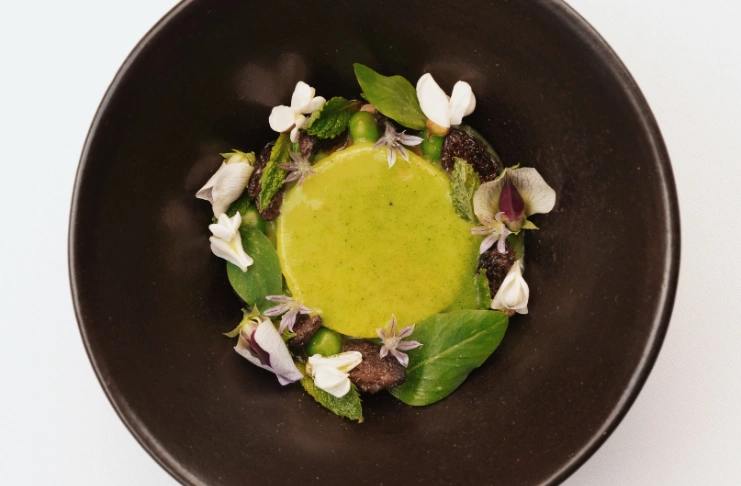
The tasting that sealed it included a dish from Huffman’s childhood. After school, he’d eat Ritz crackers with apple slices and cheddar cheese. He recreated that snack for the Canlis family in an elegant form. It’s now on the menu as “Ritz cracker tartlet, cheddar foam, apple and sturgeon caviar,” according to Seattle Refined.
Guests love it.
The Cooking
Huffman talks about food the way someone talks about neighbors. He knows where things come from. He knows the people who grow them, raise them, catch them.
He and his sous chefs go to farmers’ markets together and start conversations. They toured Ferndale Farmstead Creamery over the summer. Now the creamery’s Parmesan is part of the steak tartare in the lounge. He uses Neil’s Bigleaf Maple Syrup from Acme, Washington. It has an umami quality he describes with genuine excitement. He likes that it’s local sugar instead of cane sugar from Brazil or Florida.
He talks about Rockridge Orchards’ apple-based balsamic and Westland Distillery’s whisky aged in Garry oak, a tree unique to the I-5 corridor.
“Courage and ingenuity behind pushing the food culture of Pacific Northwest cuisine is really, really important,” Huffman told Seattle magazine. “As much as we can support the producers in our region from our restaurant, that is a big goal of ours.”
When he talks about Northwest food, he also talks about timing. King salmon when it’s king. Oysters in December. Mushrooms, when the forest allows it. He mentions the rancher at Pure Country in Moses Lake before discussing beef grading.
The Weight of It
The job Huffman now holds comes with expectations that could crush someone unprepared.
Some of his (many) responsibilities include:
- Unite a kitchen team of 35 people to run one of the most difficult operations on the planet.
- Inspire people to turn toward one another, as the restaurant’s mission statement declares.
- Balance sensation-hungry foodies with loyal regulars who’ve been coming for decades.
- Respect 75 years of history while pushing the food scene forward.
- And, of course, cook.
Huffman takes it very seriously. He calls it an honor and a responsibility.
“We’re looking into the future, asking what’s the best way to take care of somebody with our cooking, with our presence, with this entire place,” he told The Adventurist. “At 75 years old, I don’t see us slowing down.”
The Bet
Mark Canlis could have hired someone with a bigger name. Someone who cooked in Copenhagen or Paris. Someone who’d bring immediate press attention and a dramatic new direction.
Instead, he chose the guy who walked past the restaurant ten years ago and asked for a chance. The guy who spent nine years learning the place from the inside. The guy who already loves it.
Because Huffman will stay, Seattle is his home. Canlis is his restaurant now.
It’s what Peter Canlis did 75 years ago – betting on people who were from his place. And maybe that’s why the restaurant that began with a Greek immigrant who swam to Turkey is still here.
Still waiting to serve Seattle. Still betting on what matters.