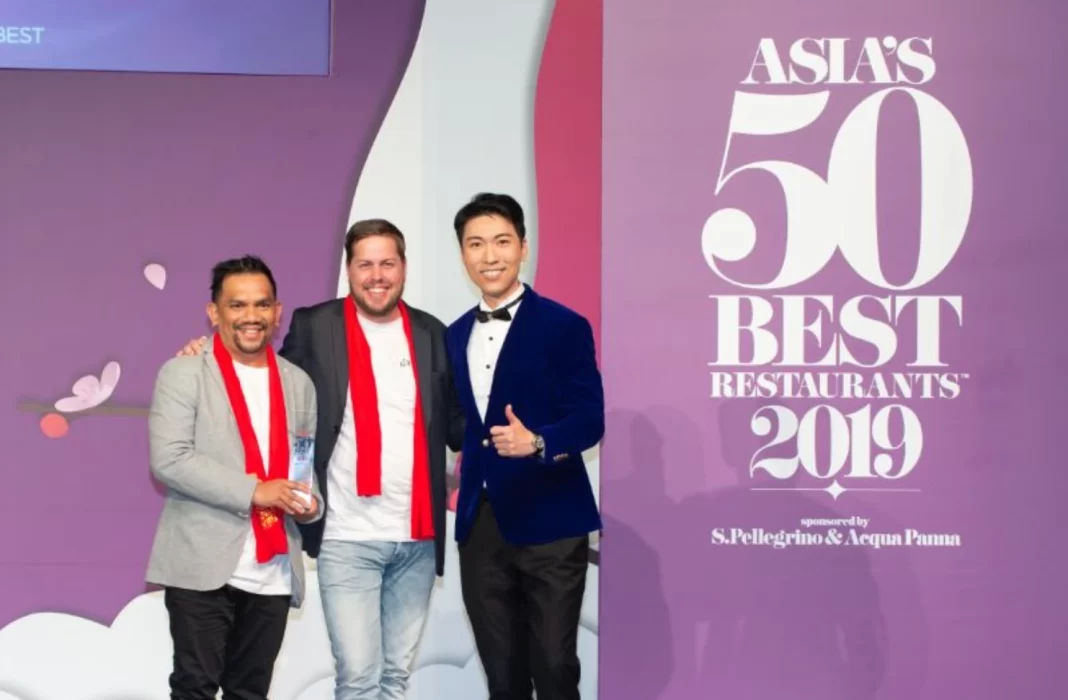

Eelke Plasmeijer and Ray Adriansyah ran Locavore in Ubud for 10 years before they admitted that the space was too small. They needed more kitchens, storage, a proper bar, and a separate room to experiment, grow mushrooms, and ferment things.
In 2023, they opened Locavore NXT on the southern edge of Ubud, surrounded by rice paddies. The new space is 47 times bigger than the original restaurant.
“From day one, Locavore felt too small as we needed more kitchen space and storage,” Plasmeijer explained. “We knew from around our third year that we wanted a better dining experience and an R&D space to move forward.”
Locavore NXT now has –
- Five kitchens
- A mushroom chamber in the basement that grows 13 varieties
- A rooftop food forest with 300 plant varieties and 30,000 individual seedlings
- Two bee colonies
- A fermentation lab
- An eight-meter-long climate-controlled mushroom fruiting chamber
- Solar panels
- Rainwater collection systems
- Worm toilets that house 2,000 worms processing sewage in the basement, and so much more.
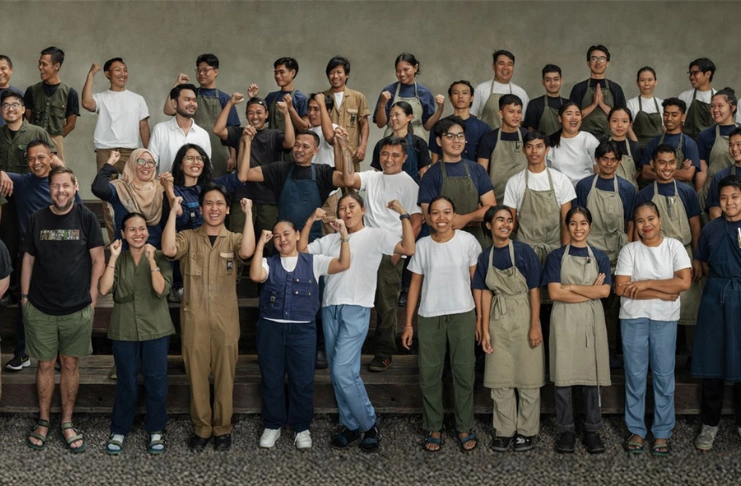
The restaurant employs 100 people. Diners get tours of the facilities as part of their meal. The tasting menu has 20 courses. Every ingredient comes from Indonesia. Nothing is imported.
Result? Locavore NXT won the 2025 Asia’s 50 Best Sustainable Restaurant Award, and in its first year, it diverted 98.4% of waste from landfills.
Two Chefs And Their Urge to Have Everything in One Place
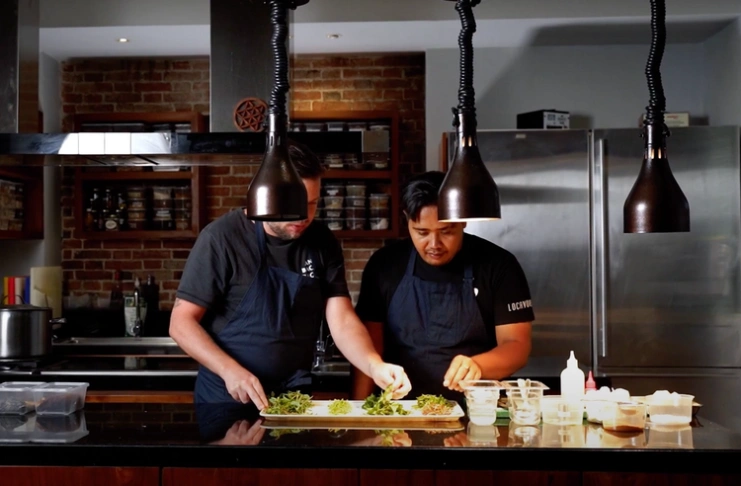
Plasmeijer is Dutch. Adriansyah is Indonesian. They opened the original Locavore in 2013 with an idea to “cook with local ingredients.” At the time, most fine dining restaurants in Bali used imported luxury items because they believed that Indonesian ingredients weren’t good enough for fine dining.
However, for Plasmeijer: “Indonesia is obviously a very diverse country, so why not put it in the spotlight a bit more? We know that our concept is not for everybody and that it can be challenging for some people. Coming here, you need to keep an open mind and be ready for a surprise.”
The original Locavore made Asia’s 50 Best Restaurants list from 2015 to 2022. It won the Sustainable Restaurant Award in 2019. But the space kept limiting them.
“The ingredients we used were grown here, but not necessarily from here,” Adriansyah shared. “We realised it would be so much more inspiring to have everything in one place. We’d also never had a proper bar or micro distillery, so we wondered: ‘How can we make it better and show the team and our guests how things should be done?’ There’s only one chance to get this right.”
They spent three years building NXT with creative partners Agency X and Budi Pradono Architects. The building uses tropical brutalist architecture that deliberately lets nature reclaim it. 550 tons of soil sit on the rooftop edible forest. The design includes floor-to-ceiling windows overlooking rice paddies.
“When we moved into this new space, we decided to go all out and build something truly unique,” Plasmeijer explained. The main dining room has an entirely open kitchen. “There are no barriers—you can sit right next to where we’re cooking and see everything, making the dining experience more interactive.”
The Exclusive Ingredients
Locavore NXT’s menu uses ingredients most people have never heard of – Picung, Lontar fruit, Jengkol, Trigona honey, Daluman, etc. Chef Maxie Millian, part of the kitchen team, told Foodies that “each snack or dish has at least one or two ingredients that most of our guests have never heard of.”
The chefs travel across Indonesia to source ingredients. They work with farmers in villages from the seaside to the highlands. Different elevations produce different flavors. “Even the same type of plant can have different taste notes depending on where it grows, influenced by factors like temperature and soil type,” Sous Chef Ida Bagus Yana Gede Kasida, known as Kasida, shared.
One of their suppliers is farmer Ana Agung Putra Semara, called Pak Agung, who owns land in the foothills of Buahan Kaja Village between Kintamani and Ubud. He inherited the land from his father a decade ago and has worked with Locavore since then.
“It’s definitely challenging, but I enjoy it a lot. I feel cared for [by the team]. We’re already like family at this point,” Pak Agung said in one interview, according to a published account.
“Back in the days, most Balinese homes came with a paddy field and a wild orchard just like this. People subsisted on the land’s harvest, using the plants for food, medicine, and, most importantly, religious ceremonies,” Kasida explained. “This connection to ritual is a key reason why knowledge about these plants has been preserved by villagers like Pak Agung.”
The restaurant also uses edible weeds that most chefs usually discard. One dish, Every Edible Element Chayote, uses the sprouts, flowers, leaves, and fruit of the chayote plant assembled into a miniature garden hanging over cured egg yolk.
Then comes Tempeh. They make it from kenari nuts and pigeon peas, then brine it, steam it, glaze it, and grill it until the texture falls between tofu and purée. The team tested 40 different variations of fermented legumes before settling on the recipe.
One amuse-bouche called The Whole Banana Tree uses the entire banana plant, including the trunk, in a curry. The team examined 19 banana varieties before choosing pisang susu and pisang gancan. The texture mimics mochi despite being made from banana.
The Creative Process Behind It All
Nothing at Locavore NXT happens quickly. Head of R&D Alfonso Cocinero, a Noma graduate, draws elaborate sketches mapping out each dish. His drawings are colorful and detailed, showing the flow and ideas behind the tasting menu.
“He’s quite the artist,” Plasmeijer said. For the second seasonal menu called Nature’s Flux, Cocinero drew a blue swimmer crab consommé as rain droplets trickling into a pool on a lotus leaf with a giant squid hovering above.
The actual dish serves grilled baby squid arranged like a miniature Kraken with river tamarind beans and pickled jicama. The crab has been clarified into translucent amber consommé poured tableside.
The restaurant has a dedicated R&D lab called Lab X, where the early stages of conceptualization happen. A fermentation room sits across from it. The mushroom chamber in the basement houses varieties ranging from common oyster mushrooms to cordyceps and hen-of-the-woods.
“We’ve always wanted to work with a wider variety of mushrooms, but in Indonesia, most are imported,” Adriansyah explained. “While you can find common types like shimeji or shiitake in supermarkets, as chefs, we wanted to explore more unique options like lion’s mane, reishi, and pink oysters.”
The rooftop food forest acts as a living calendar. “We can walk up there and see what’s coming into season, like durian or rambutan, and plan our menus accordingly,” Plasmeijer noted. “It helps us anticipate what we can harvest, both from the roof and our nearby suppliers.”
The Dining Experience That Moves Around
Guests at Locavore NXT don’t just sit down and eat. They move through the building. The experience starts at a garden shed that serves as a reception. First, snacks and cocktails are served at a bar overlooking rice paddies. Then, guests go underground to the mushroom chamber, where they eat mushroom dumplings pulled from a terrarium drawer.
The B.I.O. Library sits on the same basement level. Interactive touchscreens display 257 local ingredients that have been 3D-scanned, with information on seasonality and traditional uses. “We integrated our documentation of ingredients into the guest experience, which is not only educational but also pushes us to make sure we are recording our research,” Plasmeijer explained.
David Sullivan, founder of Agency X, Locavore’s in-house creative agency, worked on the B.I.O. Library project with creative technologists Digital Nativ. “In the spirit of sharing everything we’ve learned about local ingredients and their culinary characteristics over the years, we thought—why not digitise it? And that led us to the idea of ‘research you can touch, ‘” Sullivan said.
Midway through dinner, service pauses for another surprise course. Guests walk to the other end of the open kitchen for a refreshing soup made from pickled marigold flowers harvested from the rooftop forest.
“NXT is very modular. We’ve got lots of different paths of circulation and areas that can be activated as part of the guest experience,” Sullivan noted. “It’s been developed in such a way that our ‘backstage’ is a key part of it. We want them to see the mushroom [chamber], the waste centre, the staff canteen. It’s all part of the journey.”
The Drinks Made From Local Spirits
As expected from Locavore, their beverage program uses no imported spirits. Instead of Whiskey or rum, the team uses Brem, Arak, and Tuak (regional Indonesian drinks). They offer two pairing options: one with alcohol, one without. Both use only Balinese ingredients.
“When we first opened Locavore, Raka joined us just before the launch, and his passion for local ingredients led us to shift from traditional wine pairings to cocktail pairings inspired by local flavors,” Adriansyah explained. “When planning Locavore NXT, we decided to focus entirely on local ingredients, cutting out imported spirits.”
The drinks are made from locally sourced spirits and ferments, manipulated through fermentation to create unique flavors using flowers, fruit, spices, and kitchen leftovers. Pet nats, kombucha, and soda fill the non-alcoholic list.
“Our goal has always been to offer something unique that you can’t find anywhere else,” Adriansyah said. “Why come to Bali to eat and drink what you can get at home?”
The Waste Management
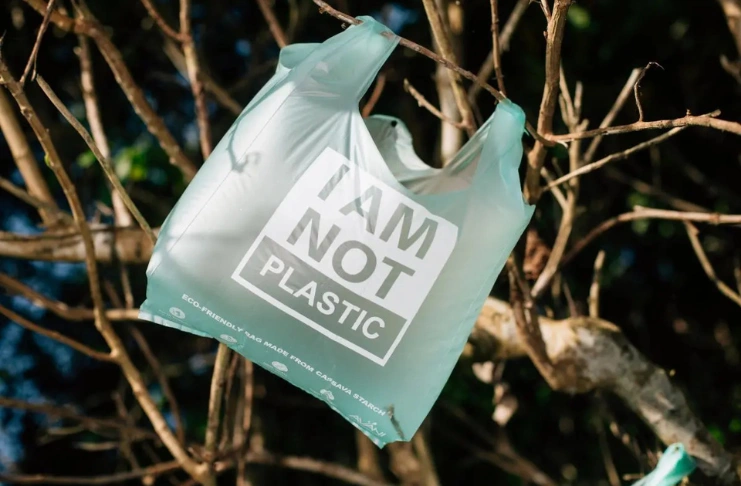
Locavore NXT diverted 98.4% of waste from landfills in its first year through its Circular Waste Centre. The facility includes a plastic shredder, a hot composter, and a bio-shredder.
Black Fly larvae housed in an Organic Wellness Center process waste on-site without using landfills. The larvae turn waste into compost and fertilizer. Then, worm toilets in the basement that house 2,000 worms process sewage.
The restaurant has 172 solar panels supplying 30% of its electricity needs. A closed-loop water system collects and filters rainwater for landscape irrigation. The building design incorporates recycled materials.
“We also really wanted the project to be as sustainable as possible because we always felt we could do so much better in that area,” Plasmeijer told Foodies.
At least 20% of staff come from surrounding villages. The restaurant provides comprehensive training programs, dedicated staff facilities, wellness initiatives, and works with organizations like Sungai Watch to clean plastic-polluted beaches. Staff work four days a week instead of the usual six-day standard in Indonesian restaurants.
“We created a staff canteen with nutritious food, nice lockers, and showers to improve their well-being,” Plasmeijer explained. “We hope these practices inspire our team and their communities.”
What They Tell Other Restaurants
The restaurant menu is over 75% vegan or vegetarian. Everything is gluten-free by default because they use flours made from fermented roots, such as cassava and sweet potato, instead of imported wheat.
“Our focus on using local produce means that we’re working with a lot of simple and humble ingredients, and we need to make them shine,” Plasmeijer said. “It demands a lot of technique, time, and thinking about how to make something like, say, jengkol (dogfruit) delicious.”
Chef Maxie Millian told Foodies that jengkol is his standout dish. “It is such a challenging ingredient for a lot of (Indonesian) guests, and they always like our version, even if they normally don’t like jengkol.”
The restaurant changes its menu three times a year. Each seasonal menu tells a different story and activates different parts of the building. “We like to change up this movement of guests when the menu changes, and hopefully we can soon integrate our edible rooftop jungle into the dining experience,” Plasmeijer said.
Three cabins called The Wood Rooms sit on-site for guests who want to stay overnight. “We call it the full NXT experience, as they are entitled to a backstage pass, giving them access to different workshops, from coffee cupping sessions to tempeh and fermentation workshops,” Adriansyah explained to Tatler Asia.
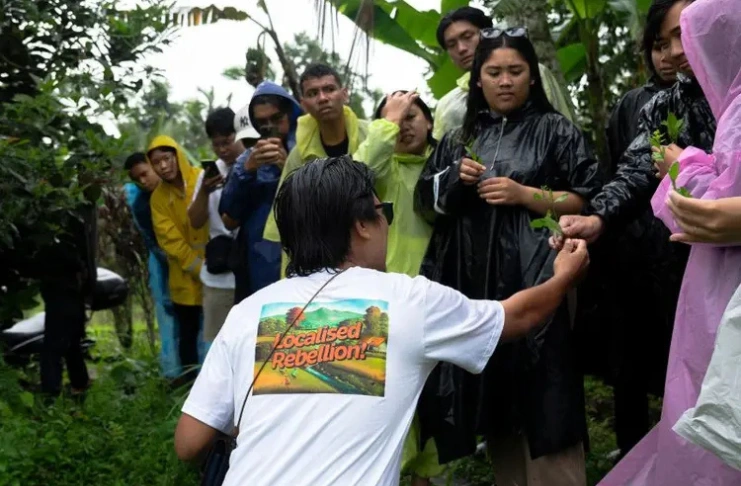
The restaurant’s motto is “More than a restaurant. A localised rebellion.” The rebellion is against conventional fine dining that relies on imports and luxury ingredients. Against the idea that local ingredients aren’t good enough.
“In the past, we made excuses about lacking space, time, or funds,” Plasmeijer said. “Now, we have more space and time, thanks to this unique building with its facilities, including a rooftop jungle. We aim to inspire others by running a restaurant that is enjoyable, sustainable, and respectful to everyone—our team, partners, and farmers.”
Adriansyah added, “This is just the beginning of a long journey. We’re committed to sustainability and responsibility, showcasing Indonesian ingredients, and inspiring others along the way.”
The restaurant has become a model. In late 2024, 10 renowned chefs from Asia’s finest restaurants gathered at Locavore for a pop-up dinner to raise funds for the Amisewaka Desa Les Community Center, which supports young Balinese people in developing skills for hospitality employment. Several program alumni now work full-time at Locavore NXT.
The chefs were given mystery boxes of locally foraged ingredients that morning and had to create dishes on the spot. The event raised money and proved the point: great cooking comes from what’s around you.
“We’re not perfect, and we acknowledge that, but we strive to do our best,” Plasmeijer said. “Our approach is to show, not just tell.”
For 10 years, they made excuses about space. Now the space is 47 times bigger, and the excuses are gone. What’s left is a restaurant with mushrooms in the basement, bees on the roof, and 100 employees working to prove that Indonesian ingredients deserve the spotlight.