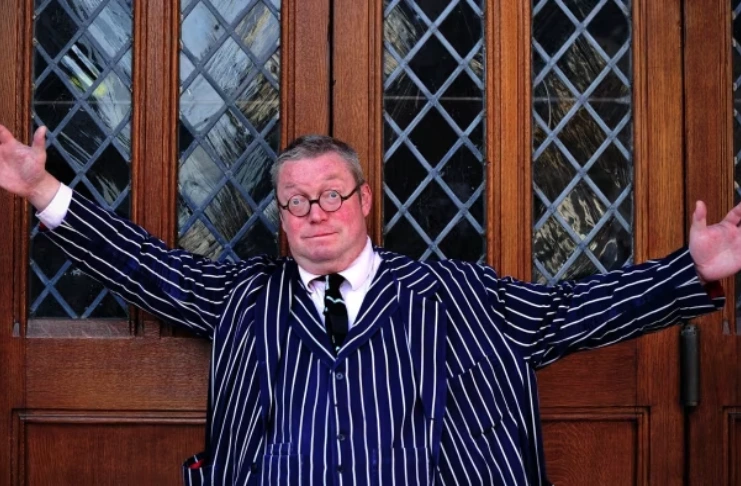

In October 1994, three men opened a restaurant in a decaying former bacon smokehouse near London’s Smithfield meat market. The neighborhood was somewhere between the outer edges of the City and the hint of promise in High Holborn. Local forms of tumbleweed blew by, as they like to say. The space had previously been a squat, a rave venue, and the offices of Marxism Today. Squatters and ravers had left graffiti on the walls. Layers of tar needed scraping away.
Fergus Henderson, Trevor Gulliver, and Jon Spiteri whitewashed everything, installed bare concrete floors, brought in repurposed wooden furniture, and opened St John. No music. No artwork on the walls. Just white space, natural light, and a menu that would change British cooking forever.
The Architect Who Never Trained as a Chef
Fergus Henderson was born on July 31, 1963, the son of two architects. His father was a keen diner, his mother a keen cook. He studied architecture himself at the Architectural Association in London, following in his parents’ footsteps. But somewhere along the way, his thoughts turned to cooking.
Henderson had no formal training in cooking and has never worked under any other chef. He did occasional stints at The Globe in Notting Hill, but mostly he learned by doing. In 1992, he and his wife Margot took over the dining room at The French House pub in Soho, cooking above the bar with Jon Spiteri. The restaurant quickly became a Soho favorite, earning loyal followers and critical praise.
Meanwhile, Trevor Gulliver had created The Fire Station in Waterloo to much critical acclaim. When it was sold in 1993, Trevor was offered the rundown buildings that formed the former smokehouse at 26 St John Street. He needed a partner. Their mutual olive oil supplier introduced Trevor and Fergus. Lunches led to a partnership. By October 1994, St John opened its doors.
The Philosophy: Nose to Tail
The restaurant’s logo is a pig. Not a stylized, cutesy pig, but a simple line drawing that tells you everything you need to know about what happens inside. St John specialized in what Henderson called “nose to tail eating.” As he explained, “it seems common sense and even polite to the animal to use all of it. Rather than being testosterone-fuelled blood-lust, it actually seems to be a gentle approach to meat eating.”
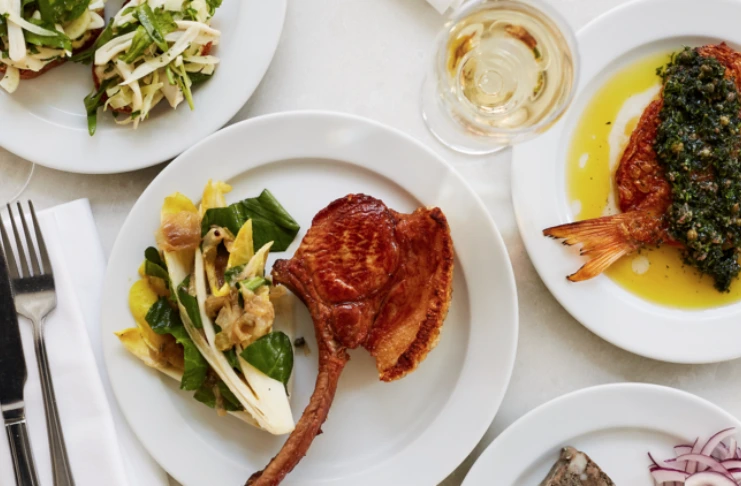
This meant serving parts of animals that had largely disappeared from restaurant menus. Pigs’ ears. Ducks’ hearts. Trotters. Pigs’ tails. Rolled pig’s spleen. Ox heart. Chitterlings. Kidneys. Tripe. And when in season, squirrel. These weren’t shock tactics or gimmicks. They were traditional British recipes, reclaimed and cooked with straightforward techniques that let the ingredients speak for themselves.
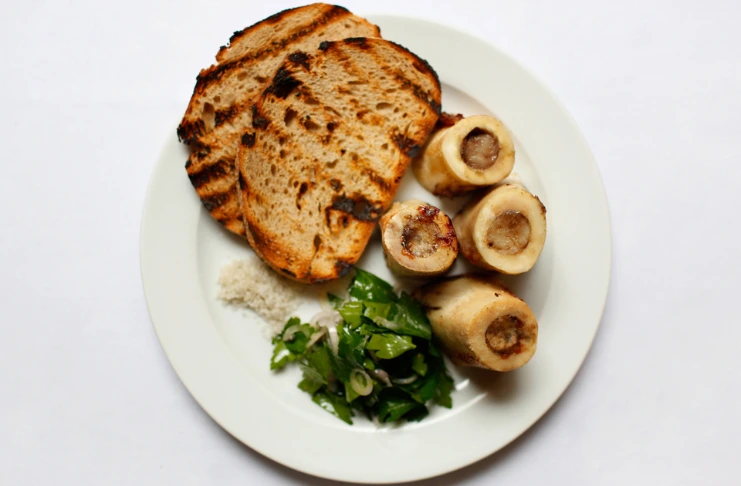
The menu changes daily based on what’s seasonally best. But one dish has remained constant since the very early days: roast bone marrow and parsley salad. It’s widely lauded as one of the most incredible British restaurant dishes of all time. Marrow bones roasted until the fat inside turns molten, served with sourdough toast and a simple salad of parsley and capers. That’s it. That’s the dish that helped define a restaurant.
The Early Days
The reviews were mixed at first. Critics complained about the apparently outrageous price charged for a plate of boiled eggs and carrots: £2.50 in 1994. The austerity confused people. This was the mid-1990s, when London restaurants were obsessed with foams and gold leaf. St John served squidge, jellies, and offal on white tablecloths. They prized pork when beef and duck were fashionable.
In Jonathan Meades’ Sunday Times roundup of 66 restaurants where he’d dined in 1994, St John scored seven out of ten. Several other restaurants received similar or higher scores for their offal dishes. Places like Fulham Road, The Chiswick, Le Poussin. Who has heard of these restaurants now? Of the 16 other restaurants of St John’s rank and above, only the River Cafe comes close to being as widely celebrated now, and most are long since closed.
But slowly, word began to spread about the concisely written menu in the pared-down building. People started to come. St John developed a following amongst gastronomic circles: chefs, foodies, food writers, and cooks on sabbatical.
What You Find Inside
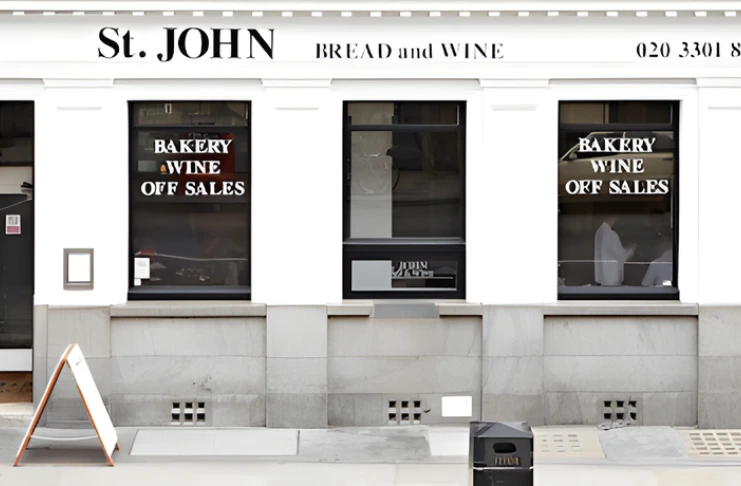
If you’ve walked past the entrance once or twice without noticing it, don’t worry. You’ve joined a long list of people who’ve done the same thing. The building is long, narrow, and poorly lit, particularly in winter, when the concrete walls and floors can seem a little cold. It looks austere on the surface. But underneath, St John couldn’t be more warm and accommodating.
As you walk into the dining room, a sign politely asks you to turn off your mobile phone. There is no music. No artwork on the walls. The restaurant looks the same as it did 30 years ago, just with a lick of paint. Even some of the crockery and glasses have survived three decades.
A small bakery occupies a corner of the vaulted bar area, with a practical display of flour, mixing machines, and Kilner jars. In the elevated dining room, where table service is offered, you can catch glimpses of the small kitchen. It resembles that of a weathered pub rather than a Michelin-starred restaurant.
St John leans heavily on French wine. Trevor started buying wines directly from growers in France early on, and St John Wines was born. Fergus and Trevor eventually established their own vineyards in France. The restaurant’s own bottles are consistently excellent.
The Impact
St John won Best British and Best overall London Restaurant at the 2001 Moët & Chandon Restaurant Awards. It was awarded a Michelin star in 2009. It has been consistently placed in Restaurant magazine’s annual list of the Top 50 restaurants in the world, ranking 41st in 2011.
But the numbers don’t capture St John’s real influence. In 1999, Henderson published “Nose to Tail Eating: A Kind of British Cooking,” which included recipes incorporating trotters, tripe, kidneys, chitterlings, and other animal parts. The book became a cult classic. He followed it with “Beyond Nose to Tail” in 2007, written with pastry chef Justin Gellatly, focusing on desserts.
Chefs Anthony Bourdain and Mario Batali have both praised Henderson for his dishes, which optimize British food while making full use of the whole animal. Bourdain called St John his favorite restaurant. The critic A.A. Gill, who initially reviewed it with hostility in the Sunday Times, later retracted his criticism.
The restaurant trained a generation of cooks who went on to lead some of the UK’s most formidable kitchens. Alumni include Lee Tiernan of Black Axe Mangal and Justin Gellatly of Bread Ahead. The DNA of St John is woven into how we dine today, from its nose-to-tail philosophy to its influence on London’s small plates culture.
The Expansion
In 2003, St John Bread and Wine opened across from Spitalfields Market. What started as a bakery selling sourdough loaves evolved into a full restaurant when customers lingered over small plates and glasses of wine while picking up their bread. The bakers had to wait another seven years before getting their own dedicated space.
In 2010, St John Bakery opened in Bermondsey. In 2022, a third restaurant opened in Marylebone. The group also has three bakeries in London, in Borough Market, Covent Garden, and Bermondsey.
There was a short-lived St John Hotel near Leicester Square that opened in 2011 and closed in 2013. Plans for St John Los Angeles never materialized. But the core restaurants remain, each adhering to the distinct style and philosophy that has been so influential.
Fergus Today
In 1998, Henderson was diagnosed with Parkinson’s disease. He remained in the kitchen undeterred for years. In 2005, the same year he was appointed Member of the Order of the British Empire (MBE), he underwent innovative Deep Brain Stimulation, which improved his mobility. He was appointed Officer of the Order of the British Empire (OBE) in the 2021 New Year Honours for services to the culinary arts.
Fergus stopped cooking at St John a long time ago due to reduced mobility from Parkinson’s, but he’s still a consistent presence at the restaurant. If he’s not having lunch, you may find him at one end of the bar with an Eccles cake and a glass of Madeira. Sometimes he’ll tour the kitchens and chat with the chefs. Fergus is married to fellow chef Margot Henderson; the couple has three children.
The Anniversary
In October 2024, St John celebrated its 30th anniversary with a series of instantly sold-out evenings cooking their 1994 menu at 1994 prices. Apricots on toast for £3.70. Grilled lamb tongues, broad beans, and carrots for £8.80. The concisely written menu. The whitewashed walls. The bare concrete. The philosophy is that nothing should go to waste.
Three decades on, St John has become a national institution. The restaurant’s spare aesthetic, captured in Henderson’s bestselling cookbook, has earned an appearance at Paris Fashion Week and a collaboration with menswear designer Drakes, where St John-inspired chore jackets retail for just under £500.
But fundamentally, nothing has changed. The menu still features dishes like faggots and peas, braised kid with fennel and green sauce, Welsh rarebit, and those famous warm madeleines for dessert. The focus remains on seasonal British ingredients, cooked simply, served without pretense.
What St John Taught Us
That a restaurant doesn’t need music or artwork or trend-chasing to matter, that offal, appropriately cooked, is delicious. That using the whole animal isn’t bloodlust but respect. That white walls and concrete floors can feel warmer than velvet and chandeliers. A menu doesn’t need to change every season to stay relevant, as long as it responds to what’s available. That French wine and British food are perfect companions. Those madeleines, served warm, are one of life’s great pleasures.
Most importantly, St John taught us that restaurants can last. In a city where dining establishments turn over constantly, where trends rise and fall with social media cycles, St John remains. A monolith of wood and whitewash. The same philosophy. The same values. The same commitment to doing one thing extraordinarily well.
Fergus believes deeply in his nose-to-tail philosophy and the eternal companionship of seasonal ingredients, so it’s no surprise that the menu at St John hasn’t fundamentally changed in 30 years. Some might call that stubborn. Most call it visionary.
St John is located at 26 St John Street, London, EC1M 4AY, near Farringdon station. Open Monday to Saturday from noon to 3 pm and from 6 pm to 10:30 pm, and on Sunday from noon to 4 pm. Reservations are recommended. The roast bone marrow and parsley salad is always on the menu.