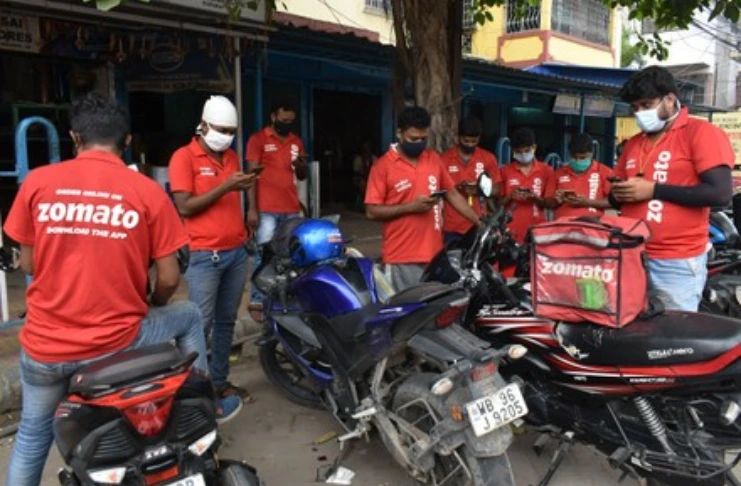

A major delivery workers’ union has publicly criticized the defence made by Zomato’s CEO, Deepinder Goyal, for the company’s current labour structure, calling it “not decent work.” This dispute has become a symbol of the many conflicts that have emerged between companies that create their own mobile applications and workers who use their labour to earn an income to support themselves and their families.
These tensions are escalating and causing the creation and/or alteration of labour laws in many countries to accommodate companies’ use of app-based delivery methods worldwide. This week, Goyal shared a document on X (formerly Twitter) outlining what he believes to be the earnings of all delivery partners who work for Zomato and Blinkit. The document states that the average hourly earnings (exclusive of tips) for delivery partners have increased by 10.9% from 2024 to 2025 and now equal ₹102.38 per hour, up from ₹92.40 per hour, which Goyal claims is evidence of improved wages.
Goyal also highlighted several points in his defence, including:
- Delivery partners have the flexibility to set their own working hours, and are not limited to any specific shifts.
- Furthermore, they keep 100% of customer tips without any business deductions taken by Zomato.
- In 2025, Zomato stated that it had invested more than ₹100 crore in providing insurance to delivery partners which provided protection for accidents, medical expenses and other forms of assistance
- Other forms of welfare measure provided included rest days for female riders, support with filing income tax returns and access to a pension scheme designed specifically for gig workers.
The CEO also disagrees with claims that gig employment forces cyclists into dangerous environments/use of exploitative methods, as ultra-speedy delivery, e.g., delivery within 10 minutes, are a result of how close a restaurant is to the cyclist instead of forcing someone to do so.
The Telangana Gig & Platform Workers Association of India (TGPWA) immediately contradicted Goyal’s claims, stating that the reality for many delivery partners on the road is very different from what the CEO represented. The TGPWA states that:
- Once operational costs such as fuel, vehicle maintenance, phone data, and consumables are deducted, net earnings drop to about ₹81 per hour, a level the union says cannot sustain a stable livelihood.
- A rider working 10 hours a day for 26 days under this model would earn roughly ₹21,000 in a month after expenses, far below minimum wage norms.
- Delivery partners do not receive paid leave, social security, provident fund benefits, or guaranteed accident coverage, key markers of formal work protections.
- Only a small proportion, around 5% of orders on Zomato, include tips, limiting the practical impact of tip income on overall earnings.
The union indicates these factors demonstrate that simply providing flexibility does not ensure that stable/acceptable work experience exists. The company’s figures do not align with the on-the-ground economic conditions of many riders.
This dispute is occurring within the larger context of an ongoing global discussion around labour practices for app-based workers, where many companies use the independent contract paradigm to classify their delivery partner workforce as independent contractors rather than employees, allowing them to offer flexibility for their workers without providing the normal protective measures afforded to traditional employees. Critics contend this has limited the available protective measures to shield against income insecurity, a lack of benefits, and increasing pressure on workers associated with performance evaluations.
In India, the debate has already led to protests and strike actions by delivery workers over pay and conditions, including concerns about rapid delivery timelines and algorithmic expectations.
The current debate surrounding innovations in the gig economy has drawn the attention of Rajya Sabha MP Raghav Chadha, who has advised caution in exploiting gig workers through innovation and called for greater ethical standards and protections in the fast-growing startup/platform economy. The conflict also exemplifies the tension within the global food delivery industry: while companies promote their products or services based on flexibility and higher salaries, workers seek stability, rights, and respect through dignified working conditions.