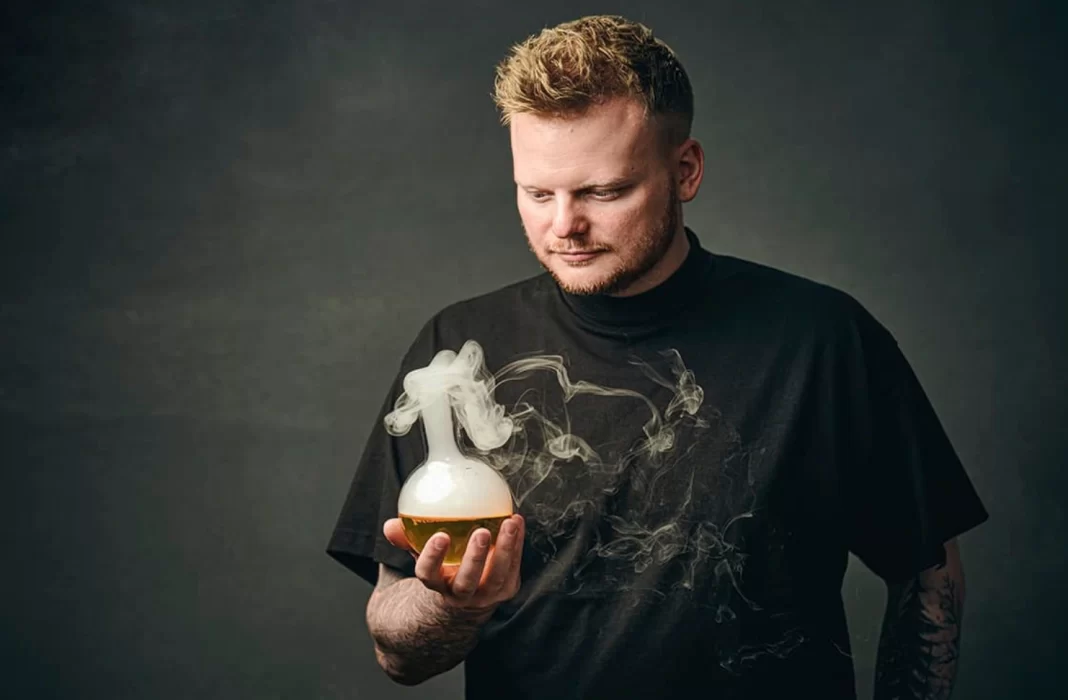

Rasmus Munk grew up on a farm in Jutland, so obviously, all he inherited from his family were just fields, a forest on the border, and the occasional school trip to Copenhagen.
It was on one of those trips in the Copenhagen Planetarium where, for the first time ever, he experienced something extraordinary.
In fact, so extraordinary that he spent the next two decades figuring out how to recreate that exact feeling, and put dinner inside it. Thus came Alchemist.
Honestly, Munk got into cooking almost by accident. He just signed up for a few culinary courses at a local association in Silkeborg just to see. But then, he fell in love with it. So, he started entering competitions, trained in various kitchens in London and Copenhagen, learnt techniques, and, more slowly, a philosophy behind it.
“I got a buzz from making Christmas dinner for a group of disadvantaged kids one year. It made me think: there’s more to food than cooking something that tastes great,” he shares.
From a Small Kitchen to a Shipyard
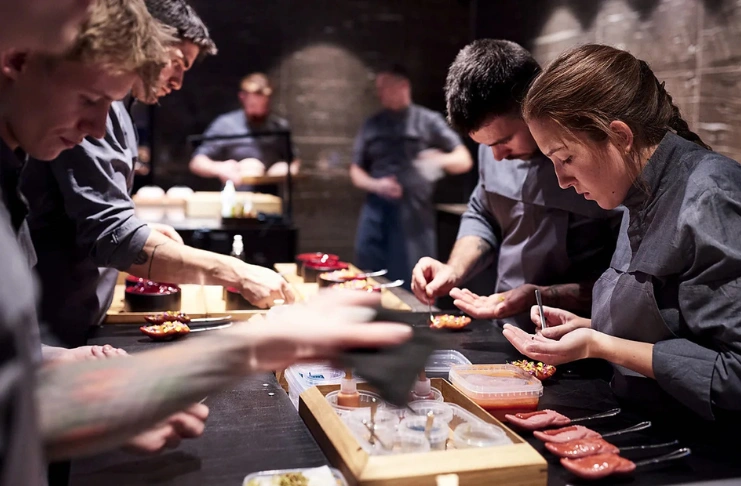
In 2015, Rasmus Munk opened the first version of Alchemist in Copenhagen. It served unusual dishes, though for a good cause. Take a lamb tartare created to support Denmark’s blood donation campaign or a dish inspired by lung cancer, for example.
He closed that restaurant in 2017 and spent two years planning his next moves.
The current Alchemist opened in 2019 in a former industrial shipyard on Refshaleoen, a post-industrial half-island on the outskirts of Copenhagen.
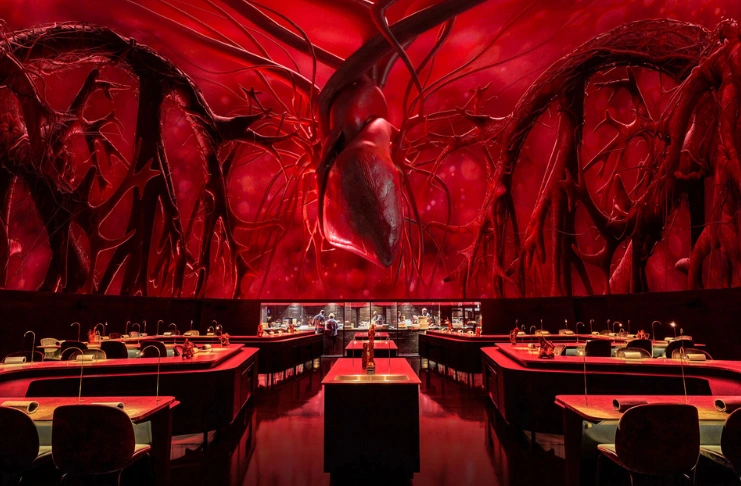
The building is massive, exactly as it needed to be, because what Munk had planned required five separate rooms, each with its own audio, visual, and sensory architecture, and fifty individual impressions to move through over the course of six to seven hours.
Seven months after opening, Alchemist was awarded two Michelin stars and a Green Star. By 2024, it ranked eighth in the world. By 2025, fifth. Rasmus Munk was named the world’s best chef by The Best Chef Awards in both years.
The Experience It Sells
The entrance to the restaurant is a set of enormous bronze doors on a rough post-industrial street. They open automatically and draw you into darkness.
Somewhere between arrival and the next room (you won’t know when), Alchemist photographs your face. Within minutes, your image appears projected into the archival figures from across time (eg, the Mona Lisa, Einstein, etc.).
This makes the very first impression of the Alchemist, although this move has been in talks for concerns regarding surveillance, and about how technology uses us before we have agreed to be used.
The first courses arrive in a warm lounge, where a glass wall looks directly into the restaurant’s laboratory kitchen. Drinks are chosen on an iPad, with pairings ranging from champagne to fermented kefir.
Then comes the dome.
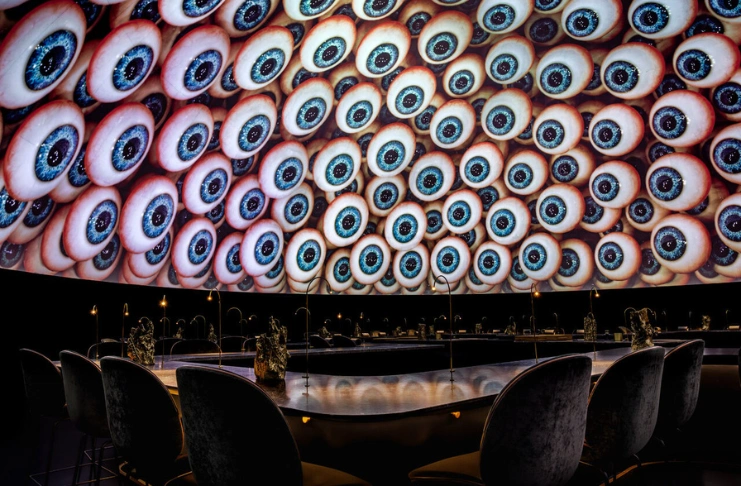
The main dining room is the “planetarium.” The ceiling is a vast projection surface that shifts between deep ocean footage, galaxies, melting ice caps, data streams, and social commentary. This is where Alchemist earns its reputation, its controversy, and its word-of-mouth.
For example, there is a dish called Food for Thought that serves lamb-brain mousse inside a silicone mould shaped like a human head, a provocation about the parts of animals we waste. Then, there is a blood-drop ice cream that comes with a QR code linked to an organ donor registration scheme. Since 2020, nearly 13,000 guests have scanned it.
Next is an art installation room, where guests are handed edible paint in beetroot reds and citrus yellows and invited to work on their own plate. Then, they are taken to an upstairs balcony, where the music slows, and they take their final bites.
For anyone interested in visiting Alchemist, here’s some advice: “Please arrive with your mind open, and ready to expand your idea of culinary art together with us.” Even their website mentions that the restaurant “might not be the right choice for an evening of business discussions or that first nervous date.”
The Lab in Focus
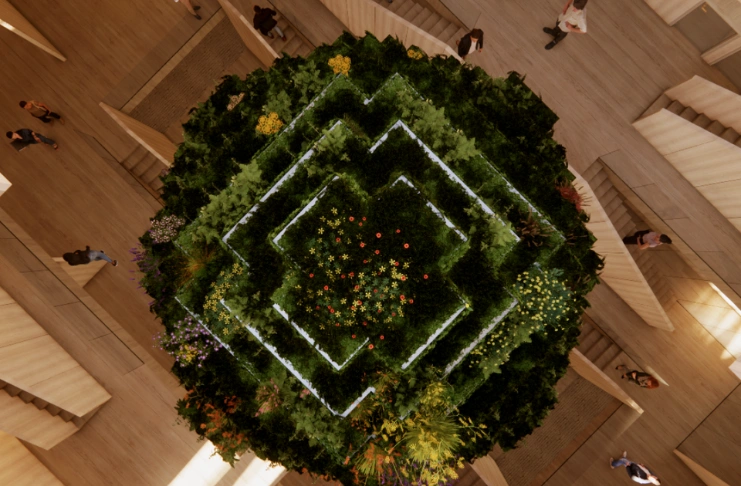
One of many things that gives Alchemist an edge is Spora, the restaurant’s non-profit research centre, where chefs work alongside scientists, designers, and artists on projects that have very little to do with what will be on the menu next week.
The range is genuinely startling:
- Chocolate produced from spent barley, with no cocoa involved
- Silkworm silk is refined into a protein that can be spun into a light meringue
- A project with MIT’s Media Lab testing fermentation as a food production system for future space habitation.
- Research with the Technical University of Denmark on sustainable proteins from seaweed and fungi.
- A collaboration with NASA on bread designed to be eaten in zero gravity.
The guiding principle of Spora is a simple inversion of how most food research works. “Deliciousness leads technology, rather than following it.”
Maybe this is why such research does not feel like a compromise at the table. Munk’s team does not develop sustainable ingredients and hopes they taste acceptable. They develop things people genuinely want to eat, and then make sure those things are sustainable.
In 2027, this ambition is going to leave the planet. Munk has partnered with Space Perspective to stage the first stratospheric dining experience aboard Spaceship Neptune, a carbon-neutral craft lifted by a SpaceBalloon to 100,000 feet. The menu is being created for microgravity. Ticket proceeds support the Space Prize Foundation, advancing gender equity in science and technology. Munk has spoken of wanting guests to experience the Overview Effect, the shift in perspective astronauts describe when they see the Earth, fragile and small, from outside it.
Dinner, in other words, is being used here as a vehicle for a planetary reckoning.
The Part That Has Nothing to Do with Dinner
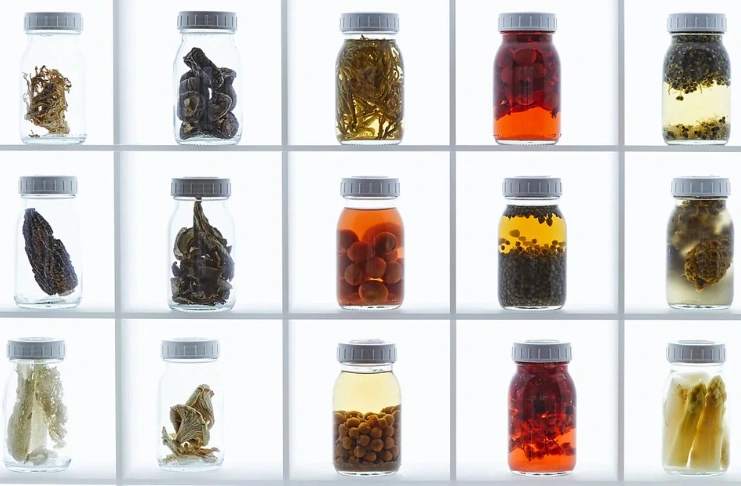
When Copenhagen went into lockdown in 2020, Alchemist’s kitchens kept running. Munk redirected them through his non-profit JunkFood to feed the city’s homeless.
One of the most exclusive dining experiences in the world became, for a period, a community kitchen.
The work with Rigshospitalet, Copenhagen’s main hospital, has been more sustained. Alchemist built a food selection app for children in the cancer ward. The team redesigned the hospital kitchen’s food technology. They created a protein-rich ice cream specifically for children recovering from cancer treatment, because when appetite is almost entirely gone, ice cream is sometimes the only thing that works.
Alchemist is now a specialist advisor on the future food experience at Mary Elizabeth’s Hospital.
The project manager on the hospital’s user experience team, Emilie Vagner, explained why Munk was the right person for this – “It’s not just about taste and food, but about surroundings too. We have children here with no appetite, so getting them motivated to eat is important. His [Munk’s] holistic approach understands that.”
The money made in the dome funds the lab. The lab funds the research. The research ends up in hospital wards and school lunches and, eventually, maybe, in space.
But, Can Gastronomy Be Art?
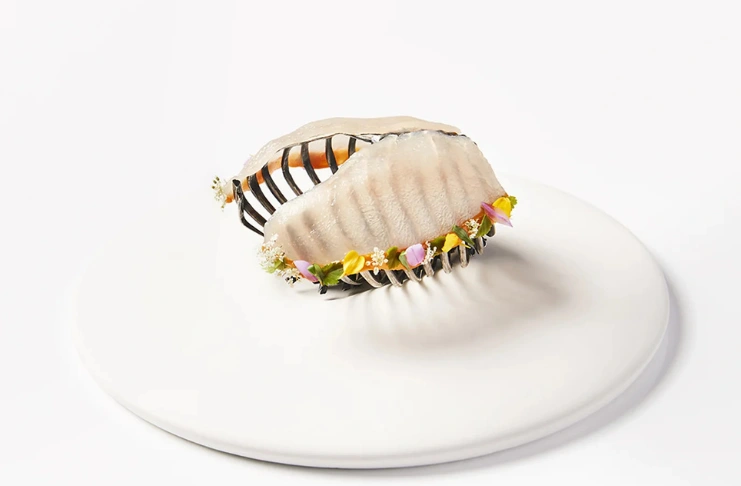
Denmark, in all seriousness, is currently exploring whether to formally recognise gastronomy as an art form. If it passes parliament, Denmark would become the first country in the world to place cooking, at its highest expression, on the same legal and cultural footing as painting or music. Chefs would become eligible for state subsidies and private foundation funding.
Munk has been central to pushing this conversation forward. He says, “We convey messages through our food. Our food is our medium of expressing ourselves.”
Ferran Adria, who arguably did more to transform fine dining than anyone alive, visited Alchemist after the 2019 opening and called it one of the most memorable meals he had experienced in a decade.
That endorsement definitely means something, coming from someone who has eaten everywhere and is no longer easily impressed. So, ready to visit Alchemist, yet?