

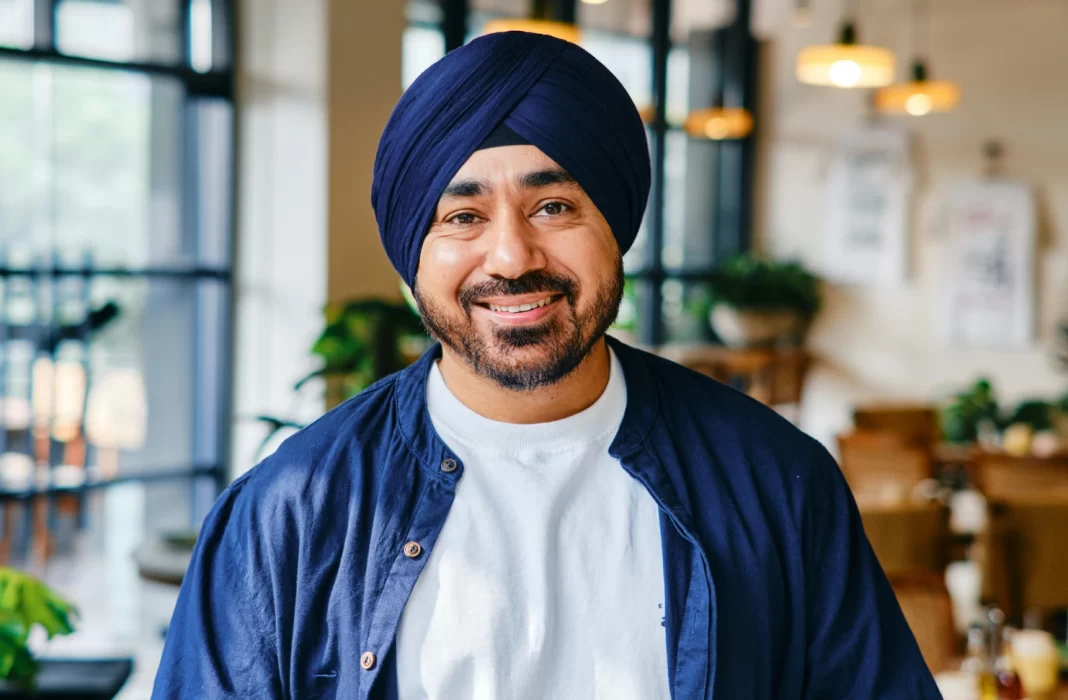

Rajan Sethi built North India’s most respected hospitality group with a filter in mind: “Does this feel true?” Nineteen years in, that one question still anchors every decision he makes.
“Food is never just food. It is memory, identity, and continuity. My job is to create spaces where people taste something they didn’t know they were missing and feel like they belong,” shares Rajan Sethi as we, the team at The Restaurant Times, sat across him, tracing the very origin of his career in F&B and everything that came along.
One very interesting thing he shared during the interview was about this photograph of him from when he was young, eating at his grandfather’s.
He doesn’t have the said photograph, but he vividly remembers what was on the table, the people who sat around it, the noise and warmth around it.
It is, in many ways, the emotional blueprint for Bright Hospitality.
When Sethi founded Bright Hospitality Private Limited in 2007, he basically stepped away from the predictability of a traditional family business. Hospitality, for him, was definitely not an inherited path. He entered the industry, by his own admission, because of his genuine love for food, people, and the experience of bringing the two together.
It’s been nearly two decades now, and Bright Hospitality runs 14 outlets across 7 brands, namely Ikk Panjab, OMO Soul Food Community, AMPM, The GT Road, Espressos Anyday, Top Banana, and more, across Delhi NCR, Kolkata, Chandigarh, and Indore. The group serves over 5,000 diners daily, and none of them has ever been funded by any external capital of a sort.
This empire has been built, and occasionally rebuilt, on what Sethi calls “resilience through authenticity.”
Through the First Year
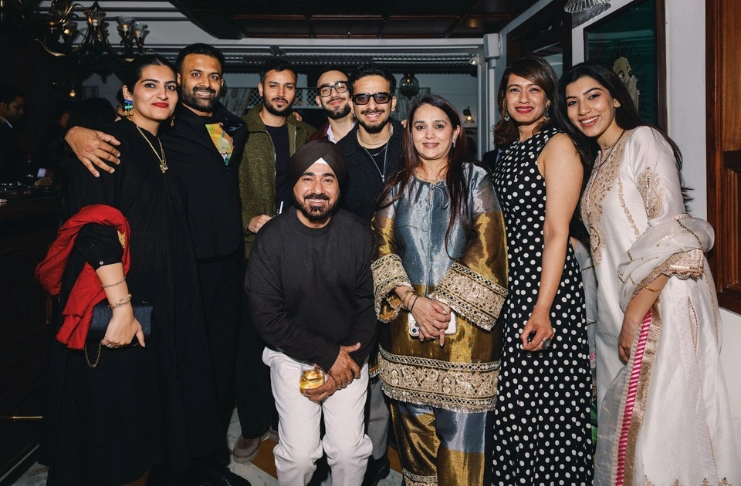
2007 was sort of a “leap of conviction, really.” Coming from a more traditional business background, hospitality, to Rajan Sethi, felt like stepping into an entirely different world. This world was, in fact, far less predictable, far more demanding, and deeply people-driven.
The early days at Bright Hospitality were less about grand strategy and more about immersion. Sethi involved himself in nearly every layer of the business, from operations, vendor relationships, service standards, guest feedback, to the day-to-day realities of keeping a restaurant running. While he already understood the business mechanics, it was in the F&B sector where he grasped the emotional side of it all.
“Guests don’t just remember what they ate. They remember how a place made them feel,” he says.
That first year, he admits, taught him more humility than confidence. It forced him to listen more carefully, adapt faster, and develop a deeper respect for the craft behind every successful hospitality experience. More importantly, it changed how he viewed the industry itself. Restaurants, he realized, were never just about food. They were about trust, consistency, and emotional connection built over time.
Now nineteen years in, Sethi still regards consistency as his north star. He believes that strong concepts may attract customers once, but lasting brands are built through consistent service, operational discipline, aligned teams, and attention to the smallest details of guest experience.
At the same time, he has deliberately unlearned the instinct to equate rapid growth with success. Because, believe it or not, expansion without clarity often weakens a brand more than it can ever strengthen one.
“In hospitality, growth is visible. Discipline is not,” he says. “But over time, disciplined growth creates far stronger and more enduring businesses than expansion driven purely by momentum.”
Identity & Ownership
Over time, Rajan Sethi has made peace with the label of being a “second-generation entrepreneur” – but only to a point. To him, a label is relevant in that it acknowledges “where your foundations come from, but it doesn’t (and should not) define the journey that follows.”
Growing up in a business family did expose him early to discipline, long-term thinking, and a ton of responsibilities, but restaurants, he insists, were never an inherited blueprint.
Hospitality was a very deliberate path of his own choosing – a business he had to build independently through experimentation, risk, and repeated learning curves. In the early years, there was perhaps a desire to prove he could create something entirely his own. Over time, however, that perspective evolved.
Today, Sethi views inheritance more as continuity rather than comparison.
“You inherit values, not outcomes,” he says. “What matters is how you interpret those values for a new context.”
Surviving the Pandemic
Most hospitality businesses that made it through 2020 to 2022 came out the other side materially changed.
Bright Hospitality was, of course, no exception. But the nature of that change says a great deal about how Sethi thinks.
Rather than treating those years purely as a crisis to survive, he made a consequential call: to use the disruption as an opportunity to rethink what the group needed to become for the long term.
It was also during this period that the group sharpened its approach to technology, delivery integration, cost discipline, and operational visibility across brands. They also became far more intentional about concept building.
The years after that were not about expanding quickly for the sake of momentum but about building brands with clearer identities and stronger fundamentals.
When the market reopened and consumer demand came flooding back, Bright held its line. Yes, there were moments when competitors moved aggressively, and they felt this bone-deep temptation to match their pace. “But [still] we made a very conscious decision to move deliberately.”
“The cost of that decision, in the short term, was speed. There were locations we could have entered earlier, opportunities we could have capitalized on more aggressively. What it protected, however, was far more valuable — clarity of brand identity and operational integrity.” At Bright, every concept, Rajan Sethi argues, needs time to mature, sharpen its voice, and build consistency before it is replicated. Scaling a concept before its fundamentals are fully tested can create long-term dilution that is difficult to reverse.
Being Bootstrapped
Being privately owned has been one of Bright’s greatest strengths.
In a sector where aggressive external capital often drives rapid expansion, the group’s approach has been intentionally measured. “We have always believed that hospitality brands need depth before they need scale.”
Private ownership means their every decision – whether it’s about opening a new outlet, investing in infrastructure, or launching a new concept – has to justify itself through long-term viability. That naturally makes Bright more selective. A heavily funded competitor may prioritize speed and market capture. “We prioritize getting each concept right before we move it.”
Building the Portfolio
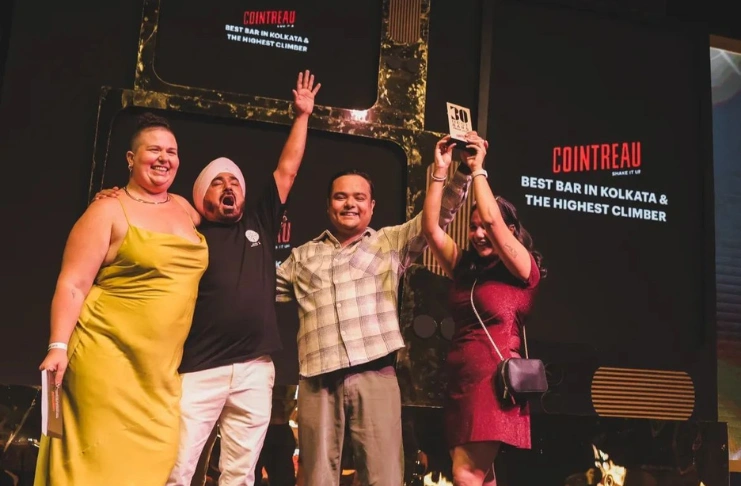
Running 7 brands simultaneously calls for the ability to look at something that’s performing well and ask not “how fast can we expand this?” but “is it actually ready?”
At Bright, three key things are evaluated on priority before they scale any of their concepts:
- Operational Readiness
- Market Relevance
- Cultural Transferability
Each brand within Bright has been built with a very specific thesis, audience, and experience architecture. The first thing they thus evaluate is whether that proposition is repeatable across markets.
Some concepts are naturally more scalable because they are format-flexible and operationally replicable. Espressos Anyday, for example, is designed for broader expansion because it aligns strongly with evolving urban consumption habits. Others, such as Ikk Panjab or Top Banana, are more emotionally and contextually specific. Their value lies in depth of experience, which means growth has to be approached with far greater care.
"A concept deserves its next outlet only when it can scale without compromise. Sometimes the smartest growth decision is expansion. Sometimes it is allowing a brand the time to deepen its identity before taking the next step."Let’s take the case of Ikk Panjab here. When its concept was being shaped, there was considerable pressure, both internal and external, to make it more commercially familiar. There were suggestions to dilute the narrative, simplify the menu into more recognizable North Indian staples, and soften some of the deeper cultural references to make it immediately more accessible. From a short-term commercial perspective, that may well have made the brand easier to scale faster.
But Sethi chose to hold the line. The concept remained committed to being deeply personal and historically rooted; they wanted to give people the experience that reflected the culinary memory of undivided Punjab rather than simply becoming another premium Punjabi restaurant. That meant investing more time in research, storytelling, menu development, and design authenticity, often at the cost of speed and immediate commercial predictability.
"Resilience through authenticity means having the conviction to build something true to its purpose, even when the market initially encourages an easier version of the idea."Celebrating Top Banana
Top Banana is Bright Hospitality’s newest opening in Greater Kailash II.
What gives the brand its edge is that it was designed from the ground up as a highly focused bar-first format.
That means the brand has an intentionally compact footprint, a sharply curated beverage program, and a food menu architected to complement the bar experience. This allows for stronger throughput, tighter inventory control, and healthier margins without compromising quality.
The concept was also built through an unusually deep collaborative structure:
| CounterTop/Pankaj Balachandran on the beverage Program | Chef Tarannum Sehgal on food (Euro-Japanese) |
| Orphic Design Studio for the space | SpeedX/Anirudh Singhal on bar technology |
The obvious risk in such a model is dilution, i.e., when two or more strong collaborators are put together to work on a project, they may pull in different directions until the original idea becomes a negotiated compromise. That’s where the founder’s hands must show up.
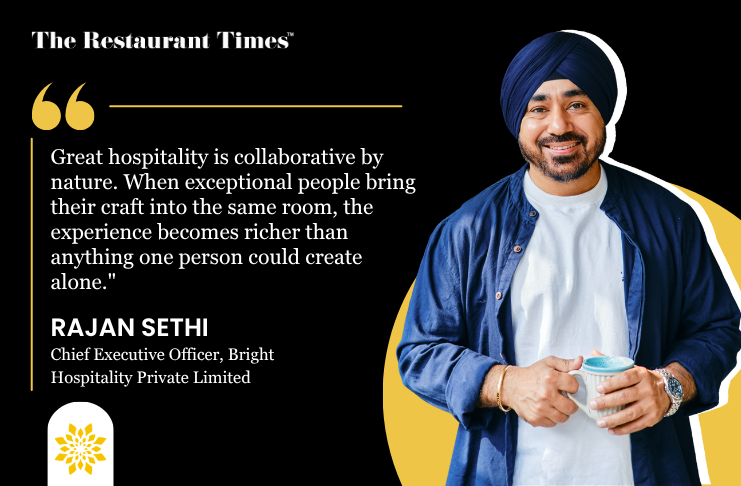
“Collaboration only works when there is absolute clarity of vision from the outset. The role of the founder in a collaborative project is not to dominate creativity — it is to act as the custodian of coherence,” says Rajan Sethi.
From the very beginning, Sethi was absolutely clear about what he wanted Top Banana to be: a bar-first concept rooted in analog music, intimacy, and sensory immersion. Once that was established, he gave each collaborator a room to push within that shared framework. His own role, therein, was to ensure that every decision, whether it was a cocktail, a design detail, or a technology layer, strengthened the central idea rather than distracted from it.
Looking at the Bigger Picture
India’s shift toward experience-led dining is real, Sethi says, but it is not immune to economic cycles. The difference today, he argues, is that the definition of value has changed. It is no longer purely a function of price. It is a function of whether the experience feels worth the spend.
"Today's consumer is far more discerning. Guests are no longer willing to spend simply on premium positioning; they expect meaning, quality, and emotional value from every hospitality experience."Bright’s hedge against this is diversification of format. The group operates highly experiential concepts like Ikk Panjab and Top Banana, plus accessible, high-frequency formats like Espressos Anyday. This allows them to stay relevant across different consumer moods and spending environments, without having to shift the identity of any individual brand to suit a shifting market.
The next big thing the group is working on right now is taking Ikk Panjab international. But the challenge here is that they need to double-ensure that what travels is not just the food, but the story and emotion behind it. Many Indian concepts entering global markets tend to adapt too heavily to local expectations, often becoming simplified versions of themselves. Rajan Sethi doesn’t want that for Ikk Panjab.
"Not every guest abroad will immediately relate to Partition-era narratives, but they will understand ideas of home, migration, memory, and belonging. That is where the brand's universality lies."The group is not willing to compromise on the integrity of their concept – their storytelling, culinary philosophy, and cultural depth. Certain operational adaptations may be necessary, but the essence of the experience cannot (and should not) change.
The Yin & Yang
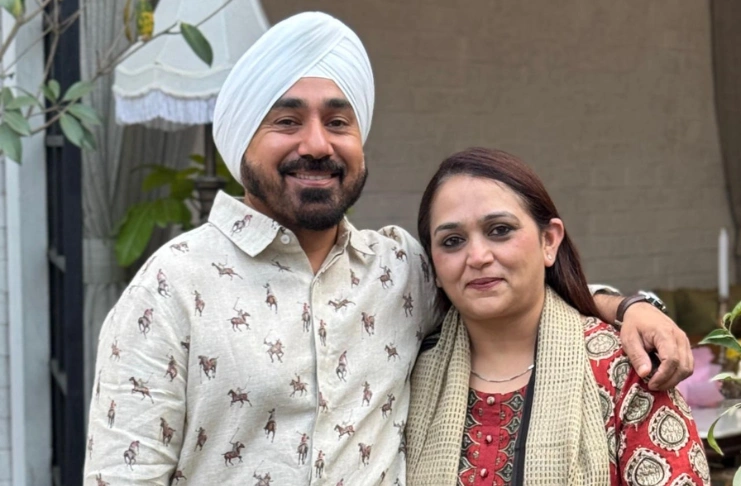
Deepika Sethi is Rajan Sethi’s partner in both life and business. They both have always approached work as two people building toward the same vision, but through very different lenses.
He is more focused on strategy, expansion, business architecture, and the long-term shape of the group. Deepika’s strength lies in shaping the emotional and experiential side of the business. She has an exceptional instinct for the finer details (like design language, guest flow, atmosphere, and other nuances) that guests may not consciously notice but always feel.
Yes, they do disagree on quite a few things, too, especially around timing and refinement. “There are moments when I am focused on execution speed and market opportunity, while she will insist on holding back until every detail feels right.”
That tension (a healthy kind), more often than not, produces better decisions than either of them would have achieved alone.
The Takeaway
When asked about what he hopes a young restaurateur takes from his journey five years from now, Sethi says:
“I would want them to understand that building in hospitality is ultimately about patience, discipline, and clarity of purpose. This industry often creates the impression that success is about speed – how quickly you can scale, how many outlets you can open, how visible your brand becomes. My own experience has taught me that sustainable success is built very differently. What matters far more is depth. It is about understanding your concept deeply enough to know why it should exist, building the operational systems to support it, and having the conviction to stay consistent even when faster, easier routes present themselves.”
On the flip side, what he does not want anyone to do is focus on replicating outcomes at the expense of building their own point of view. Every hospitality brand, he says, has to emerge from its own context, its own cultural relevance, its own founder’s perspective. If someone tries to copy formats, aesthetics, or expansion strategies without understanding the thinking behind them, they are only recreating the surface.
"The real lesson is not to replicate what has been built, but to build something that is authentically your own."It is, in the end, the same filter he has been running everything through since 2007. Does this feel true? It is not a complicated question. It is just a demanding one, and nineteen years in, the answer still has to be yes.


